
个人信用修复政策

Search documents
海南积极落实个人信用修复政策 助力经济回升与民生改善
Zhong Guo Xin Wen Wang· 2026-02-04 08:05
Core Viewpoint - The implementation of the one-time credit repair policy by the People's Bank of China is aimed at enhancing economic recovery and improving people's livelihoods in Hainan Province, with positive social feedback observed since its launch [1][2]. Group 1: Policy Implementation - The one-time credit repair policy, effective from January 1, 2025, allows individuals to have overdue information removed from the financial credit information database if they repay overdue debts by March 31, 2026, for amounts not exceeding 10,000 RMB [1]. - The policy has led to a significant increase in credit report inquiries, with 41,522 inquiries recorded by January 31, 2026, and 4,055 policy consultations conducted, both showing substantial year-on-year growth [1]. Group 2: Support Measures - The People's Bank of China in Hainan has enhanced the operational capacity of credit report self-service machines, conducting comprehensive inspections and establishing a real-time fault reporting and repair mechanism [2]. - Financial institutions are encouraged to increase both online and offline promotional efforts, providing multiple channels for policy consultation, including hotlines and dedicated staff at service points [2]. Group 3: Risk Management - The financial sector has developed emergency plans for the implementation of the policy, detailing responses to various risk events and setting risk prevention requirements for both banking and non-banking institutions [2]. - Emphasis is placed on improving dispute resolution mechanisms while ensuring the policy's integrity and compliance, as well as protecting individuals' legitimate credit rights [2].
工行宁波市分行积极落实征信修复政策 助力小微企业主重塑信用
Zhong Guo Jin Rong Xin Xi Wang· 2026-02-03 09:34
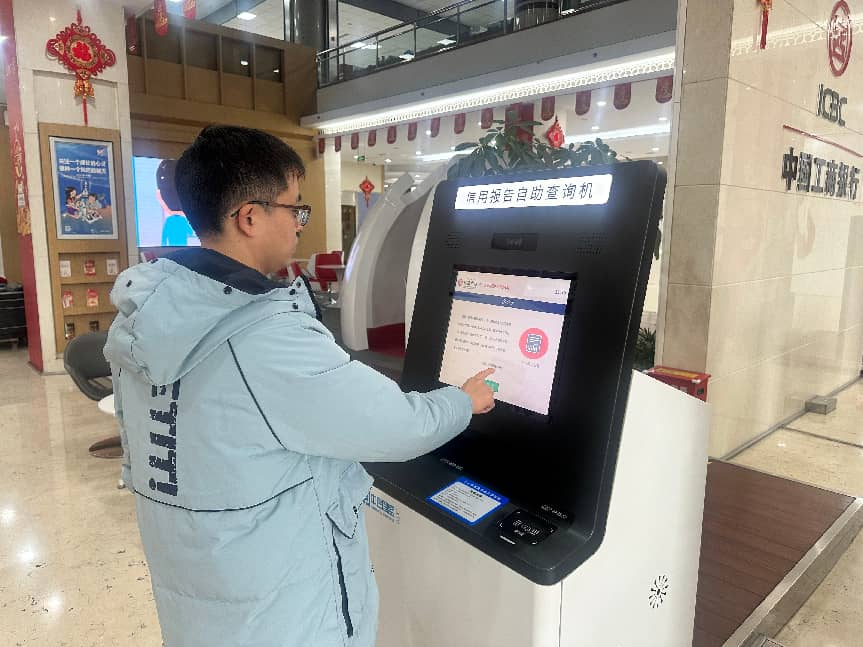
Core Viewpoint - The People's Bank of China introduced a "one-time personal credit repair policy" aimed at helping individuals with overdue credit records regain access to financing by automatically removing certain overdue records from the credit system [1]. Group 1: Policy Implementation - The policy applies to personal credit overdue records with a single overdue amount not exceeding 10,000 yuan, occurring between January 1, 2020, and December 31, 2025, provided that the overdue amount is fully repaid by March 31, 2026 [1]. - The Industrial and Commercial Bank of China (ICBC) Ningbo Branch established a dedicated task force to ensure the effective implementation of the policy, focusing on policy transmission, data verification, and customer service [2]. Group 2: Customer Support and Services - ICBC Ningbo Branch has developed an "online + offline" credit report inquiry service system, allowing customers to access simplified credit reports 24/7 through mobile and online banking, as well as at physical branches [4]. - The bank emphasizes that the credit repair policy is completely free and does not require customers to engage any third-party agents, while also warning the public against potential scams related to credit repair [4][5]. Group 3: Case Study - A restaurant owner, Ms. Li, benefited directly from the policy after her overdue records were removed, enabling her to secure a 500,000 yuan operating loan from ICBC Ningbo Branch, which alleviated her financial pressure and revitalized her business [1].


如何理解央行个人信用修复政策?
Changjiang Securities· 2025-12-25 23:30
Investment Rating - The report does not explicitly provide an investment rating for the industry [26] Core Insights - The People's Bank of China (PBOC) introduced a one-time personal credit repair policy on December 22, aimed at providing credit repair opportunities for overdue record holders. The policy focuses on overdue amounts of 10,000 yuan or less, targeting small overdue amounts and honest repayment customers. It encourages current overdue customers to repay quickly and benefits those with historical overdue records who have settled their debts, facilitating future loan approvals [2][6][9] - The policy is applicable to overdue records from January 1, 2020, to December 31, 2025, and requires borrowers to fully repay their debts by March 31, 2026, for the overdue records to be removed from the credit reporting system [6][9] - The policy is expected to improve banks' asset quality by accelerating repayments from overdue customers and may slightly increase retail loan issuance [9][10] Summary by Sections Policy Overview - The PBOC's credit repair policy targets small overdue records in personal credit reports, specifically those not exceeding 10,000 yuan. It applies to various types of personal loans, including mortgages, credit cards, and consumer loans, and does not require borrowers to apply for the repair [7][8][9] - The policy aims to address the rising loan default pressures faced by residents due to macroeconomic factors, as existing credit rules retain overdue records for five years even after debts are settled [6][9] Impact on Individuals - For current overdue customers, the policy incentivizes prompt repayment. For those who have settled their debts but still have historical overdue records, the repair of credit records will help meet future loan demands, as banks consider credit history during risk assessments [9][10] Impact on Banks - If the policy effectively encourages overdue customers to repay, it could alleviate the pressure on retail asset quality, as overdue and non-performing loan ratios have been rising. For instance, as of Q3 2025, overdue and non-performing amounts for China Merchants Bank accounted for 69.7% and 56.4% of total retail loans, respectively [10][16] - While some customers may find it easier to obtain new loans post-repair, the overall increase in loan issuance is expected to be limited due to tightened risk controls in the banking sector [10]
个人信用可一次性修复,房贷、消费贷、信用卡、花呗、借呗等纳入政策范围
Yang Zi Wan Bao Wang· 2025-12-22 13:30
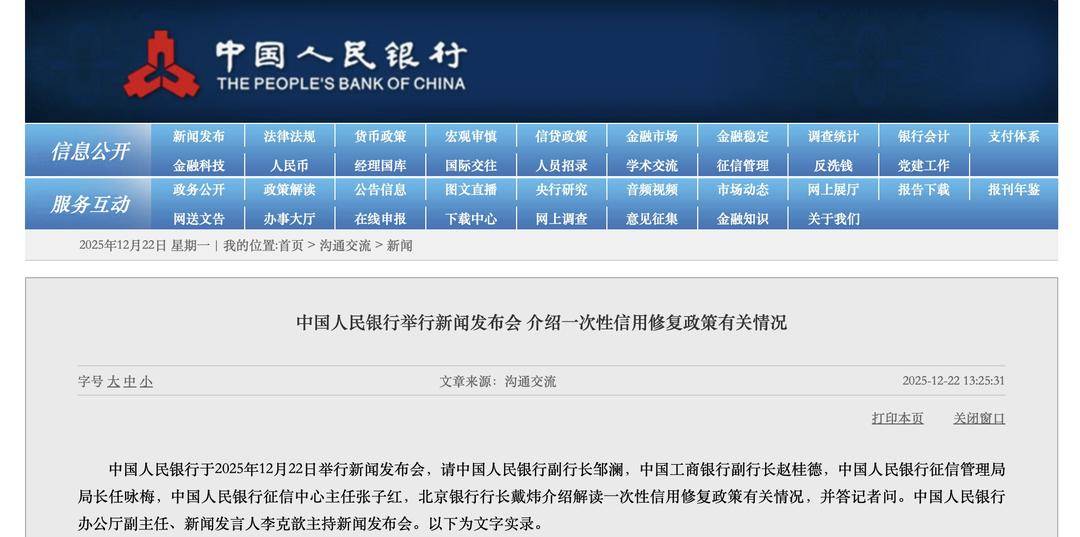
Core Viewpoint - The People's Bank of China has announced a "one-time credit repair policy" aimed at supporting individuals with damaged credit who actively repay their debts, allowing for the removal of overdue information under certain conditions [1][8]. Group 1: Policy Details - The policy allows for the removal of overdue information for single overdue amounts not exceeding 10,000 yuan, provided that full repayment is made by March 31, 2026 [1]. - The credit repair process is automatic, requiring no application or documentation from individuals, and applies to various types of loans including personal, housing, and credit card debts [2][5]. - The policy encompasses overdue loans from all financial institutions connected to the central bank's credit system, including online lending platforms [2]. Group 2: Implementation Timeline - Overdue information will not be displayed in the credit system starting January 1, 2026, for debts repaid by November 30, 2025, and will be adjusted by the end of the following month for debts repaid between December 1, 2025, and March 31, 2026 [7]. - A three-month grace period from January 1 to March 31, 2026, is provided to facilitate the implementation of the policy and allow borrowers to repay their debts [7]. Group 3: Financial Institution Guidance - Financial institutions are advised to confirm the total amount owed by borrowers to ensure full repayment and compliance with the policy [9]. - The definition of full repayment includes settling both historical overdue debts and the current month's payment, with specific examples provided for clarity [9].
2025Q3 货币政策执行报告学习体会:如何解读 2025 年三季度货币政策执行报告?
EBSCN· 2025-11-12 05:12
Economic Overview - The GDP growth for the first three quarters of 2025 is 5.2%, slightly down from 5.3% in the first half of the year, indicating a stable yet slightly slowing economy[3] - Social retail sales increased by 4.5% year-on-year, accelerating by 1.2 percentage points compared to the previous year, with final consumption contributing 53.5% to GDP growth[3] - Manufacturing investment grew by 4.0%, outperforming total investment growth by 4.5 percentage points, with high-tech industries showing significant investment increases[3] Inflation and Price Trends - Inflation concerns have eased, with the CPI rising to 0.2% year-on-year in October 2025, and the PPI's year-on-year decline narrowing to 2.1%[4] - Core CPI has shown a strong recovery, increasing to 1.2% year-on-year, marking six consecutive months of growth[4] - The report indicates a need for coordinated macro policies to promote reasonable price recovery amid various influencing factors[4] Global Economic Concerns - The report expresses heightened concerns about the cooling labor market in overseas economies, contrasting with previous assessments of strong labor markets in developed economies[5] - In September 2025, the U.S. CPI rose by 3.0%, below expectations, influenced by declines in housing and used car prices, while other major economies also reported high inflation rates[5] - The report notes a significant drop in U.S. non-farm employment growth, with only 22,000 jobs added in August, compared to 71,000 in the same month last year[5] Monetary Policy Adjustments - The report emphasizes the need for "counter-cyclical and cross-cyclical adjustments" in monetary policy, reflecting a shift from observation to active policy implementation[7] - The central bank has resumed buying government bonds, with a net purchase of 20 billion yuan in October 2025, indicating a potential increase in monetary easing[9] - The focus on credit policy remains on optimizing structure and supporting key areas, with new measures to assist personal credit recovery expected to be implemented by early 2026[10] Currency Stability - Concerns regarding the RMB exchange rate have diminished, with the report suggesting that the current level is acceptable to the central bank, focusing on the positive impact of exchange rate stability on the economy[11] - The report highlights the importance of maintaining a stable exchange rate to support foreign trade and cross-border capital flows[11]