
个人智能

Search documents
杨元庆:个人智能会辅助娱乐、阅读与沟通,并持续学习进化
Xin Lang Cai Jing· 2026-01-07 01:56
Core Viewpoint - Lenovo's CEO, Yang Yuanqing, discussed the concept of personal artificial intelligence at the Lenovo Innovation Technology Conference during CES 2026, emphasizing its ability to connect various devices and provide a personalized experience through learning user habits and memories [1][2]. Group 1: Personal Artificial Intelligence - The personal AI, referred to as a "super intelligent agent," can learn user habits and retrieve both short-term and long-term memories, allowing seamless interaction through voice, text, and buttons [1][2]. - This AI will manage and coordinate all user devices, delivering a truly personalized experience [1][2]. Group 2: Technology Integration - The operation of personal AI begins with various sensing devices, including smart glasses, smart rings, and environmental sensing technologies like conference cameras [1][2]. - Upon receiving authorization, personal AI will be able to "see" what the user sees and "hear" what the user hears, facilitating collaboration among personal computers, tablets, and smartphones [1][2]. - The personal AI will assist in entertainment, reading, and communication, continuously evolving through ongoing learning [1][2].

每天向AI提100个问题的诺奖得主,和你聊透4种智能
3 6 Ke· 2025-12-08 04:18
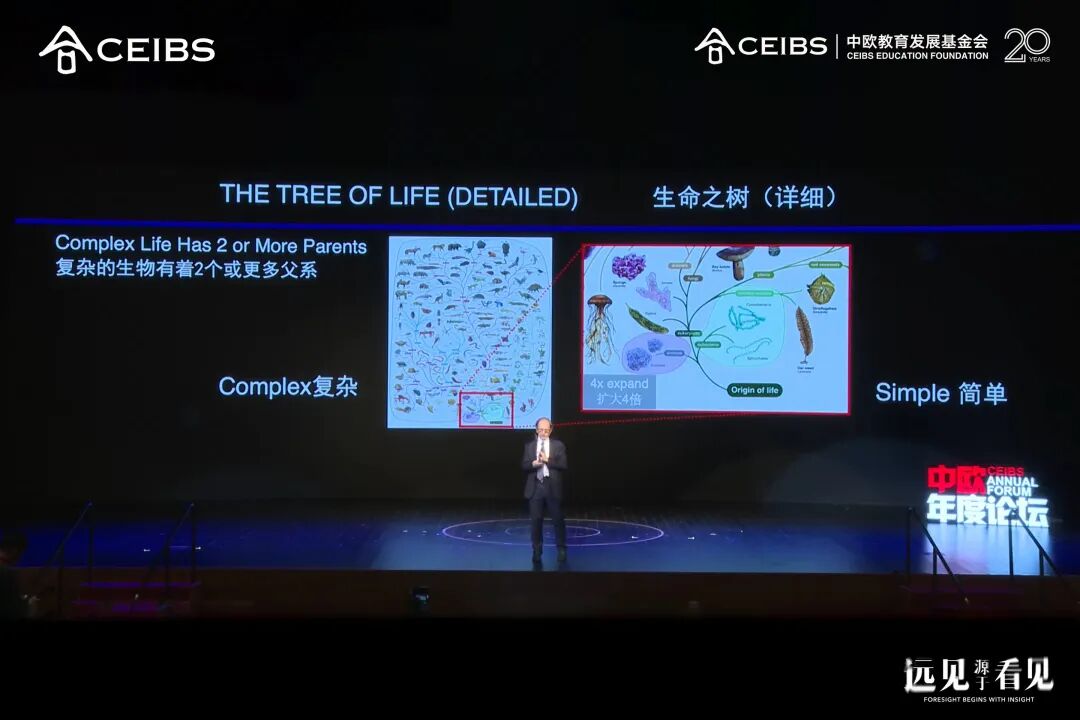
Group 1: Biological Intelligence - Biological intelligence is considered the greatest form of intelligence, learned through evolution, enabling the creation of complex structures and low-energy, intelligent brains [2] - The distinction between simple and complex life lies in sexual reproduction, which promotes diversity and enhances survival chances in uncertain futures [4] - Nature rewards creativity and diversity, emphasizing that survival is not just about being the fittest but about being diverse [4] Group 2: Cultural Intelligence - Cultural intelligence encompasses learning through various means, with significant emphasis on meeting inspiring individuals [5] - The importance of mentorship in shaping future scientists is highlighted, as mentors can provide young minds with independence and responsibility [6][7] - Young people's creativity is a powerful driver of scientific discovery, and they should be given the freedom to explore independently [9] Group 3: Artificial Intelligence - The emergence of advanced AI tools, such as OpenAI's ChatGPT, has transformed problem-solving capabilities, allowing users to engage with multiple AI tools simultaneously [12][14] - AI's ability to provide medical, legal, and psychological advice is significant due to its lack of emotional bias [12] - The training of AI models involves predicting the next word in a sequence, which requires a deep understanding of semantics and context [17][19] Group 4: Personal Intelligence - Personal intelligence emphasizes the importance of self-care, including diet, exercise, and sleep, as essential for maintaining mental and physical well-being [21] - Sleep is particularly highlighted as crucial for starting each day afresh, with a recommendation for at least eight hours of sleep [21] - Embracing various types of wisdom is necessary for leading a fulfilling life, and maintaining a healthy skepticism towards information is vital [23]

从云端到端侧:是vivo AI战略的“清醒”转向
Huan Qiu Wang Zi Xun· 2025-10-12 08:20
Core Insights - vivo aims to redefine the integration of AI and smartphones by focusing on personal intelligence rather than general artificial intelligence [4][10] - The company is shifting its strategy from cloud-based large models to edge models, emphasizing real-time performance, privacy, and personalization [4][5] AI Strategy Transition - Starting in 2024, vivo will prioritize the development and implementation of edge models, moving away from cloud-based large models [4] - The 3B edge model, set to launch in 2025, will have a memory usage of 2GB and outperform previous models in various assessments [4] - The transition to edge models is driven by considerations of practicality, device compatibility, and user experience [4][5] AI Research and Development - vivo established its AI research institute in 2017, focusing on operator optimization and building a team of experts to facilitate the efficient migration of large models to edge devices [5] - The company plans to implement 18 edge AI features in 2024, including voice recognition, image recognition, and text generation, which will function without internet connectivity [5] Intelligent Agent Ecosystem - vivo is addressing challenges in the deployment of intelligent agents, such as cross-application permissions and the lack of industry standards [6] - The company is collaborating with leading internet firms to launch a series of Agent features aimed at meeting genuine user needs [6][8] - vivo's approach to AI integration emphasizes a seamless user experience, embedding AI capabilities into existing workflows without requiring additional user actions [8] Cross-Platform Collaboration - vivo has introduced features for interoperability with Apple systems, catering to users who utilize multiple devices [10] - The company is open to collaboration with Apple to enhance user experience but will adjust its services based on Apple's willingness to cooperate [10] - vivo's vision for the future of AI in smartphones revolves around understanding user needs and enhancing the effectiveness of the intelligent agent ecosystem through personalized features [10]

联想刘军:非PC业务收入占比过半 取得历史性突破
Zheng Quan Ri Bao Zhi Sheng· 2025-08-15 07:40
Core Viewpoint - Lenovo Group achieved significant growth in its China operations for the first quarter of the 2025/26 fiscal year, with both revenue and profit seeing substantial increases, driven by a strong focus on AI strategies and a shift towards non-PC business segments [1][2]. Group 1: Financial Performance - Lenovo's China operations reported a 36% year-on-year increase in revenue and a 43% increase in profit for the first fiscal quarter [1]. - Non-PC business revenue surpassed 54% of total revenue, marking a historic milestone for the company [1]. - The Intelligent Device Group (IDG) maintained a high market share in PCs, achieving record highs during the same period [1]. - The Intelligent Infrastructure Group (ISG) saw a 72% year-on-year revenue growth, with server revenue increasing by 81% [1]. - The Solutions and Services Group (SSG) also reported over 20% year-on-year growth in both revenue and profit [1]. Group 2: AI Strategy and Innovations - Lenovo is heavily investing in personal intelligence through the Tianxi personal super-intelligent system, which enhances the IDG business [2]. - The Tianxi system was officially launched in May and has been integrated into Lenovo's personal cloud, facilitating a new generation of human-computer interaction [2]. - Lenovo's AI PCs sold over 1 million units in the previous fiscal year, with sales in the current quarter nearing last year's total, accounting for over one-third of total notebook sales in China [2]. - In enterprise intelligence, Lenovo is innovating in AI infrastructure and solutions, introducing liquid cooling technologies and the Lenovo Wanquan AI all-in-one machine, which achieves a throughput of over 12,000 tokens per second [2]. Group 3: Market Expansion and Services - Lenovo is expanding its offerings for government and enterprise clients with solutions like xCloud smart cloud, ESG, and full-cycle AI services [3]. - For small and medium-sized enterprises, Lenovo is leveraging the Baiying intelligent system to enhance IT operations, AI office tasks, and AI marketing, aiming for cost reduction and efficiency improvements [3].
联想集团超级智能体首秀2025世界移动通信大会
Zheng Quan Shi Bao Wang· 2025-06-18 09:48
Core Insights - Lenovo showcased its AI innovations at the 2025 World Mobile Communication Conference in Shanghai, emphasizing the theme "Making AI an Innovative Productivity" [1] - The company presented its full-stack AI solutions, including personal and enterprise AI, highlighting significant advancements in AI terminals, infrastructure, and services [1][3] Personal AI Innovations - Lenovo introduced the Tianxi Personal Super Intelligent Agent, a new generation human-computer interaction interface, now fully integrated into Lenovo AI PCs, featuring five key functions: AI control, AI search, AI translation, AI notes, and AI services [1][2] - The Tianxi agent aims to redefine smart interaction experiences while ensuring data security and personal privacy [1] Enterprise AI Developments - The Lenovo Lexiang Super Intelligent Agent and City Super Intelligent Agent were highlighted as key innovations for enterprise applications, with Lexiang achieving a 270% increase in weekly active users and a 30% improvement in order conversion rates since its launch [2][4] - The City Super Intelligent Agent aims to advance smart city initiatives into the 4.0 era through collaborative intelligence [2] AI Infrastructure and Solutions - Lenovo's AI infrastructure strategy includes the Wanquan Heterogeneous Intelligent Computing Platform and various AI storage and integrated systems, which support efficient management of heterogeneous computing resources [3][5] - The company plans to continuously upgrade its full-stack AI capabilities, focusing on a multi-device strategy that includes AI PCs, smartphones, tablets, and AIoT devices [4][5] Market Position and Future Strategy - Lenovo is positioned as an end-to-end partner for operators' "AI+" strategies, aiming to enhance integrated AI capabilities for consumers and businesses alike [3][4] - The company reported that its AI PC sales exceeded 1 million units in the last fiscal year, and its Moto smartphones ranked first in the global small foldable category in Q1 2025 [4]