
全栈AI

Search documents
从“单点突破”到“全域智能”:智现未来以全栈AI引领国产半导体工业软件新浪潮
半导体行业观察· 2026-03-30 01:07
Core Viewpoint - The semiconductor industry is rapidly evolving towards intelligence and autonomy, with the deep integration of AI and industrial software driving the upgrade of semiconductor manufacturing [1] Group 1: Company Overview - Zhixian Future is the first domestic provider of fully localized industrial software for 12-inch wafer fabs, focusing on advanced semiconductor manufacturing with an integrated solution of "full-stack AI + engineering intelligence" [2] Group 2: Technology and Solutions - The core advantages of Zhixian Future's industrial software AI solutions address three major pain points in wafer fabs: system complexity, rigid rules, and high reliance on engineer experience [3] - The full-stack AI product matrix includes key modules such as FabSyn FDC for intelligent monitoring, FabSyn YES for real-time defect tracking, and FabSyn APC for lithography process optimization, all aimed at enhancing production efficiency and yield [4][5] Group 3: Competitive Advantages - The full-domain AI matrix solution offers advantages in synergy, completeness, and scalability, enabling real-time monitoring and predictive analytics across various production scenarios [6] Group 4: Industry Development and Future Plans - The domestic semiconductor industrial software sector is transitioning from "shortboard supplementation" to "differentiated competition and systematic breakthroughs," with Zhixian Future planning to enhance AI and industrial software integration, expand product offerings, and deepen ecosystem collaboration [9][11]


收入狂飙56%背后阿里即时零售布局绝非“闪电战”
经济观察报· 2026-03-21 04:37
Core Viewpoint - Alibaba's Taobao Flash Sale is transitioning from a "subsidy-driven" model to a "supply optimization" approach, focusing on efficiency improvements to enhance market share against competitors [1][7]. Group 1: Financial Performance - In Q3 of FY2026, Alibaba reported that its instant retail revenue, including Taobao Flash Sale, reached 20.84 billion yuan, a year-on-year increase of 56% [2]. - The market share of Taobao Flash Sale reached 45.2% by Q4 2025, slightly surpassing Meituan's 45.0%, marking a significant competitive shift [2]. - The instant retail segment's unit economic efficiency (UE) has improved significantly, with losses narrowing, and the segment is expected to achieve overall profitability by FY2029 [7][8]. Group 2: Strategic Developments - The launch of Taobao Flash Sale in April 2022 marked a strategic shift, with the app's homepage receiving a primary entry point, leading to rapid growth in order volume [5]. - By August 2025, daily order peaks reached 120 million, with monthly active buyers growing by 200% to 300 million within four months [5]. - The rebranding of Ele.me to Taobao Flash Sale in December 2025 signifies a deeper integration of instant retail and traditional e-commerce, enhancing operational synergy [5]. Group 3: Operational Efficiency - The improvement in UE is attributed to enhanced logistics efficiency, optimized order structure, and high customer retention rates [7]. - Non-food orders now account for over 75% of Taobao Flash Sale's platform, with a significant increase in average transaction value, contributing to higher gross margins [8]. - The platform's order fulfillment rate remains stable at 96%, even during adverse weather conditions, showcasing the resilience of Alibaba's technology [8]. Group 4: AI Integration - Alibaba's AI strategy is a key differentiator in the instant retail market, with a comprehensive integration of AI capabilities from chip development to application [11][12]. - The AI Agent functionality in the Qianwen App has enabled over 140 million users to engage in AI-assisted shopping, enhancing user experience and operational efficiency [12]. - Alibaba's vertical integration from chip to application positions it uniquely in the market, allowing for significant advancements in logistics and fulfillment capabilities [12]. Group 5: Competitive Landscape - The competition in the instant retail sector remains intense, with Meituan and JD.com also expanding their capabilities and partnerships [14][15]. - Alibaba's management emphasizes continued investment in instant retail despite current losses, aiming for long-term profitability rather than short-term gains [15]. - The integration of AI and the focus on efficient matching of supply and demand are critical for success in the evolving market landscape [15].

阿里巴巴(BABA):港股公司点评:云业务加速增长,坚定投入
SINOLINK SECURITIES· 2026-03-20 14:54
Investment Rating - The report maintains a "Buy" rating for the company, expecting a price increase of over 15% in the next 6-12 months [5]. Core Insights - The company reported total revenue of 284.843 billion yuan for FY26Q3, representing a year-over-year increase of 2% (or 9% when excluding the disposal of Gaoxin Retail and Yintai) [2]. - Adjusted EBITA for the same period was 23.397 billion yuan, down 57% year-over-year, while adjusted net profit attributable to shareholders was 17.112 billion yuan, down 67% year-over-year [2]. - The domestic e-commerce sector showed relatively weak performance due to market conditions, with flash sales experiencing reduced losses. International e-commerce growth and profitability were also weak, impacted by various negative factors [3]. - The cloud business remains strong, with revenue growth of 36% year-over-year for FY26Q3, and the establishment of the ATH business group to accelerate AI investments [4]. Financial Summary - For FY2026-2028, the adjusted net profit is projected to be 74.752 billion yuan, 110.245 billion yuan, and 156.629 billion yuan, respectively, with corresponding adjusted PE ratios of 27.8, 18.9, and 13.3 times [5]. - The company’s revenue growth rates are forecasted at 3.28% for FY2026, 10.96% for FY2027, and 11.27% for FY2028 [10]. - The adjusted net profit growth rates are expected to be -52.67% for FY2026, 47.48% for FY2027, and 42.07% for FY2028 [10].
阿里AI,5年要再造一个阿里
华尔街见闻· 2026-03-19 14:29
Core Insights - Alibaba's Q3 FY2026 results show strong performance in AI and cloud services, with Alibaba Cloud's growth accelerating to 36% and external commercialization revenue increasing by 35% [3][25] - The company aims for cloud and AI commercialization revenue, including MaaS, to exceed $100 billion in five years, indicating a potential sevenfold increase in Alibaba Cloud's revenue [5][34] - The establishment of the Alibaba Token Hub (ATH) signifies a strategic shift towards a MaaS-first approach, integrating token production, delivery, and application under a single leadership [16][18] Financial Performance - Alibaba Cloud's revenue structure is evolving, with AI and MaaS contributing significantly to overall growth [4][25] - The latest data reveals a sixfold increase in token consumption on the MaaS platform over the past three months, indicating a shift from incremental contributions to core drivers of revenue [19][20] - The company has achieved a market share increase in cloud services, now at 36%, reflecting AI's role as a key growth driver [25] Strategic Developments - The ATH group aims to create, deliver, and apply tokens, reflecting the importance of tokens in the AI era [10][16] - The integration of various departments under ATH is designed to enhance the efficiency of token production and consumption, positioning Alibaba as a leader in AI infrastructure [18][34] - The company's self-developed GPU chips have achieved mass production, with over 470,000 units, contributing to a revenue scale exceeding 10 billion RMB [22][24] Market Positioning - Alibaba is positioned as a full-stack AI infrastructure company, with a comprehensive strategy encompassing chips, cloud, models, and applications [21][34] - The company is the only one among China's major cloud providers to receive top ratings across all layers of the AI stack [31] - Recent reports suggest a significant shift in the cloud pricing cycle, with potential profit margin improvements for Alibaba Cloud as it raises prices [32][34] Future Outlook - The company's long-term commercial value is expected to undergo a comprehensive reassessment, driven by optimized computing costs and enhanced token commercialization capabilities [34] - The establishment of ATH and the focus on token economics are seen as critical to meeting the growing demand for AI services [33][34] - The anticipated growth in the AI cloud market, projected to reach a compound annual growth rate of 72% from 2024 to 2029, presents substantial opportunities for Alibaba [31]

阿里云在MWC亮出“全栈AI”
凤凰网财经· 2026-03-11 10:39
Core Viewpoint - The 2026 Mobile World Congress (MWC) highlighted artificial intelligence (AI) as the central theme, showcasing its transformation from a novelty to a necessity across various industries [1] Group 1: AI's Role and Impact - The MWC attracted over 10.9 million professional attendees and featured more than 2,900 exhibitors from 219 countries, with China contributing over 350 exhibitors, ranking third globally [1] - AI is reshaping industries at an unprecedented pace, moving from being a showcase item to an essential component in sectors such as mobile, automotive, and urban development [1] - The true transformation towards intelligence is a comprehensive project that involves full-stack capabilities, global services, and an all-encompassing ecosystem [1] Group 2: Alibaba Cloud's Innovations - Alibaba Cloud showcased the "Qianwen AI glasses," which weigh only 40 grams and offer real-time translation in 89 languages, enhancing communication and user experience [4] - The interactive wall at the Winter Olympics, supported by Alibaba Cloud, demonstrated AI's ability to analyze and replay athletic performances, marking the event as the "smartest Olympics" to date [5] - Alibaba Cloud's "Full Stack AI" architecture integrates IaaS, PaaS, and MaaS, providing a complete technical loop that enhances efficiency and reduces costs for clients [9][10] Group 3: Competitive Positioning - Alibaba Cloud ranks third globally and highest in the Asia-Pacific region in key AI infrastructure metrics, indicating its competitive edge against global giants [7][8] - The company emphasizes open-source models, offering over 400 models and significantly lowering innovation barriers with competitive pricing [11] - Alibaba Cloud's infrastructure improvements have led to substantial cost savings and enhanced performance metrics, positioning it as a leader in AI deployment [12][13] Group 4: Global Partnerships and Applications - Alibaba Cloud's partnerships with leading brands like AstraZeneca and BMW demonstrate its capability to deliver tailored AI solutions across various sectors, including healthcare and automotive [17] - The company has established a strong global presence, serving over 500 million customers and expanding its data center footprint in multiple countries [20][19] - Continuous improvements in service quality have resulted in a high customer satisfaction rate of 98.95% for its AI technology services [20]

2026李彦宏OKR:AI进入兑现期
3 6 Ke· 2026-02-10 13:10
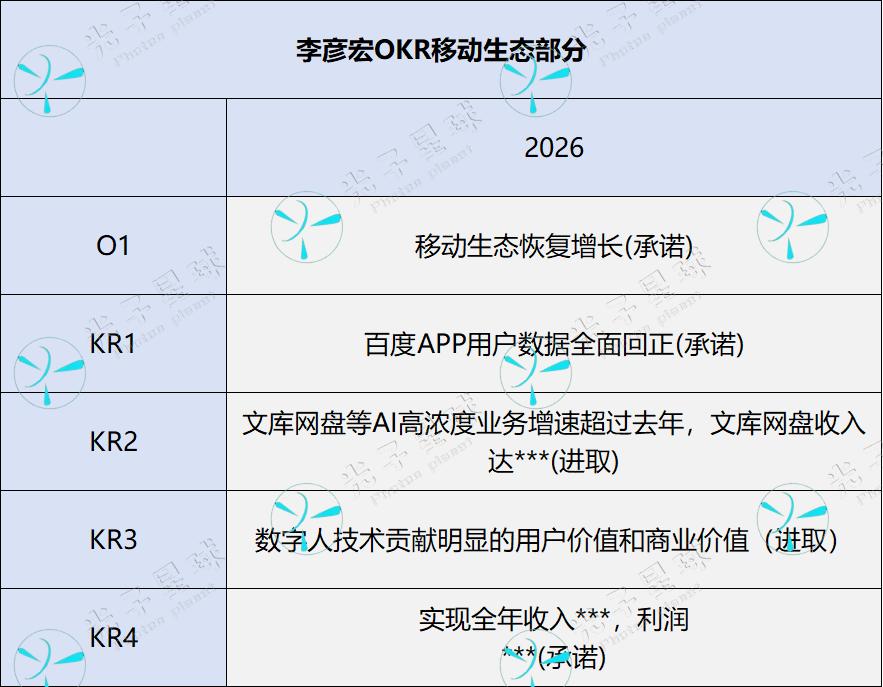
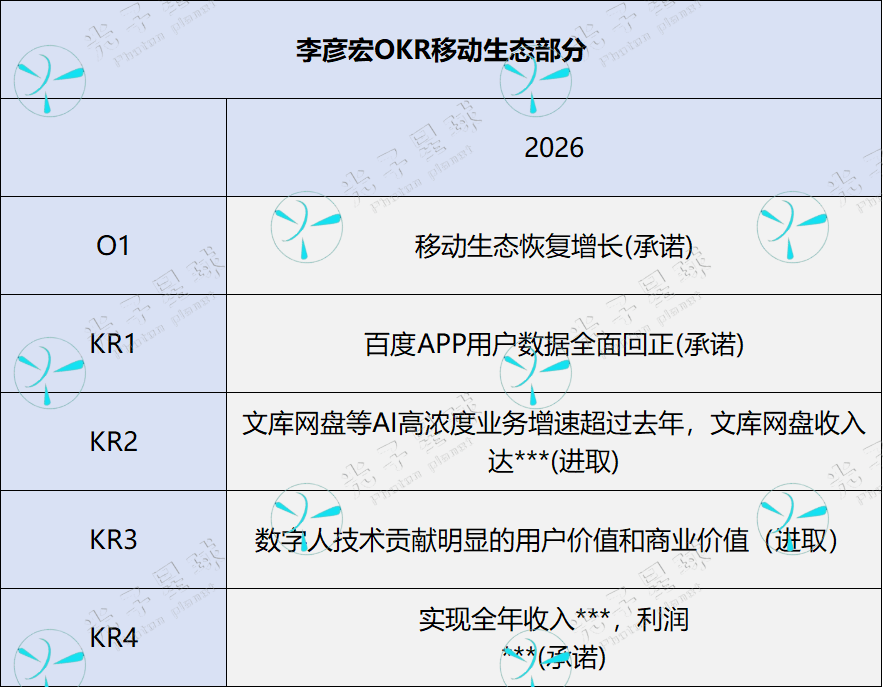
Core Insights - The article emphasizes that 2026 will be a year for Baidu to realize the commercial value of its various businesses after exploration in 2024 and restructuring in 2025 [1] Group 1: Organizational Changes - Baidu underwent three significant organizational adjustments in the first three months, including the split of TPG into two departments focusing on foundational and application model research [1] - The MEG group integrated PC and mobile search resources, forming a "search-push integration" team to enhance user operations and technical development [1] - A new PSIG group was established to focus on personal AI applications, with a subscription model for commercialization [1] Group 2: Strategic Shifts - Compared to the previous year, the number of aggressive objectives in Li Yanhong's OKR increased significantly, indicating a strategic shift towards more ambitious goals [2] - The focus on user experience has become a key operational strategy for the Baidu APP, reflecting a transition from traditional search to AI-driven interactions [3] Group 3: User Engagement Initiatives - Baidu launched a 500 million yuan Spring Festival red envelope campaign to boost user engagement, particularly targeting existing users rather than new user acquisition [5] - The emphasis on user experience necessitates a reorganization of services and interface within the Baidu APP to enhance user retention [5] Group 4: Business Model Diversification - Different business units within Baidu are adopting varied commercial models, with some focusing on classic search advertising while others explore subscription services [6] - The establishment of new business groups signals a strategic pivot towards AI and smart transportation, with specific revenue targets set for these units [7] Group 5: AI and Cloud Services - Baidu's intelligent cloud has shown strong performance, with AI cloud revenue surpassing 90% of total cloud revenue, indicating a successful transition to AI-centric services [11] - The focus on "super agents" in AI development aims to address specific high-frequency pain points in both business and consumer sectors [12] Group 6: Operational Efficiency and Growth - The operational strategy for Baidu's autonomous driving service has shifted from validation to scaling, with a focus on reducing operational costs and improving service metrics [15] - Li Yanhong's emphasis on internalizing AI capabilities reflects a broader strategy to enhance productivity and commercial value across various business units [18]

独家丨2026李彦宏OKR:AI进入兑现期
Sou Hu Cai Jing· 2026-02-10 11:27
Core Insights - The year 2026 is projected to be a significant year for Baidu, focusing on the realization of commercial value across its various businesses after a period of exploration in 2024 and restructuring in 2025 [1] Group 1: Organizational Changes and Strategy - Baidu has undergone three major organizational adjustments in the first three months of the year, including the split of the Technology Platform Group (TPG) into two departments focusing on foundational model research and application model optimization [2] - The Mobile Ecosystem Group (MEG) has integrated PC and mobile search resources, establishing a "Search and Push Integration" team to enhance user-side operations and technical development [2] - The establishment of the Personal Super Intelligent Group (PSIG) focuses on personal AI applications, with a commercial exploration of subscription models [2] - The aggressive OKR (Objectives and Key Results) set by CEO Li Yanhong reflects a strategic shift towards more ambitious goals, with a notable increase in aggressive targets from 3 to 8 out of 12 key results [2] Group 2: AI and Revenue Generation - Multiple objectives and key results now include specific revenue and profit indicators, indicating that Baidu's AI initiatives are entering a phase of value realization [3] - The focus on user experience and operational strategies within the Baidu APP has shifted, emphasizing the importance of user data and interaction as AI search technologies mature [4][6] - The 5 billion yuan prize pool for the 2026 Spring Festival activity aims to stimulate existing user engagement rather than acquiring new users, highlighting Baidu's strong presence in lower-tier markets and among older demographics [6] Group 3: Business Model and Product Development - The strategy of leveraging existing user bases and enhancing service offerings is critical, with a need to streamline services and interfaces within the Baidu APP [6] - The differentiation in business models across various consumer-facing products, such as classic search advertising versus subscription services for Baidu Wenku and Baidu Wangpan, presents challenges that need to be addressed [7] - The establishment of new business groups signals a commitment to AI and intelligent transportation, with specific revenue growth targets set for Baidu Wenku and Baidu Wangpan [8][9] Group 4: Cloud Services and AI Integration - Baidu's intelligent cloud has shown significant growth, with AI cloud revenue reaching 62 billion yuan, accounting for over 90% of total intelligent cloud revenue [12] - The shift in focus from merely running AI models to winning market share reflects a deeper understanding of AI infrastructure and business-to-business (B2B) opportunities [13] - Baidu's approach to AI emphasizes the development of "super agents" that address specific high-frequency pain points in both business and consumer contexts [15][16] Group 5: Operational Efficiency and Future Directions - The operational metrics for Baidu's autonomous driving service, including over 1.7 million service orders and 240 million kilometers driven, indicate a shift towards more precise operational management [18] - The emphasis on internalizing AI capabilities and cultural adaptation within the organization is crucial for aligning business strategies with evolving market demands [21] - The focus on achieving concrete financial outcomes rather than merely linking business activities to numerical metrics signifies a maturation in Baidu's strategic approach [21]
十七年闭关 阿里“通云哥”雏形初现
2 1 Shi Ji Jing Ji Bao Dao· 2026-01-30 14:18
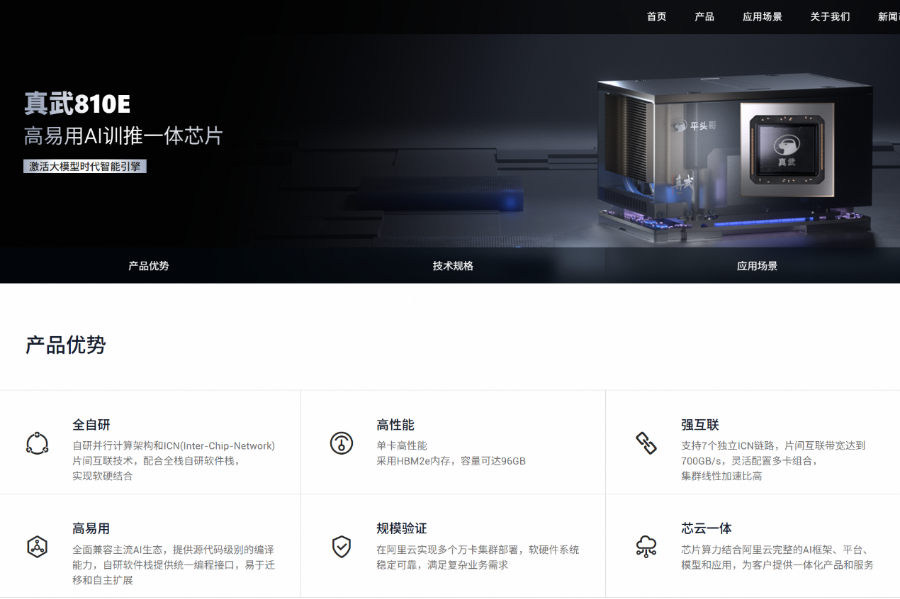
Core Insights - Alibaba's "Tongyun Ge" represents a full-stack architecture combining AI models, cloud services, and self-developed chips, marking a significant strategic shift in its AI ambitions [1][12][15] - The introduction of the "Zhenwu 810E" chip signifies a critical step in Alibaba's AI ecosystem, aiming to provide integrated solutions for AI training and inference [2][5][12] Group 1: Strategic Development - The "Tongyun Ge" strategy has been in development for 17 years, starting with the establishment of Alibaba Cloud in 2009, followed by the creation of the chip company Pingtouge in 2018, and the initiation of large model research in 2019 [2][15] - The mission of "Tongyun Ge" is to enable every individual and enterprise to participate in the AI era, reflecting a broad vision for democratizing AI access [2][12] Group 2: Technological Advancements - The "Zhenwu 810E" chip features a self-developed parallel computing architecture and inter-chip communication technology, with a memory capacity of 96G HBM2e and an inter-chip bandwidth of 700 GB/s, suitable for AI training and inference [5][8] - The chip has reportedly surpassed the performance of Nvidia's A800 and is comparable to the H20, indicating a strong competitive position in the domestic GPU market [8][9] Group 3: Market Position and Challenges - Alibaba's self-developed chips aim to reduce dependency on international giants like Nvidia, while also enhancing performance and efficiency in AI applications [9][12] - Despite the advancements, Alibaba faces challenges in hardware capabilities, including a generational gap in chip manufacturing processes and the need for extensive software ecosystem compatibility [10][11] Group 4: Industry Context - The AI competition is evolving into a comprehensive ecosystem battle, with major players like Google and Amazon also pursuing integrated solutions, highlighting the importance of cohesive hardware and software development [14][15] - The Chinese market is witnessing a strategic shift towards self-sufficiency in computing power, driven by policy support and the demand for domestic AI chip development [11][12]
阿里巴巴全栈AI布局浮出水面
Zheng Quan Ri Bao Wang· 2026-01-30 09:15
Core Insights - Alibaba's self-developed AI chip "Zhenwu 810E" has officially launched, marking the debut of its PPU (Parallel Processing Unit) and the formation of the "Tongyun Ge" AI ecosystem, which includes Tongyi Lab, Alibaba Cloud, and Pingtouge [1] - The Tongyi Lab has released the Qwen3-Max-Thinking model, boasting over 1 trillion parameters and 36 trillion tokens of pre-training data, making it Alibaba's largest and most capable model to date [1] - The "Zhenwu" PPU has been deployed in multiple clusters on Alibaba Cloud, serving over 400 clients, including major organizations like State Grid and Xpeng Motors [1] Group 1 - The "Zhenwu" PPU utilizes a self-developed parallel computing architecture and inter-chip communication technology, enabling applications in AI training, inference, and autonomous driving [2] - The PPU has been optimized for the Qwen model, providing integrated products and services through Alibaba Cloud's complete AI software stack [2] - The performance and cost-effectiveness of the "Zhenwu" PPU are comparable to Nvidia's H20, showcasing its competitive edge in the market [2] Group 2 - Alibaba has committed 380 billion yuan to AI infrastructure development, with a long-term goal of increasing cloud data center energy capacity tenfold by 2032 [2] - The CFO of Alibaba indicated that the initial investment plan may need to be increased due to the rapid growth in customer orders outpacing server deployment [2] - The launch of the "Zhenwu" PPU reflects years of strategic investment and vertical integration by Alibaba, culminating in a comprehensive AI stack [2] Group 3 - The "Tongyun Ge" model offers significant advantages in efficiency and cost through its fully self-developed approach, breaking down collaboration barriers between chips, cloud, and models [3] - The closed-loop model enhances end-to-end efficiency in AI training and inference by aligning computational needs with targeted optimizations in architecture and deployment [3]
补上全栈AI能力底层板块,阿里自研AI芯片“真武”亮相
Zhong Guo Zheng Quan Bao· 2026-01-29 13:01
Core Viewpoint - Alibaba's subsidiary, Pingtouge, has launched a high-end AI chip named "Zhenwu 810E," marking the official debut of its self-developed PPU chip, which is part of Alibaba's comprehensive AI strategy involving models, cloud, and chips [1][2] Group 1: Product Launch and Features - The "Zhenwu" PPU utilizes a self-developed parallel computing architecture and inter-chip interconnection technology, achieving full self-research in both hardware and software [2] - The chip features 96G HBM2e memory and an inter-chip bandwidth of 700GB/s, making it suitable for AI training, inference, and autonomous driving applications [2] Group 2: Market Position and Performance - The "Zhenwu" PPU's overall performance surpasses that of mainstream domestic GPUs, and it has been deployed in multiple large-scale clusters on Alibaba Cloud, serving over 400 clients including State Grid, Chinese Academy of Sciences, Xiaopeng Motors, and Sina Weibo [2] - The integration of hardware and software is expected to enhance computational efficiency and model training effectiveness, facilitating the application of large models across various industries [2] Group 3: Strategic Development - Alibaba aims to create an AI supercomputer by synergizing chip architecture, cloud platform architecture, and model architecture to achieve maximum efficiency in training and deploying large models [1] - Pingtouge, established in 2018, has released several chips since its inception, including AI inference chips and server chips, and has been focusing on integrated cloud-based chip development [1]