
智能指环

Search documents
泛嘉全新企业服务智能体亮相 构建“行为-价值-权益”全链路生态
Zhong Jin Zai Xian· 2026-02-08 12:06
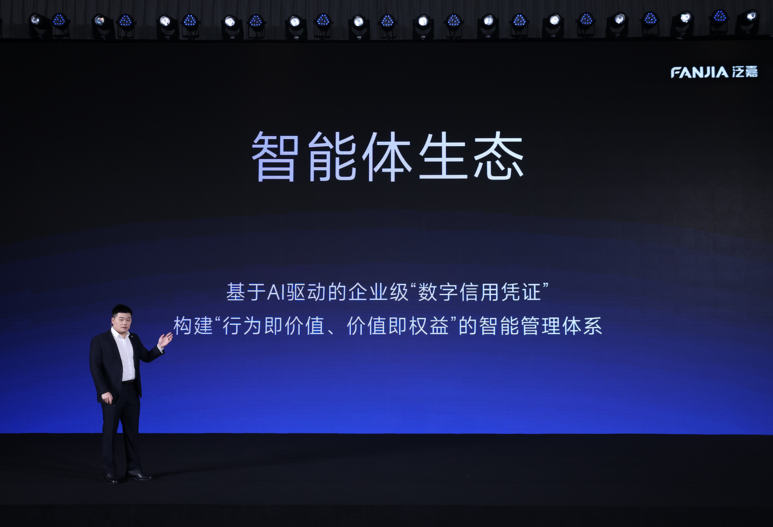
Core Insights - The core theme of the event was the launch of a new generation of enterprise service intelligence, focusing on "interconnectivity and ecological integration" to create a smarter and more open ecosystem [1] Group 1: Intelligent Management System - The new intelligent management system empowers both enterprises and employees, providing comprehensive management optimization and risk prevention capabilities [3] - For enterprises, it enhances management efficiency through AI-driven automatic audits, real-time risk control reports, and resource optimization suggestions [3] - For employees, it offers a clear incentive mechanism and various reward redemption options, allowing them to earn "work credits" based on their contributions, which can be exchanged for travel upgrades and discounts [3] Group 2: Smart Hardware Integration - The event showcased a smart ring equipped with a custom chip that monitors employees' health metrics, integrating health management with workplace scenarios [5] - This smart ring also features multiple functions such as payment, access control, and identity verification, significantly enhancing convenience in both work and life [5] - The technology is embedded in various smart devices, creating a seamless intelligent service network through precise verification of biometric features and behavioral habits [6] Group 3: User Experience and Benefits - Users wearing the smart hardware can enjoy VIP treatment at any global partner location without additional identity verification, as the hardware automatically completes identity authentication [8] - This transforms the smart hardware into a "digital black card," allowing personal assets and privileges to be accessed anytime and anywhere [8] Group 4: Future Development and Ecosystem - The company plans to deepen its ecological layout by providing a comprehensive support system for partners, enhancing collaboration with platforms like Tmall and integrating over 3,000 self-signed hotel resources [10] - The company aims to build a diverse supply chain and a privilege system for employees in partnership with high-quality service providers [10] - Since its establishment in 2009, the company has served over 10,000 listed and large enterprises, focusing on upgrading the enterprise service ecosystem to promote mutual growth for companies and employee satisfaction [10]

蓝思科技(300433):CES2026蓝思科技发布前沿应用进展
Shanghai Aijian Securities· 2026-01-12 09:13
Investment Rating - The report maintains a "Buy" rating for Lens Technology (300433.SZ) [5][6] Core Viewpoints - Lens Technology is focusing on continuous innovation in traditional consumer electronics while expanding its capacity in emerging fields such as robotics and server liquid cooling. The company has also made significant technological advancements in the commercial aerospace sector [6] - The introduction of commercial-grade ultra-thin glass (UTG) photovoltaic packaging solutions addresses the industry's need for materials that balance strength and flexibility, particularly for low-orbit satellite solar wings [6] - The company is building a highly vertically integrated core manufacturing platform for embodied intelligent hardware, showcasing advancements in humanoid robots and liquid metal precision components [6] - Lens Technology's full-stack liquid cooling solutions are expected to significantly reduce AI computing costs by over 30% [6] - The company is innovating in consumer electronics with new manufacturing processes for 3D curved glass and next-generation cooling technologies, aiming for ultra-thin products and stable AI algorithm performance [6] Financial Data and Profit Forecast - Projected revenue for 2023 is 54.49 billion CNY, with a year-on-year growth rate of 16.7%. By 2027, revenue is expected to reach 134.90 billion CNY, with a growth rate of 19.6% [4] - The net profit for 2023 is forecasted at 3.02 billion CNY, increasing to 7.93 billion CNY by 2027, reflecting a growth rate of 18.3% [4] - Earnings per share (EPS) is expected to grow from 0.57 CNY in 2023 to 1.59 CNY in 2027 [4] - The company's return on equity (ROE) is projected to improve from 6.5% in 2023 to 11.5% in 2027 [4] - The price-to-earnings (P/E) ratio is expected to decrease from 55.9 in 2023 to 21.3 in 2027, indicating a more attractive valuation over time [4]

蓝思科技(300433)公司点评:CES2026蓝思科技发布前沿应用进展
Xin Lang Cai Jing· 2026-01-12 08:40
Group 1 - The core theme of the article is that Lens Technology is showcasing its comprehensive AI hardware ecosystem at CES 2026, emphasizing its innovations in traditional consumer electronics and emerging fields like robotics and commercial aerospace [1] - Lens Technology has introduced a commercial-grade flexible glass (UTG) photovoltaic packaging solution, addressing the industry's challenge of balancing "strength" and "flexibility" in low Earth orbit satellite solar wings, with a thickness of only 30μm-50μm and a bending radius as low as R1.5mm [1] - The company is building a highly vertically integrated core manufacturing platform for embodied intelligent hardware, showcasing humanoid robots and key transmission components, achieving breakthroughs in force control precision and industrial durability [1] Group 2 - Lens Technology has launched a full-stack liquid cooling solution, with the TGV glass substrate being a key material that supports the continuation of Moore's Law, potentially reducing AI computing costs by over 30% [2] - The company continues to innovate in the consumer electronics sector, introducing atomic-level manufacturing processes for 3D curved glass and new generation VC cooling technology, achieving ultra-thin products while ensuring stable AI algorithm performance [2] - The company is advancing towards a new era of interaction, with next-generation AI/AR glasses seamlessly integrating digital information with the real world, and smart rings serving as a portable hub for body data and intent perception [2] Group 3 - The investment recommendation maintains a "buy" rating and profit forecast, with expectations for net profits of 5.42 billion, 6.71 billion, and 7.93 billion yuan for 2025-2027, corresponding to P/E ratios of 31.1, 25.2, and 21.3 times [2]
杨元庆:个人智能会辅助娱乐、阅读与沟通,并持续学习进化
Xin Lang Cai Jing· 2026-01-07 01:56
Core Viewpoint - Lenovo's CEO, Yang Yuanqing, discussed the concept of personal artificial intelligence at the Lenovo Innovation Technology Conference during CES 2026, emphasizing its ability to connect various devices and provide a personalized experience through learning user habits and memories [1][2]. Group 1: Personal Artificial Intelligence - The personal AI, referred to as a "super intelligent agent," can learn user habits and retrieve both short-term and long-term memories, allowing seamless interaction through voice, text, and buttons [1][2]. - This AI will manage and coordinate all user devices, delivering a truly personalized experience [1][2]. Group 2: Technology Integration - The operation of personal AI begins with various sensing devices, including smart glasses, smart rings, and environmental sensing technologies like conference cameras [1][2]. - Upon receiving authorization, personal AI will be able to "see" what the user sees and "hear" what the user hears, facilitating collaboration among personal computers, tablets, and smartphones [1][2]. - The personal AI will assist in entertainment, reading, and communication, continuously evolving through ongoing learning [1][2].

宜安科技:液态金属有用于智能手表外壳、眼镜铰链、智能指环等零部件制造与批量交付
Zheng Quan Ri Bao· 2025-12-12 12:13
Core Viewpoint - Yian Technology has highlighted the advantages of liquid metal materials, which include high strength, high hardness, high smoothness, high elasticity, corrosion resistance, and wear resistance, making them suitable for manufacturing contact surface components [2] Group 1 - The characteristics of liquid metal materials are suitable for the production of components such as smart watch casings, glasses hinges, and smart rings [2]

营收净利双增!歌尔股份锚定 AI 硬件与汽车电子新赛道
Jing Ji Guan Cha Wang· 2025-10-29 01:20
Core Insights - The core viewpoint of the article highlights the significant growth and transformation of Goer Technology (歌尔股份) as it shifts its focus from traditional smart acoustic products to high-margin precision components and AI smart hardware, particularly in the rapidly growing AI smart glasses market [1][5][17]. Financial Performance - In Q3 2025, Goer Technology achieved a revenue of 30.557 billion yuan, representing a year-on-year increase of 4.42% [1]. - The net profit attributable to the company, excluding non-recurring items, reached 1.034 billion yuan, marking a year-on-year growth of 19.91% [1]. Business Transformation - The increase in profit outpaced revenue growth, indicating improved efficiency in profitability [2]. - The company's business structure has undergone a significant change, with a higher proportion of revenue coming from precision components and rapidly growing AI smart hardware [4][6]. Market Trends - The AI smart glasses market is experiencing rapid growth, with a reported 145.5% year-on-year increase in shipments in Q2 2025 in China [5][8]. - Goer Technology is positioned as a key supplier in this emerging market, capitalizing on the shift from traditional TWS earphones to AI hardware [5]. Strategic Developments - Goer Technology is actively expanding its capabilities in AI smart hardware and precision components, which are the main drivers of profit growth in Q3 2025 [6][13]. - The company has made significant investments in core optical technologies, including a planned acquisition of Plessey Semiconductors for Micro-LED technology and the acquisition of Shanghai Aolai for optical waveguide technology [16][17]. Technological Advancements - Goer Technology showcased various technological innovations at its first innovation conference, including solutions for AI smart glasses that address key challenges in audio quality and privacy [7][8]. - The company is also exploring advancements in human-computer interaction through new smart ring designs that integrate health monitoring and multi-modal interaction capabilities [11][12]. Customer Engagement - The strategic shift towards high-margin components and core optical technologies aims to deepen partnerships with major clients like Meta, Huawei, and Xiaomi, who seek collaborative technology partners rather than just manufacturing capabilities [19]. Shareholder Actions - Since 2025, the controlling shareholder has increased its stake in the company by nearly 1 billion yuan, and the company has executed a share buyback of 510 million yuan [20]. - Additionally, the company announced a cash dividend of 1.50 yuan per share, totaling approximately 522 million yuan [20].

【上证首席】华创证券岳阳:AI终端,潜力巨大
Shang Hai Zheng Quan Bao· 2025-09-16 02:16
Core Insights - The electronic industry is experiencing a transformative phase driven by AI, with significant investment opportunities emerging from the innovation cycle and value reshaping within the supply chain [2][5]. Group 1: AI Terminal Potential - AI terminals, particularly AI/AR glasses, are identified as having substantial growth potential, with the global eyewear market comprising around 1.5 billion users, indicating a vast industry space [3]. - The current state of AI/AR glasses is transitional, facing challenges in display solutions and cost control, necessitating a shift towards intelligent displays to unlock more application scenarios [3]. - The development of a content ecosystem is crucial for AI terminals, as demonstrated by Apple's Vision Pro, which struggled with sales due to a lack of user demand and content [3][4]. Group 2: AI-Driven Industry Restructuring - AI is reshaping the value distribution within the electronic industry, exemplified by Industrial Fulian, which has seen its market valuation exceed 1 trillion due to its alignment with AI server-related fields [5]. - The AI computing power market in China is projected to reach $25.9 billion by 2025, growing by 36.2% from 2024, and $33.7 billion by 2026, indicating a robust demand for AI capabilities [5]. - AI computing power is expected to become a ubiquitous resource, with increasing user numbers and application scenarios driving sustained high growth in demand [5][6]. Group 3: Upgrading the Electronic Supply Chain - The PCB (Printed Circuit Board) sector is undergoing significant upgrades, with high-density technology (HDI) becoming a key focus to enhance component density and performance [6]. - The electronic industry is still in an innovation exploration phase, with companies needing to seek new growth avenues beyond traditional consumer electronics, which are nearing saturation [6][7]. - Companies are encouraged to embrace AI trends, carefully select quality clients, and maintain innovation to build competitive advantages and avoid price wars [7]. Group 4: Future Growth Opportunities - The emergence of "killer applications" in entertainment is anticipated to drive a new wave of demand, similar to past trends where entertainment applications significantly boosted device sales [4]. - AI applications in education and healthcare are highlighted as areas with strong demand and existing implementations, such as AI learning devices and health monitoring rings [4].

华创证券岳阳:AI驱动电子行业变革 产业链价值面临重塑
Shang Hai Zheng Quan Bao· 2025-09-15 19:09
Core Insights - The electronic industry is experiencing a transformative phase driven by AI, with significant investment opportunities emerging from the reshaping of the industry value chain [2][5][6] - AI/AR glasses are identified as a potential next-generation smart terminal, with a large global customer base and significant market potential [3][4] - The demand for AI computing power is expected to grow rapidly, with projections indicating the Chinese AI computing market could reach $25.9 billion by 2025, a 36.2% increase from 2024 [5][6] Group 1: AI Terminal Development - AI terminals are in the early stages but show high investment enthusiasm, with products like AI smartphones, PCs, and AR glasses gaining traction [3][4] - The content ecosystem for AI terminals is crucial for their success, as demonstrated by Apple's Vision Pro, which struggled due to a lack of content [3][4] - The emergence of "killer applications" in entertainment is anticipated to drive significant demand for AI terminals in the next three years [4] Group 2: Industry Value Restructuring - AI is driving a reallocation of value within the electronic industry, with companies like Industrial Fulian seeing their valuations rise alongside AI-related business growth [5][6] - The rapid iteration of large models since the advent of ChatGPT is expected to open new application scenarios, further increasing demand for AI computing power [5][6] - The PCB sector is undergoing upgrades, with trends towards high-density and high-performance products, reflecting the broader industry evolution [7] Group 3: Seeking New Growth Avenues - The electronic industry is in an innovation exploration phase, with traditional markets becoming saturated, prompting companies to seek new growth areas such as robotics and automotive electronics [8] - Companies are advised to embrace AI trends, carefully select quality clients, and maintain innovation to avoid low-level competition [8] - AI is also seen as a means to enhance production efficiency, with applications like AI inspection and automation expected to improve quality control and reduce costs [9]

小米和苹果,被“偷袭”
Di Yi Cai Jing Zi Xun· 2025-08-27 07:08
Core Viewpoint - The article discusses the rising popularity of smart rings among young consumers as a new trend in health management, highlighting their rapid market growth and unique advantages over traditional smartwatches [2][3][13]. Market Overview - Smart rings are a relatively new category of wearable devices, currently holding a small market share but experiencing rapid growth, with a projected global shipment growth rate of 88.4% in 2024 [3][4]. - In the domestic market, smart rings accounted for only 0.1% of the wearable device market share in early 2025, yet their sales revenue saw a staggering year-on-year increase of 6401.7% [3][4]. Key Players - Oura Ring, launched in 2015, is the leading player in the smart ring market, holding an 80% share of global sales in 2023 [4]. - Other notable brands include Ultrahuman, which holds a 12% market share, and emerging domestic brands like RingConn, which has gained significant traction in China [4][7]. Competitive Landscape - The entry of major brands like Samsung with the Galaxy Ring has significantly increased consumer awareness and interest in smart rings in China [6][7]. - The number of smart ring brands available on major e-commerce platforms in China grew from 3 in May 2024 to 34 by June 2025, with monthly sales exceeding 394 million yuan [7]. Product Features and Innovations - Health monitoring is the core selling point of smart rings, with features like blood oxygen, heart rate, and sleep tracking becoming standard [11]. - Brands are differentiating themselves by enhancing the accuracy and range of health monitoring capabilities, with some models offering advanced features like non-invasive blood glucose monitoring and ECG [11][12]. Consumer Experience - Smart rings offer a "no-feel" wearing experience, making them more comfortable for continuous use compared to smartwatches, which can be bulkier [14][15]. - The accuracy of health monitoring is enhanced due to the thinner skin and richer capillary network in the fingers, allowing for better physiological signal detection [15][16]. Battery Life and Longevity - Smart rings generally have a longer battery life than smartwatches, with many models lasting 3-5 days or more on a single charge [18]. - However, concerns about their longevity arise due to the lack of replaceable batteries, leading some consumers to view them as "disposable devices" [19]. Conclusion - Smart rings are carving out a niche in the wearable market by addressing specific needs that smartwatches do not fully meet, such as comfort, precision in health monitoring, and extended battery life [20].
小米和苹果,被一个“电子新贵”偷袭
Hu Xiu· 2025-08-27 05:36
Core Insights - The article discusses the rising popularity of smart rings among young consumers as a new trend in health management [2][3][4] - Smart rings are gaining traction in the wearable device market, with significant growth rates projected for the coming years [5][6][7] Market Overview - Smart rings currently hold a small market share in the wearable device category, estimated at 0.3% globally in 2024, but are expected to grow at a rate of 88.4%, significantly outpacing the overall market growth of 6.1% [6] - In the domestic market, smart rings accounted for only 0.1% of the market share in early 2025, yet their sales revenue saw a staggering year-on-year increase of 6401.7% [7] Key Players - The first smart ring, Oura Ring, launched by Finnish company Oura in 2015, has become a leading player in the market, with 80% of global sales in 2023 [8][9] - Despite Oura's success, it has not entered the Chinese market, leaving a gap that local brands are beginning to fill [10] Recent Developments - The entry of Samsung with its Galaxy Ring in July 2024 has significantly increased awareness and interest in smart rings among Chinese consumers [15][16] - The number of smart ring brands in the domestic market surged from 3 in May 2024 to 34 by June 2025, with monthly sales exceeding 3.94 million yuan [18] Product Features and Innovations - Health monitoring is the core selling point of smart rings, with features like blood oxygen, heart rate, and sleep tracking becoming standard [26] - Brands are differentiating themselves by offering advanced functionalities such as sleep apnea monitoring and non-invasive blood glucose tracking [27] Competitive Advantages - Smart rings offer a "no-feel" wearing experience, making them more comfortable for continuous use compared to smartwatches [30][31] - The accuracy of health monitoring is enhanced due to the thinner skin and richer capillary network in the fingers, allowing for better biological signal detection [35][36] - Smart rings generally have longer battery life, with some models lasting up to 15 days on a single charge, compared to the typical 18 hours for smartwatches [42][43] Market Positioning - Smart rings are positioned as complementary devices to smartwatches, targeting specific use cases where smartwatches may not be suitable [29][47] - The trend towards "small and precise" health monitoring devices indicates a growing market niche that smart rings are well-suited to exploit [48]