个人财富管理

Search documents
读懂经济趋势,踩准财富节奏
Sou Hu Cai Jing· 2025-12-09 04:39
Economic Cycle Analysis - The economic cycle consists of four stages: prosperity, recession, depression, and recovery, with each stage characterized by different levels of economic activity and investment [2] - The current economic cycle is influenced by technological revolutions, particularly the fifth Kondratiev wave, which focuses on new energy and artificial intelligence [3] - By 2025, the global economy is expected to show a "differentiated recovery," with the U.S. nearing the end of its interest rate hike cycle, Europe struggling with an energy crisis, and China seeking new growth points amid industrial transitions [4] Key Economic Indicators - A "three-dimensional data radar" should be established to monitor GDP growth, price levels, and employment, with China's GDP expected to grow by 4.8% year-on-year in Q2 2025, driven by a 42.3% contribution from the digital economy and a 15.6% growth in strategic emerging industries [5] - The job market shows significant differentiation, with a youth unemployment rate of 18.7% and a shortage of 4 million technical blue-collar jobs, indicating high income potential for skilled workers [6] - Fiscal policies are focused on expanding effective investment in new infrastructure and affordable housing, while monetary policies aim to boost domestic demand through interest rate cuts [7] Emerging Industries and Consumer Trends - Economic opportunities in 2026 will be concentrated in the transition between old and new industries, with sectors like artificial intelligence, biomedicine, and low-altitude economy receiving policy and financial support [10] - Traditional industries are upgrading through smart and green transformations, exemplified by digital factory practices in the home appliance sector [11] - The consumer market is experiencing a bifurcation, with both low-cost necessities and high-end quality consumption growing, while the mid-tier market faces challenges [12] Personal Wealth Management Framework - Wealth management should follow a "core + satellite" approach, with asset allocation based on risk tolerance, suggesting a conservative portfolio for low-income earners [13] - A three-step execution method is recommended: risk budget allocation, cross-asset diversification, and a rebalancing mechanism to adjust asset allocation quarterly [14] - The family wealth pyramid should include liquid assets for daily expenses, safety assets for insurance and long-term investments, and high-return assets for wealth growth [15] Defensive Strategies for Wealth Preservation - Insurance coverage should not exceed 10% of total household income, focusing on health and accident insurance to alleviate financial burdens [16] - Non-essential spending should be minimized to ensure monthly savings for investment, promoting financial security [17] - High-risk investments should be approached cautiously, with a recommendation that income-generating asset allocation should not exceed 50% of available funds [18]

徽商银行:赋能区域发展,规模盈利双增
Huan Qiu Wang· 2025-11-03 10:34
Core Viewpoint - Huishang Bank demonstrated stable operational fundamentals in the first half of the year, with core financial indicators showing growth, reflecting effective cost control and business structure optimization Financial Performance - The bank achieved operating income of 21.157 billion yuan, a year-on-year increase of 2.25% - Net profit reached 9.328 billion yuan, growing by 3.81%, indicating that profit growth outpaced revenue growth [1] - As of the end of June, total assets amounted to 2.25 trillion yuan, an increase of 11.82% from the end of the previous year [1] Credit Focus - Customer loans and advances totaled 1.10 trillion yuan, up 9.82% from the end of the previous year - Public utility loans accounted for 21% of the total, leading among all sectors; manufacturing and commercial services loans made up 13% and 14%, respectively [2] - Personal wealth management business reached a scale of 211.829 billion yuan, with the number of wealth clients increasing by 11.76% to 1.2841 million [2] Growth Engines - Supply chain finance and technology finance emerged as new growth engines, with supply chain finance lending increasing by 64.53% year-on-year - Technology loans reached 201.794 billion yuan, with a net increase of 33.029 billion yuan, reflecting a growth rate of 19.57% [3] - The bank issued 5 billion yuan in technology innovation bonds to broaden financing channels for tech enterprises [3] Risk Management - Huishang Bank focused on building a comprehensive risk management system, utilizing big data and AI for credit risk management - The non-performing loan ratio stood at 0.98%, a decrease of 0.16 percentage points year-on-year, maintaining a low level in the industry [4] - The non-performing loan provision coverage ratio improved by 17.43 percentage points to 289.94%, enhancing the bank's ability to address potential risks [4] International Trade Services - The bank enhanced its service capabilities for foreign trade enterprises, promoting the use of RMB for cross-border settlements - Cross-border RMB settlement volume reached 9.555 billion yuan, an increase of 18.73% year-on-year [6] Shareholder Returns - The bank increased its cash dividend to 0.21 yuan per share, a 44% rise from the previous year, distributing a total of 2.917 billion yuan in cash dividends [6] - The bank also paid interest on perpetual bonds, demonstrating a responsible attitude towards various capital tool investors [6]
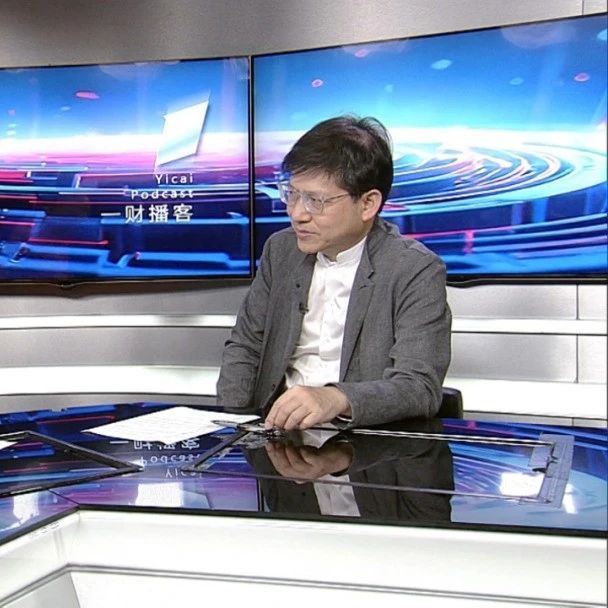
一财播客| 一财×蚂蚁对话AI时代的危与机
第一财经· 2025-05-19 09:20
Group 1 - The article discusses the impact of artificial intelligence on daily life and work, emphasizing the need for rational thinking amidst emotional and entertainment-driven social media [1][2] - It highlights the importance of understanding historical context to navigate current societal challenges and the potential threats posed by silicon-based life forms to humanity [1][2] - The discussion includes the evolution of artificial general intelligence (AGI) and its implications for personal wealth management [2] Group 2 - The article addresses the changing landscape of investment habits, questioning the value of traditional assets like school district properties and suggesting new asset allocation strategies [2] - It emphasizes the need for a reevaluation of insurance, recognizing its service nature and the vast market potential it holds [2] - The challenges and responses related to retirement insurance are explored, alongside the role of technological advancements and corporate social responsibility in supporting retirement planning [2]