
中医药传承创新发展

Search documents
中山:2026年将改建扩建3个镇街医院
Nan Fang Du Shi Bao· 2026-02-04 07:52
Core Viewpoint - The report emphasizes the acceleration of healthcare infrastructure development in Zhongshan, including the construction of new hospital facilities and the enhancement of existing healthcare services to improve the distribution of quality medical resources [1] Group 1: Healthcare Infrastructure Development - By 2026, Zhongshan will expedite the construction of the comprehensive building for the Municipal Traditional Chinese Medicine Hospital and the new area for the Municipal People's Hospital [1] - The city plans to renovate and expand three town hospitals in Nan District, Tanzhou, and Dayong, while strengthening regional central hospitals in Xiaolan, Torch, and Huangpu [1] Group 2: Healthcare Services Enhancement - The city will continue the "Thousand Doctors Entering the Grassroots Service" initiative to promote the expansion and balanced distribution of quality medical resources [1] - There will be a focus on the inheritance and innovative development of traditional Chinese medicine, with high standards set for the construction of a national demonstration pilot city for traditional Chinese medicine [1] - The report highlights the importance of maternal and child health services, aiming for a maternal system and children's health management rate of 90%, and an initial screening rate for childhood autism exceeding 60% [1]
绘就健康底色 书写民生答卷
Xin Lang Cai Jing· 2026-01-30 19:41
Core Viewpoint - The article emphasizes the significant improvements in healthcare services and accessibility in the region, driven by strategic investments and reforms during the "14th Five-Year Plan" period. Group 1: Investment and Infrastructure Development - The regional health authority is increasing investments to enhance the healthcare system, focusing on building regional medical centers and specialized departments in hospitals [2][3] - A total of 100 specialized departments are being established in group hospitals, alongside the implementation of a paired support program to improve healthcare resource distribution [2] Group 2: Service Improvement and Accessibility - The establishment of the first national regional medical center has been completed, creating a comprehensive "3+6" medical service system across the region [3] - The implementation of convenient services, such as "one registration covers three days," has been expanded to all secondary hospitals, improving patient experience [4] - Home healthcare services are being provided to elderly patients, with a family doctor signing rate of 97.33% for key populations [5] Group 3: Health Management and Preventive Care - The management of chronic diseases has evolved from periodic follow-ups to real-time monitoring and proactive intervention, with 1,477 "1+N" family doctor service teams established [8] - The region has seen an increase in life expectancy from 77.3 years in 2020 to 78.43 years in 2024, alongside an improvement in health literacy from 18.2% to 22.08% [8]
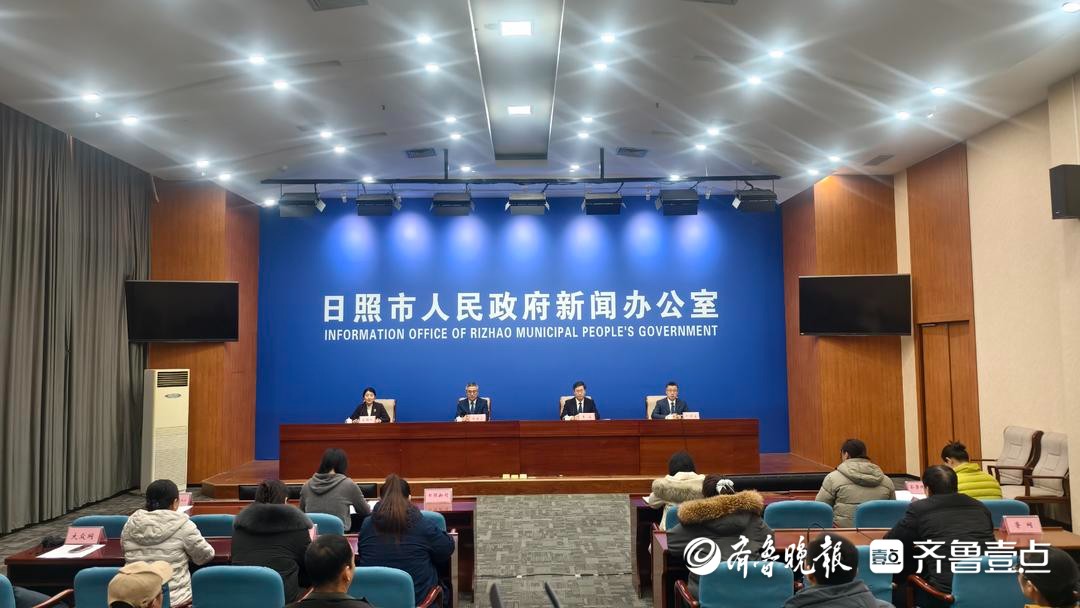
“十四五”期间健康日照建设成效显著,卫生健康事业高质量发展
Qi Lu Wan Bao· 2026-01-29 06:54
Core Viewpoint - Rizhao City has achieved high-quality development in health and wellness during the "14th Five-Year Plan" period, with key health indicators surpassing national and provincial averages [1] Group 1: Health Priorities and Strategic Planning - The "14th Five-Year Plan" prioritizes health throughout development, introducing the "Healthy Rizhao 2030 Planning Outline" and becoming the only national pilot city for health impact assessment in the province [3] - The health literacy level of residents has increased to 36.92%, a significant rise of 14 percentage points compared to the end of the "13th Five-Year Plan" [3] Group 2: Medical Resource Enhancement - The number of hospital beds in the city increased from 16,300 to 19,700, a growth of 20.34%, while the number of health technicians rose from 20,800 to 25,100, a 20.67% increase [3] - Key medical projects, including the People's Hospital emergency building and the Rizhao Regional Traditional Chinese Medicine Center, have been completed, enhancing the quality of medical services [4] Group 3: Healthcare System Reforms - The city has implemented a series of policies to improve the basic medical and health system, with digital empowerment becoming a significant breakthrough [4] - The establishment of a national health information platform has achieved the highest domestic rating, facilitating convenient online medical services [4] Group 4: Traditional Chinese Medicine Development - Rizhao City has introduced policies to promote the innovation and development of traditional Chinese medicine, signing a strategic cooperation agreement with Shandong University of Traditional Chinese Medicine [5] - The city has established five high-quality "National Medicine Halls" and 55 upgraded township "National Medicine Halls," enhancing the presence of traditional Chinese medicine [5] Group 5: Public Health Services - The restructuring of disease prevention and control institutions has significantly strengthened public health service capabilities, with standardized construction showing notable results [6] - The city has built a four-level reporting network for foodborne illnesses, enhancing food safety monitoring [6] Group 6: Comprehensive Health Services - The city has focused on health services for all demographics, completing free screenings for 285,000 eligible women and benefiting 65,000 pregnant women and newborns through health projects [7] - The number of childcare places per thousand population has reached 4.94, alleviating family childcare pressures [7] - The city has implemented a three-year action plan for integrated medical and nursing services, establishing 60 institutions to provide quality health and elderly care services [7]

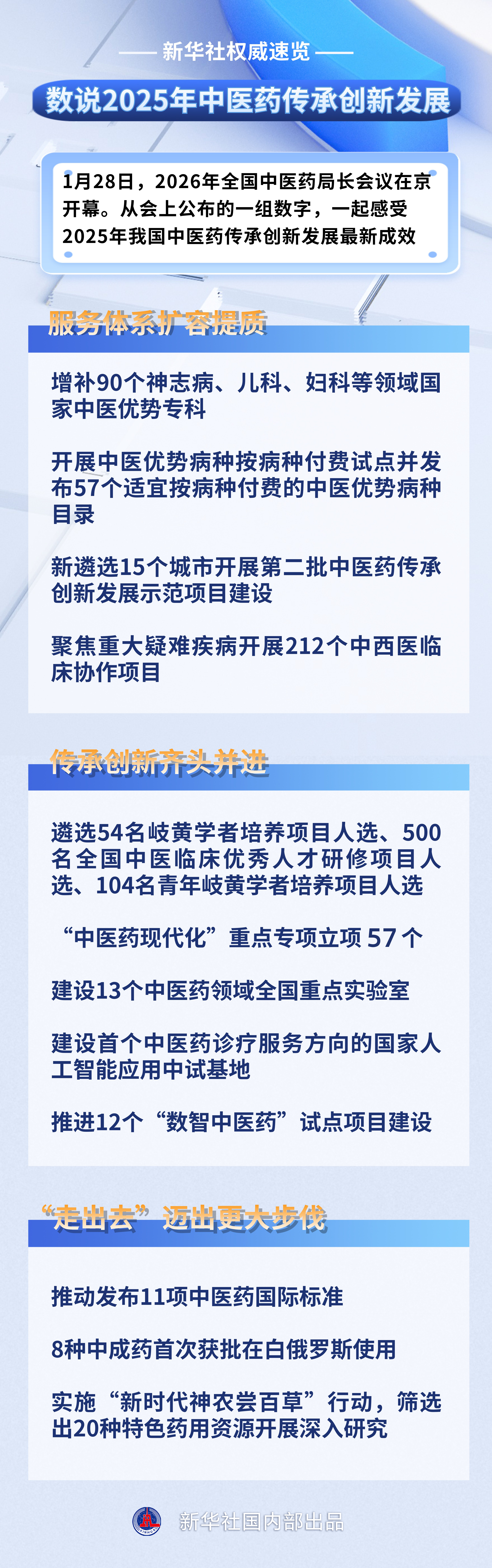
新华社权威速览丨数说2025年中医药传承创新发展
Xin Hua She· 2026-01-28 09:20
Group 1 - The core viewpoint of the article emphasizes the development and promotion of traditional Chinese medicine (TCM) through various initiatives and projects aimed at enhancing its modern application and international outreach [1][2][3]. Group 2 - The article mentions the selection of 15 innovative development demonstration projects focusing on major clinical collaboration initiatives [3]. - It highlights the establishment of 57 suitable directories to enhance the service system of TCM, aiming to integrate TCM advantages into healthcare [2]. - The article discusses the promotion of 20 types of characteristic medicines and the implementation of 11 innovative applications in the field of TCM [8][9].
中医药如何传承创新发展?国家中医药局指路
2 1 Shi Ji Jing Ji Bao Dao· 2026-01-28 03:25
Core Viewpoint - The Chinese government is promoting the integration and innovation of traditional Chinese medicine (TCM) through the successful experience of the Sanming medical reform, aiming to enhance TCM services and improve public health outcomes [1][2]. Group 1: Policy and Implementation - The National Health Commission has introduced policies to accelerate the high-quality development of county-level TCM hospitals and encourage the formation of county medical communities led by these hospitals [2]. - Currently, there are 3,099 tightly-knit county medical communities established across 2,199 counties and cities in China, with over 40% of county-level TCM hospitals taking the lead in forming these communities [2]. Group 2: Changes in Development - The establishment of county medical communities has led to a shift in development concepts, with some regions adopting a dual leadership model involving both county-level general hospitals and TCM hospitals, promoting a complementary and collaborative approach between Western and traditional medicine [2]. - In Anhui Province, 58 counties have adopted this model, serving over 15 million people, which accounts for more than 40% of the county's population [2]. Group 3: Enhancements in Medical Services - The formation of county medical communities has improved diagnostic and treatment capabilities, allowing TCM's holistic approach and suitable techniques to be widely recognized and integrated into primary healthcare [3]. - In Shandong Province, public hospitals have fully promoted five comprehensive service models of TCM, extending quality TCM services to grassroots healthcare institutions and establishing 242 TCM specialty health centers [2][3]. Group 4: Service Model Innovations - TCM hospitals are leading the integration of TCM service resources at the county level, promoting a healthcare system that combines prevention, treatment, and rehabilitation [3]. - In Deqing County, Guangdong Province, a health management specialty outpatient clinic has been established, forming disease prevention and treatment teams that collaborate with family doctors, creating a "general + specialty" team model [3]. Group 5: Future Directions - The National Administration of Traditional Chinese Medicine plans to strengthen demonstration and leadership by promoting the Sanming medical reform experience in designated areas, aiming to set benchmarks for TCM innovation and public health benefits [3].
让岐黄之术造福更多人
Xin Lang Cai Jing· 2026-01-27 16:55
Core Viewpoint - The article highlights the significant advancements in traditional Chinese medicine (TCM) through the promotion of the Sanming medical reform experience, which aims to enhance accessibility and innovation in TCM services across the country [1]. Group 1: Accessibility of TCM Services - The coverage rate of TCM services in grassroots medical institutions has reached 97%, with 99% of township health centers and community health service centers providing TCM services, significantly improving public access [2]. - In Sichuan, all community health service stations and 98.8% of village clinics can offer TCM services, establishing a "10-minute accessibility circle" for urban and rural residents [2]. - By 2030, all township health centers and community health service centers are expected to implement at least 15 types of TCM techniques [2]. Group 2: Talent Development in TCM - A comprehensive approach to developing TCM talent includes establishing a salary system that ensures TCM practitioners earn at least the average salary of their peers in the same institution [3]. - In Sanming, there are 118 national and provincial-level TCM talents, with a TCM practitioner density of 6.4 per 10,000 people, ranking high in Fujian Province [3]. - Sichuan has established a talent pool in 120 counties, training over 5,000 TCM professionals and creating 154 national grassroots TCM expert inheritance studios [3]. Group 3: Health Management Across Lifespan - TCM is increasingly integrated into health management throughout the life cycle, with initiatives to promote TCM knowledge and practices among the public [4]. - The "Healthy China" initiative includes TCM cultural activities that have reached approximately 15 million people, aiming to raise the public's TCM health literacy to 26.85% by 2024 [4]. Group 4: Focus on Key Demographics - Nationwide, all three-tier public TCM hospitals now offer pediatric services, and over 1,300 maternal and child health institutions have established TCM departments [5]. - The establishment of 128 pilot elderly TCM health centers aims to enhance TCM services for the aging population, with 1.54 billion TCM health assessments planned for individuals aged 65 and above by 2024 [5]. - The Sanming medical reform experience is being promoted nationwide, creating a comprehensive and accessible TCM service network that benefits more citizens [5].
让岐黄之术造福更多人——解码医改里的中医药“惠民密码”
Xin Hua She· 2026-01-26 14:01
Core Insights - The article discusses the promotion of traditional Chinese medicine (TCM) through healthcare reforms, highlighting the increased accessibility and integration of TCM services across various regions in China [1] Group 1: Accessibility of TCM Services - The coverage rate of TCM services in grassroots medical institutions has reached 97%, with 99% of town health centers and community health service centers providing TCM services, significantly improving public access [2] - In Sichuan, all community health service stations and 98.8% of village clinics can offer TCM services, establishing a "10-minute accessibility circle" for urban and rural TCM services [2] - By 2030, all town health centers and community health service centers are expected to provide at least 15 types of TCM techniques [2] Group 2: Talent Development in TCM - A new compensation system has been established in Sanming City to ensure that TCM practitioners earn at least the average salary of their peers in the same institution, promoting talent retention [3] - Sanming City has 118 national and provincial-level TCM talents, with a TCM practitioner density of 6.4 per 10,000 people, ranking high in Fujian Province [3] - Sichuan has created a talent pool for 120 counties, training over 5,000 TCM professionals through various programs [3] Group 3: Comprehensive Health Management - TCM is increasingly integrated into health management throughout the life cycle, with initiatives to disseminate scientific TCM knowledge to the public [4] - Health promotion activities have reached approximately 15 million people, aiming to enhance the public's understanding of TCM health culture [4] - By 2024, the health literacy level regarding TCM among Chinese citizens is projected to rise to 26.85% [4] Group 4: Focus on Key Demographics - National efforts have led to full coverage of pediatrics in public TCM hospitals and the establishment of TCM departments in over 1,300 maternal and child health institutions [5] - The construction of geriatric departments in TCM hospitals is being strengthened, with 128 pilot centers for elderly TCM health established nationwide [5] - By 2024, TCM physical constitution identification services are expected to reach 154 million instances for individuals aged 65 and above [5]
国家中医药局:接下来要具体做四项工作推广三明医改经验
Xin Hua She· 2026-01-26 14:01
Group 1 - The core viewpoint of the article is the promotion of the Sanming healthcare reform experience and the development of traditional Chinese medicine [2] Group 2 - The National Health Commission held a press conference on January 26 to discuss the promotion of Sanming healthcare reform experiences [2] - Yan Huaguo, Director of the Department of Integrated Traditional Chinese and Western Medicine and Ethnic Medicine of the National Administration of Traditional Chinese Medicine, outlined four specific tasks to promote the Sanming healthcare reform experience [2]
国家中医药局:正开展儿童青少年近视、肥胖中医药干预试点
Jing Ji Guan Cha Wang· 2026-01-26 09:43
Core Viewpoint - The National Health Commission of China is promoting the integration of traditional Chinese medicine (TCM) into the healthcare system, focusing on enhancing services for key demographics such as youth, women, and the elderly [1][2]. Group 1: TCM Integration and Services - TCM has been fully integrated into the Healthy China initiative, with the National Administration of Traditional Chinese Medicine providing health services to over 154 million elderly individuals [1]. - Nationwide, there is full coverage of pediatric services in public TCM hospitals, with over 1,300 maternal and child health institutions establishing TCM departments [1]. - More than 83% of secondary and higher public TCM hospitals have established departments for geriatric care, and 128 pilot elderly TCM health centers have been launched to improve regional service capabilities [1]. Group 2: Strengthening TCM Infrastructure - The National Administration of Traditional Chinese Medicine is leading the development of a TCM action plan under the Medical and Health Strong Foundation Project, aiming to enhance service capabilities and infrastructure in county-level TCM hospitals and grassroots healthcare institutions [2]. - The plan includes increasing the proportion of TCM practitioners in township health centers and community health service centers to 25% by optimizing talent recruitment and retention strategies [2]. - By 2030, the goal is for 100% of township health centers and community health service centers to offer at least 15 types of TCM techniques [2]. Group 3: Future Directions - The National Administration of Traditional Chinese Medicine will summarize and promote successful local experiences, creating model cities and counties for grassroots TCM work to meet the health service needs of urban and rural residents [3].
全国县办中医医疗机构覆盖率已达96%以上
Bei Jing Shang Bao· 2026-01-26 09:00
Core Viewpoint - The National Health Commission of China is promoting the experience of the Sanming medical reform and the development of traditional Chinese medicine (TCM) [1] Group 1: TCM Service Expansion - The grassroots TCM service system has been continuously strengthened and expanded in recent years [1] - The coverage rate of county-level TCM medical institutions has reached over 96% nationwide [1] - The coverage rate of TCM clinics in grassroots medical and health institutions has reached 97% [1] Group 2: Accessibility of TCM - 99% of township hospitals and community health service centers are able to provide TCM services [1] - The accessibility and convenience of TCM for the public have significantly improved [1]