中国汽车产业出海

Search documents
到欧洲北非去系列之四|西班牙,正上演中国汽车的“诺曼底登陆”
汽车商业评论· 2026-01-17 23:06
Core Viewpoint - The article discusses the strategic importance of Spain as a key entry point for Chinese automotive companies into the European market, highlighting various partnerships and investments that are reshaping the automotive landscape in Spain and beyond [4][12][20]. Group 1: Chinese Automotive Expansion in Spain - The establishment of a joint venture, EBRO, between Chery Automobile and Spanish company EV Motor in Barcelona marks a significant step in revitalizing the local automotive industry [6][24]. - Other Chinese companies, such as Leap Motor and Dongfang Automotive, are also setting up manufacturing bases in Spain, indicating a broader trend of Chinese automotive firms entering the European market [9][12]. - The article emphasizes that Spain serves as a strategic hub for Chinese automotive companies to access the EU market, leveraging its favorable trade conditions and logistical advantages [20][28]. Group 2: Economic and Market Context - Spain is the fifth largest new car market in the EU, with new car registrations expected to reach approximately 1.017 million in 2024, reflecting a 7.1% year-on-year growth [18]. - The EU's electric vehicle penetration rate is around 38%, making it a lucrative market for Chinese electric vehicle manufacturers [16]. - The article notes that by 2025, Chinese electric vehicle brands had captured over 11% of the European market share, indicating significant growth potential [16]. Group 3: Strategic Advantages of Spain - Spain's geographical position allows for efficient access to key markets in Europe, Latin America, and North Africa, enhancing the logistics and distribution capabilities for Chinese automotive firms [20][28]. - The country offers attractive tax incentives for new automotive ventures, including tax reductions and subsidies for companies that create jobs and invest in local production [27][28]. - The existing automotive ecosystem in Spain, characterized by a mature supply chain and skilled workforce, provides a conducive environment for Chinese companies to establish operations and innovate [34][35]. Group 4: Challenges and Adaptation - Chinese automotive companies face challenges in fully integrating into the local market and supply chain, necessitating a deep commitment to local partnerships and community engagement [29][32]. - The article highlights Chery's strategic approach of leveraging local assets and forming partnerships to mitigate risks associated with entering the European market [24][29]. - The need for Chinese firms to adapt to local regulations and consumer preferences is emphasized as crucial for long-term success in Spain and the broader European market [29][32].






到欧洲北非去之一|走进克拉科夫,感受波兰中欧新桥头堡
汽车商业评论· 2025-12-31 03:13
Core Viewpoint - The article discusses the efforts of the Xuanyuan Class and the World New Automotive Ecology Association to promote the globalization of the Chinese automotive industry, highlighting the importance of Poland as a strategic hub for Chinese automotive companies expanding into Europe [4][7]. Group 1: Xuanyuan Class and Globalization Efforts - The Xuanyuan Class and the World New Automotive Ecology Association aim to create a strong new automotive cooperation ecosystem and facilitate the globalization of the Chinese automotive industry [4]. - A business visit to Europe and North Africa was conducted by Dr. Jia Ke, leading to significant networking opportunities for Chinese automotive professionals [5][6]. Group 2: Development of Jingxi Zhixing in Poland - Jingxi Zhixing's Krakow Technology Center employs over 300 R&D personnel, focusing on suspension and braking systems, and has a sales revenue of less than 3 billion RMB, serving major European automotive companies [8][10]. - The company has undergone significant management restructuring to enhance its global competitiveness, including a shift towards local talent and a focus on cost control and efficiency [11][19]. Group 3: Poland as a Strategic Location - Poland is positioned as a "golden crossroads" in Europe, facilitating trade and logistics, with 90% of Central European trains passing through [22]. - The country offers significant advantages such as lower manufacturing costs, a skilled labor force, and a favorable investment environment, making it attractive for Chinese automotive companies [24][25]. Group 4: Challenges and Risks - The article highlights geopolitical risks, including high tariffs imposed by the EU on Chinese electric vehicles, which could hinder market entry for some companies [25]. - Cultural and compliance challenges exist, with language barriers affecting operational efficiency and local holidays impacting production schedules [27]. Group 5: Krakow as a Tech Hub - Krakow is recognized as a high-value European tech hub, with a strong talent pool and favorable business conditions, including tax incentives for manufacturing investments [34][41]. - The city has a robust educational infrastructure, producing a significant number of graduates in automotive and engineering fields, which supports the local industry [37][38].

重磅|欢迎加入2025慕尼黑轩辕新汽车之夜暨欧洲-北非商务考察之旅
汽车商业评论· 2025-07-16 15:24
Core Viewpoint - The Chinese automotive industry's expansion into international markets is no longer a choice but a necessity for survival and long-term development [18][19]. Group 1: Overview of the Business Delegation - The 2025 Xuanyuan New Automotive Night and Europe-North Africa Business Delegation will take place from September 6 to September 18, covering six countries and nine cities, visiting over ten companies [4][20]. - The delegation aims to provide insights into the global market and connect industry resources, starting with participation in the Munich Auto Show [5][20]. Group 2: Countries and Companies Visited - The delegation will visit Germany, Poland, Hungary, Serbia, Spain, and Morocco, focusing on Chinese supply chain enterprises and related manufacturers [6][20]. - Morocco is highlighted as a unique "springboard" for the Chinese automotive industry to enter the European and American markets due to its zero-tariff policy and low-cost manufacturing advantages [7][20]. Group 3: Purpose and Invitation - The trip serves as a deep market research opportunity amidst both crises and opportunities, encouraging professionals in the automotive supply chain to join [8][21]. - The event is organized by the World New Automotive Technology Cooperation Ecological Association in collaboration with Xuanyuan students, with a registration deadline of July 31, 2025, for Schengen visa assistance [11][21].

反超特斯拉!中国电车突围
Zhong Guo Xin Wen Wang· 2025-06-04 13:41
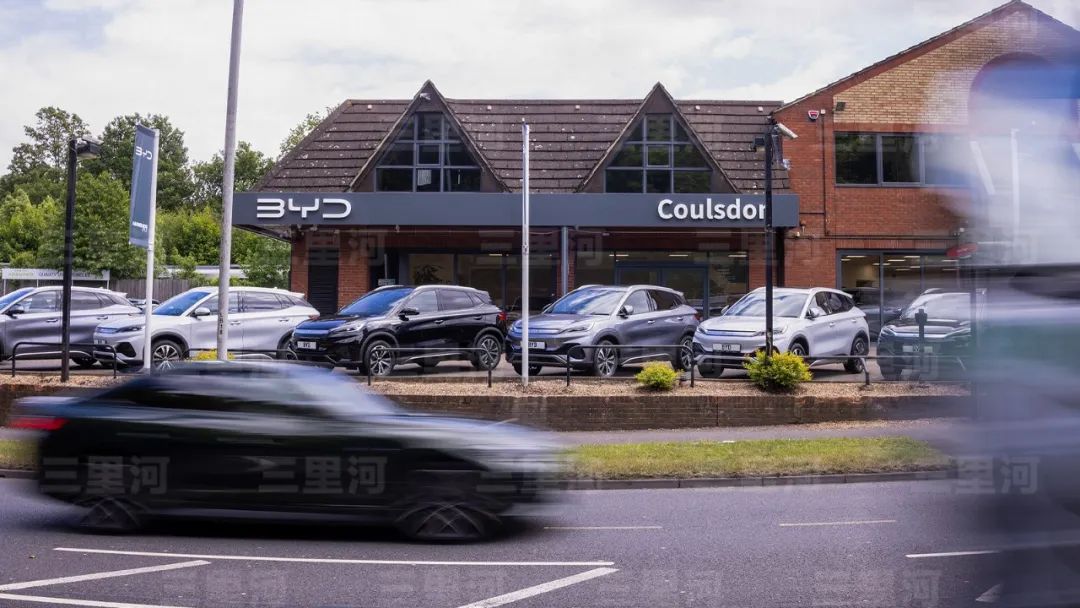
Core Insights - Chinese electric vehicle (EV) manufacturers, particularly BYD, are reshaping the global automotive landscape, with BYD surpassing Tesla in pure electric vehicle registrations in Europe for the first time in April 2025, marking a significant milestone [1][4] - Despite facing high tariffs imposed by the EU, Chinese brands have shown remarkable growth in the European market, with a 59% year-on-year increase in pure electric vehicle sales, outpacing the 26% growth of European, Japanese, and American automakers [6][8] - The comprehensive development of China's automotive industry, from vehicle manufacturing to battery research and intelligent driving systems, has enabled these brands to maintain competitive pricing and rapid product development [5][9] Market Dynamics - The European market, traditionally dominated by established brands like Mercedes, BMW, and Audi, is witnessing the rise of Chinese automakers, which are becoming a significant force despite the challenges posed by tariffs [3][4] - The EU's imposition of tariffs up to 45.3% on Chinese-made pure electric vehicles aims to protect local manufacturers, yet Chinese EV prices remain lower than their European counterparts [5][6] Sales Performance - In April 2025, BYD's sales of plug-in hybrid models surged over 300%, indicating a strong demand for these vehicles in Europe, where tariffs on hybrids are less restrictive [7] - The overall production and sales of Chinese automobiles exceeded 10 million units for the first time in history in the first four months of 2025, with 642,000 units of new energy vehicles exported, reflecting a 52.6% year-on-year growth [8] Strategic Expansion - Chinese automakers are actively expanding into international markets, with BYD entering Switzerland, Xiaopeng Motors targeting Bahrain, and Zhiji Motors launching in Australia [8] - The industry is also enhancing its supply chain capabilities, with companies like CATL investing $1.2 billion in a battery factory in Indonesia and BYD's first European factory in Hungary set to commence production [8][9] Competitive Advantage - Continuous investment in technology and innovation has allowed Chinese companies to excel in vehicle models, configurations, range, and responsiveness to market demands, positioning them favorably in the global market [9] - As Chinese automakers build overseas factories and enhance their logistics capabilities, they are expected to see sustained growth in international sales, capitalizing on the evolving global trade environment [9]