
中国特色高水平高职学校和专业建设计划

Search documents
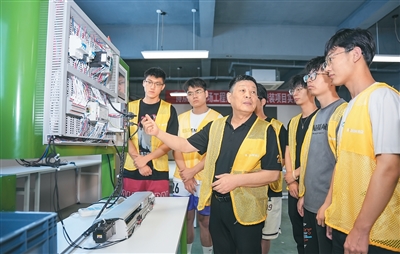
产教联合体 精准育人才
Ren Min Ri Bao Hai Wai Ban· 2025-12-24 01:20
Group 1 - The core viewpoint emphasizes the importance of vocational education in supporting China's transition from "Made in China" to "Created in China" and "Intelligent Manufacturing" [2] - During the "14th Five-Year Plan" period, vocational education has supplied over 70% of the newly added high-quality skilled talents for modern industries, contributing to economic and social development [2] - The establishment of regional industry-education integration bodies has improved the alignment of talent training with regional economic and industrial development [2] Group 2 - The "15th Five-Year Plan" suggests enhancing the operational capabilities of vocational schools and building distinctive higher vocational institutions [3] - The integration of vocational education with industry is expected to produce more skilled craftsmen and enhance the dual-win relationship between vocational education and industrial development [3] - The implementation of the second phase of the "High-Level Higher Vocational Schools and Professional Construction Plan" aims to open industry standards and resources to vocational schools, allowing students to gain practical experience in real production environments [2]

食品安全、振兴县中…一文读懂“十四五”教育强国建设“成绩单”
Xin Jing Bao· 2025-09-23 12:22
Core Viewpoint - The Chinese education system has achieved significant advancements, establishing a high-quality and large-scale education framework that ensures equal access for children, recognized internationally for its achievements in STEM education [1][2]. Group 1: Basic Education Achievements - China's basic education has reached the average level of high-income countries, with 2895 counties achieving basic balance in compulsory education and a gross enrollment rate of 92% in preschool education [2]. - The establishment of the International STEM Education Research Institute in Shanghai marks a significant recognition of China's education system by the international community [2]. - Comprehensive reforms in basic education are ongoing, focusing on reducing competition and anxiety among students through changes in resource allocation and examination reforms [2]. Group 2: Student Health and Safety - The "Student Physical Fitness Enhancement Plan" has been implemented, increasing physical education classes and extending break times to promote student health [3]. - A nationwide initiative to prevent myopia among students has shown a decrease in overall myopia rates compared to five years ago [3]. - The Ministry of Education is actively addressing food safety in schools, implementing strict guidelines and training for food service personnel to ensure the safety of school meals [4]. Group 3: Higher Education Developments - During the "14th Five-Year Plan" period, higher education has provided 55 million talents to society, with a gross enrollment rate rising from 30% in 2012 to 60.8% [5][6]. - Financial aid programs have reached approximately 150 million students annually, with total funding exceeding 1.2 trillion yuan, reflecting a 32% increase in annual investment compared to the previous five-year period [5]. - Higher education institutions are producing significant contributions to scientific research, with over 75% of national science and technology awards being awarded to universities [6]. Group 4: Vocational Education Growth - Vocational education has seen the establishment of 63 new vocational bachelor's degree programs, contributing to the training of over 70% of new high-quality skilled talents in modern industries [7][8]. - The vocational education system encompasses various levels, with a total of 9302 secondary vocational schools and 1562 higher vocational schools, serving 34 million students [7]. - Efforts are being made to enhance the quality of vocational education through partnerships with industries and the implementation of high-level vocational school plans [8]. Group 5: Teacher Development and Support - The overall structure and quality of the teaching workforce have improved, with initiatives aimed at attracting talented individuals to the teaching profession and enhancing teacher training programs [9][10]. - Policies have been implemented to ensure that teachers' salaries are competitive with local civil service wages, particularly benefiting rural teachers [10]. - The Ministry of Education has reduced the administrative burden on teachers by over 65%, allowing them to focus more on educational quality [11].