
教育家精神铸魂强师行动

Search documents
新增高等教育资源将向人口大省和中西部倾斜
21世纪经济报道· 2026-01-09 11:41
Group 1: Core Views - The 2026 National Education Work Conference outlines eight key tasks across basic education, higher education, and vocational education, emphasizing the importance of adapting to demographic changes and improving educational quality [1][4][5]. Group 2: Basic Education - All provinces will implement reforms in basic education resource allocation to better respond to changes in school-age populations, including initiatives like the revitalization of county-level high schools and deepening middle school entrance examination reforms [1][5]. - The conference emphasizes the need to maintain educational equity and provide quality education, with specific goals for preschool enrollment rates and completion rates in secondary education by 2027 and 2035 [3][5]. Group 3: Higher Education - The conference calls for a new round of "Double First Class" construction, focusing on optimizing the structure of higher education to meet national and regional strategic needs, particularly in populous provinces and the central and western regions [8][9]. - Plans include expanding the number of "Double First Class" universities from 147 to around 200, with a focus on emerging disciplines such as artificial intelligence and engineering [9][10]. Group 4: Vocational Education - The vocational education system is set to accelerate its development, with a focus on high-skill talent cultivation and integrating education with industry needs, particularly in advanced manufacturing sectors [13][14]. - The "Cluster Training" model will be explored to enhance the quality and scale of vocational education, addressing the growing demand for skilled labor in various industries [14].


详解全国教育工作会议:新增高等教育资源向人口大省和中西部倾斜
2 1 Shi Ji Jing Ji Bao Dao· 2026-01-09 10:17
Core Insights - The 2026 National Education Work Conference outlined eight key tasks across basic education, higher education, and vocational education, emphasizing the need for reforms to adapt to population changes and improve educational quality [2][3][4]. Basic Education - All provinces will implement reforms in basic education resource allocation to adapt to population changes, including actions to revitalize ordinary high schools and deepen middle school entrance examination reforms [2][4]. - Key indicators related to basic education include achieving a gross enrollment rate of 93% in preschool education by 2027 and 86% in high school education by the same year [5][6]. - The conference emphasized the importance of maintaining educational equity and providing quality education, alongside initiatives like promoting healthy school construction and integrating artificial intelligence into education [5][6]. Higher Education - A new round of "Double First-Class" construction will be initiated, focusing on optimizing the structure of higher education to meet national and regional strategic needs [3][7]. - The government plans to direct new higher education resources towards populous provinces and central and western regions, enhancing support mechanisms for these areas [8][9]. - The aim is to expand the "Double First-Class" initiative from 147 to approximately 200 institutions, focusing on emerging disciplines and reinforcing the development of foundational and specialized fields [7][10]. Vocational Education - The vocational education system is set to accelerate its development, with a focus on high-quality talent cultivation in key industries such as new energy vehicles [11][12]. - The "Cluster Training" model will be explored to enhance the core competencies of high-skilled talent, addressing the needs of modern industries [12][13]. - There is a growing recognition of vocational education, with an increasing number of students, including those with university degrees, returning to vocational schools to acquire skills [13].
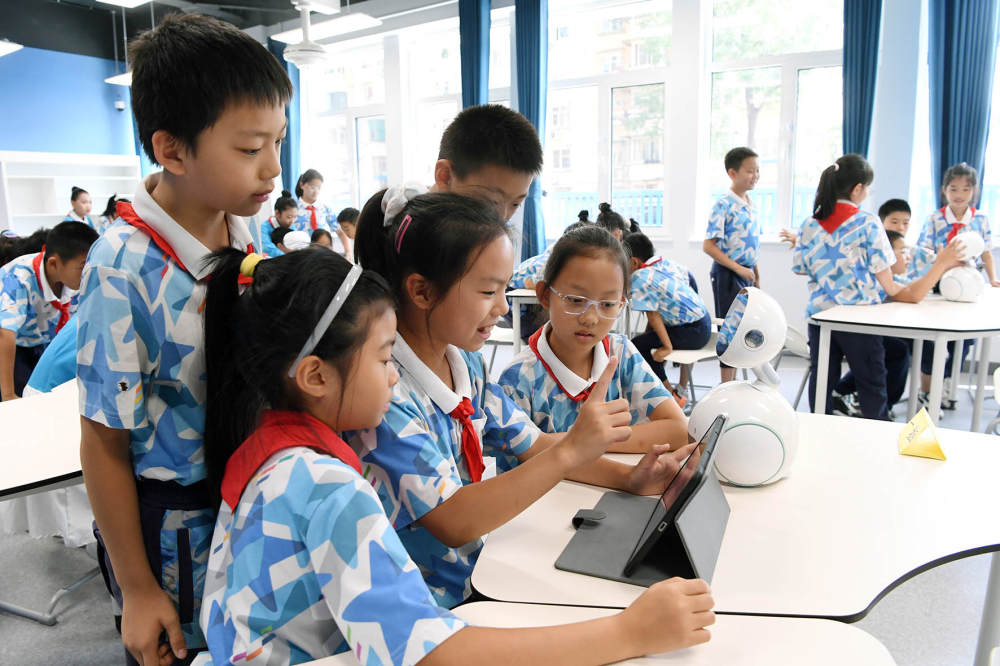
食品安全、振兴县中…一文读懂“十四五”教育强国建设“成绩单”
Xin Jing Bao· 2025-09-23 12:22
Core Viewpoint - The Chinese education system has achieved significant advancements, establishing a high-quality and large-scale education framework that ensures equal access for children, recognized internationally for its achievements in STEM education [1][2]. Group 1: Basic Education Achievements - China's basic education has reached the average level of high-income countries, with 2895 counties achieving basic balance in compulsory education and a gross enrollment rate of 92% in preschool education [2]. - The establishment of the International STEM Education Research Institute in Shanghai marks a significant recognition of China's education system by the international community [2]. - Comprehensive reforms in basic education are ongoing, focusing on reducing competition and anxiety among students through changes in resource allocation and examination reforms [2]. Group 2: Student Health and Safety - The "Student Physical Fitness Enhancement Plan" has been implemented, increasing physical education classes and extending break times to promote student health [3]. - A nationwide initiative to prevent myopia among students has shown a decrease in overall myopia rates compared to five years ago [3]. - The Ministry of Education is actively addressing food safety in schools, implementing strict guidelines and training for food service personnel to ensure the safety of school meals [4]. Group 3: Higher Education Developments - During the "14th Five-Year Plan" period, higher education has provided 55 million talents to society, with a gross enrollment rate rising from 30% in 2012 to 60.8% [5][6]. - Financial aid programs have reached approximately 150 million students annually, with total funding exceeding 1.2 trillion yuan, reflecting a 32% increase in annual investment compared to the previous five-year period [5]. - Higher education institutions are producing significant contributions to scientific research, with over 75% of national science and technology awards being awarded to universities [6]. Group 4: Vocational Education Growth - Vocational education has seen the establishment of 63 new vocational bachelor's degree programs, contributing to the training of over 70% of new high-quality skilled talents in modern industries [7][8]. - The vocational education system encompasses various levels, with a total of 9302 secondary vocational schools and 1562 higher vocational schools, serving 34 million students [7]. - Efforts are being made to enhance the quality of vocational education through partnerships with industries and the implementation of high-level vocational school plans [8]. Group 5: Teacher Development and Support - The overall structure and quality of the teaching workforce have improved, with initiatives aimed at attracting talented individuals to the teaching profession and enhancing teacher training programs [9][10]. - Policies have been implemented to ensure that teachers' salaries are competitive with local civil service wages, particularly benefiting rural teachers [10]. - The Ministry of Education has reduced the administrative burden on teachers by over 65%, allowing them to focus more on educational quality [11].
省委教育工作领导小组召开会议
Shan Xi Ri Bao· 2025-06-12 22:36
Group 1 - The meeting emphasized the importance of implementing the "Guiding Principles" and the three-year action plan to build a high-quality education system in Shaanxi province, aiming to support the province's development and serve as a model for the western region [1] - The focus is on deepening the "Big Ideological and Political Course" reform and enhancing moral education effectiveness, aligning educational reforms with technological development and national strategies [1] - The meeting highlighted the need for optimizing university disciplines and professional settings to meet urgent talent demands, while also reforming the education and talent system to foster innovation and collaboration [1] Group 2 - The meeting called for measures to support employment for college graduates, including expanding job opportunities and providing assistance to vulnerable groups [2] - It stressed the importance of addressing issues in primary and secondary education, such as the "campus meal" initiative and systemic problems in higher education, to mitigate risks in the education sector [2] - The meeting also underscored the need for effective organization of the upcoming high school entrance examination and ensuring safety during the summer [2]