
中国经济结构调整

Search documents
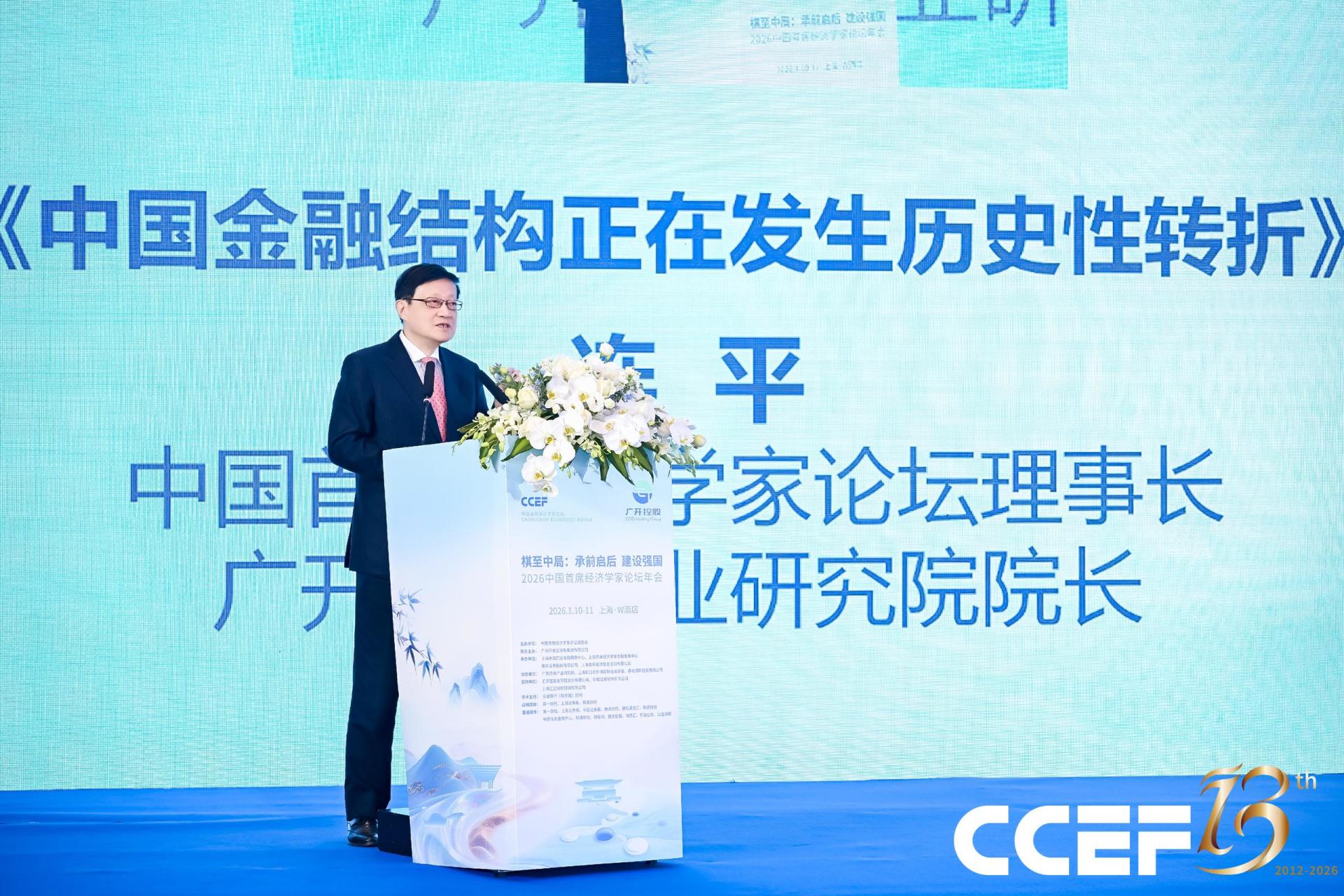
连平:直接融资占比逐步提升 反映出中国经济结构的深度调整
Mei Ri Jing Ji Xin Wen· 2026-01-10 13:34
Core Insights - The core viewpoint of the article is that China's financial structure is undergoing significant changes, with a notable shift towards direct financing, which is expected to continue growing and eventually surpass indirect financing in the coming years [1][4][6]. Group 1: Financial Structure Changes - Direct financing has been accelerating, with its incremental share steadily increasing, contrasting with the historical dominance of indirect financing [1][4]. - As of November 2025, the share of indirect financing dropped to 45.7%, while direct financing rose to 47.4%, marking a significant shift not seen in decades [4][6]. - The traditional reliance on bank credit for sectors like real estate and infrastructure is diminishing, as high-tech and strategic emerging industries are rapidly rising and require more direct financing support [1][4][6]. Group 2: Future Financing Landscape - The demand for financing in the fiscal sector is expected to remain strong, supporting market stability without significant contraction [5]. - Traditional sectors like real estate and infrastructure may see a slight rebound in financing needs, but they will not return to the previous high growth rates of 12% to 13% [5]. - The capital market is anticipated to develop positively, with a growing demand for stocks driven by high-tech industry listings and increased policy support [6]. Group 3: Implications of Direct Financing Growth - The ongoing optimization of China's financial structure is entering a critical phase, with direct financing likely to exceed 50% of the total financing landscape [6]. - This trend is expected to provide stable long-term funding, reduce financing costs, alleviate corporate debt pressure, and enhance capital allocation efficiency [6]. - The growth of direct financing may also address long-standing theoretical concerns regarding debt and leverage, potentially alleviating issues related to high M2 growth rates [6].

中信证券2025年春季宏观经济展望:蓄势待发
Zheng Quan Shi Bao Wang· 2025-03-18 00:09
Core Viewpoint - The report from CITIC Securities indicates that after three years of economic structural transformation, the share of real estate and its industrial chain in China's economy has decreased from 18% in 2020 to 10%-11% in 2024, while the share of strategic emerging industries has increased from 11.7% in 2020 to 14.1% in 2024, demonstrating initial success in the transition from old to new economic drivers [1] Economic Policy Outlook - The 2025 Two Sessions will feature a monetary policy that focuses more on the broad price system, while fiscal policy will retain reasonable space to address external challenges and weak domestic demand in a low inflation environment [1] - CITIC Securities believes that monetary policy will utilize both total and structural tools to improve the wealth effect for residents, thereby gently restoring consumer demand [1] - Fiscal policy is expected to moderately expand, focusing on enhancing social security to increase residents' marginal propensity to consume, as well as addressing debt issues and expanding investment to support economic growth [1] Economic Growth Forecast - After years of structural adjustments and innovation accumulation, China's economy is poised for a rebound [1] - Considering the potential drag of tax increases on the economy, which may primarily manifest in the second and third quarters, along with trends in domestic demand, inventory cycles, and profit cycles, CITIC Securities predicts a "U"-shaped growth for the economy in 2025, with an annual growth rate expected to remain around 5% [1]
