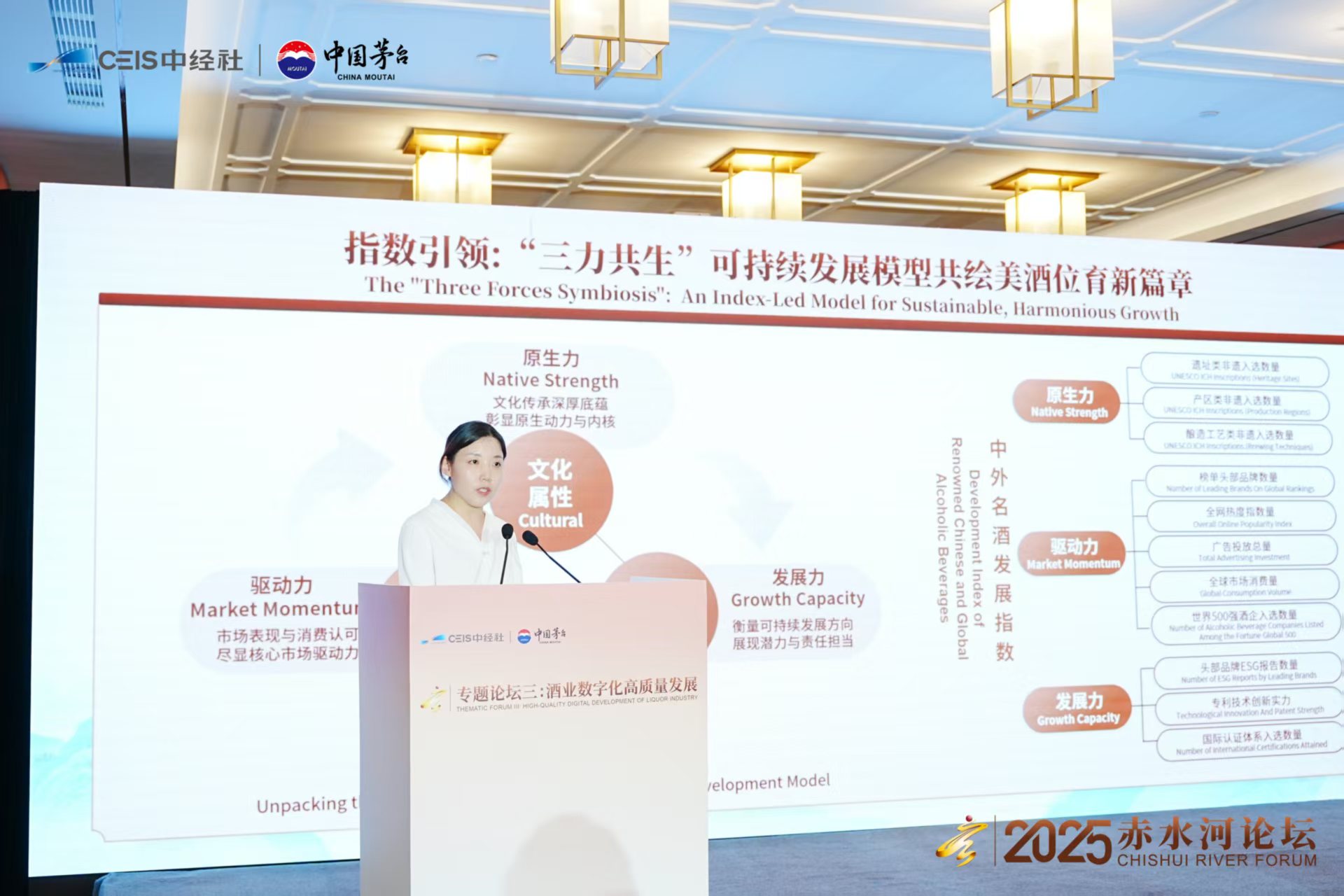
中外名酒发展指数

Search documents
中外名酒发展指数报告:啤酒、白酒、威士忌居九大品类酒前三
Bei Ke Cai Jing· 2025-10-31 07:07
Core Insights - The "2025 China and Foreign Famous Liquor Development Index Report" indicates a slowdown in the premiumization process of liquor consumption, with a rise in self-indulgent leisure consumption and health-conscious trends [1][5][6] Industry Trends - The global alcoholic beverage market is undergoing structural adjustments, showing resilience despite a 1% decline in total sales, with emerging markets like Brazil, South Africa, India, and Mexico driving growth due to younger demographics and rising disposable incomes [5] - There is a notable differentiation in consumption trends, with spirits (excluding local spirits) and ready-to-drink beverages being the only categories projected to grow from 2019 to 2024, while beer and wine sales are declining [5] Consumption Patterns - The trend towards premiumization is slowing, with mass-market liquor consumption stagnating or declining, while high-end liquor categories are experiencing significant growth, particularly in craft and specialty beers [6] - Consumers are shifting from ostentatious consumption to self-satisfying consumption, with a focus on personal values and situational needs, leading to a rise in categories like sparkling wine and aperitifs [6][7] Health Consciousness - There is an increasing emphasis on health, with consumers controlling alcohol intake and favoring non-alcoholic and low-alcohol products, as well as adopting a "zebra drinking pattern" among younger demographics [7] Market Positioning - The index ranks beer, baijiu, and whiskey as the top three categories, with beer maintaining a long-term lead due to its widespread consumption and cultural significance, while baijiu benefits from strong high-end brands and international recognition [9] - The competitive landscape in China shows a concentration of high-end baijiu, a duopoly in the beer market, and a regionally dominated wine market, with recommendations for strategic, market, product, and institutional innovations to enhance international competitiveness [10]
“中外名酒发展指数”亮相赤水河论坛,白酒跻身全球次席
Zhong Guo Jin Rong Xin Xi Wang· 2025-10-28 13:37
Core Insights - The global liquor market is experiencing significant changes, with Chinese liquor, particularly Baijiu, showing strong growth and potential for international expansion [1][15] - The inaugural "Chinese and Foreign Famous Liquor Development Index" indicates that Baijiu ranks second globally in 2024, surpassing whiskey, highlighting its historical significance and innovative capabilities [1][4] Industry Overview - The index evaluates nine major liquor categories, including Baijiu, whiskey, and beer, assessing their development levels and potential through a comprehensive framework [4][6] - Baijiu's index score has steadily increased over the past six years, particularly in the areas of driving force and development capability, supported by leading brands like Moutai and Wuliangye [6][12] Ranking and Performance - In the 2024 index, beer ranks first with a score of 95.85, followed by Baijiu at 63.80 and whiskey at 56.21, indicating Baijiu's strong market presence despite lower overall consumption compared to beer [4][9] - The report highlights that Baijiu's high-end market competitiveness is notable, with brands like Moutai becoming investment and collectible items [9][15] Cultural and Market Dynamics - The index emphasizes the cultural, social, and economic attributes of liquor, with Baijiu needing to enhance its global recognition and acceptance, as its export share is only 2.4% of the global spirits market [15][16] - The report suggests that the liquor industry's core competitiveness lies not only in the product but also in its cultural and historical value, advocating for a systematic cultural output strategy for Baijiu [15][16] Future Strategies - To enhance international competitiveness, the report recommends establishing international standards for Baijiu, promoting cultural narratives, and integrating ESG practices into business strategies [15][16] - The industry is urged to adapt to changing consumer preferences, focusing on product innovation and marketing strategies that cater to younger demographics and emerging markets [16]