
二次通胀风险

Search documents
美股高位回调,金融股遭“信用卡利率上限”重击!摩根大通、Visa跌超4%,CPI黏性制约降息预期、分析师警示二次通胀风险
Jin Rong Jie· 2026-01-14 00:29
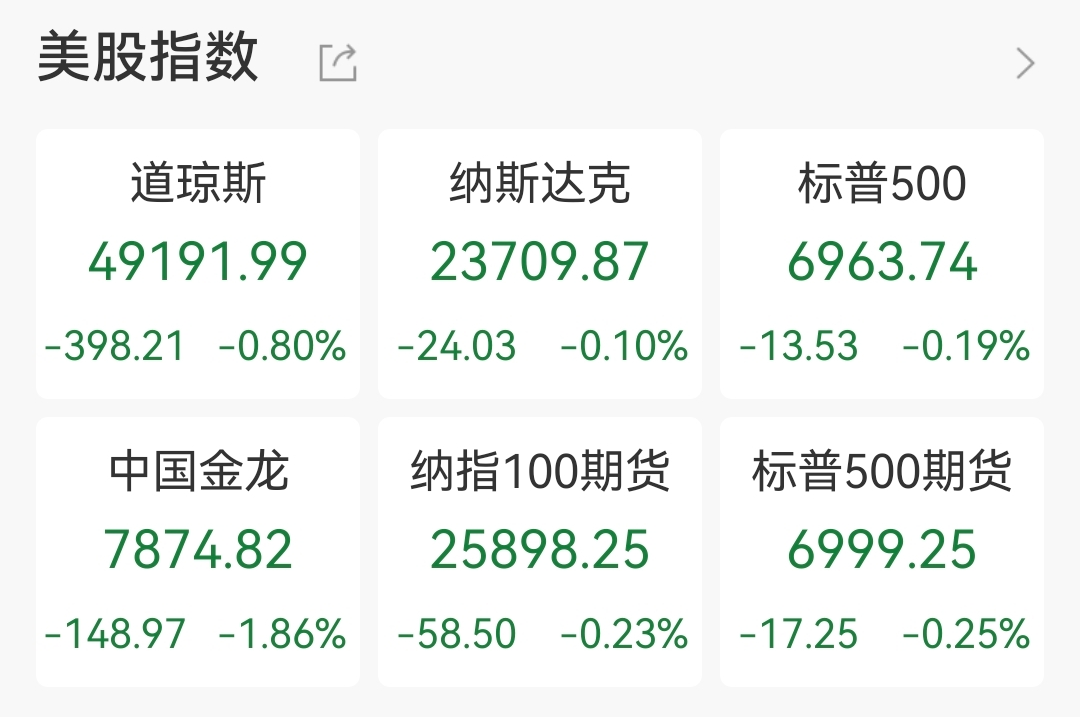
Market Overview - On January 13, U.S. stock markets experienced a correction, with all three major indices closing lower. The Dow Jones Industrial Average fell by 398.21 points, a decline of 0.8%, closing at 49,191.99 points. The S&P 500 index decreased by 0.19%, ending at 6,963.74 points, while the Nasdaq Composite index slightly dropped by 0.1%, closing at 23,709.87 points [1][2]. Sector Performance - The technology sector showed a mixed performance, with a notable divergence. Intel was a standout performer, with its stock price rising over 7%, reaching a nearly two-year high. AMD also saw a 6.39% increase, contributing to a 0.95% rise in the Philadelphia Semiconductor Index, which achieved a record closing high [2]. - Conversely, major tech giants like Meta, Amazon, and Microsoft experienced declines of over 1%, while Tesla saw a slight drop of 0.39%. The Nasdaq 100 index for U.S. tech giants ultimately fell by 0.22%, indicating internal discrepancies regarding earnings expectations and industry policies [3]. Financial Sector Challenges - The financial sector faced dual pressures from disappointing earnings and policy concerns. JPMorgan Chase reported adjusted revenues of $46.77 billion and net profits of $13 billion for Q4 2025, exceeding market expectations. However, weak performance in investment banking, with revenues of $2.35 billion down 5% year-over-year, was a significant shortfall [5][6]. - The announcement of a proposed 10% cap on credit card interest rates by President Trump raised concerns about potential impacts on bank profits and consumer credit availability. This led to a 4.23% drop in JPMorgan's stock, with Visa and Mastercard also declining by 4.41% and 3.79%, respectively. The S&P 500 financial sector fell by 1.84%, and the KBW Bank Index decreased by 1.3%, marking the largest two-day drop since mid-November [6]. Chinese Stocks Performance - Chinese stocks continued to face pressure, with the Nasdaq China Golden Dragon Index declining by 1.86%. Most stocks in this sector were in the red, with notable declines from companies like WeRide and Pony.ai, which fell over 10% and 9%, respectively. Pinduoduo dropped 5.4%, while NIO and Xpeng saw declines exceeding 3%. Alibaba was one of the few exceptions, rising slightly by 0.42% [6]. Commodity Market Highlights - In the commodities market, silver prices surged, reaching a historical high of $89.12 per ounce, with COMEX silver futures also setting records. The global silver market is expected to face a supply-demand gap exceeding 100 million ounces in 2025, continuing a trend of supply shortages for the fifth consecutive year [8]. - Gold prices experienced a mild pullback, settling around $4,588 per ounce, while international oil prices rose to their highest levels since October, with WTI crude oil increasing by 2.77% to $61.15 per barrel due to geopolitical risks [10].

2026年度展望:海外政策&海外宏观
2025-11-26 14:15
Summary of Key Points from the Conference Call Industry and Company Overview - The discussion primarily revolves around the U.S. economy and the implications of the 2026 midterm elections under the Trump administration, focusing on fiscal and monetary policies, inflation, and investment opportunities in AI and gold. Core Insights and Arguments - **Economic Outlook**: The U.S. economy is expected to experience a rebound in the second half of 2026 after a short-term impact from government shutdowns, with fiscal and monetary policies driving expansion in Q3 and rising inflation pressures in Q4 [1][2] - **Fiscal Policy**: The Trump administration is likely to continue implementing expansionary fiscal policies, including a proposed $2,000 tax credit per person, to stimulate economic growth and garner voter support ahead of the midterm elections [1][8] - **Monetary Policy**: The new Federal Reserve chair is anticipated to focus more on economic downturn risks, potentially leading to more interest rate cuts than the market expects, with analysts predicting three rate cuts in 2026 [7] - **Inflation Trends**: Inflation is expected to remain sticky in the first three quarters of 2026, with a potential increase in inflationary pressures as the economy expands in Q4, raising concerns about a second wave of inflation risks [1][11] - **Investment Opportunities**: Gold and AI are identified as the best investment combinations, each representing half of the recommended portfolio, alongside stocks, commodities, and short-term U.S. Treasury bonds benefiting from loose fiscal and monetary policies [1][2][12] Additional Important Content - **Midterm Election Challenges**: The 2026 midterm elections pose significant challenges for Trump, with predictions indicating a 70% chance for Democrats to gain control of the House, which could lead to a divided government [3][4] - **Trade Policy**: Trump may leverage trade policies, including tariffs, to secure votes from key regions while also creating external conflicts to pressure the Federal Reserve into lowering interest rates [6] - **Market Sentiment**: While market sentiment may gradually improve, there are risks of sudden deterioration due to trade policy fluctuations and economic conditions [2] - **Asset Performance**: The macroeconomic environment is expected to favor lower dollar rates and a weaker dollar index, with gold prices likely to rise and stock and commodity markets benefiting from expansionary policies [13][14] This summary encapsulates the critical insights and projections regarding the U.S. economy, fiscal and monetary policies, and investment strategies as discussed in the conference call.