
云仓

Search documents
区块链技术在云仓溯源与信任构建中的应用
Sou Hu Cai Jing· 2025-10-22 12:17
Core Insights - The increasing globalization and complexity of supply chains necessitate transparent, trustworthy, and tamper-proof product traceability information, which blockchain technology can provide through its unique attributes of distribution, immutability, and traceability [1][2] Group 1: Blockchain in Supply Chain - Blockchain technology, when integrated with cloud warehousing, offers an innovative solution for building a credible supply chain traceability system [1] - The direct application of blockchain in cloud warehousing enables full-chain traceability of products, recording key data such as production batch, origin, quality inspection reports, and storage time from the moment of entry [1] - Consumers can access an immutable "digital passport" by scanning a QR code on the product, allowing them to trace the product's journey from "field to table" or "factory to hand," which is particularly valuable for industries with high authenticity and quality requirements like food, pharmaceuticals, and luxury goods [1] Group 2: Trust Mechanism and Collaboration - The technology effectively establishes a trust mechanism among multiple parties, as traditional traceability systems often rely on centralized databases, which depend on a single entity's credibility [1] - In a blockchain network, various participants such as cloud warehouse operators, brand owners, logistics companies, and regulatory bodies collaboratively maintain a distributed ledger, preventing any single party from altering data, thus enhancing information credibility [1] - This system can significantly reduce issues related to counterfeit products and information opacity in the supply chain, enabling precise and rapid recalls in case of quality issues [1] Group 3: Smart Contracts and Automation - Blockchain-based smart contracts can interact with cloud warehouse operations to automate and ensure the trustworthiness of processes, such as automatically triggering payment to suppliers upon successful product dispatch and receipt by designated logistics providers [2] - This automation reduces manual verification and disputes, thereby improving financial efficiency within the supply chain [2] Group 4: Challenges and Future Outlook - Despite its promising prospects, the large-scale application of blockchain in cloud warehousing faces challenges, including technical performance issues like transaction processing speed, the willingness of organizations to collaborate on data sharing, and the lack of relevant standards [2] - The deep integration of blockchain with cloud warehousing represents a significant evolution towards a more transparent, secure, and efficient supply chain management system [2]

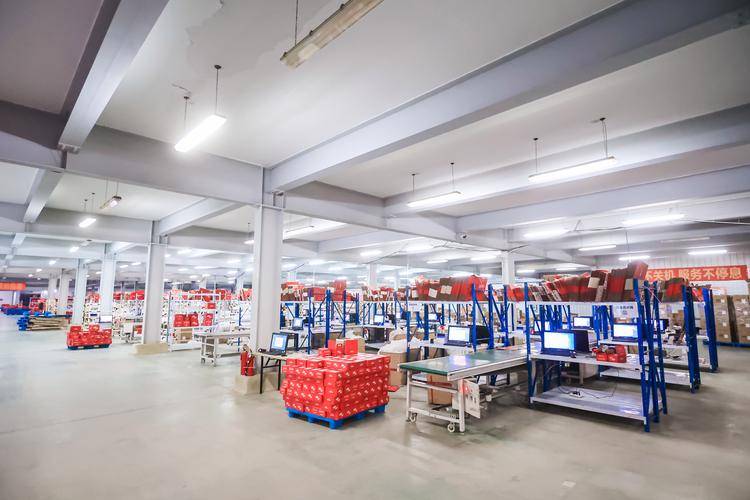
苏州老板入局家居,12个月进账80亿
21世纪经济报道· 2025-10-08 08:15
Core Insights - The article discusses the growth and challenges faced by GigaCloud (大健云仓), a global home goods platform founded by Wu Lei, a former executive at New Oriental Education [1][9] - GigaCloud achieved a GMV of approximately 10 billion yuan and revenue of around 8 billion yuan in the past 12 months, despite facing uncertainties in the global trade environment [1][3] Business Model - GigaCloud operates as an intermediary, connecting sellers (factories/traders) with buyers (retail/wholesale channels), allowing for efficient circulation of large goods like furniture and auto parts [2] - The company employs a "supply chain pre-positioning" model, where suppliers produce goods in advance and store them in overseas warehouses, reducing inventory risks and simplifying transaction processes [3][6] Market Expansion - In response to challenges in the U.S. market due to rising tariffs, GigaCloud is accelerating its expansion into the European market, which now accounts for about 25% of its global revenue [6][7] - The company opened a strategic new warehouse in North Rhine-Westphalia, Germany, to enhance its logistics capabilities in Europe [6][7] Financial Performance - GigaCloud reported a revenue of $323 million in Q2, a slight increase of 3.8% year-on-year, with a GMV of over $1.4 billion in the past 12 months, reflecting a 31% year-on-year growth [6][7] - The company has maintained a zero-debt status and positive operating cash flow, with $300 million in liquid assets as of June [10] Strategic Acquisitions - GigaCloud acquired Noble House, a U.S. furniture company, for approximately $85 million, aiming to integrate its assets and optimize its product offerings [9][10] - The management has already streamlined the SKU count from over 8,000 to around 3,000, improving profitability [10]
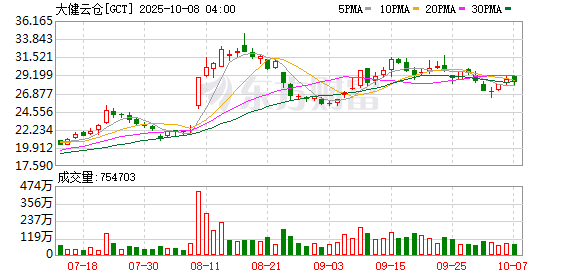
苏州老板入局家居,12个月进账80亿
2 1 Shi Ji Jing Ji Bao Dao· 2025-10-08 03:10
Core Insights - The article discusses the growth and challenges faced by GigaCloud (大健云仓), a global home goods platform founded by former New Oriental executive Wu Lei, highlighting its recent market performance and strategic expansions [2][4][20]. Company Overview - GigaCloud's market capitalization has reached $1 billion, with its valuation doubling over the past five months [3]. - The company reported a GMV (Gross Merchandise Volume) of approximately 10 billion yuan and revenue of around 8 billion yuan over the past 12 months [5]. Market Challenges - The global trade environment has been volatile, impacting GigaCloud's operations, particularly due to increased tariffs from major sourcing countries [6]. - The company faced disruptions in its supply chain, with partners pausing shipments, which is expected to affect Q3 performance [12][13]. Strategic Expansion - Wu Lei is focusing on expanding GigaCloud's presence in the European market to counterbalance the challenges in the U.S. market [14][16]. - A new strategic warehouse in North Rhine-Westphalia, Germany, has been launched to enhance logistics capabilities across Europe [15][16]. Business Model - GigaCloud operates on two business models: 1P (direct sales) and 3P (platform services), with a growing emphasis on the 3P model, which has seen a 25% increase in active sellers [19]. - The company aims to increase its European business scale to match that of the U.S. market in the coming years [17]. Acquisition and Integration - GigaCloud acquired Noble House, a U.S. furniture company, for approximately $85 million, aiming to integrate its assets and improve profitability [21][22]. - The management has already optimized the product lineup by eliminating outdated SKUs and introducing new ones, with plans to stabilize the product mix by mid-2024 [23]. Financial Health - GigaCloud has zero debt and has maintained positive operating cash flow since its IPO, with $300 million in liquid assets as of June [25]. - The board has announced a share buyback plan of up to $111 million to bolster investor confidence amid ongoing trade fluctuations [26].
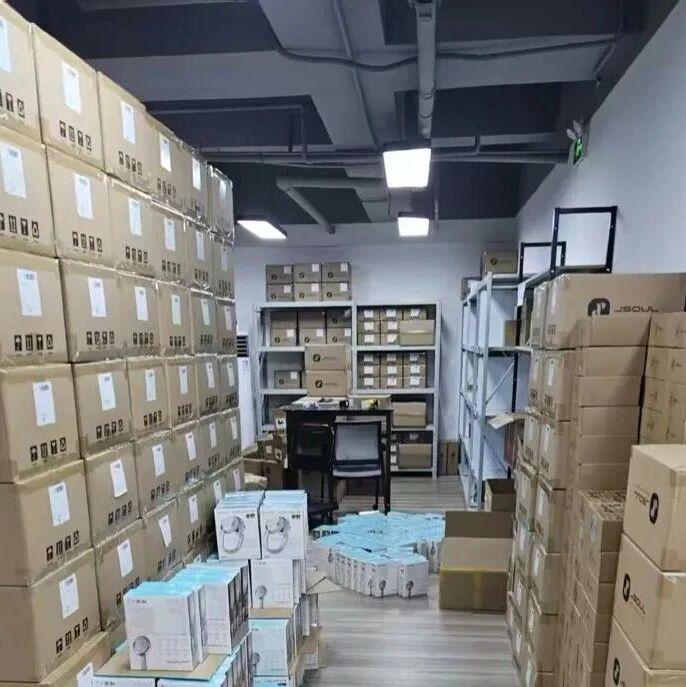
东莞台风天:一次极端天气下的产业链大考
21世纪经济报道· 2025-09-24 04:46
Core Viewpoint - The article discusses the impact of Typhoon "Haikashan" on the manufacturing sector in Dongguan, Guangdong, highlighting the measures taken by companies to mitigate production disruptions and maintain supply chain efficiency during extreme weather conditions [1]. Group 1: Company Responses to Typhoon - Dongguan's manufacturing companies implemented emergency measures, including halting production and coordinating logistics to minimize losses during the typhoon [1]. - Guangdong Juan Shu Technology Co., Ltd. managed to produce 3,000 AI Bluetooth earphones before the typhoon hit, ensuring timely delivery to the domestic market [3]. - The company has established sales channels on e-commerce platforms and is enhancing its cloud warehouse strategy to improve delivery efficiency during adverse weather [5]. Group 2: Coordination and Production Planning - Dongguan Kanda Toy Gifts Co., Ltd. prioritized employee safety while coordinating production plans to fulfill orders for the National Games and other domestic and foreign orders [7]. - The company communicated with e-commerce platforms to extend delivery deadlines to avoid penalties due to typhoon-related delays [9]. - Dongguan Tingyuxuan Clothing Co., Ltd. activated its emergency response mechanism, ensuring safety checks and preparing for production resumption post-typhoon [10][11].
东莞台风天:一次极端天气下的产业链大考
2 1 Shi Ji Jing Ji Bao Dao· 2025-09-24 04:10
Core Viewpoint - The super typhoon "Haikashan" poses significant challenges to the global supply chain, particularly affecting manufacturing operations in Dongguan, Guangdong, as companies implement emergency measures to mitigate production disruptions during the critical Christmas order season [1][2]. Group 1: Company Responses - Dongguan's manufacturing enterprises, including Guangdong Juan Shu Technology Co., are activating disaster response mechanisms, coordinating production schedules, and utilizing cloud warehouses to minimize losses from the typhoon [1][2]. - Juan Shu Technology, a prominent audio brand supplier, has developed new earphones for the domestic market and established sales channels on platforms like JD, Tmall, and Douyin, ensuring limited impact from the typhoon due to proactive production scheduling [2][3]. - The company has extended shipping times from 24 hours to 48 hours on e-commerce platforms to manage customer expectations during the typhoon, while also planning to establish cloud warehouses in major cities to enhance logistics efficiency [3]. Group 2: Industry Impact - Dongguan Kangda Toy Gift Co., a veteran in the toy industry, is prioritizing employee safety while managing production schedules for significant orders, including those for the National Games [4][5]. - The company has communicated with e-commerce platforms to delay delivery deadlines until after the typhoon, thereby avoiding penalties for late shipments [5]. - In the garment sector, Dongguan Tingyuxuan Clothing Co. has initiated emergency measures, ensuring safety checks and preparing for a brief production halt while maintaining communication with clients regarding delivery adjustments [6].
武商集团:江豚会员店支持门店周边5公里的极速达配送
Zheng Quan Ri Bao Wang· 2025-08-06 13:15
Group 1 - The company, Wushang Group, announced on August 6 that its Jiangtun membership stores currently support express delivery within a 5-kilometer radius of the stores [1] - The company plans to launch a citywide delivery function soon, which will be based on sales data and existing supermarket locations to build cloud warehouses to meet more membership service needs [1]
