产业协同圈

Search documents
官方解答首都都市圈空间范围和“三个圈层”划定相关问题
Zhong Guo Xin Wen Wang· 2026-02-12 17:13
Core Viewpoint - The first urban agglomeration plan approved by the Central Committee of the Communist Party of China and the State Council, titled "Modern Capital Urban Agglomeration Spatial Coordination Plan (2023-2035)," has been released, highlighting the unique advantages and roles of the capital urban agglomeration in various aspects such as politics, ecology, economy, and security [1][2]. Group 1: Urban Agglomeration Overview - The capital urban agglomeration is characterized by its role as the only urban agglomeration in China with two municipalities, serving as a crucial support for the coordinated development of Beijing-Tianjin-Hebei [1]. - The spatial scope of the capital urban agglomeration includes a multi-layered, nested "concentric circle" model, which is innovative compared to traditional "one-hour commuting" ranges [1]. Group 2: Commuting Circle - The commuting circle considers the current cross-border commuting rate and the comprehensive transportation reach within one hour, covering a total area of approximately 27,000 square kilometers, which includes all of Beijing and 12 surrounding districts and counties [1]. Group 3: Functional Circle - The functional circle represents the core area for the development of the capital urban agglomeration, encompassing Beijing, Tianjin, Xiong'an New Area in Hebei, and parts of Langfang, Baoding, and Zhangjiakou, with a total area of about 42,000 square kilometers [2]. Group 4: Industrial Coordination Circle - The industrial coordination circle serves as an open area for the development of the capital urban agglomeration, extending its influence across the entire Beijing-Tianjin-Hebei urban cluster and coordinating with surrounding urban clusters such as Liaoning Central South, Shandong Peninsula, and Central Plains [2]. - This circle aims to efficiently connect with major domestic urban clusters like the Yangtze River Delta, Guangdong-Hong Kong-Macao Greater Bay Area, Chengdu-Chongqing, and the middle reaches of the Yangtze River, establishing a multi-level collaborative and open pattern that reaches both nationally and globally [2].
天津滨海新区:“流量”港口与“硬核”产业的交响
Xin Lang Cai Jing· 2026-02-08 09:17
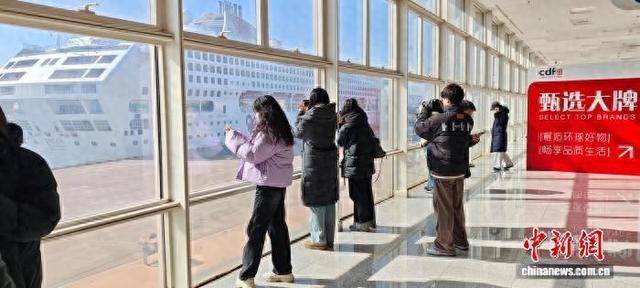
Core Insights - The article highlights the development of Tianjin Binhai New Area, showcasing the integration of cruise tourism and advanced manufacturing industries as a dual strategy for economic growth [1][3]. Group 1: Cruise Tourism - The Tianjin International Cruise Home Port has become a popular choice for tourists, with over 300,000 visitors in the previous year and a projected increase to over 30,000 during the Spring Festival this year [3][4]. - The port has implemented a cruise control system that reduces the entry processing time for travelers to just 3 to 5 seconds, significantly improving efficiency [3]. - The local government is designing new tourism products that combine cruise experiences with high-speed rail and wellness offerings, aiming to enhance visitor engagement and spending [3][4]. Group 2: Advanced Manufacturing - The Binhai New Area is home to high-end manufacturing, exemplified by the third-generation artificial heart "Rocket Heart," which received regulatory approval in July 2022 and has helped many patients with end-stage heart failure [4]. - The Tianjin YunYao Aerospace Technology Co., Ltd. is developing the "Binhai No. 1" meteorological observation satellite, which provides customized data products for industry users [4]. - The region's focus on advanced industries is part of a broader strategy to transition from merely receiving investments to fostering a two-way empowerment relationship with Beijing, enhancing both talent attraction and service capabilities [5].

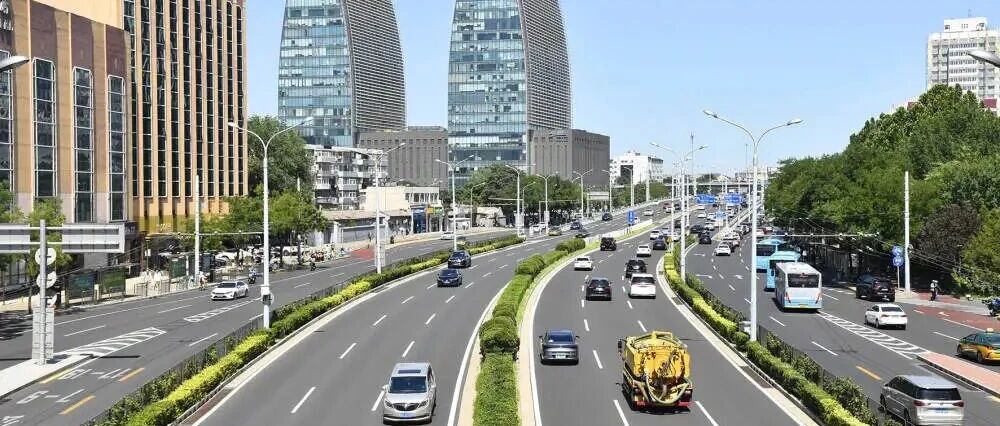
首都都市圈范围定了
21世纪经济报道· 2026-02-04 05:49
Core Viewpoint - The article discusses the approval of the "Modern Capital Urban Circle Spatial Coordination Plan (2023-2035)" by the Central Committee of the Communist Party of China and the State Council, highlighting the significant progress in the decongestion of non-capital functions in Beijing and the transformation of its development model [1][2]. Group 1: Development Goals - The plan outlines three stages of development goals: by 2030, significant progress in the construction of the modern capital urban circle will be achieved, with improvements in managing "big city diseases" and the gradual emergence of the Beijing-Tianjin integration effect [1] - By 2035, the basic framework of the modern capital urban circle will be formed, with notable success in managing "big city diseases" and enhanced urban-rural planning and governance integration [1] - By 2050, the modern capital urban circle will be fully established as a world-class urban circle centered around the capital, demonstrating significant achievements in the integration of Beijing and Tianjin [1] Group 2: Urban Circle Structure - The capital urban circle is defined as an organic whole that supports each other, aiming to create a spatial pattern of "one core, two wings, dual cities, multiple points, and dual corridors with multiple circles" [1] - The plan emphasizes the importance of a clear and reasonable multi-layered structure, including commuting circles, functional circles, and industrial collaboration circles [10] - The commuting circle is highlighted, covering an area of approximately 27,000 square kilometers, including parts of Beijing, Tianjin, and several cities in Hebei province [10] Group 3: Economic and Industrial Development - The plan addresses the need to enhance development momentum, noting the aging population in the capital and the declining share of GDP and population in the Beijing-Tianjin-Hebei region [13] - It emphasizes the role of technological innovation in driving development and the importance of cultivating new productive forces [13] - The plan proposes the construction of the Beijing-Tianjin and Beijing-Xiong'an corridors to develop new productive forces, with a focus on high-quality development and innovation [13][14] Group 4: Transportation Integration - The plan outlines the "Eight Corridors and Two Rings" transportation network, which aims to strengthen rapid connectivity between cities through major transportation corridors [11] - The focus on transportation integration is seen as crucial for commuting and industrial collaboration within the capital urban circle [11] - The plan's transportation strategies are more specific and detailed compared to previous documents, aiming to facilitate the movement of people and goods effectively [11]