创新走廊

Search documents
多地陆续出台“十五五”规划建议,“路线图”愈加明晰
Ren Min Ri Bao Hai Wai Ban· 2026-02-11 00:21
Core Insights - Economic provinces in China play a crucial role in stabilizing the national economy and driving high-quality development, with a clear roadmap emerging from recent "14th Five-Year" planning proposals [1][2] Group 1: Economic Performance - The top ten economic provinces contribute nearly 20% of the national area and over 60% of the GDP, acting as stabilizers and leaders in high-quality development [2] - In the first three quarters of this year, all nine provinces in the top ten exceeded or matched the national average GDP growth rate, showcasing strong development momentum [2] - Jiangsu's GDP surpassed 10 trillion yuan for the first time, while Shanghai and Hunan both exceeded 4 trillion yuan, raising the entry threshold for the "four trillion club" [2] Group 2: Future Planning - Five of the ten economic provinces have set ambitious goals to lead in various aspects, such as Guangdong aiming for economic doubling by 2035 and Jiangsu focusing on high-quality development and technological innovation [3] - Zhejiang plans to achieve significant progress in high-quality development and common prosperity within five years [3] Group 3: Structural Optimization and New Momentum - Economic provinces are at the forefront of structural optimization and new momentum, with policies promoting the growth of emerging industries like digital economy and artificial intelligence [4] - Guangdong has outlined a digital economy development plan with specific targets, including a core AI industry scale exceeding 440 billion yuan by 2027 [4] Group 4: Domestic Demand and Investment - Economic provinces are enhancing domestic demand and stabilizing investment through consumption activities and major engineering projects [6] - Guangdong has allocated an additional 3.5 billion yuan for fiscal policies, while Jiangsu plans to distribute over 400 million yuan in consumption vouchers [7] Group 5: Reform and Innovation - To further stimulate growth potential, economic provinces need to focus on breaking regional collaboration barriers and innovating in areas like low-altitude economy [8] - Continuous efforts are being made to improve the business environment and integrate into the national market, with specific measures being implemented in provinces like Sichuan and Henan [7]
天津滨海新区:“流量”港口与“硬核”产业的交响
Xin Lang Cai Jing· 2026-02-08 09:17
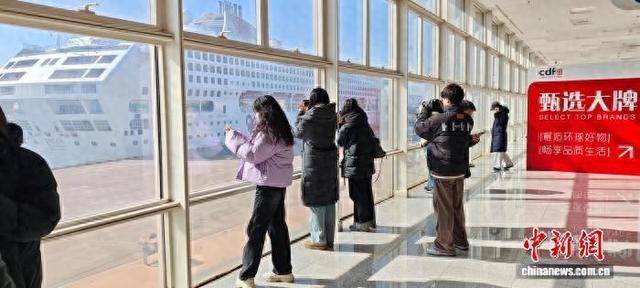
Core Insights - The article highlights the development of Tianjin Binhai New Area, showcasing the integration of cruise tourism and advanced manufacturing industries as a dual strategy for economic growth [1][3]. Group 1: Cruise Tourism - The Tianjin International Cruise Home Port has become a popular choice for tourists, with over 300,000 visitors in the previous year and a projected increase to over 30,000 during the Spring Festival this year [3][4]. - The port has implemented a cruise control system that reduces the entry processing time for travelers to just 3 to 5 seconds, significantly improving efficiency [3]. - The local government is designing new tourism products that combine cruise experiences with high-speed rail and wellness offerings, aiming to enhance visitor engagement and spending [3][4]. Group 2: Advanced Manufacturing - The Binhai New Area is home to high-end manufacturing, exemplified by the third-generation artificial heart "Rocket Heart," which received regulatory approval in July 2022 and has helped many patients with end-stage heart failure [4]. - The Tianjin YunYao Aerospace Technology Co., Ltd. is developing the "Binhai No. 1" meteorological observation satellite, which provides customized data products for industry users [4]. - The region's focus on advanced industries is part of a broader strategy to transition from merely receiving investments to fostering a two-way empowerment relationship with Beijing, enhancing both talent attraction and service capabilities [5].