产业链价值

Search documents
贸易顺差1万亿美元什么概念?搁200年前,八国联军早来家门口了
Sou Hu Cai Jing· 2025-12-21 10:13
Core Viewpoint - The trade surplus of over $1 trillion in the first eleven months of 2025 reflects a significant shift in China's economic position compared to historical contexts, particularly the humiliating indemnities of the past [1][3][13] Group 1: Trade Surplus Analysis - China's trade surplus reached $1.076 trillion, a substantial figure that highlights the country's economic strength [1] - The current trade surplus is a result of market-driven choices, with a significant portion of exports consisting of electromechanical products, particularly new energy vehicles, lithium batteries, and photovoltaic products [7] - Exports to emerging markets such as ASEAN, Africa, and Latin America have seen rapid growth, with exports to Africa increasing by 26.3% [7] Group 2: Historical Context and Comparison - The indemnity amount from the Boxer Protocol was approximately 450 million taels of silver, equivalent to over $100 billion in today's purchasing power, which could be covered by a fraction of the current trade surplus [3][5] - The historical context of foreign powers using military force to extract resources contrasts sharply with the current situation where China competes in global markets based on quality and supply chain stability [5][9] Group 3: Economic Implications and Future Outlook - A large trade surplus indicates a reliance on overseas markets, which could pose risks if global economic conditions change, prompting a focus on expanding domestic demand [11] - The transition from a history of forced trade to a proactive integration into globalization signifies a shift in China's economic strategy, emphasizing high-quality development and global capacity layout [13] - The trade surplus serves as a historical benchmark, illustrating China's journey from adversity to a central position on the world stage, highlighting the importance of managing domestic affairs effectively [13]

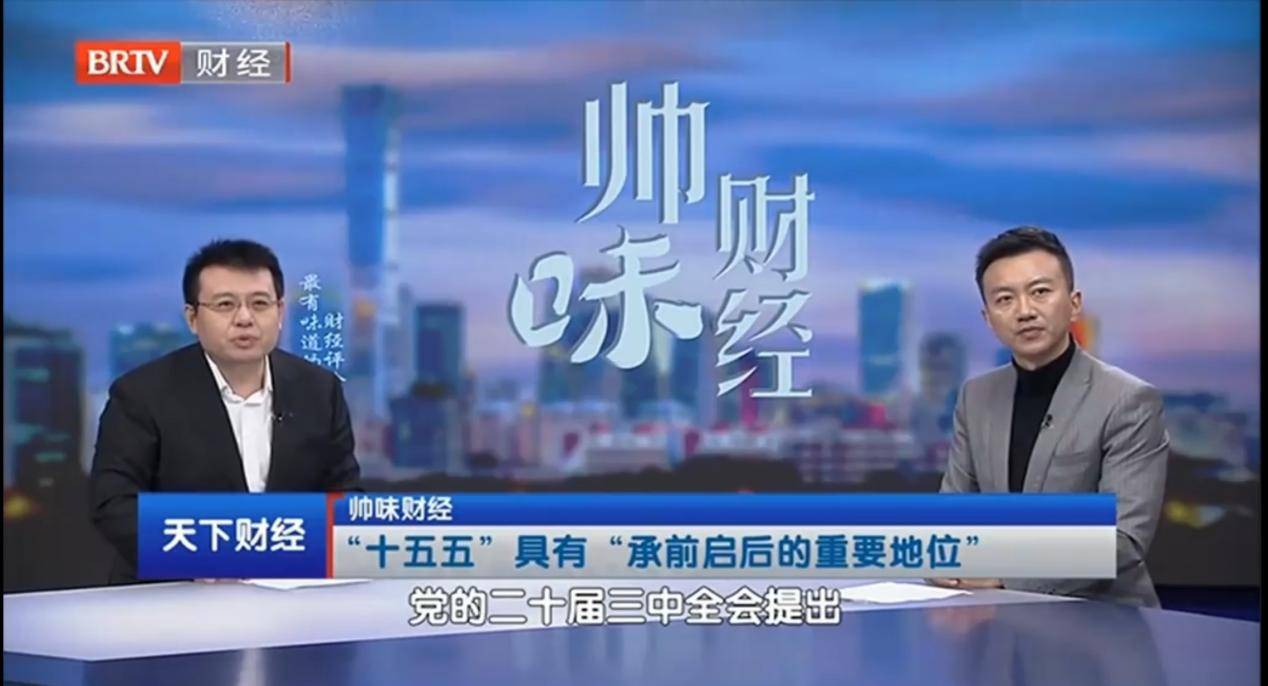
知名经济学家杜帅评论:“十五五” 现代化进程的关键中继与改革攻坚期
Sou Hu Cai Jing· 2025-11-17 09:09
Core Viewpoint - The "15th Five-Year Plan" (2026-2030) is a critical transitional phase for China, serving as a bridge between the "14th Five-Year Plan" and the "16th Five-Year Plan," and is essential for achieving socialist modernization by 2035 [1] Strategic Positioning - The "15th Five-Year Plan" is a unique observation and transition period to assess previous development outcomes and accumulate momentum for future acceleration [3] - It is a completion point for over 300 major reform tasks from the 20th National Congress, with specific milestones set for 2026-2029 to ensure reforms translate into tangible results [3] - This period is also a window for China to align with global rule restructuring, particularly in international trade and digital governance, which will impact its competitive position in global agreements like CPTPP and DEPA [3] Industrial Development Focus - The emphasis on "real economy" and "manufacturing reasonable proportion" is not merely about expanding capacity but is centered on "value-oriented" scientific layout [4] - As of the first half of 2025, China's manufacturing value added accounted for 25.7% of GDP, indicating a need to balance between too high and too low proportions to avoid resource strain and economic vulnerability [4] - The goal is to shift from a "scale-oriented" approach to a "value-oriented" one, focusing on core component R&D, independent intellectual property breakthroughs, and technological innovation to drive high-end, intelligent, and green transformation in manufacturing [4] Governance Philosophy Upgrade - The report elevates the concept of "people-centered" governance to "people first," emphasizing investment in human capital as a key infrastructure focus [6] - Over 120 reform tasks directly address critical life stages from birth to end-of-life, with quantifiable and accountable targets to ensure tangible improvements in quality of life [6] - The plan aims to convert demographic dividends into quality dividends through vocational training and equalization of public services, ensuring inclusivity in modernization efforts [6] Economic Long-Term Outlook - Despite challenges, the long-term positive trend of China's economy during the "15th Five-Year Plan" remains intact, supported by three main advantages: a vast market, latecomer advantages for industrial upgrades, and sustained competitive edge through technological innovation [8] - The large population and middle-income group provide a solid market foundation, while China's manufacturing scale and complete industrial system are unmatched globally [8] - The country can leverage its latecomer status to adopt advanced international practices in emerging fields like AI and quantum technology, exemplified by its rapid advancements in the renewable energy sector [8] Conclusion - The "15th Five-Year Plan" is positioned as a pivotal period for China to deepen reforms, strengthen industries, and enhance livelihoods, laying a solid foundation for achieving socialist modernization [9]