
产业链供应链协同合作

Search documents
占比近七成,机电产品成为推动中韩贸易增长重要动力
Xin Hua Wang· 2026-01-04 09:37
Core Insights - In the first eleven months of 2025, trade between China and South Korea reached 2.14 trillion yuan, marking a year-on-year growth of 1.6% [1] - The trade of electromechanical products accounted for 1.43 trillion yuan, growing by 5.9% and representing 67% of the total trade volume, an increase of 2.7 percentage points from the previous year [1] Trade Dynamics - China imported 1.2 trillion yuan worth of goods from South Korea and exported 0.94 trillion yuan, with Sino-Korean trade constituting 5.2% of China's overall foreign trade [1] - There is a deepening collaboration in supply chains, with imports of electronic components and computer accessories from South Korea increasing by 9.9% and 7.4% respectively [1] Emerging Cooperation Areas - In the new sectors, imports of medicinal materials and pharmaceuticals from South Korea rose by 8.9% and 3% respectively, while exports of "new three samples" products and medical instruments to South Korea grew by 12.4% and 1.1% [1] Agricultural Trade Expansion - The trade volume of agricultural products between China and South Korea reached 52.19 billion yuan, reflecting a year-on-year increase of 2.1% [1] - Notably, imports of alcoholic beverages and pasta from South Korea, as well as exports of dried and fresh fruits, nuts, and tea to South Korea, saw double-digit growth rates [1]
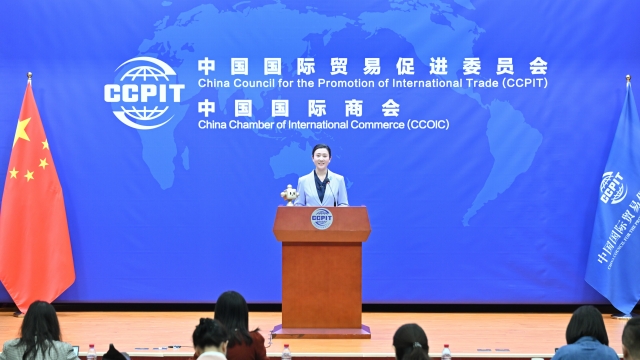
贸促会:今年逾60批次美企高管密集访华,工商界是双方经贸合作的主力军
Di Yi Cai Jing· 2025-10-31 07:56
Core Viewpoint - The meeting between the leaders of China and the United States in Busan, South Korea, emphasizes the importance of strengthening economic and trade cooperation between the two countries, with a focus on mutual benefits for the business communities involved [1][3]. Group 1: Economic Cooperation - The Chinese and U.S. business communities are seen as the main force and beneficiaries of bilateral economic cooperation, forming a mutually beneficial interest community [3]. - The China Council for the Promotion of International Trade (CCPIT) has organized over 60 delegations from U.S. institutions and enterprises to visit China this year, indicating strong engagement [3]. - The number of U.S. exhibitors at the third Chain Expo increased by 15% compared to the previous year, highlighting growing interest in collaboration [3]. Group 2: Trade Statistics - In the first nine months of this year, the CCPIT issued 66,000 certificates of origin for exports to the U.S., and facilitated over 7,000 patent and trademark applications for U.S. applicants in China [3]. - From January to October, over 3,500 Chinese enterprises participated in more than 50 professional exhibitions in the U.S., covering various sectors such as electronics and textiles, with a total exhibition area exceeding 48,000 square meters [3]. Group 3: Market Diversification - China's trade with countries involved in the Belt and Road Initiative reached 17.37 trillion yuan, a 6.2% increase, accounting for 51.7% of total trade value [6]. - Trade with ASEAN, Latin America, Africa, and Central Asia saw increases of 9.6%, 3.9%, 19.5%, and 16.7% respectively [6]. Group 4: Regional Cooperation - The CCPIT is actively promoting trade cooperation with ASEAN countries, organizing over 152 exhibition projects with more than 5,000 participating enterprises this year [7]. - The 18th China-Latin America Entrepreneurs Summit will be held in Zhengzhou, focusing on cooperation in sectors such as mining, meat, and electronics [7]. Group 5: Upcoming Events - The 18th China-EU Investment Trade and Technology Cooperation Fair will be held in Chengdu, promoting collaboration in energy, digital technology, and biomedicine [8].

李强在第28次东盟与中日韩领导人会议上的讲话(全文)
证监会发布· 2025-10-28 02:25
Core Viewpoint - The speech emphasizes the importance of open cooperation among East Asian countries to overcome economic challenges and sustain growth, highlighting the region's historical economic achievements and the need for strategic collaboration moving forward [2][4][5]. Group 1: Economic Cooperation - The ASEAN and China-Japan-South Korea cooperation has shown resilience and vitality despite facing increased challenges and uncertainties in the global economic landscape [2][5]. - Open cooperation has been a key factor in East Asia's economic miracles, allowing countries to complement each other's strengths and avoid politicizing trade issues [4][5]. Group 2: Regional Stability - The current international situation is marked by conflicts and instability, which threaten global development; thus, maintaining peace and stability in East Asia is crucial [5][6]. - There is a strong call to uphold free trade and multilateral trade systems while opposing protectionism to advance regional economic integration [5][6]. Group 3: Supply Chain Collaboration - East Asia possesses a comprehensive industrial chain with strong complementary advantages, and there is a need to enhance collaboration across different segments of the supply chain [5][6]. - The region should focus on improving cooperation in finance, trade, and food security to create new growth points and enhance internal development momentum [5][6]. Group 4: Innovation and New Growth Drivers - The region is encouraged to support technological innovation, particularly in fields like artificial intelligence, robotics, and biomedicine, to enhance innovation capabilities [6][7]. - Continued collaboration in digital economy, electric vehicles, and clean energy is essential to seize development opportunities [6][7].

在第28次东盟与中日韩领导人会议上的讲话 中华人民共和国国务院总理 李 强 (2025年10月27日,吉隆坡)
Jing Ji Ri Bao· 2025-10-27 22:34
Core Viewpoint - The meeting emphasizes the importance of open cooperation among East Asian countries to overcome economic challenges and leverage historical successes for future growth [1][2]. Group 1: Economic Cooperation - ASEAN and China, Japan, and South Korea have maintained a positive trend in economic cooperation, showcasing the resilience and vitality of the East Asian economy [1]. - The region possesses a large market, mature industrial systems, ample capital, advanced technology, and a rich talent pool, which can be harnessed through inclusive and sustainable cooperation [3]. Group 2: Regional Stability - The current international situation is marked by turmoil and conflict, which poses significant challenges to global development; thus, maintaining peace and stability in East Asia is crucial [3]. - There is a call to resolve differences through dialogue and consultation, opposing external interference and avoiding the creation of tensions [3]. Group 3: Supply Chain Collaboration - East Asia has a comprehensive advantage across the entire supply chain, from design and manufacturing to market sales, which should be better utilized to enhance cooperation and improve efficiency [3]. - The meeting supports the strengthening of regional economic and financial cooperation, aiming to create more cooperation highlights and growth points [3]. Group 4: Innovation and New Growth Drivers - The region is encouraged to support technological innovation, particularly in fields like artificial intelligence, robotics, and biomedicine, to enhance innovation capabilities and drive development [4]. - There is a commitment to advancing cooperation in digital economy, electric vehicles, and clean energy to seize development opportunities [4].
李强在第28次东盟与中日韩领导人会议上的讲话(全文)
Xin Hua She· 2025-10-27 17:17
Core Points - The speech emphasizes the resilience and vitality of the East Asian economy, despite facing increasing challenges and uncertainties due to complex changes in the international economic landscape [1][2] - The importance of open cooperation is highlighted as a key factor in overcoming difficulties and achieving economic miracles in East Asia [2] - The focus is on creating a favorable environment for regional development, enhancing industrial and supply chain cooperation, and fostering new growth drivers through technological innovation [3][4] Group 1: Economic Cooperation - The East Asian region has a large market, mature industrial systems, abundant capital, advanced technology, and a rich talent pool, which are essential for economic potential [3] - The need to maintain peace and stability in East Asia is stressed, along with the importance of dialogue and cooperation to resolve differences and oppose external interference [3] - The commitment to enhancing regional economic integration and opposing protectionism is reiterated [3] Group 2: Industrial Collaboration - East Asia possesses a comprehensive advantage across the entire industrial chain, from design and research to manufacturing and sales, which should be leveraged for better cooperation [3] - The region is encouraged to improve collaboration and efficiency in the flow of resources and production [3] Group 3: Technological Innovation - The speech calls for increased support for technological innovation, particularly in fields like artificial intelligence, robotics, and biomedicine, to enhance innovation capabilities [4] - Collaboration in digital economy, electric vehicles, and clean energy is emphasized as a way to seize development opportunities [4]