人工智能产业革命

Search documents
6家险资加码,国科投资瑞华四期基金漂亮终关
Sou Hu Cai Jing· 2026-02-15 11:41
Core Viewpoint - Guoke Investment Management's Guoke Ruihua Phase IV Fund has completed its final closing with a total scale of 4.58 billion, making it the largest market-oriented direct investment fund established in the past two years [2][3] Fund Overview - The fund's total scale reached 4.58 billion, with a significant portion of 45% coming from insurance capital, making it a representative of market-oriented equity funds with the highest insurance capital content in the industry [2][3] - Notable investors include AIA, China Pacific Insurance, and several other high-quality insurance companies, indicating strong confidence in the fund's management and investment strategy [2][3] Investment Strategy - Guoke Investment has a history of early-stage investments in technology sectors, such as the new energy vehicle supply chain and semiconductor industry, demonstrating a proactive approach to identifying investment opportunities [6][9] - The company emphasizes the importance of maintaining rationality during investment consensus bubbles, advocating for a focus on high-quality companies with continuous innovation capabilities [8][9] Market Insights - The current investment landscape is characterized by a transition from consensus formation to potential bubble periods, particularly in the artificial intelligence sector, which may face a phase of disappointment in the coming years [9][10] - The A-share market saw 116 IPOs in 2025, primarily in hardware, automotive, and semiconductor sectors, while the Hong Kong market had 111 IPOs, focusing on biomedicine, software, and medical devices [10][12] Future Outlook - Guoke Investment plans to leverage the Hong Kong market as a key exit channel, aiming to provide a platform for innovative companies that understand market demands and have strong overseas capabilities [12] - The investment roadmap will follow the "646+1" framework, aligning with national strategic needs and focusing on artificial intelligence as a primary investment theme [10][12]


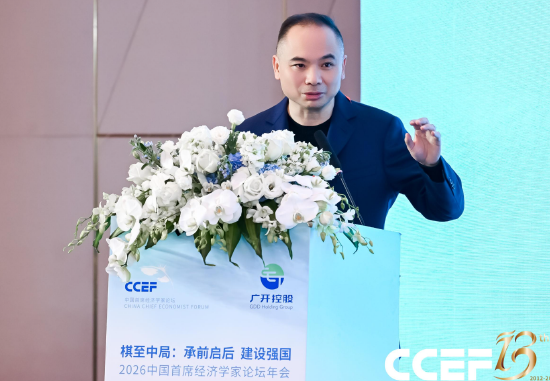
刘煜辉:这一轮AI产业革命最终使命将由中国完成
Xin Lang Cai Jing· 2026-01-10 07:28
Core Viewpoint - The responsibility for completing the AI industrial revolution now falls on China, as the U.S. is increasingly becoming a mere technology blueprint exporter without the capability to implement a complete industrial ecosystem [3][5]. Group 1: AI Industrial Revolution - The second half of AI development requires establishing a robust and complete industrial ecosystem at the backend, with significant capital investment at the frontend to create a closed loop [3][5]. - The process of AI at the endpoint can only be effectively executed by China, leveraging its capabilities in optimizing large models and creating a foundational ecosystem for global AI applications [3][5]. Group 2: Hardware and Manufacturing - China's manufacturing strength is highlighted by its ability to produce affordable and high-quality hardware, including AI smartphones, smart glasses, various wearables, drones, electric vehicles, and future robots [3][5]. - The integration of open-source large model ecosystems into diverse, cost-effective hardware allows China to sell these products globally, resulting in financial returns to the country [3][5]. Group 3: Data and Financial Systems - The endpoint continuously generates scenarios and data, which enter a data mining process to produce digital assets that feed into the financial system, creating a new cycle of credit expansion [3][5].
日经BP 2026十大预测,AI是就业增长突破口
日经中文网· 2025-12-07 02:13
Group 1 - The core viewpoint is that the AI industry revolution will lead to a shift in labor towards industries with higher production efficiency, ultimately driving economic growth [2][6] - The impact of generative AI on job losses among white-collar workers is outweighed by its ability to create new job opportunities, accelerating the AI industry revolution [4][6] - There will be a labor shortage in sectors that require skills in AI and robotics, particularly in manufacturing and logistics [2][6] Group 2 - The prediction indicates that the geopolitical tensions, particularly between the US and China, will intensify, leading to an irreversible division in the world [6] - Companies need to prepare for unexpected situations and focus on restructuring supply chains around three key regions: the US, China, and the Asia-Pacific [6]
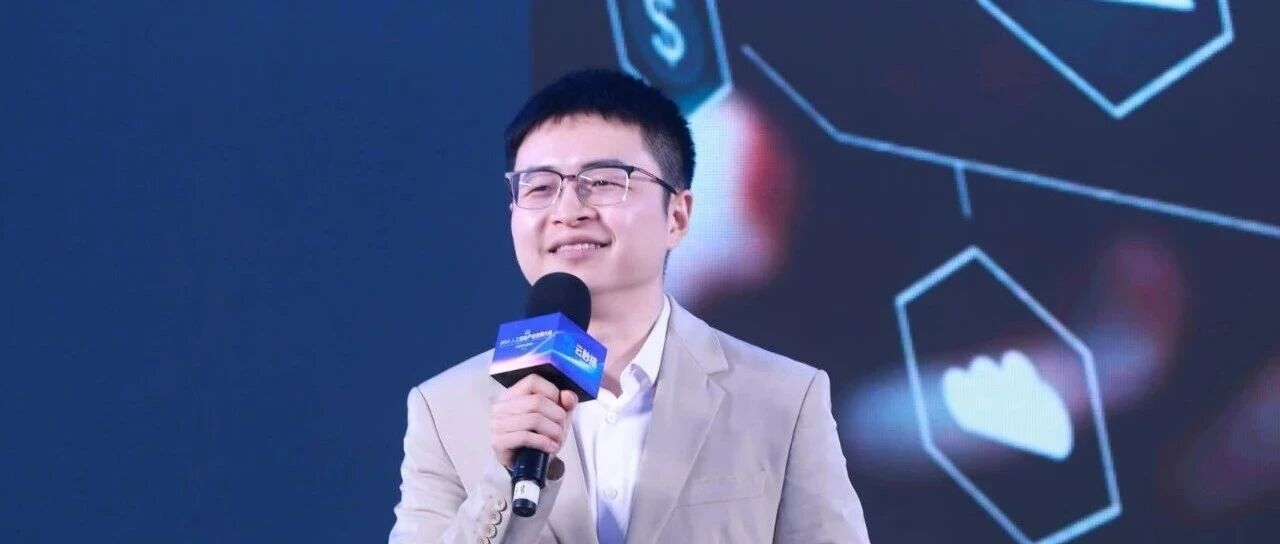
论坛| 杜雨博士在杭州2025人工智能产业发展大会发表主题演讲《AI 产业革命与具身智能崛起》
未可知人工智能研究院· 2025-10-09 03:02
Core Viewpoint - The AI industry in China is undergoing a significant transformation, entering the "2.5 stage" characterized by advancements in embodied intelligence and AI for Science, driven by emerging players like DeepSeek [2][3]. Group 1: AI Industry Development - The AI industry in China is experiencing its third wave of development, moving from general large models to more specialized fields such as embodied intelligence and AI for Science [2][3]. - The rise of large language models is reshaping the AI industry landscape and giving birth to new trillion-dollar markets, including embodied intelligence and AI hardware [6]. Group 2: Embodied Intelligence - Embodied intelligence is identified as the next trillion-dollar market, with significant opportunities in humanoid robots [8]. - The demand for humanoid robots is expected to surge in sectors like smart manufacturing, healthcare, and services, with a potential explosive growth in the global humanoid robot market by 2030 [9]. - Humanoid robots are designed to adapt to human environments and tools, allowing for high task flexibility and natural interaction with humans, making them a key path for AI industrialization [10]. Group 3: AI for Science - AI is transforming foundational research paradigms in materials science, life sciences, electronic sciences, energy sciences, and environmental sciences, positioning AI for Science as a critical breakthrough for China's AI industry [15][19]. - Examples of AI applications in scientific research include the Citrine aluminum alloy development platform, Google Cloud's multi-omics suite, and NVIDIA's cuLitho computational lithography library, showcasing AI's vast potential in both research and industry [22]. Group 4: Regional Focus - Hangzhou is highlighted as a new highland for China's AI industry, contributing over 70% of Zhejiang Province's AI industry output value in 2024, with a vibrant entrepreneurial atmosphere [24][26]. - The city is seen as a "paradise" for AI innovation and entrepreneurship, with the Unforeseen AI Research Institute committed to fostering an AI industry ecosystem [29]. Group 5: Competitive Landscape - The essence of the AI competition is framed as a race against time, emphasizing that those who master AI will control the future [32]. - The Unforeseen AI Research Institute aims to accelerate the integration of technology and industry, seizing the global competitive high ground in AI [34][35].