
人群细分

Search documents
2025年个护小家电市场总结:需求重构,价值深耕
Xi Niu Cai Jing· 2026-02-11 07:40
Core Insights - The personal care small appliance industry is shifting from a focus on "scale expansion" to "quality enhancement" driven by consumer upgrades and market competition [1] Hair Dryer - The hair dryer industry is moving away from price competition to demand creation, with four key directions for transformation [2] - The marginal effect of parameter competition is diminishing, as consumers are less sensitive to minor upgrades beyond a certain threshold [3] - Functional innovation is addressing core hair care pain points, with water ion and hair essence products projected to capture significant market shares by 2025 [2] - There is a need for deeper smart technology integration, particularly in app functionalities and scalp protection technologies [3] - Market segmentation is opening new growth avenues through targeted products for specific user groups, such as portable models for travelers and low-noise versions for children [3] Electric Toothbrush - The electric toothbrush market is transitioning from a rapid growth phase to a plateau, facing challenges in converting manual toothbrush users [4] - Smart features are becoming a significant value addition, with products featuring app connectivity and smart displays expected to dominate sales by 2025 [4] - Different age groups have distinct oral care needs, necessitating tailored functionalities in electric toothbrushes [5] - The growth of vibrating electric toothbrushes is stagnating, with a need for integration of smart features to enhance user experience [5] Electric Shaver - The electric shaver industry is characterized by stable volume and increased revenue, with retail sales reaching 9.83 billion yuan and an average price increase of 11.9% [6] - Portable shavers are driving growth, with their market share expected to rise significantly, reflecting a trend towards high-end products [6] - Product innovation is focusing on emotional and gift attributes, optimizing user experience, and enhancing core shaving performance [6][7] - The industry is entering a quality enhancement phase, emphasizing the need for improved shaving efficiency and battery life [7]
2026年,手机行业迎来“人群细分”时代?
Xin Lang Cai Jing· 2026-02-04 12:20
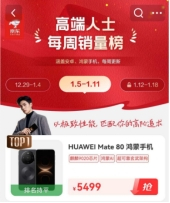
Core Insights - The emergence of AI smartphones by the end of 2025 is seen as a potential growth opportunity for the Chinese smartphone market, but industry experts caution that such innovations may only provide a temporary differentiation before leading to homogenized competition [1][26] - As the market evolves, brands are preparing for two strategies: embracing AI technology while also focusing on deepening their understanding of consumer segments to maintain stability [2][27] Market Trends - The past year has shown that successful smartphone models often result from targeted consumer segmentation strategies, with examples including OPPO's Reno14 and 15 series appealing to students and vivo's iQOO15 attracting gamers [2][27] - The introduction of weekly sales rankings by JD.com, segmented by consumer interests, provides valuable insights for both consumers and manufacturers regarding market trends and product penetration [3][28] Consumer Insights - The JD.com rankings reveal significant shifts in consumer preferences, with Huawei dominating the high-end market and even capturing the gaming segment with its Mate 80 model [5][30] - Vivo and OPPO have also shown strong performances in various consumer segments, indicating a trend towards brand diversification and targeted marketing strategies [8][33] Strategic Partnerships - Huawei's success is attributed to its effective market strategy and collaboration with JD.com, leveraging the platform's unique advantages in traffic and marketing capabilities [9][34] - JD.com plays a crucial role in supporting brands through tailored marketing strategies and logistics, ensuring timely product launches and consumer engagement [10][35] Future Directions - The smartphone industry is shifting from a focus on product specifications to a strategy centered on user engagement and targeted marketing, emphasizing the importance of understanding consumer segments [25][50] - The future winners in the smartphone market will be those who can accurately identify niche consumer groups and provide integrated solutions that enhance the overall customer experience [25][50]

年销超40亿,增长16.6%!解锁护手霜市场的三大增量逻辑
FBeauty未来迹· 2026-01-30 14:52
Core Insights - The article emphasizes the growing importance of hand care products, particularly hand creams, as consumers increasingly seek personalized and effective solutions for skin care [3][4]. - The market for hand creams is projected to continue expanding, with significant sales growth driven by innovative features and targeted consumer segments [6][11]. Market Trends Analysis - The total sales of hand creams reached approximately 4.02 billion yuan from January to November 2025, marking a year-on-year increase of 16.6%, with a total volume of 122.82 million units sold, up 23.9% [6]. - In November 2025, sales peaked at around 888.22 million yuan, reflecting a month-on-month growth of 28.86% [6]. - Hand moisturizing creams dominate the market with a share of 79.01%, while hand care products account for 20.99%, with respective average prices of 33.82 yuan and 29.28 yuan [8]. Product Innovation and Consumer Segmentation - The article highlights a significant shift towards functional innovation in hand creams, with fragrance gift sets and anti-aging features emerging as key growth drivers, with some products experiencing sales growth rates between 222% and 749% [11]. - The demand for hand creams is highly concentrated in the lower price segment (0-44 yuan), which accounts for 80.54% of total sales volume [11]. Consumer Insights and Recommendations - Targeted product development is recommended for specific consumer segments, such as workplace women (ages 26-35) and young women (ages 21-25), focusing on quick-absorbing and aesthetically pleasing products [12][23]. - There is an identified opportunity to expand into male and teenage markets, with tailored products for gaming and outdoor activities [23]. Supply Chain and Market Dynamics - The supply side saw a surge in online product offerings and store numbers in November, reaching annual peaks of 113,278 products and 37,783 stores, indicating a strategic preparation for peak season [11]. - The article suggests that brands should leverage social media data and user profiles to develop differentiated products that cater to specific consumer needs and scenarios [12][23].

人群精准适配 场景深度融合
Jin Rong Shi Bao· 2026-01-28 04:33
Group 1 - The service consumption market is experiencing significant growth, with projections indicating that by 2025, per capita service consumption expenditure will increase by 4.5%, accounting for 46.1% of total per capita consumption expenditure [1] - The focus of competition in the consumer goods and retail industry has shifted from "capturing market share" to "creating meaning," reflecting a more mature and rational consumer base that seeks emotional resonance and identity recognition [2] - The "performance economy" is expected to see 640,400 commercial performances in 2025, a 6.58% increase from 2024, with an audience of 194 million, indicating a strong demand for immersive and personalized experiences [2] Group 2 - Major cities like Beijing and Shanghai are actively promoting the opening of new stores, with Beijing expecting 1,068 new stores and Shanghai 848 new stores by the end of 2025, enhancing social engagement among younger consumers [3] - The "silver economy" is emerging as a new growth area, with policies aimed at optimizing elderly care services and products, reflecting a shift in elderly consumer needs towards quality and diversified service experiences [4] - Various regions are piloting exclusive services for the elderly, indicating a market shift towards high-quality, emotionally resonant consumption experiences for older demographics [4] Group 3 - Service consumption is evolving through cross-industry integration, with models like "culture + tourism" and "digital + night economy" breaking down barriers and creating a multi-dimensional consumption ecosystem [5] - The "Su Chao" consumption tracking report indicates that integrated service scenarios have generated 37.96 billion yuan in revenue, showcasing the potential of immersive experiences in service consumption [6] - Online retail is projected to reach 15.97 trillion yuan in 2025, growing by 8.6%, with physical goods online retail accounting for 26.1% of total retail sales, highlighting the importance of digital integration in enhancing service consumption [6] Group 4 - Analysts suggest increasing investment in public service sectors such as elderly care, childcare, culture, and tourism to meet diverse consumer needs, emphasizing the role of technology in creating new service offerings [7] - Financial services should adapt to the unique characteristics of family-oriented consumption, moving from standardized to customized financial solutions to enhance the overall service consumption experience [7]