电吹风

Search documents
家电行业周报(2026/3/16-2026/3/20):创想三维提交招股书,3D打印加速普及-20260322
Hua Yuan Zheng Quan· 2026-03-22 12:21
Investment Rating - The investment rating for the home appliance industry is "Positive" (maintained) [1] Core Viewpoints - The report highlights the submission of an IPO application by Chuangxiang Sanwei, a leading provider of consumer-grade 3D printing products and services, which has seen revenue exceed 3.1 billion yuan in 2025, marking a year-on-year growth of 36.7% [3][6] - The consumer-grade 3D printing industry is expected to grow significantly, with a projected market size exceeding 4 billion USD in 2024 and a compound annual growth rate (CAGR) of 33% from 2024 to 2029 [3][7] - The competitive landscape of the consumer-grade 3D printing market is highly concentrated, with the top five players holding over 70% market share, and Chuangxiang Sanwei being the second-largest player with an 11.2% market share [3][13] Industry Overview - The consumer-grade 3D printing market primarily targets individual consumers and maker communities, serving as a tool for creative projects, prototyping, and light commercial needs [7][9] - The industry is currently in a phase of accelerated penetration, with generative AI technology lowering the barriers to entry for users, allowing for easier participation in 3D creation [9][10] - The global consumer-grade 3D printing market is expected to reach 4.1 billion USD in 2024 and grow to 16.9 billion USD by 2029, with a CAGR of 33.0% [8][9] Competitive Landscape - The consumer-grade 3D printer market has a high concentration, with a CR5 exceeding 70%, indicating a competitive environment where product capabilities and AI integration will be key differentiators [13][14] - Chuangxiang Sanwei is recognized as a leader in integrating AI technology across the 3D printing process, which positions the company to continue leading in performance and innovation [27] Investment Recommendations - The report suggests a "barbell strategy" focusing on dividend stocks and new overseas products, with three main investment lines: 1. Companies with improving operational efficiency and potential for recovery, such as Jimi Technology and Boss Electric [32] 2. Companies redefining products for international markets, including Jimi Technology, Ninebot, and Roborock [32] 3. Quality dividend stocks with low valuations, such as Midea Group and Haier Smart Home [33]
——《2026/03/09-2026/03/13》家电周报:追觅算力基站发射成功,开能子公司签署干细胞合作意向-20260322
Shenwan Hongyuan Securities· 2026-03-22 07:00
Investment Rating - The report maintains a positive outlook on the home appliance sector, highlighting the potential for growth and stability in leading companies [4][5]. Core Insights - The report identifies two main investment themes: the value proposition of leading white and black appliance companies, which are characterized by low valuations, high dividends, and stable growth, and the technological advancements in the sector, with companies exploring new fields such as robotics and data centers [5][6]. - The report emphasizes the ongoing demand in emerging markets, which is expected to drive long-term growth for major appliance manufacturers [5][6]. Sales Data Summary - In January 2026, the online sales volume of vacuum cleaners reached 319,300 units, a year-on-year increase of 48.83%, with sales revenue of 352 million yuan, up 71.84%. The average price increased by 61.14% to 1,538.21 yuan per unit [4][33]. - The online sales volume of washing machines was 213,800 units, a year-on-year increase of 38.84%, with sales revenue of 243 million yuan, up 6.28%. The average price decreased by 25.43% to 1,106.95 yuan per unit [4][33]. - In contrast, the online sales of hair dryers and electric shavers saw declines, with hair dryer sales down 13.79% to 955,100 units and sales revenue down 8.38% to 225 million yuan. The average price increased by 22.96% to 272.1 yuan per unit [5][40]. Market Dynamics - The home appliance sector underperformed compared to the Shanghai and Shenzhen 300 index, with the home appliance index dropping 3.3% while the index fell 2.2% [6][7]. - The report notes a slight decline in the white goods market demand in early 2026, with air conditioning production and sales both down approximately 3.5% year-on-year [6][14]. Industry Developments - The successful launch of the "Yaotai" computing base station by Chasing Computing on March 16, 2026, marks a significant step towards establishing a space supercomputing center [6][13]. - The report highlights the ongoing adjustments in the export market due to international trade fluctuations, impacting the overall demand for home appliances [6][14]. Raw Material Price Trends - As of March 20, 2026, copper prices increased by 17.35% year-on-year to 95,820 yuan per ton, while aluminum prices rose by 15.67% to 24,065 yuan per ton [15][19].




家电周报:追觅算力基站发射成功,开能子公司签署干细胞合作意向-20260322
Shenwan Hongyuan Securities· 2026-03-22 06:05
Investment Rating - The report maintains a positive outlook on the home appliance sector, recommending a focus on leading companies with low valuations, high dividends, and stable growth attributes [4][5]. Core Insights - The home appliance sector has shown mixed performance, with a notable increase in sales for cleaning appliances while personal care products have seen declines. The report highlights the resilience of leading companies in the face of market fluctuations and emphasizes the potential for growth in emerging markets [4][5][6]. - The report identifies two main investment themes: the value proposition of leading white and black appliance companies and the technological advancements in the sector, particularly in robotics and AI applications [4][5]. Sales Data Summary - **Cleaning Appliances**: In January 2026, online sales of vacuum cleaners reached 319,300 units, a year-on-year increase of 48.83%, with sales revenue of 352 million yuan, up 71.84%. The average price rose by 61.14% to 1,538.21 yuan per unit. For washing machines, sales were 213,800 units, up 38.84%, with revenue of 243 million yuan, a 6.28% increase, but the average price fell by 25.43% to 1,106.95 yuan [4][37]. - **Personal Care Products**: In January 2026, online sales of hair dryers decreased by 13.79% to 955,100 units, with revenue down 8.38% to 225 million yuan. The average price increased by 22.96% to 272.1 yuan per unit. Electric shavers saw a 14.00% drop in sales to 830,400 units, with revenue down 15.52% to 178 million yuan, and the average price decreased by 10.70% to 195.3 yuan [5][44]. Market Dynamics - The home appliance sector's performance has been impacted by a slight decline in demand for white goods in early 2026, with air conditioning production down 1.9% and sales down 3.5% year-on-year. The report notes that domestic market growth is under pressure due to high base effects from previous government subsidy policies [6][14]. - The report also highlights the successful launch of a computing base station by a key player, indicating advancements in technology and potential future growth areas in AI and robotics [6][13]. Component Data - In January 2026, the sales of rotary compressors increased by 3.2% to 27.51 million units, while sales of refrigerator compressors rose by 16.5% to 28.07 million units, indicating a positive trend in component demand [22][30].
2026年中国家用电器协会电吹风“C . ”标志发布会:电吹风市场趋势解读
NIQ· 2026-03-18 01:34
Investment Rating - The report indicates a positive outlook for the hair dryer market, with a projected compound annual growth rate (CAGR) of 8.6% from 2016 to 2025 for the global market excluding North America and Russia, and a CAGR of 10% for the Chinese mainland market from 2021 to 2025 [7][19]. Core Insights - The global hair dryer market (excluding North America and Russia) is expected to reach a sales revenue of $4.6 billion by 2025, with the Chinese mainland market accounting for 35% of this total [4][7]. - The online sales channel is projected to dominate, with a consumption share of 61% by 2025, and online promotional sales expected to account for 47% of total online sales [11]. - The market is witnessing a significant shift towards high-speed hair dryers, with their sales proportion expected to reach 85% in the Chinese mainland by 2025 [23]. Market Trends - The sales revenue for the Chinese mainland hair dryer retail market is anticipated to reach 11.2 billion yuan by 2025, with a CAGR of 10% [19]. - The average price of high-speed hair dryers in the Chinese mainland is expected to stabilize around 400 yuan, driven by the competitive landscape of domestic brands [23]. - Emerging markets in Eastern Europe and the Middle East and Africa are expected to show notable growth, while Latin America and developed Asia-Pacific markets are projected to recover from previous declines [8]. Consumer Behavior - Consumers in overseas markets prioritize price and product functionality, with 81% considering price as a key factor in their purchasing decisions [14]. - The report highlights that product performance, technology level, and design/materials are the main drivers for consumer purchases, outweighing brand and marketing factors [42]. - Users express concerns about noise levels and the effectiveness of hair drying, indicating areas for product improvement [34][36]. Future Outlook - The report emphasizes the need for innovation to drive industry growth, suggesting that finding the next core technological breakthrough is essential [49]. - The establishment of unified standards is expected to reshape industry order and promote high-quality development in the hair dryer market [49].
2026年中国家用电器协会电吹风“C”标志发布会:2025年全球&中国大陆:电吹风市场趋势解读
NIQ· 2026-03-16 03:40
Investment Rating - The report indicates a positive investment outlook for the hair dryer industry, with a projected compound annual growth rate (CAGR) of 8.6% from 2016 to 2025 for the global market excluding North America and Russia [7]. Core Insights - The global hair dryer market (excluding North America and Russia) is expected to reach a sales revenue of $4.6 billion by 2025 [4]. - The Chinese mainland market is projected to account for 35% of the global market share by 2025, with a retail market sales scale reaching 11.2 billion yuan [7][19]. - The average price of hair dryers in China is expected to rise, reflecting a long-term positive trend, with the market expected to exceed 13 billion yuan by 2030 [47]. Market Trends - The online sales channel is anticipated to dominate, accounting for 61% of total consumption by 2025, with online promotional sales expected to increase to 47% [11]. - The sales of high-speed hair dryers in China are projected to reach 85% of the market share by 2025, driven by domestic brands enhancing their price-performance ratio [23]. - The report highlights that consumers in overseas markets prioritize price and product functionality, with a significant focus on high-speed hair dryers [14]. Consumer Behavior - Consumers are increasingly valuing product performance, technology, and design over brand and marketing factors when making purchasing decisions [42]. - The report notes that user complaints primarily revolve around noise levels, drying efficiency, and exaggerated claims regarding hair care benefits [34][36]. - The majority of consumers use hair dryers for daily home use, with a high frequency of short-duration usage [39]. Future Outlook - The report emphasizes the need for innovation to drive industry growth and identifies the next generation of core technological breakthroughs as essential [50]. - The establishment of unified standards is expected to reshape industry order and promote high-quality development in the hair dryer market [51].
遵义市家用电器消费提示
Sou Hu Cai Jing· 2026-02-12 02:52
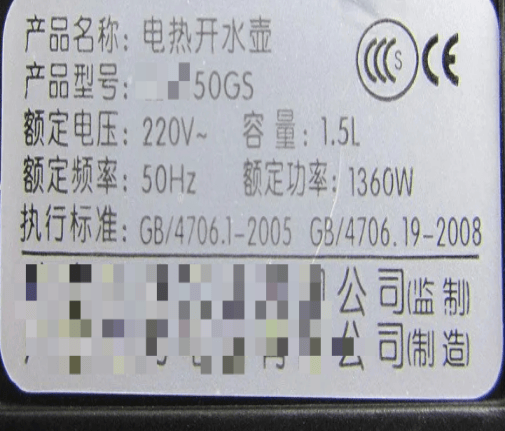
Core Viewpoint - The article emphasizes the importance of safety when purchasing and using household appliances, especially during the upcoming Spring Festival, highlighting guidelines for consumers to ensure product quality and safety. Group 1: Product Selection Guidelines - Consumers should check product name, manufacturer details, specifications, voltage, power parameters, and safety certifications on the product label [1] - The appearance and craftsmanship of appliances should be inspected, looking for quality features such as smooth surfaces and secure connections [4] - The CCC certification is crucial as it serves as a mandatory safety certification for household appliances, and products without this certification pose significant safety risks [8] Group 2: Recommended Purchase Channels - It is advised to purchase appliances from reputable sources such as large appliance stores, brand-specific shops, and authorized online platforms [9][10] - Consumers should be cautious of low-priced products from unlicensed vendors, as these may be substandard or counterfeit [5] Group 3: Safety Usage Tips - Proper layout of sockets and appliances is essential to prevent accidents [8] - Consumers should regularly replace aging appliances to avoid fire hazards and ensure safety [12] - Electrical devices should be used according to the manufacturer's instructions, and consumers should avoid overloading circuits [12][13] Group 4: Electrical Safety Rules - Key safety rules include not using damaged appliances, avoiding wet hands when handling electrical devices, and not overloading power outlets [16][17] - Regular checks of household wiring and devices are recommended to ensure safe operation [14]

中国机电产品进出口商会:“十四五”期间中国家电年出口规模突破千亿美元
智通财经网· 2026-02-11 13:25
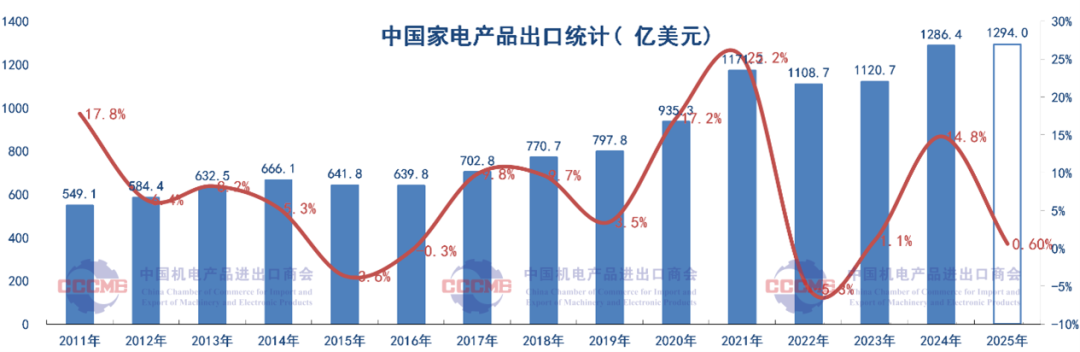
Core Insights - The report by the China Chamber of Commerce for Import and Export of Machinery and Electronic Products indicates that during the "14th Five-Year Plan" period, the overall export scale of China's home appliance industry has grown, entering a phase of high-quality exports. The export scale of home appliances is projected to increase from $93.5 billion in 2020 to $129.4 billion by 2025, achieving a compound annual growth rate (CAGR) of approximately 6.7% [1][4]. Group 1: Export Scale and Growth - The export scale of home appliances during the "14th Five-Year Plan" has surpassed $100 billion, becoming the third category of electromechanical products to do so after integrated circuits and electronic consumer goods [1][4]. - The CAGR of home appliance exports during this period is lower than the 7.8% growth rate during the "13th Five-Year Plan" and is on par with the growth rate of the "12th Five-Year Plan" [1][4]. Group 2: Market Dynamics and Challenges - The international trade environment has become increasingly complex, with trade protectionism impacting the industry. Despite these challenges, Chinese home appliance companies have maintained a focus on globalization, innovation, and brand development, acting as a stabilizer and mainstay in the foreign trade sector [1][7]. - The export volume experienced significant fluctuations, with a notable 25% increase in 2021 due to the demand from the home economy. However, a decline was observed in 2022 due to post-pandemic demand drop and geopolitical conflicts [7][8]. Group 3: Market Diversification - The primary growth regions for home appliance exports have shifted from Europe and North America to emerging markets such as ASEAN, the Middle East, Latin America, and countries along the "Belt and Road" initiative, with double-digit CAGR in these areas [8][9]. - The share of U.S. imports of Chinese home appliances has decreased from 36% in 2020 to 23% in 2025, with a significant drop in exports to the U.S. in 2025, particularly a 42.5% decline in May [9][12]. Group 4: Product Innovation and Structural Upgrades - The pace of innovation in the home appliance sector has accelerated, with a shift from traditional OEM models to ODM and OBM, reflecting a structural upgrade in export products [18][22]. - The CAGR for major appliances (5.7%), environmental appliances (8.1%), and personal care products (6.8%) has outpaced that of lifestyle appliances (3.6%) and kitchen small appliances (3.7%) [18][19]. Group 5: Specific Product Trends - The export volume of air conditioning products is projected to grow from 62.1 million units in 2020 to 82.3 million units by 2025, driven by increased demand due to global climate change [21]. - The export volume of washing machines (under 10 kg) is expected to grow at a CAGR of 10.6%, with the share of drum-type machines increasing from 40% in 2020 to 55% in 2025 [21][22].
2025年个护小家电市场总结:需求重构,价值深耕
Xi Niu Cai Jing· 2026-02-11 07:40
Core Insights - The personal care small appliance industry is shifting from a focus on "scale expansion" to "quality enhancement" driven by consumer upgrades and market competition [1] Hair Dryer - The hair dryer industry is moving away from price competition to demand creation, with four key directions for transformation [2] - The marginal effect of parameter competition is diminishing, as consumers are less sensitive to minor upgrades beyond a certain threshold [3] - Functional innovation is addressing core hair care pain points, with water ion and hair essence products projected to capture significant market shares by 2025 [2] - There is a need for deeper smart technology integration, particularly in app functionalities and scalp protection technologies [3] - Market segmentation is opening new growth avenues through targeted products for specific user groups, such as portable models for travelers and low-noise versions for children [3] Electric Toothbrush - The electric toothbrush market is transitioning from a rapid growth phase to a plateau, facing challenges in converting manual toothbrush users [4] - Smart features are becoming a significant value addition, with products featuring app connectivity and smart displays expected to dominate sales by 2025 [4] - Different age groups have distinct oral care needs, necessitating tailored functionalities in electric toothbrushes [5] - The growth of vibrating electric toothbrushes is stagnating, with a need for integration of smart features to enhance user experience [5] Electric Shaver - The electric shaver industry is characterized by stable volume and increased revenue, with retail sales reaching 9.83 billion yuan and an average price increase of 11.9% [6] - Portable shavers are driving growth, with their market share expected to rise significantly, reflecting a trend towards high-end products [6] - Product innovation is focusing on emotional and gift attributes, optimizing user experience, and enhancing core shaving performance [6][7] - The industry is entering a quality enhancement phase, emphasizing the need for improved shaving efficiency and battery life [7]
江苏省盐城市市场监管局发布2025年度冬季小家电产品市级专项监督抽查信息
Zhong Guo Zhi Liang Xin Wen Wang· 2026-02-06 07:08
Core Viewpoint - The report from the Yancheng Market Supervision Administration indicates that the quality inspection of winter small household appliances for the year 2025 showed no non-compliance among the 25 batches tested, reflecting a positive trend in product quality in this sector [2]. Group 1: Quality Inspection Results - The Yancheng Market Supervision Administration conducted a special quality inspection for winter small household appliances, with a total of 25 batches planned for testing [2]. - All 25 batches tested were found to be compliant with quality standards, indicating effective regulatory oversight and quality assurance in the market [2]. Group 2: Product Categories and Companies - The inspection covered various product categories, including electric kettles, liquid heaters, multifunctional electric pots, heaters, humidifiers, and electric blankets [3][5]. - Notable manufacturers involved in the inspection include Guangdong Midea, Hangzhou Joyoung, and Shenzhen Skyworth, among others, showcasing a diverse range of companies in the small appliance sector [3][5].




1.54亿溢价收购亏损企业,小熊电器“贪婪”吗
3 6 Ke· 2026-02-06 05:05
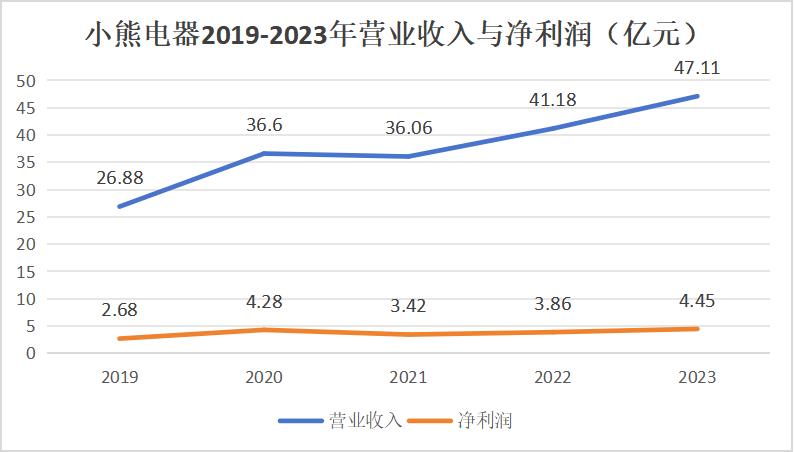
Group 1 - The core point of the news is that Xiaoxiong Electric plans to acquire a 61.78% stake in Guangdong Roman Intelligent Technology Co., Ltd. for 154 million yuan, aiming to gain control and diversify its product offerings amid a declining small home appliance market [1][5][12] - Xiaoxiong Electric has faced challenges in the small home appliance sector, with a reported revenue decline of 4.58% year-on-year in Q1 2024, and its kitchen appliance revenue share dropping below 80% for the first time in five years [5][6] - The acquisition of Roman Intelligent is seen as a strategic move to expand into the personal care appliance market, which has shown growth potential, contrasting with the stagnation in kitchen appliances [10][12] Group 2 - Roman Intelligent reported total assets of 447.86 million yuan and a net loss of 372.46 thousand yuan in 2023, primarily due to its underperforming self-branded products [8][9] - The company has a strong R&D team with over 120 members and holds more than 900 patents, which could enhance Xiaoxiong Electric's innovation capabilities post-acquisition [10][11] - Roman Intelligent's business model includes a significant focus on ODM/OEM operations, which accounted for 80% of its revenue in 2023, providing Xiaoxiong Electric with established competitive advantages and potential for overseas market expansion [11][12]