
代理退保黑灰产

Search documents
一条评论引来四家“代理退保”,隐蔽化黑灰产围猎消费者
第一财经· 2026-03-15 14:10
Core Viewpoint - The article highlights the increasing concealment of illegal "insurance policy cancellation" operations, which have shifted from direct customer information acquisition to more subtle methods via social media platforms, making it harder for regulators to combat these practices [3][5][19]. Group 1: Methods of Operation - The illegal "insurance policy cancellation" operations have evolved from direct phone calls and SMS to utilizing social media platforms, where they embed hooks in comment sections to attract potential victims [5][6]. - These operations employ deceptive language and tactics, such as using variant words to bypass platform audits, making it difficult for consumers to distinguish between legitimate and fraudulent information [6][10]. - The black market for "insurance policy cancellation" has developed a sophisticated model involving the creation and management of social media accounts to lure customers, often disguising themselves as ordinary users [10][15]. Group 2: Risks and Consequences - Consumers engaging with these fraudulent services face multiple risks, including loss of insurance coverage, potential financial loss from upfront fees, and exposure of personal information to malicious actors [16][18]. - The article notes that some consumers have reported losing their deposits after engaging with these fraudulent entities, highlighting the financial risks involved [16][18]. - The illegal operations can lead to legal repercussions for consumers who may be coerced into providing false information or engaging in fraudulent complaints [16][18]. Group 3: Regulatory Challenges - Despite increased regulatory efforts, the article points out that the black market for "insurance policy cancellation" persists due to the anonymity and adaptability of these operations [19][20]. - Regulatory bodies have implemented measures to combat these practices, but the evolving tactics of the black market make enforcement challenging [19][20]. - The insurance industry itself faces challenges, including pressure to resolve complaints quickly, which can lead to a reluctance to pursue legal action against fraudulent operations [20][21]. Group 4: Recommendations for Prevention - The article suggests a multi-faceted approach to prevent illegal "insurance policy cancellation," including better protection of consumer information, enhanced sales suitability obligations for insurance companies, and the establishment of a credit management system within the industry [21]. - It emphasizes the need for increased consumer education regarding the risks associated with these fraudulent practices and the importance of verifying the legitimacy of cancellation services [21].


“律师”教你全额退保?五部门挑破短视频“全额退保”乱象
Bei Jing Shang Bao· 2026-02-09 03:29
Core Viewpoint - The article highlights the emergence of fraudulent "agent rights protection" schemes on social media platforms, where individuals falsely claim to assist consumers in obtaining full insurance refunds, often using rented or misappropriated law firm accounts to lend credibility to their operations [1][2][3] Group 1: Regulatory Response - Five regulatory departments have issued a risk warning targeting illegal "agent rights protection" activities on short video and live streaming platforms, indicating a crackdown on these fraudulent practices [2][5] - The warning outlines the main characteristics of these fraudulent videos and live streams, including false claims about new regulatory policies and misleading information about financial institutions [2][3] Group 2: Nature of the Fraud - Many of these fraudulent operations present themselves as "professional lawyers" or law firms, using legal jargon to mislead consumers into believing they can achieve full refunds through dubious methods [3][4] - The article reveals that the identities of these so-called lawyers can be easily rented for a few hundred yuan, allowing anyone to pose as a legal professional [6][7] Group 3: Consumer Vulnerability - Consumers often turn to these fraudulent services due to the high costs and complexities associated with hiring legitimate lawyers, as well as the difficulty in obtaining necessary evidence for their claims [8][10] - The perception that insurance companies frequently deny claims contributes to consumer anxiety, making them more susceptible to the promises of quick and easy refunds from fraudulent agents [12][14] Group 4: Industry Implications - The article discusses how the pursuit of scale within the insurance industry has led to unethical practices among agents, which in turn provides material for fraudulent operations to exploit [10][11] - The systemic risks posed by these fraudulent activities have been recognized as a threat to financial security and social stability, prompting a coordinated response from multiple regulatory bodies [4][5] Group 5: Recommendations for Consumers - Consumers are advised to critically assess their insurance policies and avoid impulsive decisions to cancel, as many policies retain value over time [15] - The article emphasizes the importance of consumer education regarding insurance products and the risks associated with "agent rights protection" schemes, encouraging reliance on official channels for dispute resolution [14][15]
“律师”教你全额退保?五部门挑破短视频“全额退保”乱象
Bei Jing Shang Bao· 2026-02-06 16:30
Core Viewpoint - The article highlights the emergence of fraudulent "agent rights protection" schemes on social media platforms, where individuals falsely claim to be lawyers and promise full insurance refunds, leading to significant consumer exploitation and regulatory intervention [1][4][5]. Group 1: Regulatory Response - On February 6, multiple regulatory bodies issued a risk warning targeting illegal "agent rights protection" activities on short video and live streaming platforms, indicating a crackdown on these deceptive practices [1][4]. - The warning detailed the characteristics of these fraudulent videos, including false claims about new regulatory policies and misleading information about financial institutions [4][5]. Group 2: Characteristics of Fraudulent Practices - Common tactics include fabricating "new policies" from regulatory bodies and claiming that financial institutions are offering full refund activities, often using misleading visuals to enhance credibility [5][6]. - Many of these fraudulent accounts are operated under the guise of legitimate law firms, with some being mere information or consulting companies masquerading as legal entities [6][7]. Group 3: Industry Impact - The rise of these fraudulent schemes is attributed to systemic issues within the insurance industry, including a focus on scale over ethical practices, which creates vulnerabilities that fraudsters exploit [15][16]. - The article emphasizes that the "agent rights protection" phenomenon is a symptom of deeper issues within the insurance sector, including the pressure on agents to meet sales targets, leading to unethical behavior [15][17]. Group 4: Consumer Behavior and Awareness - Consumers often turn to these fraudulent services due to the perceived difficulty and high costs associated with legitimate legal recourse, exacerbated by a lack of understanding of insurance policies and processes [12][18]. - The article suggests that consumer education and awareness are crucial in combating these fraudulent practices, urging individuals to critically assess their insurance policies and avoid impulsive decisions [20][21]. Group 5: Recommendations for Mitigation - Effective mitigation requires a collaborative effort from platforms, insurance companies, regulatory bodies, and consumers to address the root causes of these fraudulent activities [19][20]. - Strengthening platform controls and enhancing consumer education about insurance products and the risks of "agent rights protection" schemes are essential steps in reducing the prevalence of these scams [19][20].
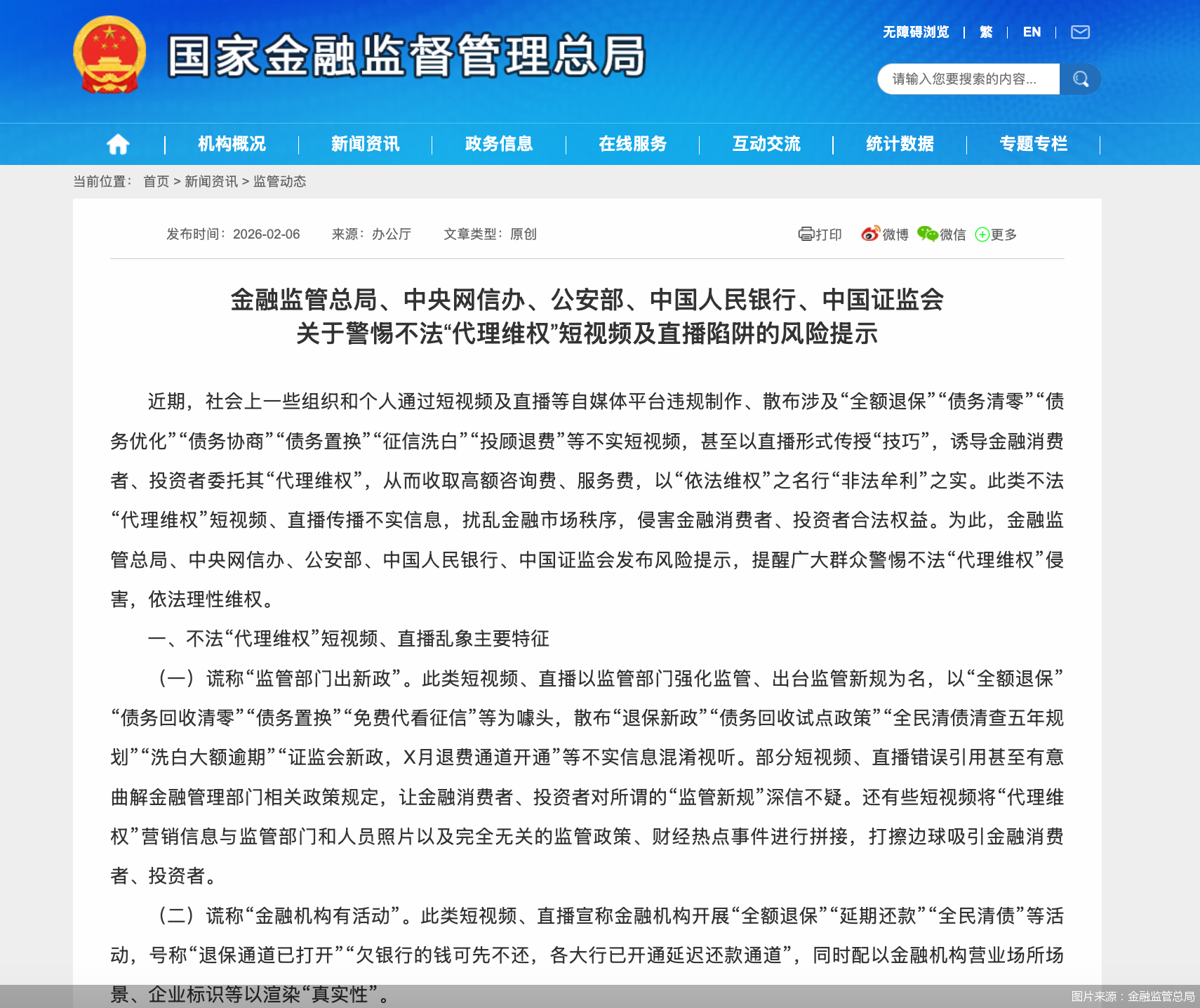
典型案例曝光!“代理退保”等金融“黑灰产”再被通报
Guo Ji Jin Rong Bao· 2026-01-26 13:00
Core Viewpoint - The article highlights the ongoing issue of "agent policy cancellation" as a significant manifestation of "black and gray industry" in the financial sector, with recent cases being exposed by regulatory authorities [1] Group 1: Case Summaries - The recent report includes five cases, three related to the banking industry and two to the insurance industry, specifically concerning "agent policy cancellation" [1] - One case involved a scheme where an individual, Song, operated an insurance brokerage and recruited others to sell insurance policies under false pretenses, leading to a total investment of over 17.63 million yuan and a loss of approximately 5.84 million yuan for the insurance company [3] - Another case involved the illegal purchase of personal information of insurance policyholders, where an individual named Wang profited 68,749 yuan by providing this information for policy cancellation purposes [6] Group 2: Regulatory Response - The financial regulatory authority emphasizes the need for strict legal action against such fraudulent activities, highlighting the importance of cross-departmental cooperation to combat "black and gray industry" crimes [4] - The regulatory body plans to enhance consumer education and risk management practices within insurance companies to prevent such fraudulent schemes from occurring [4][7] - A long-term prevention mechanism is being established, focusing on collaboration between industry stakeholders, law enforcement, and public awareness to effectively combat the illegal acquisition of personal information and related fraudulent activities [7]
“代理退保”等“黑灰产”再被通报,有人获刑超十年
证券时报· 2026-01-23 13:13
Core Viewpoint - The article emphasizes the crackdown on illegal activities in the insurance sector, particularly focusing on the rise of "black and gray" industries related to insurance fraud and the illegal purchase of personal information [1][5]. Group 1: Insurance Fraud Cases - A case involving Song and others was reported, where they committed contract fraud under the guise of "short-term policy cancellation." From July 2020 to May 2022, they developed 18 policyholders who were misled into purchasing insurance products without genuine intent to maintain them, resulting in a total investment of over 17.63 million yuan and a loss of 5.84 million yuan to the insurance company [4][5]. - The court sentenced Song and six others to prison terms ranging from one year to ten and a half years for contract fraud, with some receiving fines and others on probation. Song's probation was revoked due to committing a new crime [4][5]. Group 2: Illegal Purchase of Personal Information - Another case involved Wang and others who illegally purchased personal information of insurance policyholders for the purpose of "agent policy cancellation." They acquired 67,207 records, profiting 68,749 yuan from this illegal activity [7][8]. - The regulatory authority highlighted the importance of punishing illegal information purchases to protect personal data security. The article notes that the "agent policy cancellation" industry often begins with the illegal acquisition of personal information, which can lead to targeted scams [8]. Group 3: Regulatory Response - The Financial Regulatory Authority stated that there has been a growing trend in insurance-related fraud, which disrupts market order. They are committed to severe penalties and cross-departmental cooperation to combat these illegal activities [5][8]. - The article calls for a robust mechanism to prevent such crimes, emphasizing the need for collaboration between insurance companies, law enforcement, and public awareness campaigns to create a comprehensive defense against these "black and gray" industries [8].

代理退保“毒丸”调查(上):几百元租一个律所社交账号使用权
Bei Jing Shang Bao· 2025-10-21 06:23
Core Viewpoint - The "agent insurance refund" industry, operating in a gray area, has become a focus for regulatory authorities, yet it has evolved into a more concealed and sophisticated "standardized" operation model despite ongoing crackdowns [1] Group 1: Industry Operations - The black market utilizes "lawyer avatars" to create a facade of legitimacy, renting or impersonating law firm credentials to appeal to consumers' psychological defenses [1][4] - The industry has developed a structured approach, including the use of "complaint scripts" fabricated by so-called "legal teachers" to create emotionally charged, standardized complaint letters [1][7] - The black market's operations heavily rely on the internet, with a high degree of industrialization, including media companies that specialize in acquiring and renting various credentialed accounts [6][14] Group 2: Consumer Interaction - Consumers are often lured by enticing phrases on social media, with accounts portraying a sense of justice and claiming to offer high refund rates [2][4] - The complaint materials provided to consumers are often fabricated, containing misleading information that has not been verified with the clients [9][11] - The black market's tactics include using fake identities and misleading claims to pressure insurance companies into compliance [11][12] Group 3: Regulatory Challenges - The black market exploits the complexity of insurance products and refund processes, presenting themselves as legal experts to manipulate consumer trust [14] - Regulatory bodies have increased their efforts to combat these fraudulent practices, but consumer awareness and vigilance remain crucial in protecting against such scams [14][15]
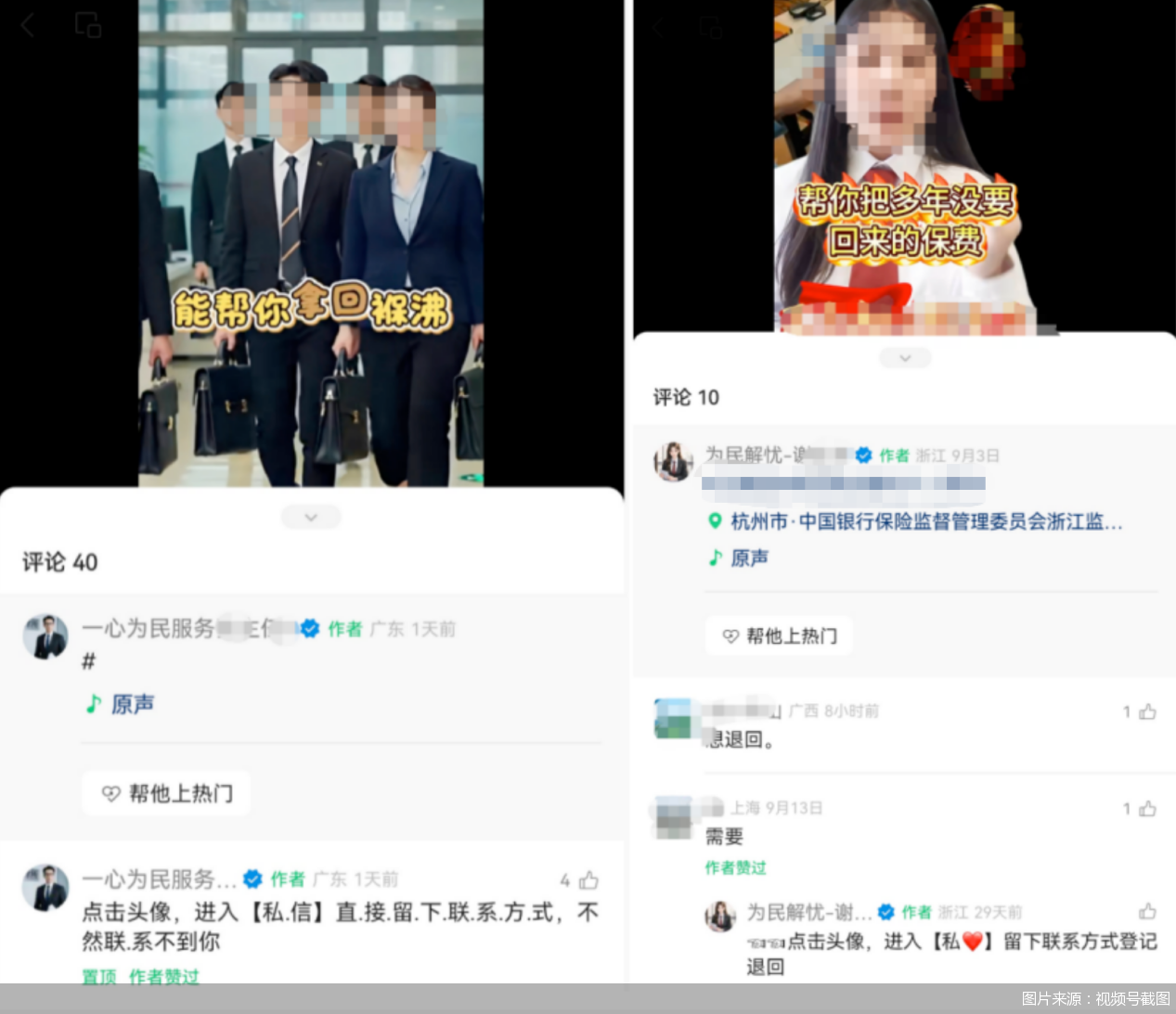
财经眼|合力打击“代理退保”黑灰产
Ren Min Ri Bao· 2025-09-30 02:01
Core Viewpoint - The rise of fraudulent "agent refund" schemes in the insurance sector poses significant risks to consumers, who may be misled into paying fees for services that do not yield the promised refunds or benefits [1][5][6]. Group 1: Consumer Experiences - A 73-year-old consumer fell victim to an "agent refund" scam after being promised a high refund rate for her annuity insurance, leading her to pay a service fee without receiving any actual refund [2][3]. - The consumer was advised to file a complaint with regulatory authorities without first consulting her insurance agent, which is a common tactic used by scammers [3][4]. - After realizing the scam, the consumer was able to recover her service fee with the help of regulatory authorities, highlighting the importance of vigilance against such schemes [4]. Group 2: Nature of Fraud - Fraudulent entities often disguise themselves as legal or consulting firms, using high refund promises to exploit consumers' lack of knowledge about their rights and the insurance process [5][6]. - These scams can lead to significant financial losses for consumers, including the loss of insurance coverage and potential exposure to further scams due to the sale of personal information [6][7]. Group 3: Regulatory Response - The financial regulatory authorities have emphasized that any organization or individual is prohibited from illegally promoting or conducting insurance refund services, with strict penalties for those who engage in such activities [7][9]. - Recent legal actions have been taken against criminal groups involved in "agent refund" scams, with significant financial losses reported for insurance companies and substantial illegal profits for the perpetrators [8][9]. Group 4: Industry Measures - The insurance industry is collaborating with regulatory bodies to enhance the detection and prevention of "agent refund" scams, including the use of technology and data analysis to identify fraudulent activities [10][11]. - There is a call for clearer legal definitions and regulations regarding illegal "agent refund" practices to improve enforcement and consumer protection [11][12].
合力打击“代理退保”黑灰产
Ren Min Ri Bao· 2025-09-30 00:26
Core Viewpoint - The article highlights the increasing prevalence of illegal "agent refund" schemes in the insurance industry, which mislead consumers into believing they can recover their premiums through unauthorized channels, leading to financial losses and potential legal issues [1][5][12]. Summary by Sections Consumer Experiences - A 73-year-old woman from Chongqing fell victim to an illegal "agent refund" scam after being misled by a lawyer's claims of high refund rates [2]. - The victim paid a service fee of 4,000 yuan to the scammers, who promised a 90% refund of her premium, significantly higher than the normal rate [3]. - After realizing the scam, the victim was able to recover her service fee with the help of the insurance company and law enforcement [4]. Nature of the Scam - Financial black and gray market organizations exploit consumers' lack of knowledge about their rights and the refund process, often using false claims and fabricated documents to pressure insurance companies into paying excessive refunds [5][6]. - Victims often incur high fees without successfully obtaining refunds, and they risk losing their insurance coverage and personal information [6][7]. Legal and Regulatory Actions - The article discusses a case in Quanzhou where a criminal gang was convicted of extortion related to "agent refund" schemes, resulting in significant financial losses for insurance companies [8]. - Regulatory bodies emphasize that any complaints must be truthful and not fabricated, as malicious complaints can lead to legal consequences for the complainants [9][12]. Industry Response - Financial regulatory authorities are enhancing collaboration with law enforcement to combat illegal "agent refund" activities, including sharing information and conducting joint operations [10][11]. - The use of technology, such as big data and intelligent models, is being implemented to improve the identification and handling of these scams [11]. Recommendations for Improvement - Experts suggest that clearer legal definitions and regulations regarding illegal "agent refund" practices are necessary to facilitate enforcement and protect consumers [12]. - Financial institutions are encouraged to strengthen internal controls and self-regulation to prevent employees from facilitating illegal activities [13].
“专业人士”看似热心帮忙 却让保险消费者损失资金又丢了保障 合力打击“代理退保”黑灰产(财经眼)
Ren Min Ri Bao· 2025-09-29 22:38
Core Viewpoint - The rise of fraudulent "agent refund" schemes in the insurance sector poses significant risks to consumers, as these scams exploit individuals' lack of knowledge about their rights and the refund process [1][5][6]. Group 1: Consumer Experiences - A 73-year-old consumer in Chongqing fell victim to an "agent refund" scam after being misled by a supposed lawyer on social media, believing she could recover a significant portion of her insurance premium [2][3]. - The consumer paid a service fee of 4,000 yuan but was later informed that her refund would be much lower than expected, highlighting the deceptive nature of these schemes [3][4]. - After realizing the fraud, the consumer was able to recover her service fee with the help of the insurance company and law enforcement [4]. Group 2: Nature of Fraud - Fraudulent entities often disguise themselves as legal or consulting firms, luring consumers with promises of high refunds and exploiting their lack of knowledge about insurance policies [5][6]. - These scams can lead to significant financial losses for consumers, including the potential loss of insurance coverage and personal information being sold for further fraudulent activities [5][6]. Group 3: Legal and Regulatory Response - The financial regulatory authorities are taking steps to combat these fraudulent practices, including criminal prosecutions for those involved in "agent refund" schemes [7][8]. - Recent cases have resulted in severe penalties for perpetrators, including prison sentences and fines, indicating a growing legal crackdown on such activities [7][8]. - Regulatory bodies emphasize the importance of truthful complaints and warn that fabricating claims can lead to legal repercussions for consumers as well [8][11]. Group 4: Industry Measures - The insurance industry is collaborating with regulatory agencies to enhance efforts against "agent refund" fraud, including the establishment of joint task forces and data-sharing initiatives [9][10]. - Technological advancements are being utilized to improve the identification and handling of fraudulent activities, with companies developing models to detect and analyze such scams [9][10]. - There is a call for clearer legal definitions and regulations regarding illegal "agent refund" practices to strengthen enforcement and consumer protection [10][11].
剑指退保黑产!金监、公安重拳出击,腾讯 “参战”
2 1 Shi Ji Jing Ji Bao Dao· 2025-09-29 11:17
Core Viewpoint - The insurance industry in Guangdong and Fujian is intensifying efforts to combat illegal "agent policy cancellation" activities, with collaboration among financial regulators, law enforcement, and industry associations to establish a comprehensive prevention and control system [1][2][3]. Group 1: Regulatory Actions - The National Financial Regulatory Administration and the Ministry of Public Security have initiated a collective crackdown on illegal activities related to "agent policy cancellation," emphasizing the need for cross-regional and cross-departmental cooperation [1][2]. - The Guangdong Insurance Industry Association has organized meetings and training sessions to address the issue, collaborating with major internet companies like Tencent [1][3]. - New regulatory measures, such as the "Insurance Sales Behavior Management Measures," will take effect on March 1, 2024, prohibiting any organization or individual from illegally promoting or conducting policy cancellation activities [3]. Group 2: Criminal Cases and Enforcement - A notable case involved the main perpetrators of an "agent policy cancellation" extortion scheme being sentenced to significant prison terms, highlighting the legal consequences of such illegal activities [4][6]. - The Ministry of Public Security and the National Financial Regulatory Administration have reported on the outcomes of a six-month crackdown on financial black and gray market crimes, including the publication of typical cases [5]. Group 3: Industry Impact and Consumer Awareness - The distinction between legitimate policy cancellation and illegal "agent policy cancellation" is crucial, as the latter disrupts market order and exploits consumers [7][8]. - The illegal activities often involve misleading advertising and coercive tactics to extract higher compensation from insurance companies, posing significant risks to consumers [8][9]. - Industry experts urge consumers to remain vigilant against the risks associated with "agent policy cancellation" and to utilize legitimate channels for policy cancellation [9].