
价值引领

Search documents
董事长缪建民一句“员工很少准时下班”,直接把招商银行推进了舆论漩涡。大伙儿还没从这句话里回过神,年报数据又添了一把火:2025年招行员工突破12万人,人均薪酬43.33万,但比去年降了3.5%。更扎眼的是,普通员工薪酬缩水,管理层却普遍涨薪。行长王良年薪297万,微涨0.88万;副行长徐明...
Sou Hu Cai Jing· 2026-03-31 12:27
Group 1 - The chairman's comment about employees rarely leaving on time has sparked public controversy for the bank [1] - In 2025, the bank's employee count is expected to exceed 120,000, with an average salary of 433,300, reflecting a 3.5% decrease from the previous year [1] - While ordinary employees face salary cuts, management salaries have generally increased, with the CEO earning 2.97 million, a slight increase of 0.88 million, and the vice president receiving a significant raise of nearly 800,000, totaling over 2.81 million [1] Group 2 - The banking industry is facing challenges, and while cost-cutting is understandable, salary adjustments should not disproportionately affect employees [2] - Employees are the main workforce, and focusing solely on contributions without fair compensation can lead to dissatisfaction and disengagement [2] - Management salary increases should be justified by performance, ensuring transparency to maintain employee morale and trust in the organization [2]



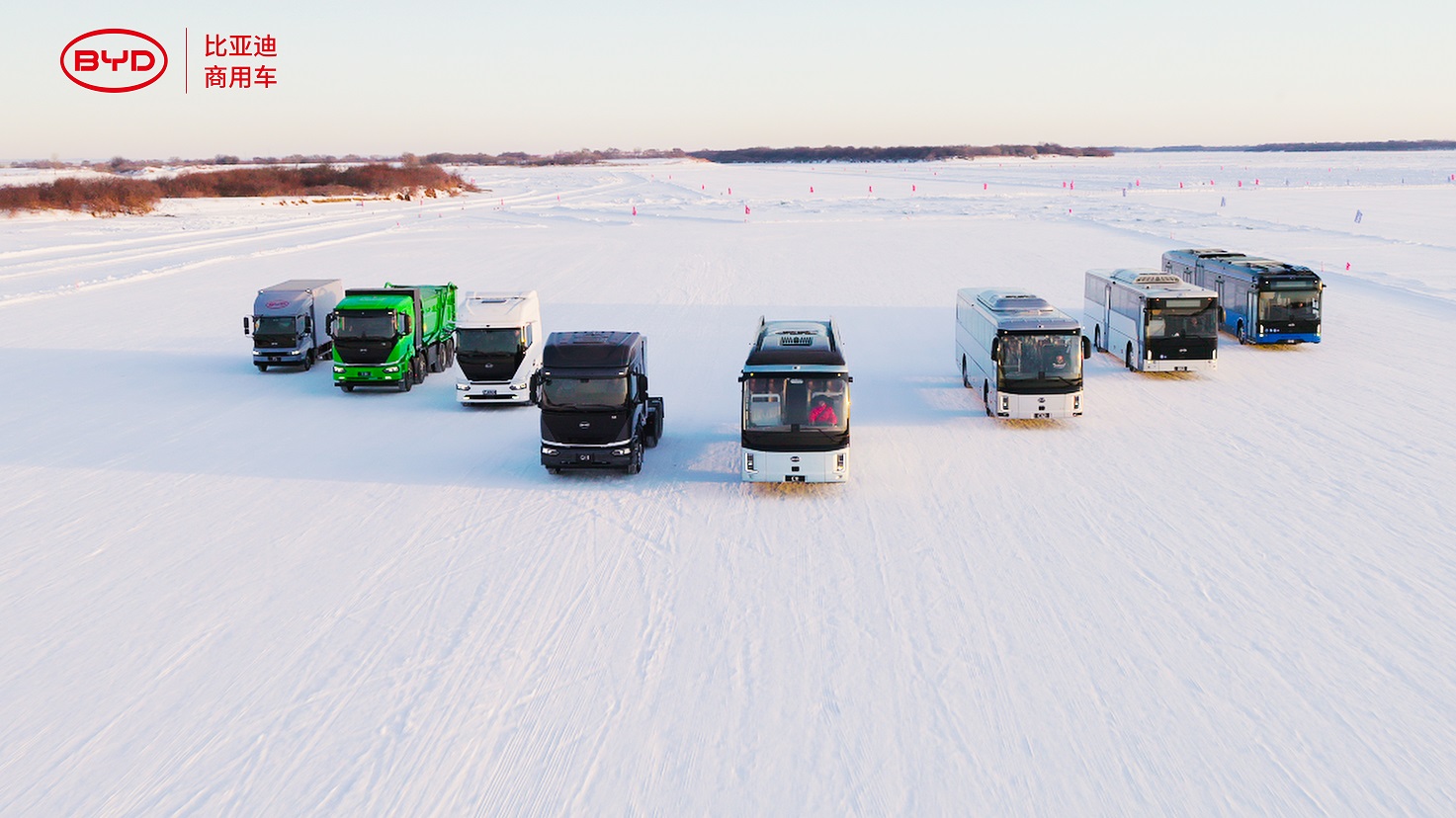
从极寒破冰,到穿越周期 比亚迪商用车向新、向质、向高之行
Zhong Guo Qi Che Bao Wang· 2026-02-05 08:06
Core Insights - BYD's commercial vehicle division has established itself as a leader in the electric vehicle sector, emphasizing the importance of being a pioneer in technology and market strategies [2][3] - The "14th Five-Year Plan" marks a critical transition for China's new energy vehicle industry, shifting from policy-driven to market-driven growth, with BYD focusing on comprehensive solutions for commercial vehicles [3][5] - BYD's strategic shift from a single electric focus to a dual approach of "pure electric + hybrid" is a significant development, exemplified by the launch of the T5DM hybrid light truck [5][10] Strategic Transformation - The transition during the "14th Five-Year Plan" has allowed BYD to solidify its foundation and expand its market presence, aiming to become a full-spectrum provider of new energy solutions for commercial vehicles [3][5] - The introduction of the T5DM hybrid light truck addresses market pain points such as range anxiety and the need for efficient fuel alternatives, leveraging BYD's established hybrid technology [5][10] - BYD's product matrix now includes a variety of vehicles, such as the T4 electric truck and C11 passenger bus, designed to meet diverse market needs and enhance operational efficiency [6][11] Technological Advancements - BYD has developed a robust technology system capable of operating in extreme conditions while also catering to large-scale market demands, showcasing a balance of strength and flexibility [7][8] - The company has implemented advanced technologies for cold weather performance, ensuring reliable operation in harsh environments, which is critical for market acceptance [8][10] - BYD's vertical integration and control over the supply chain enable it to offer competitive pricing, achieving "fuel-electric parity" for its hybrid vehicles [10][11] Market Position and Future Outlook - BYD's global sales reached 57,013 units in the past year, with significant contributions from both buses and trucks, highlighting its expanding footprint across over 400 cities worldwide [16] - The company aims to transition from product output to establishing technical standards and value output in the global market, enhancing its competitive edge [12][14] - BYD's potential to define global standards in hybrid commercial vehicles and reshape business models through data-driven solutions positions it as a key player in the future of the industry [14][16]

行业洞察 | 中国超硬材料产业TOP50城市榜单揭晓 河南多城位居前列
Xin Hua Cai Jing· 2026-01-30 06:23
Core Insights - The superhard materials industry, known as the "industrial teeth," is becoming a key measure of advanced manufacturing strength in regions across China [1][2] - The 2025 China Superhard Materials Industry City Competitiveness TOP 50 list highlights Zhengzhou, Shangqiu, Nanyang, Jiaozuo, and Xuchang as the top five cities, with competitiveness indices of 94.04, 89.17, 88.91, 86.81, and 84.44 respectively [1] Group 1: Industry Overview - The competitiveness ranking is based on six dimensions: industry scale, quality enterprises, innovation capability, financing ability, industry efficiency, and growth capability [1] - Zhengzhou leads in both "industry scale" and "quality enterprises," while also ranking in the top three for "innovation capability" and "financing ability," showcasing a comprehensive leading advantage [2] Group 2: Regional Strengths - Henan province, as the birthplace and core area of the superhard materials industry, accounts for over 90% of the national production capacity, with a complete supply chain from raw materials to finished products [2] - The strong industrial cluster effect in Henan has led to significant technological innovations, particularly in cutting-edge fields like CVD diamonds and nano-diamonds [2] Group 3: Competitiveness of Other Cities - Other cities like Shenzhen, Xiamen, and Beijing are forming a distinctive second tier in the competitiveness ranking, with Shenzhen showing notable advantages in "growth capability" [4] - Xiamen excels in nurturing specialized "little giant" enterprises, while Beijing maintains a leading position in basic research and frontier applications in superhard materials [4] Group 4: Future Trends - The competition in the superhard materials industry is shifting from production capacity to technological innovation, product performance, and brand value [4] - The superhard materials sector is crucial for supporting strategic emerging industries such as aerospace, semiconductors, and new energy vehicles, indicating its importance in future manufacturing competitiveness [4][5]
实现文化传承与思政教育同频共振
Xin Lang Cai Jing· 2026-01-08 22:05
Core Viewpoint - The integration of traditional Chinese culture into higher education ideological and political education is essential for fostering cultural confidence and nurturing new generations, requiring systematic advancement from top-level design, educational teaching, and faculty development [1] Group 1: Top-Level Design Dimension - Establish a systematic planning and institutional guarantee by enhancing organizational mechanisms and leadership roles, forming a collaborative working group involving multiple departments to ensure the scientific and effective integration of traditional culture into education [2] - Improve the institutional framework by incorporating traditional culture into the overall development plan of the university, enhancing curriculum design, teaching evaluation, and faculty training [2] Group 2: Educational Teaching Dimension - Strengthen classroom teaching by creating a multi-dimensional curriculum system that includes mandatory and elective courses focused on traditional culture, integrating its content into ideological education [3] - Foster a cultural atmosphere by designing campus environments that reflect traditional culture and organizing activities that engage students in cultural experiences [3] Group 3: Faculty Development Dimension - Enhance talent recruitment by implementing specialized plans to attract high-level professionals and young teachers with expertise in traditional culture [4] - Establish a training system to improve teaching capabilities, incorporating traditional culture into existing teacher training programs and promoting interdisciplinary collaboration among faculty [4]
人工智能视域下思政教育工作图景与路径
Xin Hua Ri Bao· 2025-07-02 23:33
Core Insights - The article discusses the transformative impact of artificial intelligence (AI) on higher education, particularly in the realm of ideological and political education in universities, highlighting new opportunities and perspectives brought by digitalization [1] Group 1: Transformation of Educational Models - AI technology will lead to a comprehensive transformation of ideological and political education in universities, shifting from traditional methods to a more intelligent and collaborative educational model [2] - The integration of AI will facilitate a hybrid teaching model that combines online and offline learning, making online micro-classes a significant supplement to traditional ideological education [2] - AI can assist educators by taking over repetitive tasks such as student performance analysis and assignment grading, thereby enhancing teaching efficiency [2] Group 2: Innovation in Teaching Content - AI will enable a dynamic and multi-dimensional presentation of teaching content, moving beyond static textbooks to a more integrated approach [2] - AI systems can automatically gather trending educational materials from the internet, creating an updated case library for ideological education [2] - Virtual reality (VR) technology can simulate various scenarios for students, helping them understand the consequences of different value choices [2] Group 3: Redefining Roles of Educators and Students - The roles of educators and students will undergo significant changes, fostering a collaborative educational community [2] - Educators will transition from mere knowledge transmitters to classroom designers and academic researchers, utilizing AI data to enhance teaching [2] - Students will evolve from passive recipients of knowledge to active learners, using digital tools for independent exploration and collaborative activities [2] Group 4: Reform Pathways for AI Integration - To realize the envisioned transformation, a systematic solution must be developed, focusing on key areas such as technology, policy, and talent [3] - There is a need to establish comprehensive regulations and standards for the application of AI in ideological education, ensuring data security and ethical considerations [3] - Institutions should create a tiered certification system for AI educational platforms, assessing their safety, algorithm transparency, and educational suitability [3] Group 5: Enhancing Value Guidance and Teacher Competence - The application of AI in education must adhere to the principle of serving educational purposes, ensuring that technology supports rather than detracts from the educational experience [4] - A robust review mechanism should be established to filter negative content generated by AI, maintaining ideological safety in educational materials [4] - Developing a composite teacher workforce with both professional and digital literacy is crucial for improving the quality of ideological education [5]