
纳米金刚石

Search documents
趋势研判!2026年中国纳米金刚石行业政策、产需情况、市场规模、重点企业及未来趋势:下游需求增长与工艺优化,促进纳米金刚石规模持续扩张[图]
Chan Ye Xin Xi Wang· 2026-02-17 01:47
Core Insights - The nano-diamond market in China is projected to grow from 173.12 million yuan in 2016 to 298 million yuan in 2024, with a compound annual growth rate (CAGR) of 7.02% [1][12] - The industry is expected to reach a market size of approximately 31.89 million yuan by 2025, driven by advancements in synthesis technology and increasing demand from high-end manufacturing, new energy, and electronic information sectors [1][12] - The future of the nano-diamond industry is anticipated to focus on high performance, green development, and collaborative industrial ecosystems [1][12] Industry Overview - Nano-diamonds are non-metal materials composed of sp³ hybridized carbon atoms, exhibiting exceptional hardness, high thermal conductivity, and biocompatibility [3] - They can be synthesized through various methods, including high-temperature high-pressure and detonation techniques, and are categorized into single-dispersed nano-diamond particles and nano-diamond polycrystals [3][9] Market Dynamics - The demand for nano-diamonds is increasing due to the rising performance requirements in downstream industries such as high-end manufacturing and new energy [1][12] - The industry is supported by national policies that encourage the development of new functional materials, including nano-diamonds [7][8] Application Areas - Nano-diamonds have diverse applications across various fields, including: - As additives in metal coatings to enhance part lifespan by 1-9 times and reduce coating thickness by over 50% [5] - In catalysis to improve propane dehydrogenation selectivity and stability in redox reactions [5] - As lubricating oil additives to decrease friction loss by 30-40% [5] - In aerospace for turbine blade coatings and composite material reinforcement [5] - In medicine as drug carriers and fluorescent probes for targeted tumor therapy and in vivo imaging [5] Industry Chain - The upstream of the nano-diamond industry includes raw materials like graphite and methane, as well as equipment for synthesis [9] - The midstream consists of nano-diamond synthesis and processing companies, while the downstream encompasses applications in abrasives, lubricants, aerospace, metal coatings, and medical fields [9][10] Competitive Landscape - The nano-diamond industry in China features several key players, including: - Huifeng Diamond, specializing in synthetic single crystal diamond powder [13] - Sifangda, focusing on superhard materials and related products [15] - The competition is intensifying, with companies emphasizing technological innovation, brand building, and market expansion [13][15] Future Trends - The nano-diamond industry is expected to expand its application scenarios and innovate functionalities, moving from traditional uses to high-value fields such as biomedical, quantum information, and advanced manufacturing [16] - There will be a focus on optimizing synthesis processes for precision control, scalability, and environmental friendliness [17] - Cross-disciplinary integration and collaboration between academia and industry will enhance innovation and facilitate the transition of nano-diamonds from laboratory to industrial application [19]


激市场活力 筑发展之基 增民生底色
Sou Hu Cai Jing· 2026-02-06 23:45
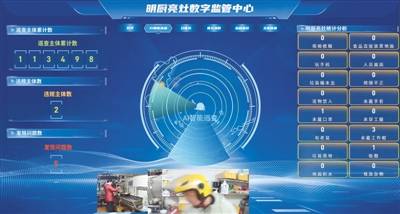
Core Viewpoint - The article highlights the significant advancements in food safety and market regulation in Zhengzhou, emphasizing the integration of digital technology and community engagement to enhance consumer trust and safety in the food industry [10][11][12]. Group 1: Food Safety Initiatives - The "Internet + Bright Kitchen" initiative allows consumers to view real-time kitchen operations, enhancing transparency and trust in food safety [12][13]. - Zhengzhou has implemented a comprehensive monitoring system for food safety, with 5,565 sets of kitchen monitoring equipment connected to the network, allowing real-time oversight [14]. - The city has been recognized as a "National Food Safety Demonstration City," reflecting its improved food safety governance capabilities [28]. Group 2: Community Engagement and Governance - The "Zhengqi Pioneer" program engages over 8,000 delivery riders as food safety monitors, creating a community-driven approach to food safety oversight [12][18]. - The program encourages riders to report violations, forming a closed-loop management system that enhances regulatory efficiency [12][14]. - The integration of digital tools in governance has improved the efficiency of market regulation, allowing for real-time data sharing and monitoring [11][13]. Group 3: Regulatory Reforms and Business Environment - Zhengzhou has streamlined business registration processes, reducing paperwork and approval times significantly, which has led to a substantial increase in the number of registered businesses [16][17]. - The city has introduced a "no-feel migration" reform, allowing businesses to relocate with minimal administrative burden, resulting in an 81.67% completion rate for migration applications [17]. - Credit classification and regulatory measures have been enhanced, covering over 70% of sectors, which has improved the precision of regulatory actions and reduced unnecessary disruptions for compliant businesses [18][19]. Group 4: Quality and Innovation - Zhengzhou's quality improvement initiatives have led to the establishment of a Chief Quality Officer system, with over 80% of key enterprises appointing quality leaders [21][22]. - The city has actively participated in the formulation of international and national standards, enhancing its reputation in quality governance [22][24]. - The "Zheng High Competition" has generated significant economic benefits from patented technologies, showcasing the city's commitment to innovation and quality [23][24]. Group 5: Consumer Protection and Satisfaction - The city has developed a "放心消费" (Safe Consumption) initiative, promoting consumer rights and establishing a new dispute resolution system [31][30]. - A multi-channel complaint handling system has been implemented, ensuring quick resolution of consumer disputes and enhancing consumer confidence [31][32]. - The establishment of numerous consumer protection stations across the city has created a robust support network for consumers [31].
行业洞察 | 中国超硬材料产业TOP50城市榜单揭晓 河南多城位居前列
Xin Hua Cai Jing· 2026-01-30 06:23
Core Insights - The superhard materials industry, known as the "industrial teeth," is becoming a key measure of advanced manufacturing strength in regions across China [1][2] - The 2025 China Superhard Materials Industry City Competitiveness TOP 50 list highlights Zhengzhou, Shangqiu, Nanyang, Jiaozuo, and Xuchang as the top five cities, with competitiveness indices of 94.04, 89.17, 88.91, 86.81, and 84.44 respectively [1] Group 1: Industry Overview - The competitiveness ranking is based on six dimensions: industry scale, quality enterprises, innovation capability, financing ability, industry efficiency, and growth capability [1] - Zhengzhou leads in both "industry scale" and "quality enterprises," while also ranking in the top three for "innovation capability" and "financing ability," showcasing a comprehensive leading advantage [2] Group 2: Regional Strengths - Henan province, as the birthplace and core area of the superhard materials industry, accounts for over 90% of the national production capacity, with a complete supply chain from raw materials to finished products [2] - The strong industrial cluster effect in Henan has led to significant technological innovations, particularly in cutting-edge fields like CVD diamonds and nano-diamonds [2] Group 3: Competitiveness of Other Cities - Other cities like Shenzhen, Xiamen, and Beijing are forming a distinctive second tier in the competitiveness ranking, with Shenzhen showing notable advantages in "growth capability" [4] - Xiamen excels in nurturing specialized "little giant" enterprises, while Beijing maintains a leading position in basic research and frontier applications in superhard materials [4] Group 4: Future Trends - The competition in the superhard materials industry is shifting from production capacity to technological innovation, product performance, and brand value [4] - The superhard materials sector is crucial for supporting strategic emerging industries such as aerospace, semiconductors, and new energy vehicles, indicating its importance in future manufacturing competitiveness [4][5]
在微纳世界刻下中国尺度—— 一颗纳米金刚石的国际标准之路
Zhong Guo Zhi Liang Xin Wen Wang· 2025-10-20 08:01
Core Viewpoint - The release of the ISO 6031:2025 standard, led by Henan United Precision Materials Co., Ltd., marks a significant milestone for China's ultra-hard materials industry, transitioning from a follower to a leader in international standards for nano-diamond materials [1][2]. Group 1: Industry Significance - Ultra-hard materials, particularly diamonds, are essential in high-end manufacturing due to their superior physical and chemical properties, finding applications in aerospace, defense, and advanced technology sectors [1]. - The Chinese diamond production accounts for over 95% of the global output, yet high-end products still rely on imports, indicating a need for quality upgrades and standardization [4]. Group 2: Standardization Efforts - The ISO 6031:2025 standard provides a unified technical language and quality benchmarks for global nano-diamond producers and polymer composite manufacturers, enhancing industry coherence [2]. - Henan United Precision Materials has a strong technical foundation in nano-diamond preparation and application, successfully applying its materials in various fields such as high-performance composites and biomedical applications [2]. Group 3: Research and Development - The Zhengzhou Abrasives Research Institute has been pivotal in promoting Chinese standards internationally, having developed significant innovations in the ultra-hard materials sector since its establishment in 1958 [2][3]. - The institute has addressed common industry challenges by developing precise testing methods for diamond impurities and improving the formulation analysis of abrasive tools, significantly reducing product development cycles [3]. Group 4: Future Development Plans - Henan Province has outlined a clear development path for the ultra-hard materials industry, focusing on upstream customization, midstream calibration technology, and downstream quality evaluation systems [4]. - The implementation of the "Action Plan for Cultivating and Expanding the Ultra-Hard Materials Industry Chain (2023-2025)" aims to transition the industry from a "tool era" to a "functional era," fostering a globally competitive ultra-hard materials industry cluster [4].
仅次于美德,中国扩大参与国际标准制定,“定标准者得天下”
Guan Cha Zhe Wang· 2025-09-18 06:37
Core Viewpoint - The article discusses the shift in global standard-setting power, highlighting China's rise as a leader in various industries, moving from a "follower" to a "setter" of international standards, particularly in emerging technologies like electric vehicles and robotics [1][2]. Group 1: China's Rise in Standard Setting - China is increasingly participating in international standardization, with significant improvements in the quality of proposals and expertise among its experts [2]. - In 2022, approximately 9% of the standards published by the International Organization for Standardization (ISO) were led by Chinese experts [2]. - China has made notable advancements in international standard-setting, including the first international standard for nano-diamond and a new standard for autonomous driving [3]. Group 2: Strategic Investments and Collaborations - The Chinese government, universities, and both state-owned and private enterprises are collaborating systematically to enhance China's position in standard-setting [4]. - Significant financial resources are being allocated to standardization efforts, with a focus on reducing technological dependence and achieving global leadership [4]. - By 2025, China aims to cultivate over 300 key talents in standardization and establish more than 15 universities offering standardization engineering programs [4]. Group 3: Industry Contributions - Chinese state-owned enterprises and private companies, such as Haier, are actively involved in the standard-setting process, with Haier successfully establishing an international standard for refrigerator preservation [5][6]. - Currently, about 70% of registered appliance patents globally originate from China, indicating a strong innovation capacity [6]. Group 4: Future Potential and Challenges - China's growing influence in international standards reflects its long-term investment in innovation, transitioning from a standard "follower" to a "leader" in certain fields [8]. - Despite the increasing number of representatives in global organizations, there is a need for more experts with technical expertise and language skills to further enhance China's influence [8][9]. - The ISO president noted that China is one of the most active members of ISO, participating in approximately 90 technical committees, which showcases its significant contributions [10].

我国首个纳米金刚石国际标准发布
news flash· 2025-07-21 02:06
Core Viewpoint - The first international standard for nano-diamond, titled "Special Purpose Functional Fillers for Polymer Nano-Diamonds," has been officially released, marking a significant leap for China's nano-diamond materials industry from "deep cultivation" to "leading internationally" [1] Group 1 - The standard defines the definitions, performance indicators, and testing methods for nano-diamond materials, providing guidelines for industries such as aerospace and precision electronics [1] - Global experts participated in the formulation of this standard, highlighting international collaboration [1] - China's proposed "1+N+X" characterization methodology has gained international recognition, showcasing the country's innovative contributions in this field [1]
我国牵头制定的首个纳米金刚石国际标准正式发布
news flash· 2025-07-21 02:04
Core Points - The first international standard for nanodiamond, led by China, has been officially released, marking a significant milestone for the country's nanodiamond materials industry [1] - Nanodiamonds, with particle sizes in the range of 10^-9 meters, are recognized for their exceptional properties, including electrical insulation, extreme hardness, excellent thermal conductivity, and outstanding wear resistance [1] - The new standard is expected to enhance the performance of polymer composite materials in terms of strength, toughness, wear resistance, thermal conductivity, and friction reduction, with applications in aerospace, precision electronics, medical devices, and new energy vehicles [1]
首个由中国企业主导 豫企制定的纳米金刚石国际标准发布
He Nan Ri Bao· 2025-07-11 23:21
Core Viewpoint - The international standard ISO 6031:2025 for nanoscaled diamonds, led by Henan United Precision Materials Co., Ltd., has been officially released by the International Organization for Standardization (ISO), marking a significant leap for China's superhard materials industry from "following" to "leading" in the international standards arena [1][2]. Group 1: Company Achievements - Henan United Precision Materials Co., Ltd. is recognized as a "hidden champion" in the field of nanoscaled diamond materials, focusing on in-depth research and original innovation for many years [2]. - The company has previously established two national industry standards: "Nanoscaled Diamonds for Superhard Abrasives" and "Diamond Grinding Liquids for Superhard Abrasives" [2]. - The proposal for the international standard on "Nanoscaled Diamonds for Polymer Reinforcement" began in 2020, with the ISO approving the project in 2021 [2]. Group 2: Industry Impact - The newly released international standard fills a gap in the global standard system for high-end polymer composite applications of nanoscaled diamonds, providing a unified international standard for the industry's high-quality development [3]. - The standard establishes a common technical language and quality benchmarks for global nanoscaled diamond producers, polymer composite manufacturers, and downstream application parties [2]. - The implementation of this standard is expected to significantly enhance the international influence of Henan's superhard materials industry [3].