
仿生机器人

Search documents
登上Science合作期刊!北大喻俊志团队打造两栖“超级吸盘”,灵感源自七鳃鳗,吸附力超自重850倍,可在各类表面稳定吸附
机器人大讲堂· 2026-03-30 13:37
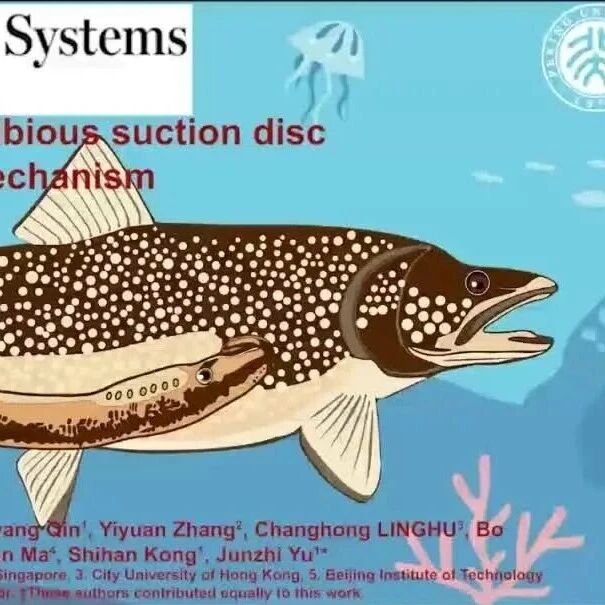
Core Viewpoint - The article discusses the development of a new hybrid adhesion suction disc inspired by the lamprey, which overcomes challenges in amphibious environments and rough surfaces, enhancing the adaptability of robots in various conditions [2][5][10]. Group 1: Scientific Problem - The research addresses how negative pressure adhesion and mechanical locking can work together to overcome the limitations of adhesion on rough surfaces, aiming for stable and reversible universal adhesion [7]. - The study reveals the synergistic mechanism of "negative pressure adhesion + mechanical locking," inspired by the lamprey's mouth structure, and is published in the journal "Cyborg and Bionic Systems" [7]. Group 2: Performance Validation - The hybrid suction disc achieves a maximum adhesion force of 562.6 N in air and 590.7 N underwater, allowing it to lift objects over 850 times its own weight of 70 g [13]. - The introduction of the SMP layer enhances adhesion strength by 377% in air and 270% underwater compared to traditional suction methods, maintaining adhesion even on rough surfaces with a roughness of Ra 707 µm [13]. - The suction disc can maintain adhesion for up to 26.8 hours under a 5N load in air, a 195% improvement over the control group without SMP, and shows a 540% increase in underwater environments [13]. Group 3: Application Demonstration - The suction disc demonstrates versatility by successfully gripping objects across a wide weight range, from 0.01 g electronic chips to an 11.4 kg wooden tabletop, and adapts to various surface geometries [16][17]. - In underwater environments, the suction disc maintains stable adhesion on both smooth and complex surfaces, showcasing its adaptability [17]. - A notable demonstration involved the suction disc integrated with a robotic arm, successfully transitioning between air and water while maintaining reliable adhesion [18].

三花智控20260324
2026-03-26 13:20
Company and Industry Summary Company Overview - The company is Sanhua Intelligent Control, which reported a total revenue of 31 billion RMB in 2025, marking an 11% year-on-year increase. The gross profit margin was 28.78%, up by 1.3 percentage points, and the net profit attributable to shareholders reached 4.06 billion RMB, a 31% increase year-on-year [3][4]. Key Business Segments Refrigeration Business - Revenue from the refrigeration segment was 18.59 billion RMB, up 12.2% year-on-year, with a gross margin of 28.77%, an increase of 1.4 percentage points. The net profit for this segment was 2.08 billion RMB, reflecting a 30.9% increase [3][4]. - The commercial refrigeration segment achieved approximately 20% revenue growth and about 40% net profit growth in 2025, indicating strong customer loyalty and stability [14]. Automotive Parts Business - The automotive parts segment generated revenue of 12.42 billion RMB, a 9.1% increase year-on-year, with a net profit of 1.98 billion RMB, also up 31% [3][4]. - Major clients include a large customer in the U.S. and BYD, with significant orders from Xiaomi and other emerging players. The profit growth for 2026 is expected to slightly exceed revenue growth [2][3]. Emerging Strategic Industries - Revenue from emerging strategic industries, including liquid cooling and energy storage thermal management, reached 2 billion RMB in 2025, doubling year-on-year. The growth rate for 2026 is projected to be between 50% and 100% [2][4]. - The company has established connections with major U.S. AI technology firms and Tier 1 manufacturers for these products [2][4]. Bionic Robotics Business - The bionic robotics segment is positioned as a supplier of components for all potential manufacturers, with internal progress reported as smooth. The strategy has shifted from focusing on benchmark clients to a broader customer base [5][11]. Financial Strategies and Capital Expenditure - The company plans to invest 7 to 8 billion RMB over the next three years, focusing on overseas bases in Mexico, Vietnam, Poland, and Thailand to mitigate macroeconomic risks and support global markets [2][8]. - In 2025, the investment in the Thailand electromechanical factory was reported at 400 million RMB [8]. Raw Material Management - The company has implemented strategies to manage raw material price fluctuations, including price linkage for copper products and hedging for aluminum products. The use of stainless steel as a substitute for copper has been emphasized [7][9]. Market Outlook and Guidance - For 2026, the company targets a 15% growth in net profit, with expectations of a slight slowdown in growth due to subsidy policy changes and overseas market fluctuations [2][3]. - The automotive parts business is expected to face pressure from the downstream automotive industry, with strategies in place to manage aluminum price risks through hedging and material substitution [9][11]. Additional Insights - The company has noted a significant difference in net profit margins between the automotive and home appliance segments, attributed to improved operational efficiency and a shift in business strategy towards selecting quality clients [6][10]. - The company remains optimistic about the long-term growth of the electric vehicle market, despite current market fluctuations, and is committed to capturing opportunities in both electric and traditional fuel vehicle markets [11][12]. Conclusion - Sanhua Intelligent Control is positioned for growth across its various business segments, with a strong focus on emerging technologies and strategic investments in overseas markets. The company is actively managing raw material costs and adapting its strategies to maintain profitability in a changing market environment.
三花智控(002050):业绩符合预期,盈利能力持续提升
SINOLINK SECURITIES· 2026-03-24 13:38
Investment Rating - The report maintains a "Buy" rating for the company, indicating an expected price increase of over 15% in the next 6-12 months [5]. Core Insights - The company reported a revenue of 31.012 billion RMB for 2025, representing a year-on-year growth of 10.97%. The net profit attributable to shareholders was 4.063 billion RMB, up 31.1% year-on-year [2]. - The cooling segment showed resilience with a revenue of 18.585 billion RMB, growing by 12.22% year-on-year, while the automotive parts segment generated 12.427 billion RMB, increasing by 9.14% year-on-year. The growth in the cooling business is attributed to rising demand in the commercial cooling sector, particularly for data centers [3]. - The gross profit margin improved significantly in Q4, reaching 31.16%, an increase of 4.32 percentage points year-on-year, driven by pricing mechanisms and commodity hedging strategies [3]. - The company is expanding its operations in countries like Thailand, Mexico, Poland, and Vietnam, which has led to an increase in overall expense ratios [3]. Financial Projections - Revenue projections for 2026 to 2028 are estimated at 36.5 billion, 40 billion, and 43.5 billion RMB, respectively. The net profit for the same period is expected to be 4.69 billion, 5.208 billion, and 5.817 billion RMB [5]. - The current market valuation corresponds to a price-to-earnings ratio of approximately 38.2, 34.4, and 30.8 for the years 2026 to 2028 [5].

三花智控(002050) - 2026年3月24日投资者关系活动记录表
2026-03-24 11:22
Financial Performance - In 2025, the company achieved a revenue of CNY 31.012 billion, representing a year-on-year growth of 10.97% [7] - The net profit attributable to shareholders was CNY 4.063 billion, with a year-on-year increase of 31.10% [7] - The gross profit margin was 28.78%, up by 1.31% compared to the previous year [7] - Revenue from the refrigeration and air conditioning parts business grew by 12.22%, with a gross profit margin of 1.42% [7] - The automotive parts business revenue increased by 124.27%, with a gross profit margin of 9.14% [7] Market Strategies - The company has established a systematic response to fluctuations in raw material prices, including a price linkage mechanism for copper-based products [7] - The company is actively pursuing material substitution strategies, using stainless steel and aluminum to mitigate cost pressures from commodity price volatility [7] - The commercial refrigeration segment has shown strong performance due to a focus on quality control and customer responsiveness, leading to high customer loyalty [8] Emerging Business Areas - The data center and energy storage sectors have been integrated into the company's strategic emerging business, showing significant revenue growth compared to 2024 [9] - The company is positioned as a supplier of thermal management components for liquid cooling and energy storage, collaborating with leading integrators [9] Automotive Sector Outlook - The net profit in the automotive thermal management segment has significantly increased due to market expansion and focus on high-value projects [11] - The company maintains a positive outlook on the global electric vehicle market, driven by cost advantages over traditional fuel vehicles and increasing acceptance among younger consumers [10] - The company plans to continue optimizing its customer and project structure to enhance profitability [11] Capital Expenditure Plans - Capital expenditures will focus on global capacity expansion, ongoing R&D investments, and digital transformation to support long-term growth in core businesses [12] - The company has established production bases in Mexico, Vietnam, and Poland, with plans to expand into Thailand [12]
登Science合作期刊,这个触觉传感模拟器SimTac,让仿生机器人设计周期大幅缩短
机器人大讲堂· 2026-03-12 09:57
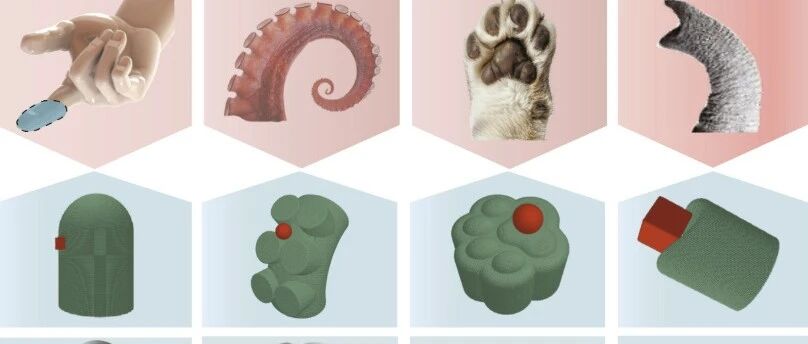
Core Viewpoint - The article discusses the development of SimTac, a simulation platform that enables robots to have tactile sensors mimicking various biological forms, allowing them to perceive textures, forces, and interactions with the environment in a more adaptive manner [1][2]. Group 1: Challenges in Tactile Sensors - Robots currently struggle to differentiate between various objects and apply appropriate force due to their limited tactile sensing capabilities [3]. - Biological tactile perception is closely linked to morphology, with complex structures like human fingers, cat paws, octopus tentacles, and elephant trunks providing exceptional interaction abilities [3][4]. - Existing tactile sensors primarily use simple geometric shapes, which limits their effectiveness in handling complex forms [3][4][5]. Group 2: SimTac Overview - SimTac is designed to allow tactile sensors to adopt any complex biomimetic shape and accurately simulate tactile responses in a virtual environment, thus streamlining the design and iteration process [6][9]. - The platform consists of three main modules: particle deformation simulation, light field rendering, and neural network force prediction, which together create a comprehensive simulation loop [7][8][9]. Group 3: Applications and Testing - SimTac has demonstrated the ability to simulate various biological sensor shapes, including human fingers, cat paws, octopus tentacles, and elephant trunks [11][12]. - The research team successfully created a tactile sensor modeled after an elephant trunk, showcasing the transition from virtual design to physical production [13][15]. - SimTac's simulations have been validated through three tactile perception tasks, achieving high accuracy rates in real-world applications, such as object shape classification and slip detection [16][17][18]. Group 4: Future Implications - SimTac fills a significant gap in the design tools for biomimetic tactile sensors, enabling the creation of complex shapes that were previously difficult to model [23]. - The platform allows for rapid prototyping and testing of tactile sensors, potentially leading to the development of fully biomimetic tactile robots [24][25].
这款微型机器人能当“侦察兵”
Xin Lang Cai Jing· 2026-02-23 21:43
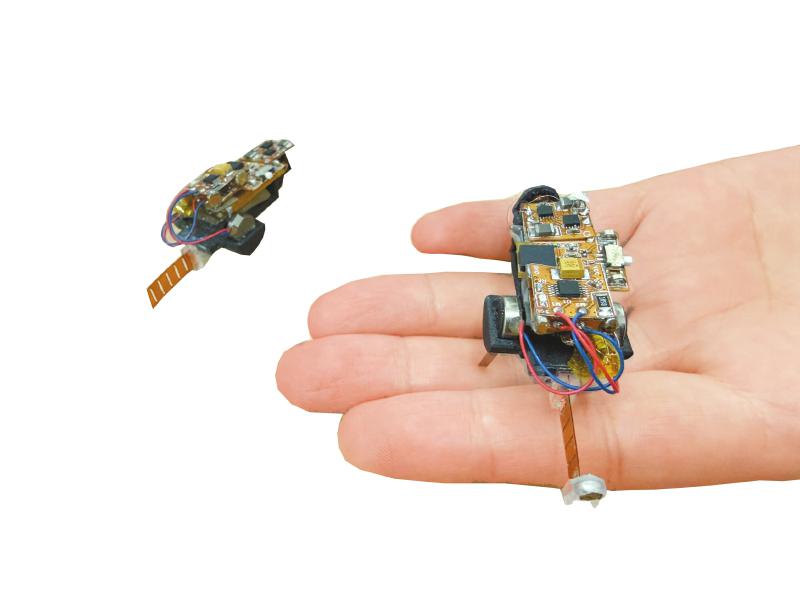
Core Insights - The article discusses the development of a micro-bionic robot inspired by the shrew, created by a research team at the University of Electronic Science and Technology of China, which showcases high mobility and collaborative capabilities [2][5]. Group 1: Robot Design and Functionality - The electronic shrew weighs only 6 grams and measures approximately 4 cm in length and 2 cm in width, featuring two micro motors, a battery, and a circuit board, allowing for agile movement in multiple directions [2][5]. - A key feature of the robot is its long yellow tail, which mimics the shrew's tail-dragging behavior, equipped with micro magnets for quick attachment when two robots come close [3][4]. - The team addressed the challenge of the magnets not being strong enough by combining dry adhesion (magnets) with wet adhesion (glue), using a special temperature-controlled polyurethane glue that solidifies at room temperature and melts when heated [4]. Group 2: Potential Applications - The electronic shrew has a battery life of approximately 45 minutes and can carry objects weighing up to twice its body weight, but its true potential lies in its ability to work in clusters [5]. - These robots can connect in a line to navigate complex terrains, such as crossing large gaps or climbing obstacles, and can work together to perform tasks that are impossible for a single unit [5]. - Potential applications include search and rescue operations in disaster zones, inspections in confined spaces, and collaborative transport of small items in challenging environments [5][6]. Group 3: Future Developments - The research team has already developed three functional robots and is working on three more, with plans for future models that can jump, fly, and swim, inspired by the survival strategies of plants and animals in nature [5].

这也太像真人了!年轻演员们被机器人奶奶唬住了
Xin Lang Cai Jing· 2026-02-18 05:56
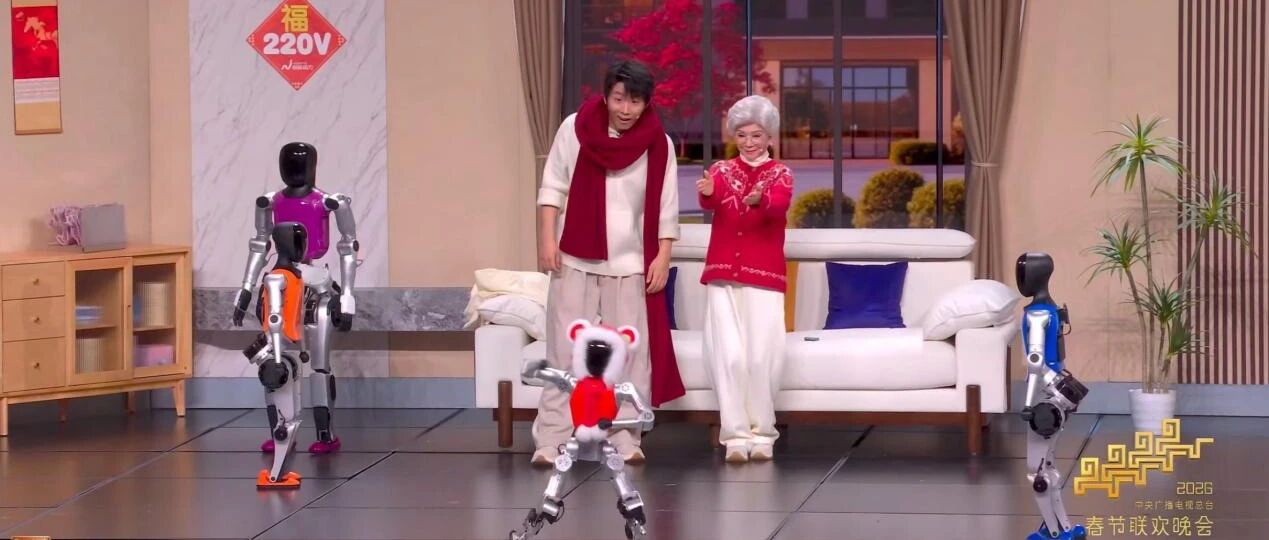
Core Viewpoint - The development of a lifelike robotic grandmother has successfully deceived young actors during rehearsals, showcasing advancements in robotics and the challenges faced in adapting to the dynamic nature of live performances [1] Group 1: Technology and Innovation - The robotic grandmother exhibits advanced features such as moving eyes, which contributed to its realistic appearance and ability to engage with actors [1] - The flexibility required in language-based performances poses significant challenges for the robotics team, necessitating rapid response and program adaptability to accommodate script changes during rehearsals [1] Group 2: Industry Challenges - The integration of robotics into live performances highlights the increasing complexity of technological applications in entertainment, particularly in adapting to real-time changes [1] - The success of the robotic grandmother reflects broader trends in the entertainment industry towards incorporating advanced technology to enhance audience engagement and performance quality [1]
春晚上的万元机器人,松延动力如何把“人形”做成家庭消费品
机器人大讲堂· 2026-02-18 04:01
Core Viewpoint - The article discusses the debut of consumer humanoid robots on the Spring Festival Gala, highlighting the shift from showcasing technical capabilities to creating interactive, family-friendly robots that are affordable and accessible [1][4][20]. Group 1: Humanoid Robot Development - The humanoid robot "Xiao Bumi" represents a significant milestone, priced at 9998 yuan, making it the first mass-produced bipedal humanoid robot in China under 10,000 yuan [7][8]. - The development of Xiao Bumi focuses on creating a robot that is safe, interactive, and suitable for home environments, rather than just enhancing performance metrics like speed and agility [5][9]. - The design constraints of Xiao Bumi, such as limiting motor torque and impact force, ensure a more natural and gentle movement, making it more suitable for family interactions [8][9]. Group 2: Market Potential - The introduction of Xiao Bumi opens up several markets, including education, family, and research institutions, by significantly lowering the price barrier for humanoid robots [20][23]. - In the education sector, the affordability of Xiao Bumi allows schools to purchase humanoid robots for teaching purposes, which was previously limited by high costs [20][21]. - The family market is seen as a growing opportunity, with early adopters being tech enthusiasts, and the potential for broader acceptance as more humanoid robots enter homes [21][23]. Group 3: Technological Breakthroughs - The article highlights three major technological breakthroughs achieved by the company: miniaturization of components, lip synchronization for speech, and overcoming the "uncanny valley" effect in humanoid robots [24][25][28]. - The integration of advanced algorithms and hardware design allows for more lifelike movements and interactions, enhancing the overall user experience [25][28]. - The company's focus on creating a humanoid robot that feels natural and relatable is a key differentiator in the market, setting it apart from competitors [29][32]. Group 4: Future Outlook - The humanoid robot industry is at a pivotal point, transitioning from technical validation to market differentiation, with two distinct paths emerging: one focused on industrial applications and the other on consumer-oriented solutions [29][30]. - The success of Xiao Bumi is seen as a direct result of redefining what a consumer robot should be, emphasizing interaction and usability over mere technical specifications [32][34]. - The company aims to continue iterating on its products based on user feedback, ensuring that the robots evolve to meet the needs of consumers in real-world settings [17][34].
创始人讲述制作蔡明仿生人经过:约一个半月完成制作
Xin Lang Cai Jing· 2026-02-17 12:13
Core Viewpoint - The article discusses the development and debut of a lifelike robot modeled after the famous Chinese comedian Cai Ming, which was featured in the 2026 Spring Festival Gala, highlighting advancements in robotics and the emotional connection between technology and human experiences [1][4]. Group 1: Project Development - The project to create the Cai Ming robot was initiated by NOETIX Songyan Power, with the first contact occurring on November 15, 2022, and the robot's head completed within a month [1]. - The entire production process took approximately one and a half months, with the first presentation to Cai Ming's team and the director occurring by the end of December [1]. - The makeup for the robot was done by the same makeup artist who has worked with Cai Ming since 1996, ensuring a high level of authenticity [1]. Group 2: Artistic and Emotional Aspects - Cai Ming expressed that the creation of the robot aimed to emphasize that technology cannot replace human emotions and familial bonds, as audience reactions indicated a desire to reconnect with loved ones after viewing the performance [4]. - The performance featured the robot alongside Cai Ming, creating a moment where the distinction between the two became difficult for the audience to discern, marking a significant achievement in robotics [2]. - The show "Grandma's Favorite" not only showcased the robot but also served as a nostalgic reminder of past performances, bridging the gap between technology and human interaction [4]. Group 3: Audience Engagement and Expectations - The article highlights the challenges of creating content that appeals to a diverse audience, balancing humor that resonates with both younger and older viewers [6][7]. - The evolving expectations of the audience in the new media era necessitate that creators present fresh and engaging stories while maintaining emotional depth [7]. - The Spring Festival Gala remains a platform where audiences seek to reconnect with cherished memories and emotions, emphasizing the importance of quality content in entertainment [7].
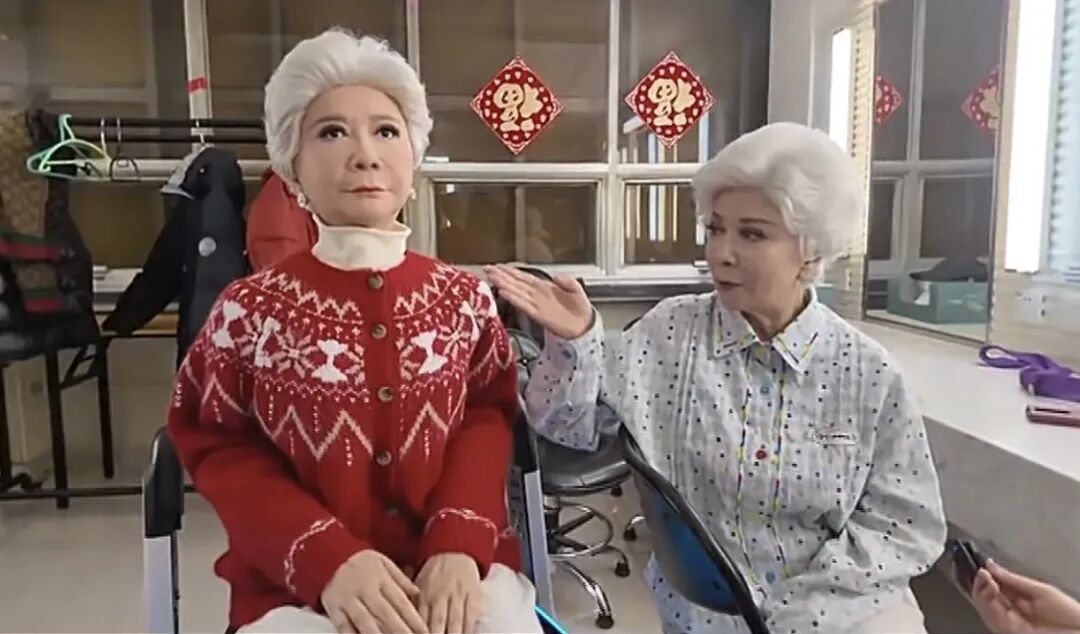
机器人扮演蔡明!背后揭秘:让蔡明设想自己是机器人
Nan Fang Du Shi Bao· 2026-02-16 13:52
Group 1 - The core focus of the article is on the humanoid robot startup Songyan Power, which recently completed its shareholding reform and showcased its robots during the CCTV Spring Festival Gala [1] - Songyan Power has developed multiple humanoid robots, including a bionic robot resembling the actress Cai Ming, which was featured in a skit during the gala [1] - The company assessed its technical capabilities to create a lifelike humanoid robot within a tight timeline, confirming that it could meet the deadline for the Spring Festival performance [1] Group 2 - During the rehearsal phase, Songyan Power involved Cai Ming in the debugging process to enhance the robot's performance, allowing her to demonstrate the robot's role in the skit [1] - Since its establishment over two years ago, Songyan Power has launched three different models of bipedal humanoid robots and several highly anthropomorphic bionic robots [1] - The company gained significant recognition in 2025 due to its performance at the Yizhuang Robot Half Marathon [1]