企业维权

Search documents
大疆打了个样!遭遇霸凌就要敢于斗争
Xin Lang Cai Jing· 2026-02-26 22:50
Core Viewpoint - DJI has filed a lawsuit against the FCC regarding its decision to place DJI and its products on a "regulated list," which the company argues is unjust and lacks objective assessment [1][3]. Group 1: Legal Action and Market Impact - DJI's lawsuit aims to protect not only its own rights but also the interests of American consumers, as the company holds over 70% of the global civil drone market and approximately 70% to 90% of the U.S. consumer, commercial, and government drone markets [3]. - Following the FCC's ban, there was a significant surge in demand for DJI products, with reports of sales increasing over eightfold in a single week, and prices on second-hand platforms rising by 200% [3][4]. Group 2: Regulatory Environment and Industry Response - The FCC's ban has led to a "hoarding" trend among consumers and prompted the agency to issue exemptions for certain foreign drones and key components, effective until the end of 2026, to avoid disruptions in public safety operations and agricultural digitalization [4]. - The U.S. has seen a broadening of national security concepts, leading to discriminatory lists that ultimately burden American businesses and consumers, with nearly 90% of tariff economic burdens falling on them [4].

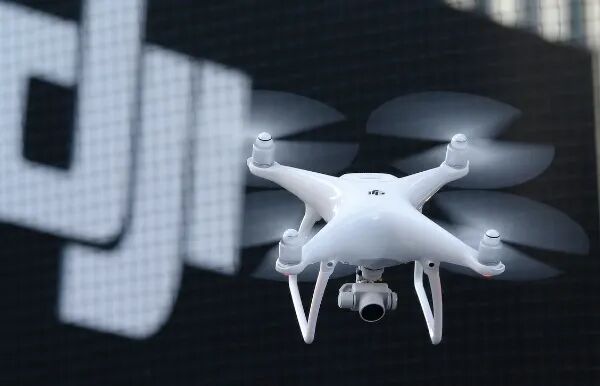
大疆:起诉美国联邦通信委员会 维护全球用户合法权益
Xin Jing Bao· 2026-02-24 12:02
Core Viewpoint - DJI has filed a lawsuit against the FCC's decision to include its products on the "Covered List," arguing that the decision lacks substantial evidence and violates procedural and constitutional principles [1] Group 1: Legal Action - DJI submitted a lawsuit to the Ninth Circuit Court on February 20, 2024, challenging the FCC's decision made on December 23, 2025 [1] - The lawsuit aims to protect the rights of the company and the interests of American consumers and agricultural users who rely on DJI products [1] Group 2: Allegations Against FCC - DJI claims that the FCC's decision has serious procedural flaws and substantive defects, as it was made without any evidence proving that DJI products pose a national security threat [1] - The company argues that this decision violates due process principles and potentially breaches U.S. constitutional and federal laws [1] Group 3: Market Impact - Following the FCC's ban announcement, there was a strong reaction from the U.S. consumer market and agricultural users, leading to a "stockpiling" trend and a 200% price increase for related equipment on second-hand trading platforms [1] - DJI holds over 70% market share in the global civil drone market and approximately 70% to 90% market share in the U.S. consumer, commercial, and government drone markets [1]
大疆:起诉美国联邦通信委员会,维护全球用户合法权益
Bei Ke Cai Jing· 2026-02-24 12:00
Group 1 - DJI has filed a lawsuit with the U.S. Ninth Circuit Court of Appeals challenging the FCC's decision to include DJI and its products on the "Covered List" effective December 23, 2025, aiming to protect its legal rights and the interests of U.S. consumers and the agricultural sector affected by the ban [1] - The lawsuit claims that the FCC's decision lacks substantial evidence proving that DJI products pose a national security threat, violating due process and potentially breaching U.S. constitutional and federal laws [1] - Following the FCC's ban announcement, there was a strong reaction from the U.S. consumer market and agricultural users, leading to a "stockpiling" trend and a 200% price surge for related equipment on second-hand trading platforms [1] Group 2 - DJI maintains over 70% market share in the global civil drone market and holds approximately 70% to 90% of the market share in the U.S. consumer, commercial, and government drone markets [1] - Previously, DJI had filed appeals against being listed on the U.S. Department of Defense's "Chinese Military Companies List" on October 18, 2024, and October 14, 2025 [2]
大疆向美国政府“亮剑”!
Guan Cha Zhe Wang· 2026-02-24 11:58
Core Viewpoint - DJI, a leading domestic drone manufacturer, has filed a lawsuit against the FCC to challenge its decision to place DJI and its products on the "Covered List" by December 23, 2025, citing procedural flaws and lack of evidence regarding national security threats [1][3]. Group 1: Legal Action and Implications - DJI aims to protect its legal rights and the interests of American consumers and agricultural users affected by the FCC's ban [1]. - The lawsuit argues that the FCC's decision violates due process and relevant U.S. laws, as no substantial evidence was provided to support claims of national security threats from DJI products [1][3]. Group 2: Market Position and Impact - DJI holds over 70% of the global civil drone market and approximately 70% to 90% of the U.S. consumer, commercial, and government drone markets [3]. - Over 80% of the 1,800 law enforcement agencies in the U.S. utilize DJI products, with significant usage reported in major cities like New York and Kansas City [3]. Group 3: Consumer Reaction and Market Dynamics - Following the FCC's announcement, there was a strong consumer reaction, leading to a surge in demand and a 200% price increase for related equipment on second-hand platforms [3][4]. - A large U.S. drone dealer reported an over 800% year-on-year increase in DJI product sales in a single week, indicating strong consumer demand despite the ban [4]. Group 4: Previous Challenges - This is not the first time DJI has challenged the U.S. government, as it previously filed appeals against being listed on the U.S. Department of Defense's "Chinese Military Companies List" [5].
小米诉自媒体案一审获赔500万
Xin Lang Cai Jing· 2026-02-24 11:24
Core Viewpoint - The court ruled in favor of the company in a defamation case against the self-media account "AutoReport Automotive Industry," ordering the defendant to delete infringing content, publicly apologize, and pay 5 million yuan in damages [1] Group 1 - The court found that the defendant disseminated content that lacked factual verification, misattributed information, and was clearly derogatory, thereby infringing on the company's reputation and damaging its brand image [1] - The company expressed its commitment to using legal means to protect its rights against misleading public information and any insults or defamation [1]

小米:诉自媒体“AutoReport汽车产经”案一审胜诉,法院判被告赔偿500万
Xin Lang Cai Jing· 2026-02-24 10:57
Core Viewpoint - The court ruled in favor of the company in a defamation case against the self-media account "AutoReport Automotive Economics," ordering the defendant to delete infringing content, publicly apologize, and pay 5 million yuan in damages [1] Group 1 - The court found that the defendant disseminated content that lacked factual verification, misrepresented information, and clearly defamed the company, harming its reputation [1] - The company expressed its commitment to using legal means to protect its rights against misleading information and insults that infringe upon its interests [1] - The company welcomes criticism, suggestions, and supervision from the public but will firmly defend its legitimate rights against false information [1]
大疆起诉美国联邦通信委员会
Huan Qiu Shi Bao· 2026-02-24 10:19
Core Viewpoint - DJI Innovation has filed an appeal with the U.S. Ninth Circuit Court of Appeals against the FCC's decision to place DJI and its products on a "regulated list," arguing that the decision lacks substantial evidence and violates due process principles [1] Group 1: Legal Action - DJI filed the appeal on February 20, 2026, challenging the FCC's decision made on December 23, 2025 [1] - The company aims to protect its legal rights and the interests of American consumers and agricultural users affected by the ban [1] Group 2: Allegations Against FCC - DJI claims that the FCC's decision contains serious procedural flaws and substantive defects [1] - The FCC failed to provide any substantial evidence proving that DJI products pose a threat to U.S. national security [1] - The company argues that the decision not only violates due process principles but also potentially breaches the U.S. Constitution and federal laws [1]
蔚来:多个账号因恶意诋毁被判赔偿道歉 维权所得全部捐献
Feng Huang Wang· 2026-01-19 07:23
Core Viewpoint - NIO has successfully taken legal action against multiple online accounts that disseminated false information about the company, resulting in a court ruling that recognizes the infringement of NIO's rights and mandates public apologies and compensation for economic losses [1][2]. Group 1: Legal Actions and Outcomes - The court has ruled against several online accounts, including "妄图网络," for spreading false information that maliciously defamed NIO's business operations, leading to a requirement for public apology and compensation [2]. - Another ruling involved accounts operated by "老蔡商业反思," which were found to have published defamatory content against NIO, resulting in a court-ordered compensation and apology from the defendants [2]. Group 2: Company Response and Future Actions - NIO is committed to using legal means to protect its and its users' rights, adopting a zero-tolerance policy towards any defamatory actions against the company [2]. - The company plans to donate any compensation received from legal actions to support education and elderly care charitable initiatives [1][2].


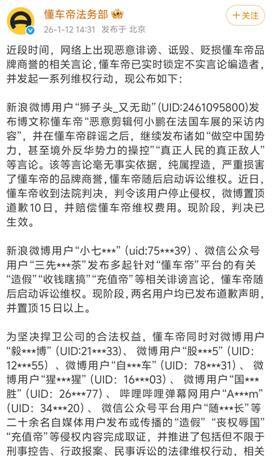
正本清源,懂车帝对20余账号采取法律行动,博主道歉赔偿
Zhong Guo Jing Ji Wang· 2026-01-13 06:55
Core Viewpoint - The company, Dongchedi, is actively pursuing legal actions against over 20 social media accounts for malicious defamation and false statements that harm its brand reputation, emphasizing the importance of maintaining a healthy online environment [1][2]. Group 1: Legal Actions - Dongchedi has initiated various legal actions, including criminal complaints, administrative reports, and civil lawsuits, against more than 20 involved social media accounts [1][2]. - A specific case involved a Weibo user who falsely claimed that Dongchedi maliciously edited an interview with a prominent figure, leading to a court ruling that required the user to cease infringement, apologize publicly for 10 days, and compensate Dongchedi for legal costs [1]. Group 2: Apologies and Compliance - Users from Weibo and WeChat, who previously spread defamatory statements about Dongchedi, have issued public apologies and will keep these statements pinned for over 15 days to mitigate the negative impact of their actions [2]. - The company has completed evidence collection against additional involved accounts, including users from various platforms, and is proceeding with legal actions against them [2]. Group 3: Industry Implications - Dongchedi's actions are not only aimed at protecting its own rights but also at combating the broader issue of malicious online behavior and promoting a truthful and healthy discussion environment within the automotive industry [2]. - The company calls for rational participation in online discussions and warns against the influence of rumors and malicious actors, contributing to the sustainable development of the automotive industry's online ecosystem [2].
海底捞“小便门”涉案少年正式登报道歉
Guan Cha Zhe Wang· 2026-01-08 07:56
Core Viewpoint - The incident involving Haidilao, known as the "urination incident," has concluded with a public apology and legal repercussions for the individuals involved, highlighting the importance of legal accountability regardless of age [1][7]. Group 1: Incident Overview - The incident occurred on February 24, 2025, when two intoxicated minors urinated into a hot pot at a Haidilao restaurant, which was later filmed and shared online, leading to widespread outrage [3]. - Haidilao responded promptly by reporting the incident to law enforcement and taking measures to ensure customer safety, including replacing all utensils and offering refunds and compensation to affected customers [4]. Group 2: Legal Proceedings - In September 2025, a court ruled on the case, ordering the minors and their parents to issue public apologies and pay a total of 2.2 million yuan (approximately 220,000) in damages for the harm caused to the restaurant's reputation and property [6]. - The court emphasized that the legal system does not excuse illegal behavior by minors and that they are capable of understanding the consequences of their actions [6]. Group 3: Implications for Society and Business - The case serves as a reminder of the responsibilities of guardians in educating minors about acceptable behavior and the legal consequences of their actions [7]. - Haidilao's proactive measures in addressing the incident and seeking legal recourse demonstrate the importance of businesses protecting their reputation and rights through legal channels [7].