
休谟机制

Search documents
出口猛增至3020亿创历史新高,美国数据飙升暗藏啥玄机?背后究竟有啥“杀机”?
Sou Hu Cai Jing· 2026-02-18 05:04
Group 1 - The article discusses the persistent trade deficit of the United States, which has been ongoing for decades, and attributes this phenomenon to the global status of the US dollar [1][5] - It explains the concepts of trade surplus and deficit, noting that a country with more imports than exports faces a deficit, which typically signals economic weakness for most nations [2][4][3] - The US, as the issuer of the dollar, operates differently; it can maintain a trade deficit because the world needs dollars for transactions, settlements, and reserves, necessitating the US to continuously "spend" abroad [8][10] Group 2 - The article highlights the structural paradox of the US dollar, which requires a trade deficit to ensure global liquidity while simultaneously needing a trade surplus to maintain its value and trust [17][32] - It references the historical context of the dollar's detachment from the gold standard in 1971, marking the beginning of uncontrolled trade deficits for the US [19][21] - The article discusses the Triffin Dilemma, which posits that a country's currency must be widely circulated internationally, leading to long-term deficits that can undermine the currency's credibility [32] Group 3 - The article mentions the recent reduction in the US trade deficit by 39% in October 2025, which, while appearing positive, raises concerns about the potential tightening of global dollar liquidity and the erosion of trust in dollar-based transactions [36][37] - It draws parallels between the current situation of the US dollar and the historical decline of the British pound, emphasizing that the international status of any currency ultimately depends on economic strength, institutional stability, and market trust [44] - The article concludes that the current international monetary order is fraught with contradictions, and the US must navigate these complexities while facing the risk of losing its dollar dominance [40][49]

“根本特里芬难题”与美元全球大循环的兴衰
Bank of China Securities· 2026-01-23 06:51
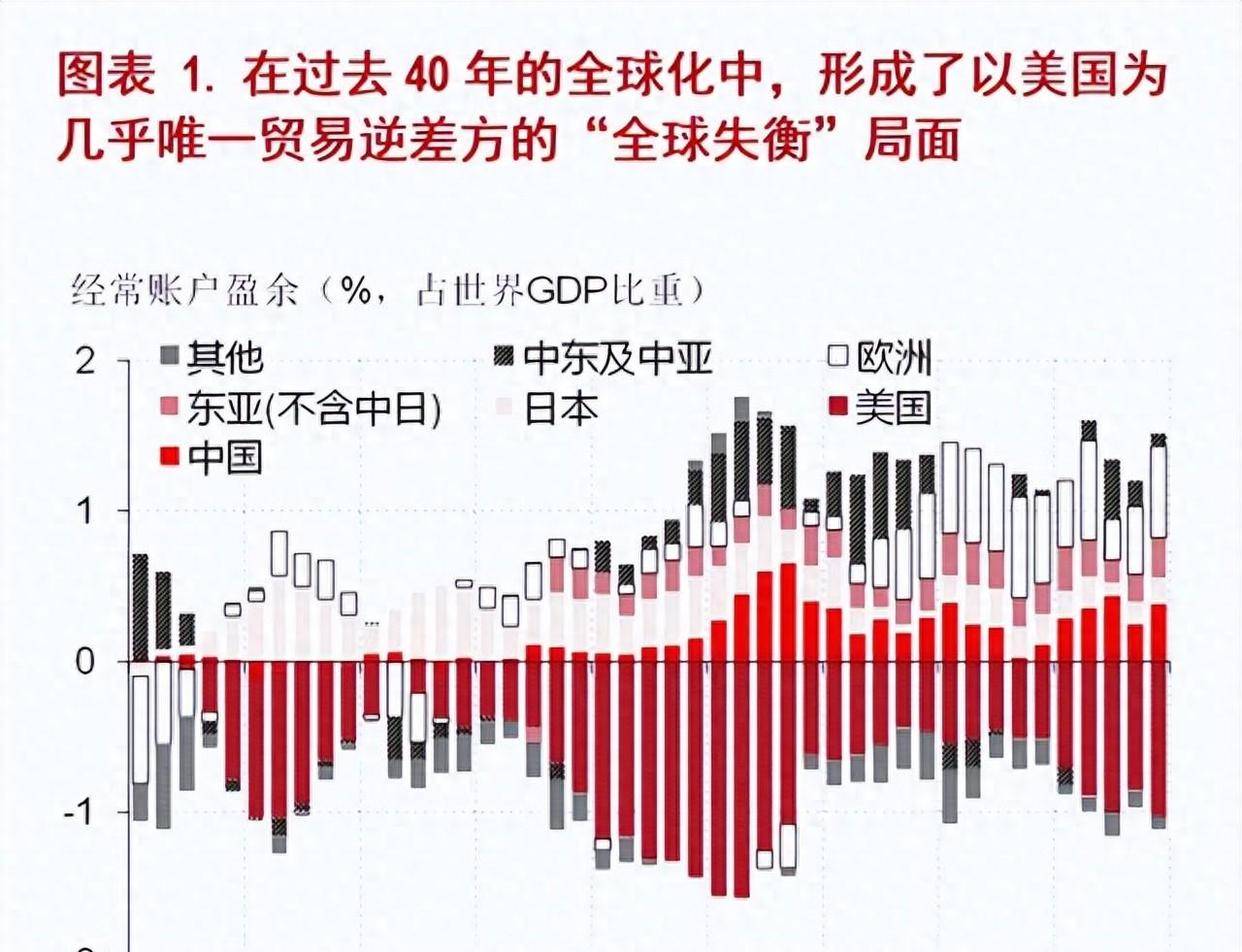
Group 1 - The report discusses the concept of "global imbalances" that emerged since the 1980s, with the United States being the primary trade deficit country, contributing significantly to the global trade deficit [2][3] - The dollar's global circulation is linked to the U.S. trade deficit, where dollars flow out through imports and return through investments in U.S. financial markets, creating a cycle that has led to global imbalances [3][4] - The decoupling of the dollar from gold in 1971 marked the beginning of the "Fiat Money System," allowing for the possibility of global imbalances and the dollar's global circulation [4][13] Group 2 - The report highlights the "Fundamental Triffin Dilemma," which describes the conflict between U.S. hegemony and dollar hegemony, suggesting that the dollar's dominance may ultimately undermine U.S. power [35][38] - The introduction of the "Reciprocal Tariff" policy in April 2025 is seen as a significant event indicating a shift from the dollar's global circulation, reflecting the U.S. government's attempt to consolidate its power at the expense of dollar hegemony [41][44] - The report emphasizes that the U.S. manufacturing sector has declined significantly since the 1971 decoupling, with manufacturing's share of GDP dropping from 22% to 10% by 2024, indicating a trend of deindustrialization linked to dollar policies [28][31]
