传统手艺创新

Search documents
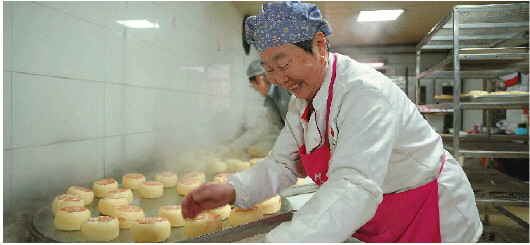
裹着山海年味,多彩花馍上桌
Qi Lu Wan Bao· 2026-02-14 16:31
Core Viewpoint - Wang Gezhuang's large steamed buns, a traditional delicacy from the Jiaodong region, have become a popular choice for the Chinese New Year, with significant demand leading to a peak in orders during the lunar month [4][5]. Group 1: Market Demand and Sales - Over 170 bun merchants in Wang Gezhuang have entered a peak order period, with preliminary statistics indicating an order volume of approximately 2 million jin during the lunar month [4][6]. - Daily retail sales at the Jiuxiangyuan bun workshop reach around 300 orders, with products being shipped as far as Hainan and Xinjiang [5][6]. Group 2: Product Innovation and Cultural Significance - The buns are not only traditional food but also represent a cultural heritage, with the craft of making Wang Gezhuang buns recognized as an intangible cultural heritage since 2008 [8][9]. - The workshop has introduced various flavors and themed designs for different festivals, adapting traditional techniques to modern tastes [9][10]. Group 3: Economic Impact and Industry Growth - The Wang Gezhuang large steamed bun industry has transformed from a local culinary tradition into a significant economic pillar, with an estimated production value of around 160 million yuan by 2025 [11][12]. - The Wang Gezhuang Cultural Festival has been held for twelve consecutive years, promoting the integration of agriculture, culture, and tourism, further enhancing the region's economic development [12].

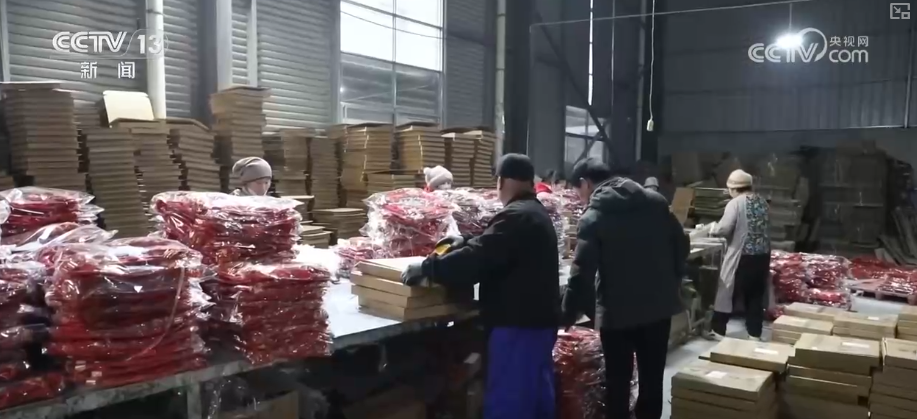
迎新春·看振兴 | 一编一织结出吉祥 “指尖”技艺绘就新蓝图开拓大市场
Yang Shi Wang· 2026-02-12 08:54
Core Viewpoint - The traditional craft of Chinese knots in Honghua Town, Shandong, is experiencing a surge in demand as the Spring Festival approaches, leading to unprecedented sales growth for local artisans [1][3]. Group 1: Sales and Production - The sales of wine-red Chinese knots have skyrocketed from 2,000-3,000 orders per day to over 10,000 orders daily as the festival nears, marking a significant increase in demand [3]. - The production process involves multiple components, with each Chinese knot requiring several essential parts, creating a challenge to maintain a steady supply chain [4]. - Over 17,000 individuals are engaged in the handmade production of components for Chinese knots in Honghua Town, showcasing the scale of local involvement in this industry [6]. Group 2: Supply Chain and Local Economy - The local production of components has led to increased income for villagers, with some earning over 10,000 yuan annually from their contributions to the craft [6]. - A decision was made to keep key production processes local, reducing costs significantly from 2 yuan to 0.8 yuan per item and improving delivery times from one week to immediate availability [10]. - Local government support includes financing and infrastructure improvements to bolster the industry, indicating a strong commitment to developing this traditional craft [12]. Group 3: Innovation and Future Goals - Continuous innovation is crucial for maintaining sales, with the team investing in advanced technology such as UV printing to enhance the design and quality of Chinese knots [15]. - The team plans to expand their market reach internationally through platforms like Alibaba, aiming to blend Chinese cultural elements with global customer needs [15].
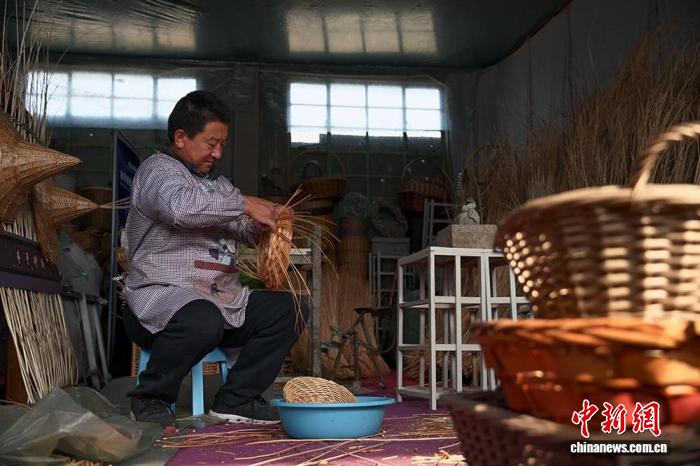
指尖翻飞“编”潮品:胶东柳编从田舍走向国际
Zhong Guo Xin Wen Wang· 2025-11-18 06:21
Core Viewpoint - The article highlights the transformation of traditional Jiaodong willow weaving from a rural craft into a fashionable international product, driven by innovation and market demand [1]. Group 1: Historical Context and Evolution - Willow weaving has a long history in the Jiaodong region of Shandong, initially serving as a side job for locals during farming off-seasons [2]. - The craft saw a revival in the 1990s when a florist's demand for willow flower baskets inspired artisans like Yu Jizhi to innovate and create new products such as small flower baskets and pet baskets [2]. Group 2: Craftsmanship and Techniques - The quality of willow weaving relies heavily on material selection, with specific local varieties like "Dahongtou" and "Bailiutiao" being preferred for their durability [4]. - Various weaving techniques are employed for different purposes, such as flat weaving for fruit trays and twisting techniques for handles, showcasing the complexity of the craft [4]. Group 3: Market Expansion and Community Impact - Yu Jizhi's willow products have gained popularity not only in domestic supermarkets but also in international markets through cross-border e-commerce, particularly appealing to European consumers [6]. - The craft has fostered community development, with Yu Jizhi establishing willow weaving classes that have engaged over 60 villagers, and plans to form a cooperative to create a complete industry chain from cultivation to sales [6].
生财有道丨粉嫩可爱的龙头,你肯定没见过!80后匠人让顺德容桂龙舟破圈
Sou Hu Cai Jing· 2025-06-03 07:31
Core Viewpoint - The article highlights the cultural significance and artistic innovation of dragon boat making in Ronggui, Shunde District, Guangdong, particularly as the Dragon Boat Festival approaches, showcasing both traditional craftsmanship and modern artistic interpretations [1][4][15]. Group 1: Cultural Significance - The dragon boats in Ronggui are primarily made from Kundan wood, which allows them to be preserved in river mud for durability [3]. - The vibrant colors and decorations of the dragon boats are a key feature, with the community coming together to celebrate and compete in beauty during the festival [4][15]. Group 2: Artistic Innovation - Yang Jinghe, a notable figure in the dragon boat decoration industry, has created a signature piece featuring a unique purple and pink color scheme, inspired by three female figures [7][8]. - The workshop led by Liang Haiying, who inherited the craft from his father, combines traditional techniques with innovative designs, producing dynamic dragon boat models where over 90% of the figures and decorations are movable [10][16]. Group 3: Intergenerational Craftsmanship - The article emphasizes the collaboration between young artisans and older craftsmen, showcasing a blend of innovation and tradition in the dragon boat making process [11][15]. - The legacy of craftsmanship is evident in the works of 104-year-old Ming Bo and 69-year-old Hai Shu, who have both contributed significantly to the mechanical aspects of dragon boat models [16].