传统投资驱动战略

Search documents
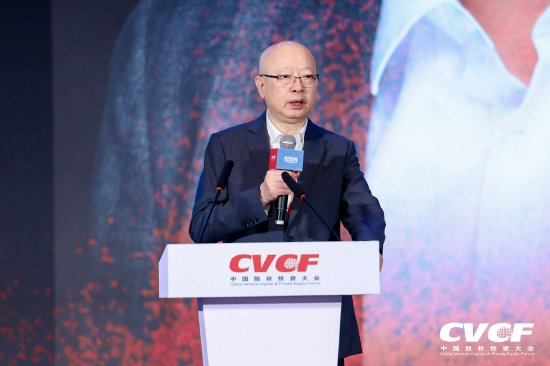
靳海涛:中国创投往何处去
Xin Lang Cai Jing· 2025-12-04 07:49
Core Insights - The annual China Private Equity Annual Conference will be held from December 2-5, 2025, in Shenzhen, focusing on observing China's technological innovation [2][18] - The chairman of Qianhai Ark Asset Management shared insights on the strategic role of venture capital and the development trends in China's venture capital landscape [2][19] Group 1: National Strategic Demand - Innovation is a core development strategy for every country, with two main paths: innovation investment-driven strategy and traditional investment-driven strategy [3][20] - Countries like the US, Israel, and China exemplify the innovation investment-driven strategy, which supports small enterprises and disruptive technologies, leading to significant capital inflow into the tech innovation sector [3][20] - In contrast, countries like Japan and Russia follow a traditional investment-driven strategy, relying on conventional financing channels and often missing out on technological advancements [4][20] Group 2: Impact of Venture Capital on China's Economy - Since the emergence of venture capital in 1999, China's GDP has grown over 13 times, with venture capital contributing more than 43% to this growth [5][21] - Venture capital has played a crucial role in nurturing high-quality enterprises, with over 90% of companies listed on the Sci-Tech Innovation Board and over 50% on the ChiNext Board being supported by venture capital [5][22] - The sector has significantly contributed to the development of key industries, including semiconductors, renewable energy, communication, transportation technology, artificial intelligence, and biomedicine [6][22] Group 3: Five Key Investment Directions - The first direction is the "short board" process, focusing on technological breakthroughs to ensure supply chain security and autonomy, with over 2 billion yuan invested in semiconductor companies [7][24] - The second direction is the digitalization process, which aims to transform traditional industries using digital technology, with significant investments in projects like 聚玻网 and autonomous driving [7][24] - The third direction is the carbon neutrality process, which has evolved from being finance-driven to policy-driven and now demand-driven, with investments in emerging technologies [7][25] - The fourth direction is the health sector, shifting from symptomatic treatment to root cause resolution, with predictions that China will lead in biopharmaceuticals in the next 7-8 years [7][26] - The fifth direction is consumer upgrade, emphasizing the importance of consumer sectors in economic growth and the need for investment support [7][26] Group 4: Recommendations for Future Development - The industry should focus on "early, small, and future" investments, promoting "patient capital" as a fundamental requirement for a healthy venture capital ecosystem [11][28] - There is a need to optimize the capital source structure in the venture capital industry, aiming for a balanced approach involving government capital, financial capital, and family wealth [12][29] - Emphasis should be placed on post-investment management and support, moving away from solely chasing "blockbuster" investments [12][30] - The development of S funds and follow-up funds is crucial for creating a sustainable innovation investment ecosystem [12][30] - A balanced support for various industries is essential to avoid over-concentration and to foster innovation across sectors [12][31]


靳海涛:中国创投往何处去
投资界· 2025-12-04 07:01
Core Viewpoint - The article emphasizes the strategic role of venture capital in driving innovation and economic growth in China, highlighting the importance of aligning national strategic needs with investment fund demands [2][5][11]. Group 1: National Strategic Perspective - Innovation is recognized as a core development strategy for countries, with two main paths: innovation investment-driven strategy and traditional investment-driven strategy. The former supports small enterprises and disruptive technologies, while the latter relies on traditional financing methods [3][4]. - Countries like the US, Israel, and China exemplify the innovation investment-driven strategy, leading to significant capital inflow into technology innovation and economic growth [4][5]. - China has adopted an innovation investment-driven strategy, resulting in a GDP growth of over 13 times since 1999, with investment contributing over 43% to this growth [5][6]. Group 2: Investment Fund Demand - Investment funds prioritize creating good returns for investors, focusing on five key processes and directions that are expected to yield favorable investment returns [7]. - The first focus is on addressing "bottleneck" issues in industries, ensuring supply chain security through technological breakthroughs, with significant investments in the semiconductor sector [7][8]. - The second focus is on the digital transformation of traditional industries, enhancing efficiency through the integration of software and hardware [8][9]. - The third focus is on the carbon neutrality process, which has evolved from being finance-driven to policy-driven, and now to demand-driven, necessitating external funding support for disruptive innovations [9][10]. - The fourth focus is on the health sector, shifting from "symptomatic treatment" to "curative treatment," with predictions that China will lead in biopharmaceuticals in the next seven to eight years [10]. - The fifth focus is on consumer upgrades, which are crucial for economic growth and should receive more attention from capital markets [10]. Group 3: Market Outlook and Recommendations - The article suggests seven key recommendations for the next phase of China's equity investment, including fostering "patient capital" and encouraging innovation while being tolerant of failure [11][12]. - It advocates for a balanced capital source structure in the equity investment industry, comprising government capital, various financial capitals, and family wealth [12]. - Emphasis is placed on enhancing post-investment management and services to support companies in overcoming challenges and accelerating growth [13]. - The development of S funds and follow-up funds is crucial for maintaining a vibrant investment ecosystem, preventing potential exit crises [14]. - The article calls for a balanced support for various industries to ensure that innovation thrives across sectors, avoiding excessive concentration in specific areas [14][15].

前海方舟靳海涛:没有活跃的S基金市场,耐心资本就成为空话
Xin Lang Cai Jing· 2025-12-04 02:12
Core Viewpoint - The 25th China Private Equity Annual Conference emphasizes the importance of developing "patient capital" to build a healthy and resilient venture capital ecosystem in China [1][18]. Group 1: Key Suggestions for Private Equity Investment - The focus should be on "investing early, investing small, and investing in the future," which is essential for the venture capital ecosystem [3][20]. - There should be a gradual optimization of capital sources, aiming for a balanced structure of government capital, various financial capital, and family wealth [3][15]. - The commercial strategies and product designs of venture capital institutions must adapt to the trend of local governments using equity finance and capital attraction as a means to transform land finance [3][32]. Group 2: Emphasis on Post-Investment Management - Venture capital institutions should prioritize post-investment management and support, adhering to a principle of "30% investment, 70% management" to help companies integrate resources and overcome challenges [3][16]. - The development of S funds and follow-up funds is crucial for creating a sustainable innovation investment ecosystem [4][33]. - A balanced support for various industries is necessary to avoid excessive concentration and ensure that innovation across all sectors is nurtured [4][33]. Group 3: Market Dynamics and Trends - A healthy secondary market is vital for supporting IPOs and mergers and acquisitions of innovative companies, as the prosperity of the primary market relies on good valuations and smooth exit channels in the secondary market [4][17]. - The current investment landscape should not overly worry about market polarization resulting from expansion, as this is considered a normal phenomenon [4][17]. - The historical contribution of venture capital to China's GDP growth, which has increased over 13 times since 1999, highlights its significant role in establishing a complete industrial chain [8][25]. Group 4: Global Perspective on Investment Strategies - There are two main development paths for countries: innovation-driven investment strategies that support small and disruptive innovations, and traditional investment strategies that rely on established financing channels [6][24]. - China's adherence to an innovation-driven investment strategy has led to significant achievements in technology and industry, positioning it favorably in the global market [6][23]. - The focus on addressing "bottleneck" issues in supply chains and promoting digital transformation is essential for future investment returns [10][11].