
保险返佣

Search documents
求职踩坑、销售藏猫腻,瑞众人寿的灰色增员术
Bei Jing Shang Bao· 2026-01-22 14:00
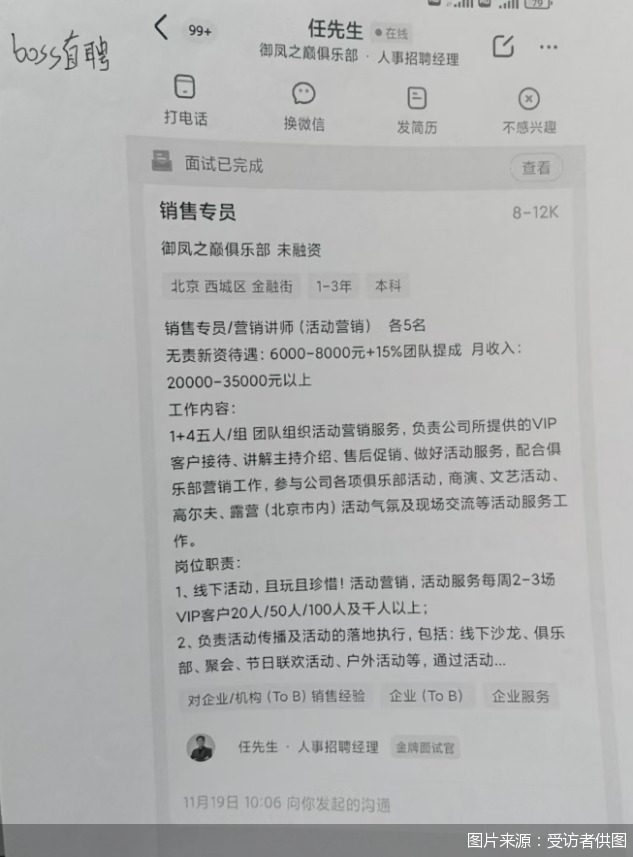
Core Viewpoint - The article highlights deceptive recruitment practices in the insurance industry, where companies misrepresent job roles and compensation to attract candidates, leading to a lack of transparency and trust in the sector [1][8]. Recruitment Practices - Job postings for high-paying positions often turn out to be for insurance sales roles, misleading candidates about the nature of the work [1][3]. - A specific case involved a candidate, Wang Li, who was lured by a job advertisement promising a base salary of 6,000 to 8,000 yuan, with potential earnings of 20,000 to 35,000 yuan per month through commissions [2][3]. Company Background - The company involved, Ruizhong Life Insurance, has a history of being a significant player in the insurance market, having taken over the business and assets of Huaxia Life Insurance after it was placed under regulatory control in 2020 [3][4]. - As of 2024, Ruizhong Life Insurance reported total premiums of 236.8 billion yuan and employed approximately 110,000 frontline sales personnel [3]. Regulatory Violations - The recruitment practices employed by the team director, Wu, violated regulatory guidelines that prohibit insurance marketing personnel from independently recruiting new agents [8][11]. - Regulatory bodies confirmed that the actions taken by Wu and his team were in breach of established recruitment policies, leading to potential sanctions against Ruizhong Life Insurance [8][11]. Sales Practices - The article describes unethical sales practices, including the return of commissions and offering gifts as incentives, which are against the regulations set forth in the Insurance Law [9][10]. - Specific instances of commission returns and gift offerings were documented, indicating a systemic issue within the sales practices of the company [9][10]. Industry Challenges - The reliance on "human sea tactics" for recruitment has led to high turnover rates and a lack of professionalism among sales agents, damaging the overall reputation of the insurance industry [12][13]. - The shift in consumer expectations towards more personalized and comprehensive financial services necessitates a transformation in the insurance sector, moving away from aggressive recruitment strategies [13][14]. Recommendations for Improvement - The article suggests that insurance companies should reform their incentive structures to prioritize compliance and service quality over mere sales volume [14]. - It emphasizes the need for ongoing compliance training and ethical education for agents to enhance professionalism and restore trust in the industry [14].

买保险送金条、回报20%?通通违规
Nan Fang Du Shi Bao· 2025-10-25 23:16
Core Insights - The insurance industry is facing significant scrutiny due to illegal "rebate" practices, which have evolved into more covert forms despite being explicitly defined as illegal [2][7] - Regulatory bodies have intensified their efforts to combat these practices, issuing approximately 156 fines totaling over 30 million yuan in 2023 alone [7][8] Group 1: Rebate Practices - "Rebates" in the insurance sector have shifted from direct cash returns to disguised forms such as gifts and value-added services to evade regulatory scrutiny [2][7] - Cases have emerged where insurance agents promise additional benefits, such as gold bars or travel incentives, leading to disputes when these promises are not fulfilled [3][4] Group 2: Regulatory Actions - Regulatory authorities have issued a high volume of fines, with 156 penalties recorded by October 22, 2023, affecting various types of insurance companies across 28 provinces [7][8] - The fines primarily target practices that provide policyholders with benefits outside of the insurance contract, which can disrupt rational decision-making and fair market competition [7][8] Group 3: Legal Consequences - Legal cases highlight the repercussions for agents who engage in misleading practices, with courts ruling that agents must return commissions and compensate companies for losses incurred due to their actions [4][10] - The dual penalty system for institutions and individuals has become standard, with many agents facing bans from the industry as a result of their involvement in rebate schemes [8][9] Group 4: Consumer Impact - Consumers are warned about the hidden dangers of rebates, which can lead to inadequate coverage, poor service, and higher overall costs for insurance products [10] - The industry is urged to maintain compliance and transparency to protect both consumers and the integrity of the market [9][10]

保险销售送上“金条赠礼”:法律红线前的危险诱惑
Xin Lang Cai Jing· 2025-10-24 01:05
Core Viewpoint - The article highlights a recent case of insurance sales misconduct in Beijing, where a salesperson promised gold bars as incentives for purchasing insurance, leading to legal repercussions and raising concerns about the integrity of the insurance sales industry [1][4][7]. Group 1: Case Summary - In 2023, a client named Mr. Ruan was promised gold bars by salesperson Mr. Jin for purchasing two insurance policies, which ultimately led to a lawsuit after the promised gold was never delivered [1][4]. - The insurance company refunded Mr. Ruan's premiums due to Mr. Jin's clear violations, and subsequently sued him for the return of commissions and damages [4][5]. - The Beijing Financial Court ruled in favor of the insurance company, ordering Mr. Jin to return all commissions and compensate for losses incurred [4][7]. Group 2: Industry Implications - The case illustrates a broader issue of illegal commission practices in the insurance industry, which can distort the purpose of insurance and lead to significant disputes [7][12]. - The rise of illegal commission practices is linked to a high-commission-driven mechanism within the insurance sector, which encourages unethical behavior among sales personnel [11][12]. - Recent regulatory measures, such as the "reporting and operation integration" policy, aim to curb these practices by tightening commission structures and ensuring transparency in insurance product pricing [13][14]. Group 3: Broader Criminal Activities - A related case in Shanghai revealed a criminal network involving high commissions and short-term policy cancellations, indicating a systemic issue within the industry [8][9]. - Between 2020 and 2022, a group led by a contractor named Mr. Song caused significant financial losses to an insurance company through fraudulent practices, resulting in legal action against multiple individuals involved [9][10]. Group 4: Regulatory and Market Trends - The insurance industry is experiencing a decline in the number of sales agents, with a reduction of over 70% from historical peaks, reflecting the impact of regulatory changes [13][14]. - Despite the challenges, there are signs of improvement in industry quality, with increases in insurance depth and density, indicating a shift towards more sustainable practices [13][14].
保险返佣乱象:从“送金条”到“保单借款”,违规套路再升级
Nan Fang Du Shi Bao· 2025-10-23 03:57
Core Points - The insurance industry is facing significant scrutiny due to illegal commission practices, particularly the phenomenon of "rebates" which have evolved into more covert forms such as offering gifts or additional services to circumvent regulations [2][3][7] - Regulatory bodies have intensified their efforts to combat these practices, issuing approximately 156 fines totaling over 30 million yuan in 2023 alone, indicating a trend of strict enforcement across various insurance sectors [7][8] Summary by Sections Insurance Rebate Issues - Recent cases highlight the ongoing issue of illegal commission practices in the insurance sector, with agents promising gifts like gold bars to entice customers, leading to disputes when these promises are not fulfilled [3][10] - The practice of offering rebates has transformed from direct cash returns to disguised incentives such as travel packages and gift cards, which still violate regulations [2][5] Regulatory Actions - As of October 22, 2023, regulatory authorities have issued around 156 penalties related to rebate practices, affecting various insurance companies and intermediaries across 28 provinces, with fines exceeding 30 million yuan [7][8] - Notable fines include 473,000 yuan against China Dadi Property Insurance and 353,000 yuan against China Pacific Life Insurance, with individual penalties for responsible personnel [7][8] Case Studies - A case involving an agent promising a gold bar led to a customer seeking contract cancellation after not receiving the promised item, resulting in the agent being ordered to return commissions and compensate the insurance company for losses [3][6] - Another case revealed a scheme where agents encouraged short-term policies with high commissions, leading to significant financial losses for the companies involved [5][6] Industry Response - The insurance industry is reportedly becoming more cautious in light of regulatory pressures, with many companies now keeping detailed records of transactions to avoid violations [8][10] - Despite the increased scrutiny, some agents may still engage in illicit practices to secure sales, indicating a need for ongoing vigilance and compliance [8][10]

买保险送金条,有人靠保险骗佣牟利千万
21世纪经济报道· 2025-10-20 15:46
Core Viewpoint - The article highlights the prevalence of commission-based practices in the insurance industry, particularly focusing on the illegal activities surrounding high commissions and rebate schemes that lead to fraud and customer dissatisfaction [4][8][12]. Group 1: Case Studies of Fraud - A case involving an insurance salesperson promising gold bars for purchasing insurance led to a lawsuit where the court ruled the salesperson must return commissions and compensate the insurance company for losses due to policy cancellations [4][6]. - Another case revealed a group exploiting high commissions and short-term policy cancellations to generate illegal profits, resulting in significant financial losses for the insurance company involved [5][6]. Group 2: High Commission Issues - The insurance industry has a long-standing issue with high commission rates, particularly in long-term products like critical illness and annuity insurance, where first-year commissions can reach 30%-60% or higher [8][9]. - The commission structure, characterized by high initial commissions and significantly lower renewal commissions, incentivizes agents to prioritize short-term gains over long-term customer needs, leading to practices like rebate schemes [9][10]. Group 3: Industry Perspectives on Rebates - Many industry professionals view rebates as a "hidden rule" that can facilitate transactions, while others argue that it undermines the service quality and long-term viability of agents [10][11]. - The prevalence of rebate requests from clients reflects a perception that agents earn excessive commissions, which can be mitigated by improving service quality and client education [11]. Group 4: Legal and Regulatory Implications - The Beijing Financial Court has ruled that any form of rebate or promise of additional benefits in insurance sales is illegal, emphasizing the need for compliance with the Insurance Law [12]. - The article suggests that addressing the root causes of rebate practices requires reforming commission structures and implementing performance evaluation systems that prioritize customer satisfaction and policy retention [12][13].

保险骗佣黑幕:有人靠“高额返佣+短期退保”牟利千万
2 1 Shi Ji Jing Ji Bao Dao· 2025-10-20 10:45
Core Viewpoint - The insurance industry is facing a significant issue with commission rebates, highlighted by recent judicial cases that expose illegal practices and the need for reform in commission structures and regulatory oversight [3][10][11]. Group 1: Judicial Cases and Their Implications - Recent cases in Shanghai and Beijing have brought attention to illegal commission rebate practices, including a case involving over 10 million yuan related to "high commission + short-term cancellation" schemes, resulting in severe penalties for the perpetrators [3][4][6]. - A specific case involved a salesperson promising gold bars for insurance purchases, leading to a court ruling that mandated the return of commissions and compensation for losses incurred by the insurance company [3][6][10]. Group 2: Nature of Commission Rebates - The practice of commission rebates is prevalent, with approximately 5% to 10% of clients actively inquiring about them, indicating a widespread acceptance of this behavior within the industry [3][8]. - High commission rates, particularly in long-term insurance products like critical illness and annuity insurance, create an environment conducive to rebate practices, with first-year commissions often reaching 30%-60% or more [6][7]. Group 3: Structural Issues in Commission Payments - The commission structure, characterized by high initial commissions and significantly lower renewal commissions, incentivizes short-term behavior among agents, leading to practices such as rebate schemes and policy cancellations [7][11]. - Industry experts suggest that the current commission model needs reform, advocating for a more balanced distribution of commissions over multiple years to discourage short-term profit-seeking behaviors [11]. Group 4: Industry Perspectives on Rebates - There is a divided opinion within the industry regarding commission rebates, with some viewing them as a necessary business practice while others highlight the negative impact on service quality and long-term client relationships [9][10]. - The prevalence of rebates is partly attributed to client perceptions of agent value, with many clients believing agents earn excessive commissions, prompting them to request rebates [9]. Group 5: Recommendations for Reform - Experts recommend optimizing the commission structure by reducing first-year commissions and increasing renewal commissions, alongside implementing quality-based performance assessments to improve service standards [11]. - Suggestions include introducing a deferred commission system and enhancing compliance training to mitigate the risks associated with rebate practices [11].

保险骗佣黑幕:有人靠“高额返佣+短期退保”牟利千万?
2 1 Shi Ji Jing Ji Bao Dao· 2025-10-20 10:39
Core Viewpoint - The insurance industry is facing a judicial storm regarding commission rebates, highlighting systemic issues related to high commission structures and unethical sales practices [2][3][10]. Group 1: Judicial Cases - Recent judicial cases in Shanghai and Beijing have brought attention to illegal commission rebate practices, including a case involving over 10 million yuan related to "high commission + short-term cancellation" schemes [2][3]. - In one case, a salesperson promised a gold bar for purchasing insurance but failed to deliver, leading to a court ruling requiring the salesperson to return commissions and compensate the insurance company for losses [3][5]. - Another case revealed a fraudulent scheme where a group exploited high commissions and short-term cancellations to generate illegal profits, resulting in significant financial losses for the insurance company [4][6]. Group 2: High Commission Issues - The insurance industry has long been plagued by a "high commission-driven" phenomenon, particularly in long-term products like critical illness and annuity insurance, where first-year commissions can reach 30%-60% or more [6][7]. - The commission structure, characterized by high initial commissions and significantly lower renewal commissions, incentivizes agents to pursue short-term gains, leading to practices like commission rebates and policy cancellations [7][8]. - The prevalence of commission rebates is noted, with approximately 5% to 10% of clients actively inquiring about them, reflecting a broader acceptance of these practices within the industry [8][9]. Group 3: Industry Perspectives - Opinions within the industry regarding commission rebates are mixed, with some viewing them as a "hidden rule" that facilitates transactions, while others highlight the ethical and service quality issues they create [8][9]. - The lack of a stable income for insurance agents, who rely solely on commissions, contributes to the normalization of rebate practices, which can lead to service deficiencies for clients [8][9]. - The legal risks associated with commission rebates are significant, as they violate regulations prohibiting the offering of benefits outside of the insurance contract [9][10]. Group 4: Proposed Solutions - Addressing the commission rebate issue requires a comprehensive approach, including optimizing commission structures, performance assessments, and industry regulations [10]. - Recommendations include reducing first-year commission rates, increasing renewal commissions, and implementing quality-oriented assessment mechanisms to improve compliance awareness [10]. - There is a call for a more balanced commission distribution over multiple years to mitigate the pressure on agents while ensuring better service quality for clients [10].