人海战术

Search documents
从下沉市场到港交所:伊对如何靠“人海战术”跑出上市路?
Sou Hu Cai Jing· 2026-02-05 01:54
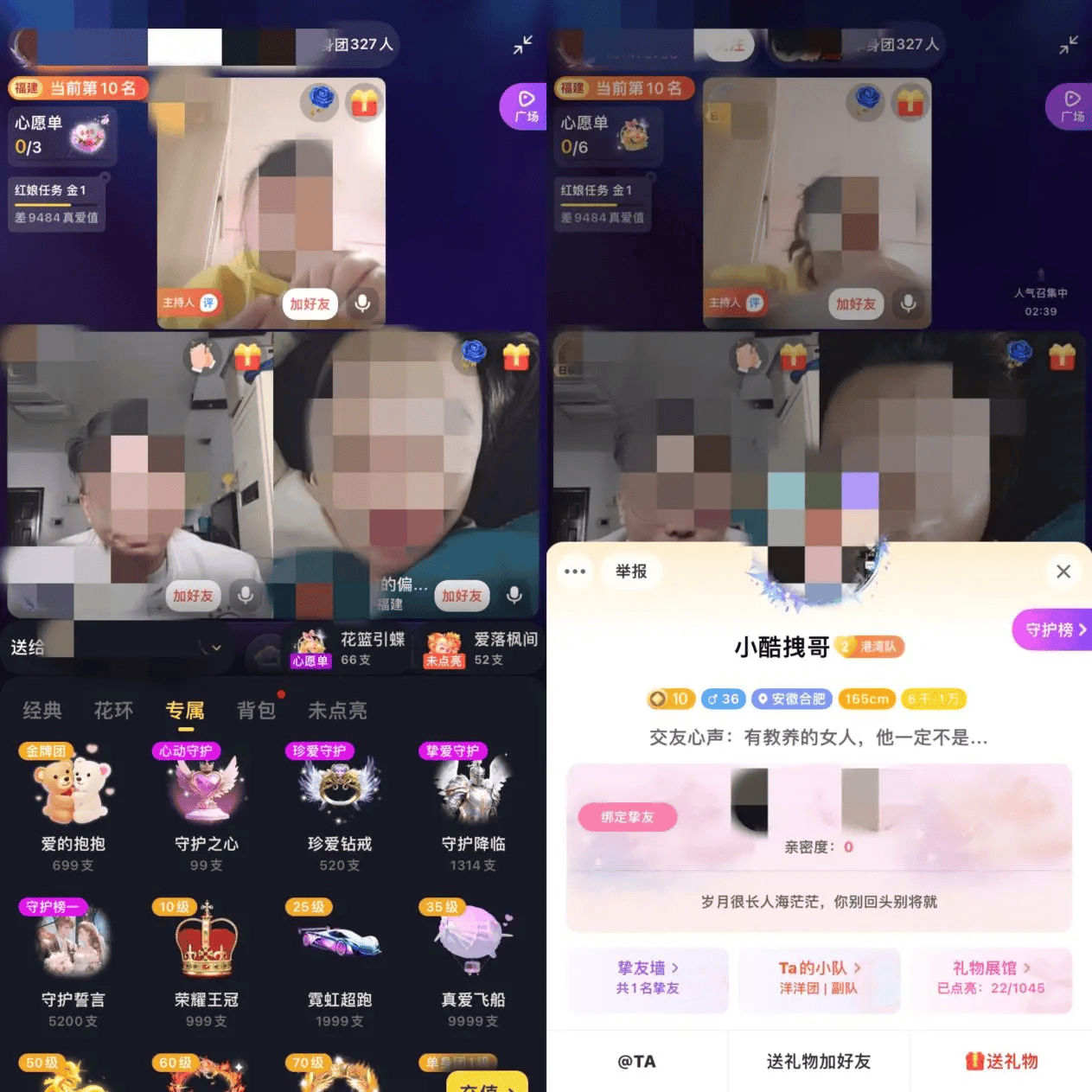
Group 1 - The core strategy of the company, Yidui, to succeed in the competitive social market and aim for a listing on the Hong Kong Stock Exchange is not based on advanced technology but rather on a precise focus on the lower-tier markets and an extensive "human sea tactic" [3] - Yidui has identified a significant opportunity in the lower-tier market's single population, who desire emotional connections but lack trust in pure algorithmic matching. The company employs 180,000 matchmakers, primarily from third and fourth-tier cities, who can quickly establish emotional resonance with users [5] - The company's revenue of 1.5 billion RMB is supported by a closed-loop model combining matchmakers, live streaming, and dating services. The matchmakers attract traffic through live streaming, enhance conversion through one-on-one services, and monetize through gift rewards. As Yidui prepares for its IPO, it aims to leverage capital to expand its matchmaker network and improve technology while balancing commercialization and user experience [8] Group 2 - The promotional and advertising expenses for the year ending December 31, 2022, were 358.485 million RMB, which represented a 97.3% increase compared to the previous year. For the six months ending June 30, 2023, these expenses were 285.731 million RMB, a 95.7% increase [9] - The cost of goods sold for the year ending December 31, 2022, was 9.328 million RMB, accounting for 2.5% of total revenue. For the six months ending June 30, 2023, this cost rose to 11.104 million RMB, representing 3.7% of total revenue [9] - The total revenue for the year ending December 31, 2022, was 368.435 million RMB, which is projected to increase to 654.826 million RMB by 2024, maintaining a consistent growth trajectory [9]

求职踩坑、销售藏猫腻,瑞众人寿的灰色增员术
Bei Jing Shang Bao· 2026-01-22 14:00
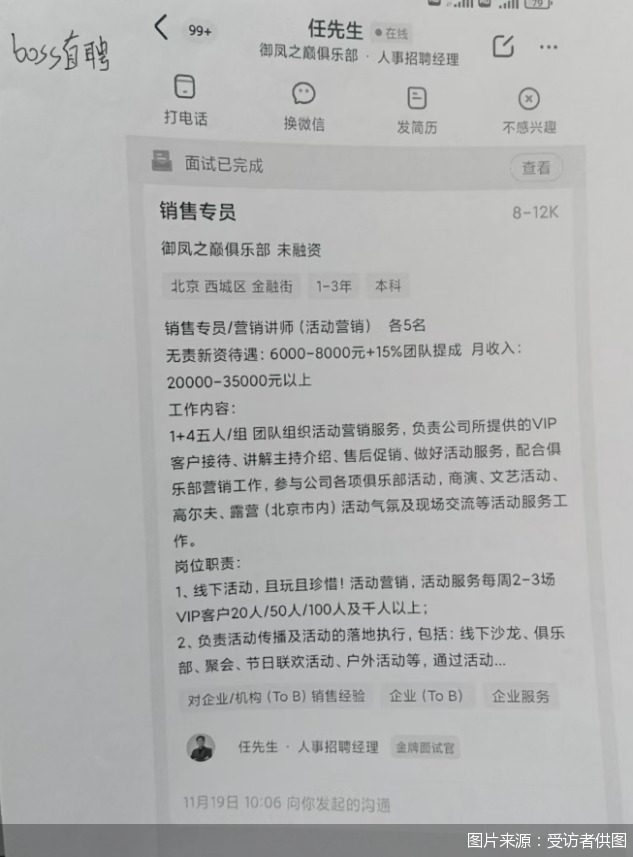
Core Viewpoint - The article highlights deceptive recruitment practices in the insurance industry, where companies misrepresent job roles and compensation to attract candidates, leading to a lack of transparency and trust in the sector [1][8]. Recruitment Practices - Job postings for high-paying positions often turn out to be for insurance sales roles, misleading candidates about the nature of the work [1][3]. - A specific case involved a candidate, Wang Li, who was lured by a job advertisement promising a base salary of 6,000 to 8,000 yuan, with potential earnings of 20,000 to 35,000 yuan per month through commissions [2][3]. Company Background - The company involved, Ruizhong Life Insurance, has a history of being a significant player in the insurance market, having taken over the business and assets of Huaxia Life Insurance after it was placed under regulatory control in 2020 [3][4]. - As of 2024, Ruizhong Life Insurance reported total premiums of 236.8 billion yuan and employed approximately 110,000 frontline sales personnel [3]. Regulatory Violations - The recruitment practices employed by the team director, Wu, violated regulatory guidelines that prohibit insurance marketing personnel from independently recruiting new agents [8][11]. - Regulatory bodies confirmed that the actions taken by Wu and his team were in breach of established recruitment policies, leading to potential sanctions against Ruizhong Life Insurance [8][11]. Sales Practices - The article describes unethical sales practices, including the return of commissions and offering gifts as incentives, which are against the regulations set forth in the Insurance Law [9][10]. - Specific instances of commission returns and gift offerings were documented, indicating a systemic issue within the sales practices of the company [9][10]. Industry Challenges - The reliance on "human sea tactics" for recruitment has led to high turnover rates and a lack of professionalism among sales agents, damaging the overall reputation of the insurance industry [12][13]. - The shift in consumer expectations towards more personalized and comprehensive financial services necessitates a transformation in the insurance sector, moving away from aggressive recruitment strategies [13][14]. Recommendations for Improvement - The article suggests that insurance companies should reform their incentive structures to prioritize compliance and service quality over mere sales volume [14]. - It emphasizes the need for ongoing compliance training and ethical education for agents to enhance professionalism and restore trust in the industry [14].
义乌市茗谭贸易公司四川分公司:时尚百货店铺经营的四大要点
Sou Hu Cai Jing· 2025-12-15 12:01
Group 1 - Clear product positioning is essential for retail success, allowing brands to adapt to competition and market development effectively [1] - The layout of products is crucial, with common pitfalls including the "hit product mentality" and the "sea of products strategy," which can lead to poor sales and ineffective brand identity [3][4] - Unique and creative product design is vital for standing out in the retail market, as it helps create a memorable brand image [5] Group 2 - Focusing on repeat purchase products, such as clothing and snacks, can enhance customer loyalty, especially when the store meets all shopping needs [6] - Effective marketing strategies for existing customers, including personalized service and loyalty programs, can increase customer retention and stabilize revenue [8] - By mastering product positioning, product layout, unique design, and customer marketing, retail stores can thrive in a competitive environment [8]

从柯淳到刘萧旭,短剧演员被谁“锁”了?
3 6 Ke· 2025-10-11 11:22
Core Insights - The short drama industry is experiencing a significant transformation, with a shift from relying on scripts to focusing on securing popular actors as key assets for production [1][7][43] - The competition for talent has intensified, leading to a "talent war" where companies are increasingly signing exclusive contracts with actors to ensure a steady supply of star power [4][22][43] Group 1: Industry Dynamics - The success of short dramas like "盛夏芬德拉" has highlighted the importance of lead actors, with platforms reporting over 300 million views and significant social media engagement [1][4] - Companies are adopting different strategies: some are using a "mass recruitment" approach to build a large pool of actors, while others focus on signing established stars to drive viewership [13][22][43] - The influx of actors from prestigious acting schools indicates a shift in perception, with more trained professionals entering the short drama space, enhancing the overall quality of productions [35][41] Group 2: Talent Acquisition Strategies - Companies like 欢瑞世纪 and 河马星驰 are expanding their talent pools significantly, with欢瑞世纪 reportedly signing over 100 new actors to support their production needs [13][14] - The trend of signing headliners is evident, with companies prioritizing actors with substantial fan bases, such as 李柯以 and 曾辉, who have over 160,000 and 127,000 followers respectively [22][24] - The competitive landscape has led to a dual approach where companies balance nurturing new talent while also securing established actors to ensure both production capacity and audience appeal [26][29][43] Group 3: Actor's Role and Market Evolution - The role of actors has evolved from being mere resources to becoming central figures that influence production quality and audience engagement [7][43] - The market is witnessing a bifurcation where some actors prefer the stability of company contracts, while others opt for the flexibility of personal studios, reflecting a growing divide in career strategies [27][34] - The industry's maturation is marked by a recognition that the value of actors will be assessed through multiple dimensions, including audience engagement, revenue sharing, and overall market impact [43]