
信托行业转型

Search documents
“十五五”启航:多家信托公司年度工作会共谋新篇
Jing Ji Guan Cha Bao· 2026-02-12 02:45
Group 1: Industry Overview - The year 2026 marks the official start of the "14th Five-Year Plan" and is crucial for the trust industry to return to its core business, accelerate transformation, and enhance quality and efficiency [1] - Multiple trust institutions, including Everbright Xinglong Trust, China Resources Trust, and Zhongcheng Trust, held annual meetings focusing on high-quality development as a core goal, outlining a grand blueprint for differentiated, specialized, and high-quality growth in the trust industry [1] Group 2: Everbright Xinglong Trust - Everbright Xinglong Trust emphasizes a stable and progressive approach, proposing seven key areas of focus: strengthening party leadership, transformation and development, risk resolution, compliance, departmental conduct, institutional mechanisms, and strict party governance [2] Group 3: China Resources Trust - China Resources Trust aims for systematic reconstruction of core competitiveness, aligning with group strategy, and focusing on five major tasks: consolidating leading business advantages, improving risk management, deepening organizational restructuring, strengthening talent development, and upgrading digital transformation [3] Group 4: Zhongcheng Trust - Zhongcheng Trust reported significant achievements with asset management exceeding 1.5 trillion yuan and a securities asset management trust scale surpassing 1 trillion yuan, emphasizing compliance and risk management while enhancing its role in national strategy and group development [4] Group 5: Foreign Trade Trust - Foreign Trade Trust held a meeting themed "Practical Action Towards New and Better," summarizing the execution of its 2025 strategy and assessing current economic conditions and industry trends to plan for 2026 [5] Group 6: Wukuang Trust - Wukuang Trust focuses on its mining characteristics as a strategic core, aiming to enhance core functions and competitiveness over the next five years, with a strong emphasis on party building, capabilities, talent, governance, conduct, and integrity [6] Group 7: Guotong Trust - Guotong Trust adopts a differentiated strategy to break through challenges, emphasizing user-centric approaches and process thinking to stimulate overall vitality and ensure compliance, while focusing on seven dimensions for development [7] Group 8: Zhongyuan Trust - Zhongyuan Trust celebrates its 40th anniversary with a focus on innovation and core principles, aiming for comprehensive improvement in operational quality by concentrating on political leadership, risk control, business transformation, talent development, benchmarking management, and internal collaboration [9] Group 9: Daye Trust - Daye Trust aims to deepen its market presence with a focus on asset service trusts, exploring innovative models in pension and charitable trusts, and establishing a professional reputation in niche markets [10]
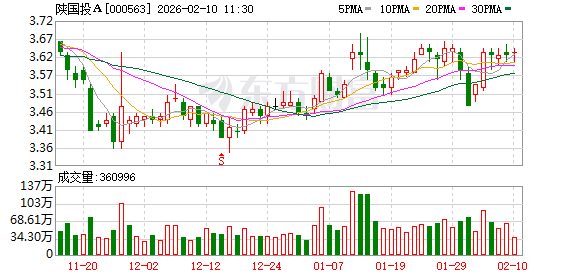
陕国投A2025年净利润14.33亿元 同比增长5.25%
Zheng Quan Ri Bao Wang· 2026-02-10 07:43
Group 1 - The core viewpoint of the article highlights the steady growth of Shaanxi International Trust Co., Ltd. (referred to as "Shaanxi Guotou A") in 2025, with total revenue reaching 2.952 billion yuan, a year-on-year increase of 0.85%, and net profit attributable to shareholders amounting to 1.433 billion yuan, up by 5.25% [1][2] - The company plans to distribute a cash dividend of 0.6 yuan per 10 shares (including tax) to all shareholders as part of its 2025 annual distribution plan [1] - Shaanxi Guotou A emphasizes its commitment to reducing financing costs for the real economy, effectively managing risks, and maintaining stable overall operations [1] Group 2 - In response to the accelerated transformation of the trust industry, Shaanxi Guotou A has initiated a private placement plan of up to 3.8 billion yuan, aimed at enhancing its capital strength and net asset scale [2] - The completion of this plan is expected to provide strong support for the company to seize strategic opportunities and achieve high-quality sustainable development amid intense market competition [2]

陕国投信托2025年报出炉 管理信托规模超6000亿
Jing Ji Guan Cha Wang· 2026-02-10 07:30
Company Performance - In 2025, Shaanxi International Trust Co., Ltd. (Shaanxi Trust) reported total operating revenue of 2.952 billion yuan, an increase of 0.85% year-on-year [2] - The company achieved operating profit of 1.910 billion yuan, up 4.04% year-on-year [2] - Total profit reached 1.908 billion yuan, reflecting a year-on-year growth of 4.48% [2] - Net profit for the year was 1.433 billion yuan, marking a 5.25% increase compared to the previous year [2] - The company proposed a dividend distribution plan of 0.6 yuan per 10 shares (including tax) for all shareholders [2] Trust Management and Strategic Focus - As of the end of the year, the trust management scale reached 624.585 billion yuan, representing an 8.01% year-on-year growth [2] - Shaanxi Trust actively participated in major projects in Shaanxi Province, including the "Belt and Road" initiative and key regional developments, focusing on six advantageous industries such as energy and aerospace [2] - The company emphasized its integrated functions of investment, financing, and services to enhance supply chain management and promote "four-chain integration" [2] Industry Context and Future Plans - In response to the accelerating transformation of the trust industry, which demands higher investment research capabilities, digitalization, and active management, the company initiated a private placement plan not exceeding 3.8 billion yuan [3]


陕国投A 2025年净利润14.33亿元 同比增长5.25%
Zheng Quan Ri Bao· 2026-02-10 04:36
Core Viewpoint - Shaanxi International Trust Co., Ltd. (referred to as "Shaanxi Guotou A") reported a steady growth in its 2025 annual performance, with total revenue reaching 2.952 billion yuan, a year-on-year increase of 0.85%, and a net profit attributable to shareholders of 1.433 billion yuan, up 5.25% [2] Group 1 - In 2025, the company plans to distribute a cash dividend of 0.6 yuan per 10 shares (including tax) to all shareholders [2] - The company emphasized its commitment to reducing financing costs for the real economy, effectively managing risks, and maintaining stable overall operations [2] - Shaanxi Guotou A leveraged its integrated functions of investment, financing, and services to participate in major projects in Shaanxi Province, focusing on six key industries including energy and aerospace [2] Group 2 - In response to the accelerated transformation of the trust industry, Shaanxi Guotou A initiated a private placement plan of up to 3.8 billion yuan [3] - The completion of this plan is expected to significantly enhance the company's capital strength and net asset scale, supporting high-quality sustainable development and competitive positioning in the market [3]
慈善信托在透明规范中发挥作用
Jin Rong Shi Bao· 2026-01-29 01:04
Core Viewpoint - The financial regulatory authority has initiated a path for the trust industry to return to its core mission and focus on high-quality development, emphasizing risk prevention and compliance [1] Group 1: Regulatory Developments - The Financial Regulatory Authority released guidelines to strengthen supervision and prevent risks in the trust industry, marking the beginning of a high-quality development journey [1] - The Ministry of Civil Affairs and the Financial Regulatory Authority issued the "Charity Trust Information Disclosure Measures," which consists of 26 articles aimed at enhancing the transparency and effectiveness of charity trusts [2][3] Group 2: Industry Transformation - The trust industry is focusing on reducing financing and channel trusts while enhancing its core business, with a significant emphasis on risk management and compliance [1] - Charity trusts have seen a substantial increase in registration, with 2,799 trusts registered and a total asset scale of 10.705 billion yuan as of January 28, 2026 [2] Group 3: Information Disclosure Requirements - The new measures require timely public disclosure of key information related to charity trusts, including registration details and financial management, to ensure transparency [3][4] - The measures encourage public and media oversight of charity trust information disclosure, promoting accountability and transparency in operations [3][4] Group 4: Performance of Trust Companies - Several trust companies, including CITIC Trust and Shanghai Trust, reported stable performance in 2025, with CITIC Trust achieving 6.326 billion yuan in revenue and expanding its service offerings [6] - Shanghai Trust's asset management scale reached nearly 1.4 trillion yuan, with over 13,000 active wealth accounts totaling 100 billion yuan [6] - Kunlun Trust reported a 439.75% increase in net profit, focusing on energy trust development and successfully registering a new charity trust project at the beginning of 2026 [6]
信托业2025成绩单
2 1 Shi Ji Jing Ji Bao Dao· 2026-01-28 23:30
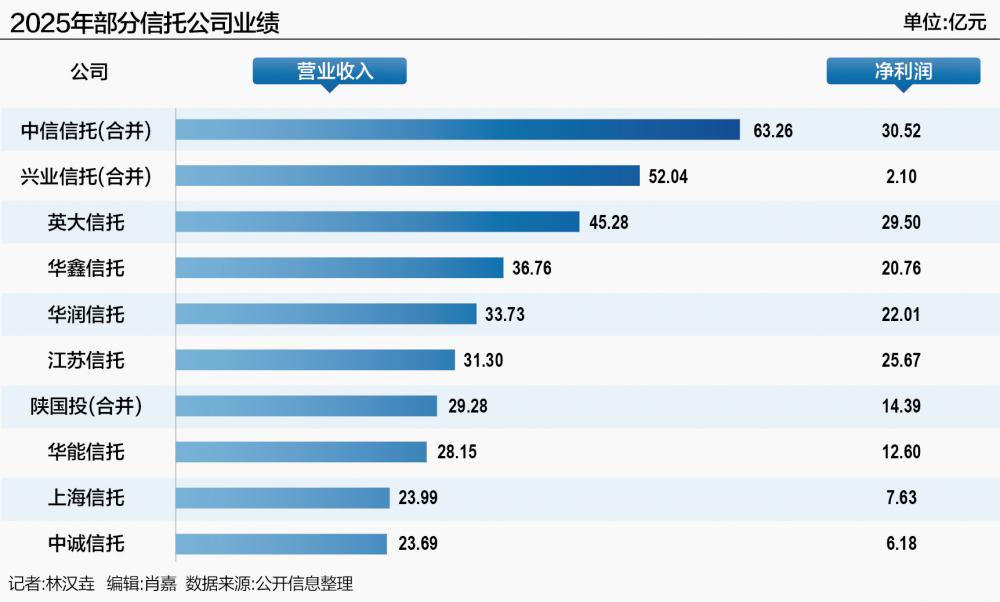
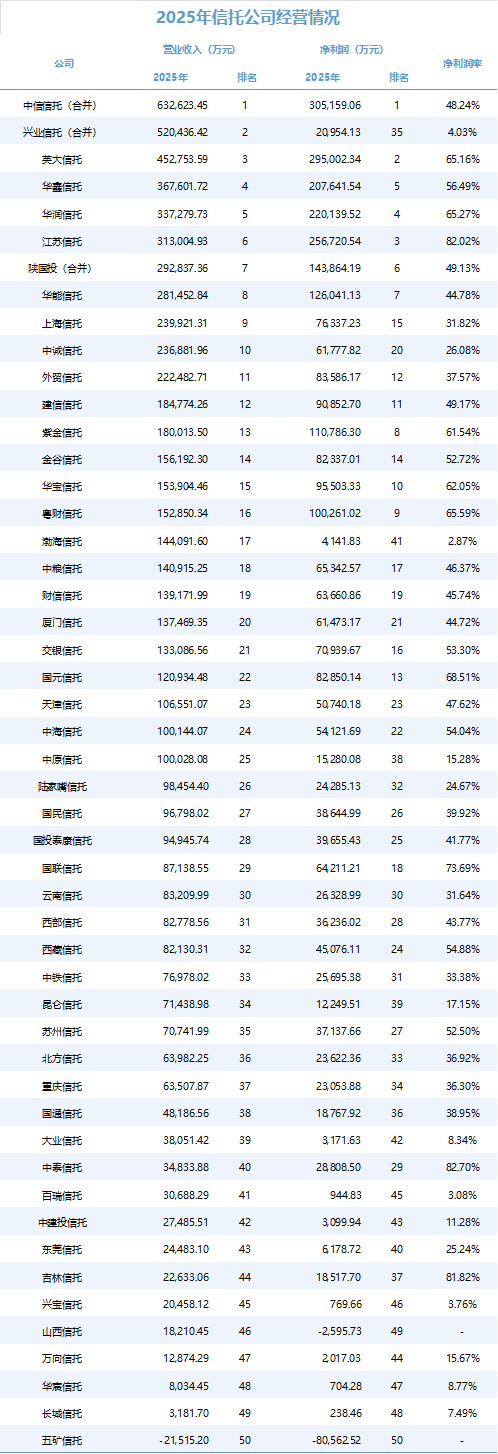
Core Insights - The trust industry is experiencing growth in both revenue and net profit for 2025, but internal differentiation among companies is intensifying [1][3][4] Revenue and Profit Overview - In 2025, 50 trust companies reported a total revenue of 70.871 billion yuan and a net profit of 31.418 billion yuan, with nearly 60% of companies achieving positive net profit growth [1][5] - The top five companies account for over 30% of the total revenue, indicating a significant head effect, with the leading company, CITIC Trust, generating 6.326 billion yuan in revenue, representing 8.93% of the total [3][4] - The revenue of the top ten companies constitutes 51.85% of the total revenue of the 50 companies, while half of the companies reported revenues below 1 billion yuan [3][4] Profitability Differentiation - The net profit margin varies significantly among companies, with 16 companies exceeding a 50% net profit margin, while 7 companies reported margins below 10%, the lowest being 2.87% [7] - CITIC Trust led in net profit with 3.052 billion yuan, followed closely by Yingda Trust and Jiangsu Trust [5][6] Business Model Transformation - The trust industry is shifting from homogeneous competition to differentiated operations, driven by inherent resource endowments and strategic transformation paths [4][8] - Companies with different backgrounds, such as bank-affiliated trusts and financial holding group trusts, are leveraging their unique advantages to enhance their competitive edge [4][8] Trust Business vs. Proprietary Business - Trust business revenue decreased to 36.568 billion yuan, down 8.76% year-on-year, continuing a downward trend [8][9] - In contrast, proprietary business revenue saw significant growth, supported by a recovering capital market and improved investment management capabilities [9][10] Asset Management Growth - By mid-2025, the total trust asset management scale reached 32.43 trillion yuan, a year-on-year increase of 20.11%, ranking third in the asset management industry [9][10]
信托业2025成绩单:营收净利整体双增,前五强揽下三成营收
2 1 Shi Ji Jing Ji Bao Dao· 2026-01-28 10:48
Core Insights - The trust industry is experiencing revenue and profit growth in 2025, but internal differentiation is intensifying [1][2] - Nearly 60% of the 50 trust companies reported positive net profit growth, with total revenue reaching 70.87 billion yuan and net profit at 31.42 billion yuan [1][2] Revenue Analysis - The top five trust companies account for over 30% of the industry's total revenue, indicating a significant head effect [1][5] - The total revenue of the 50 trust companies is 70.87 billion yuan, with the top five companies generating 32.60% of this total [5][6] - The revenue of the trust business continues to decline, contrasting sharply with the substantial growth in proprietary business income [1][9] Profit Analysis - The total net profit for the 50 trust companies is 31.42 billion yuan, with nearly 60% achieving positive growth [7] - CITIC Trust leads with a net profit of 3.05 billion yuan, followed by Yingda Trust and Jiangsu Trust [7][8] - There is a notable disparity in net profit margins, with 16 companies exceeding 50% and 7 companies below 10% [7][8] Business Transformation - The industry is shifting from homogeneous competition to differentiated operations, with varying paths of transformation among companies [1][6] - Companies with different backgrounds are leveraging their core advantages to establish unique development paths [6][11] - The proprietary business income is significantly increasing, while trust business income is declining, reflecting a structural adjustment in profit models [10][11] Asset Management Growth - The total trust asset management scale reached 32.43 trillion yuan, growing by 20.11% year-on-year, ranking third in the asset management industry [11][12] - The growth in asset management scale indicates the industry's strong position and potential for development [12]
透视信托业年报:分化加剧,路在何方?
Shang Hai Zheng Quan Bao· 2026-01-20 18:53
Core Insights - The trust industry in 2025 has experienced significant differentiation, with the number of companies reporting profit growth nearly equal to those reporting declines, highlighting a stark contrast in performance across the sector [1][3] - The shift in focus from non-standard to standardized products, driven by regulatory guidance, has led to varying degrees of success among trust companies, with some pursuing scale at the expense of risk management [1][4] Group 1: Performance Highlights - CITIC Trust reported a consolidated revenue of 6.326 billion yuan and a net profit of 3.052 billion yuan in 2025, both showing growth and ranking first among disclosed trust companies [2] - Yingda Trust also demonstrated strong growth, with revenues and net profits reaching 4.528 billion yuan and 2.95 billion yuan, respectively, marking increases of 53.3% and 66.1% year-on-year [2] - Huaxin Trust achieved revenues of 3.676 billion yuan, a year-on-year increase of 23.87%, and a net profit of 2.076 billion yuan, up 13.48% [2] Group 2: Underperforming Companies - Wenkang Capital's subsidiary, Wenkang Trust, reported a revenue of -203 million yuan and a net loss of 806 million yuan for 2025 [3] - Jianxin Trust's revenue and net profit decreased to 1.848 billion yuan and 909 million yuan, respectively, down by 3.05 billion yuan and 3.03 billion yuan compared to 2024 [3] - Among the 50 disclosed trust companies, 21 reported a year-on-year decline in net profit, while 20 experienced a drop in revenue, indicating widespread challenges [3][4] Group 3: Industry Trends and Challenges - The divergence in performance is attributed to varying strategies, with some companies heavily involved in channel business while others have focused on asset service trusts and asset management trusts [3][4] - Many trust companies have partnered with wealth management subsidiaries to develop standardized products, which often lack active management capabilities, leading to increased scale but decreased profitability [4] - The pace of risk resolution varies among companies, with some struggling to adapt to the industry's transformation, particularly those with significant exposure to real estate trusts and low-risk non-standard urban investment projects [5] Group 4: Future Outlook - The industry is expected to continue its trend of differentiation, with professional capabilities becoming the core competitive advantage [5] - Regulatory changes are pushing trust companies to enhance their active management skills, particularly in the valuation of fixed-income products, marking the end of the era of passive valuation [5] - Trust companies are encouraged to invest in macro research, industry analysis, credit assessment, and portfolio construction to improve their performance, linking it directly to their research and investment capabilities [5]
信托业2025年“成绩单”揭晓,资产服务信托加速崛起
Huan Qiu Wang· 2026-01-18 01:40
Core Insights - The trust industry is experiencing a transformation, with overall revenue stabilizing while individual company performance shows significant divergence [1][3] - Leading firms like CITIC Trust, Yingda Trust, and Huaxin Trust have reported strong financial results, indicating successful adaptation to new market conditions [1][3] - Conversely, some companies, such as Wenkun Trust, are struggling with severe performance declines, highlighting the challenges of transitioning from traditional financing models [3][5] Industry Performance - CITIC Trust reported operating revenue of 6.326 billion yuan and a net profit of 3.052 billion yuan, maintaining its leading position in the industry [1] - Yingda Trust exhibited remarkable growth, with operating revenue and net profit increasing by 51.49% and 63.70% year-on-year, respectively [1] - Huaxin Trust achieved a net profit of 2.076 billion yuan, with its proprietary business revenue growing by 167.94% [1] - Shanghai Trust's asset management scale reached nearly 1.4 trillion yuan, a 50% increase from the beginning of the year [1] Challenges Faced - Wenkun Trust reported an operating revenue of -203 million yuan and a net profit of -806 million yuan, indicating significant operational difficulties [3] - The decline in net income from fees and commissions, along with substantial investment losses, reflects the struggles of some firms in adapting to reduced traditional financing activities [3] Business Structure Evolution - Investment income has become a critical component of revenue for some companies, with Jiangsu Trust deriving 75% of its operating revenue from investment income [3] - Asset service trusts are emerging as a significant growth driver, with experts noting that asset management trusts are the primary growth engine in the current market [3][5] Service Trust Developments - Service trusts have achieved breakthroughs in various sectors, with Shanghai Trust's wealth management account scale reaching 100 billion yuan [4] - CITIC Trust's asset scale includes a 47% share of service trusts, indicating a shift towards diversified service offerings [4] - Companies like Kunlun Trust are leveraging their connections with state-owned enterprises to innovate in areas such as carbon capture and hydrogen energy [4] Future Outlook - The performance divergence in 2025 is seen as a natural outcome of the transition from old to new business models within the trust industry [5] - The core competitiveness of trust companies will increasingly depend on specialized capabilities in niche markets rather than mere scale [5] - Asset service trusts, particularly family and pension trusts, are expected to be key areas for future growth, emphasizing the need for high-quality, professional services [5]

王峥嵘:以“本源”链接“能源”
Zheng Quan Ri Bao Wang· 2025-12-26 07:45
Core Viewpoint - Kunlun Trust is focusing on the energy sector and enhancing its asset management capabilities to adapt to the current low-interest-rate environment and the evolving asset management landscape in China [2][7]. Group 1: Company Background - Kunlun Trust, originally founded as Jinguang Trust in 1986, was acquired by China National Petroleum Corporation (CNPC) in 2009 and rebranded as Kunlun Trust, which is a significant brand under CNPC [1]. - The company has a registered capital of 10.2 billion yuan and manages over 300 billion yuan in assets, with a strong presence in cities like Beijing, Ningbo, and Guangzhou [1]. Group 2: Industry Context - The trust industry is undergoing its sixth transformation, with regulatory improvements and a focus on returning to core functions, emphasizing active management and service to the real economy [2]. - The new "National Nine Articles" and the Central Economic Work Conference have set a policy framework that supports the trust industry, allowing it to play a unique role across various markets [2]. Group 3: Strategic Focus - Kunlun Trust aims to enhance its marketing and product operation capabilities to better serve the energy sector and differentiate itself from other trust companies [3][4]. - The company has successfully transitioned to a model that emphasizes asset management and has achieved a significant increase in its asset management scale, reaching 40.672 billion yuan in integrated finance [4]. Group 4: Product Development - The company has developed a diverse product range, including cash management, pure debt, and family trusts, with a focus on wealth preservation and growth [5][6]. - Kunlun Trust is the first company approved by the financial regulatory authority to pilot pension trusts, with over 200 contracts and a scale nearing 50 million yuan [6]. Group 5: Future Outlook - Despite the low-interest-rate environment, the trust industry is expected to have significant growth potential, leveraging its unique functionalities to support wealth preservation and social governance [7].
