
资产服务信托

Search documents
信托业2025年“成绩单”揭晓,资产服务信托加速崛起
Huan Qiu Wang· 2026-01-18 01:40
Core Insights - The trust industry is experiencing a transformation, with overall revenue stabilizing while individual company performance shows significant divergence [1][3] - Leading firms like CITIC Trust, Yingda Trust, and Huaxin Trust have reported strong financial results, indicating successful adaptation to new market conditions [1][3] - Conversely, some companies, such as Wenkun Trust, are struggling with severe performance declines, highlighting the challenges of transitioning from traditional financing models [3][5] Industry Performance - CITIC Trust reported operating revenue of 6.326 billion yuan and a net profit of 3.052 billion yuan, maintaining its leading position in the industry [1] - Yingda Trust exhibited remarkable growth, with operating revenue and net profit increasing by 51.49% and 63.70% year-on-year, respectively [1] - Huaxin Trust achieved a net profit of 2.076 billion yuan, with its proprietary business revenue growing by 167.94% [1] - Shanghai Trust's asset management scale reached nearly 1.4 trillion yuan, a 50% increase from the beginning of the year [1] Challenges Faced - Wenkun Trust reported an operating revenue of -203 million yuan and a net profit of -806 million yuan, indicating significant operational difficulties [3] - The decline in net income from fees and commissions, along with substantial investment losses, reflects the struggles of some firms in adapting to reduced traditional financing activities [3] Business Structure Evolution - Investment income has become a critical component of revenue for some companies, with Jiangsu Trust deriving 75% of its operating revenue from investment income [3] - Asset service trusts are emerging as a significant growth driver, with experts noting that asset management trusts are the primary growth engine in the current market [3][5] Service Trust Developments - Service trusts have achieved breakthroughs in various sectors, with Shanghai Trust's wealth management account scale reaching 100 billion yuan [4] - CITIC Trust's asset scale includes a 47% share of service trusts, indicating a shift towards diversified service offerings [4] - Companies like Kunlun Trust are leveraging their connections with state-owned enterprises to innovate in areas such as carbon capture and hydrogen energy [4] Future Outlook - The performance divergence in 2025 is seen as a natural outcome of the transition from old to new business models within the trust industry [5] - The core competitiveness of trust companies will increasingly depend on specialized capabilities in niche markets rather than mere scale [5] - Asset service trusts, particularly family and pension trusts, are expected to be key areas for future growth, emphasizing the need for high-quality, professional services [5]


家族信托的2025:着眼长远 向下扎根
Zhong Guo Zheng Quan Bao· 2025-12-30 21:11
Core Insights - The family trust industry is experiencing significant growth driven by the increasing wealth transfer needs of high-net-worth individuals, supported by favorable policies and the proactive efforts of trust institutions [1][2] - Despite the growth, challenges such as trust-building, talent shortages, and regulatory alignment remain, prompting the industry to seek pathways for high-quality development [1][3] Policy Breakthroughs - The recent draft guidelines from the China Trust Industry Association clarify the definition of family trust business, establishing a minimum investment threshold of 10 million yuan and emphasizing the core attributes of wealth protection and transfer [2] - Pilot programs for real estate and equity trust property registration have been initiated in cities like Beijing and Shanghai, facilitating the development of asset service trusts, particularly family trusts [2] Focus on Talent and Capability - The industry emphasizes the need for skilled professionals who are well-versed in trust and legal knowledge to meet the complex demands of clients, including asset preservation and succession planning [3] - The family trust sector has seen rapid growth, with the total scale reaching 643.58 billion yuan by the end of 2024, highlighting the competitive nature of the market where professional capabilities are crucial [3] Path to Value Deepening - Experts predict that as policies and regulations improve, family trusts will overcome existing barriers, ensuring wealth security while promoting family values and legacy [4] - The industry is expected to enter a phase of compliance, professionalism, and diversification, with increasing personalized demands from high-net-worth individuals [4] - Challenges such as tax-related issues and the need for integrated talent remain, putting pressure on smaller trust companies to either invest significantly in capabilities or exit the market [4]
信托资产规模超32万亿元 营收、利润实现“双增”
Xin Lang Cai Jing· 2025-12-22 20:23
Core Insights - The trust industry in China is showing positive adjustments towards "returning to its roots," with significant growth in trust asset scale and operational performance [1][2][3] Group 1: Industry Performance - As of June 2025, the total trust asset scale reached 32.43 trillion yuan, marking a year-on-year increase of 20.11% [1] - In the first half of 2025, the industry achieved operating income of 34.362 billion yuan, a 3.34% increase compared to the same period in 2024, and a total profit of 19.676 billion yuan, up 0.45% year-on-year [1] - The trust industry has transitioned from traditional financing and channel trust models to asset management and asset service trusts, which are now the main drivers of growth [1][2] Group 2: Business Structure - Asset management trusts have become the primary growth engine, with a balance of approximately 24.43 trillion yuan, accounting for 75.33% of total trust assets [1] - Asset service trusts have also shown steady growth, with a balance of at least 8 trillion yuan, representing 24.67% of total trust assets [1] - By mid-2025, securities investment trusts emerged as the dominant product within asset management trusts, growing to 12.48 trillion yuan and comprising 51.09% of the total scale of funding trusts [2] Group 3: Market Position - The trust industry has strengthened its position within the overall asset management sector, which reached a total asset management scale of 174.50 trillion yuan by mid-2025, reflecting a growth of approximately 5.57% from the end of 2024 [3] - Trust assets rank third in the asset management industry, following insurance asset management and public funds [3] - Experts suggest that trust companies should focus on their core business, improve governance, and develop clear strategic plans for sustainable business models in the new era [3]
超2万亿资金“搬家”证券市场
第一财经· 2025-12-22 02:49
Core Viewpoint - The trust industry in China has seen a significant recovery in revenue and profit growth in the first half of 2025, indicating a potential bottoming out and a return to core business practices, despite ongoing challenges in the transition phase [3][5][14]. Group 1: Industry Overview - As of mid-2025, the total trust asset scale in China surpassed 30 trillion yuan, reaching 32.43 trillion yuan, making it the third largest sector in the asset management market [3][8]. - The trust industry has shifted from traditional financing and channel trust models to asset management and asset service trusts, with a notable trend of funds moving towards the securities market [3][8]. Group 2: Revenue and Profit Trends - In the first half of 2025, the trust industry achieved operating revenue of 343.62 billion yuan and a total profit of 196.76 billion yuan, marking a year-on-year increase of 3.34% and 0.45% respectively [5][6]. - The industry experienced a significant decline in revenue and profit in 2024, with operating revenue down 32.73% and total profit down 40.63% compared to the previous year [5][6]. Group 3: Asset Allocation Trends - By mid-2025, funds directed towards financial markets reached 15.05 trillion yuan, accounting for 61.60% of total trust funds, a substantial increase from 42.38% at the end of 2022 [9][10]. - The allocation to the bond market remains dominant, with 9.36 trillion yuan invested, while equity and fund markets combined received only 1.47 trillion yuan [9][10]. Group 4: Asset Service Trusts - Asset service trusts, encouraged by regulatory bodies, are still in the exploratory phase, with wealth management service trusts amounting to 4.37 trillion yuan and administrative management service trusts at 2.80 trillion yuan as of mid-2025 [11][12]. - The development of green trusts is seen as a necessary step for the industry to return to its core functions, although challenges in asset identification and risk management persist [13][14].

建信信托党委副书记、总裁卢刚: 信托核心价值在于“服务、整合、跨期”
Zheng Quan Shi Bao Wang· 2025-12-08 23:28
Core Viewpoint - The trust industry is at a critical juncture of transformation and upgrading, where "change" is essential for survival and development, necessitating a focus on internal capabilities and value reconstruction for differentiated development from other financial sectors [1][2] Group 1: Service Value - The core value of trust lies in "service value," which emphasizes the role of trust companies as professional trustees, shifting from a "product-centered" to a "customer-centered" approach, and from a "transaction-driven" to a "service-driven" model [1] - Asset service trusts are highlighted as a key carrier of service value, demonstrating strong vitality in areas such as risk disposal, asset securitization, and elderly care services [1] Group 2: Integration Value - Trust companies serve as "connectors" of resources and demands, leveraging their unique integration advantages across monetary markets, capital markets, and real industries [2] - The integration value is reflected in the broad business scope and the ability to flexibly utilize various financial tools to provide diverse financial services, which is crucial for creating excess value and fulfilling social responsibilities [2] Group 3: Cross-Period Value - The essence of the trust system lies in its time dimension, allowing for long-term asset preservation, appreciation, and orderly inheritance across economic cycles and human lifetimes [2] - Adhering to "long-termism" is seen as a return to the essence of trust and a necessary choice for the industry to achieve high-quality development [2]
信托业规模首破30万亿,资管信托和服务信托成增长新引擎
Di Yi Cai Jing· 2025-10-22 13:41
Core Insights - The trust industry has successfully transitioned from traditional non-standard financing to asset service trusts, asset management trusts, and charitable trusts, leading to significant growth in asset management scale [1] - As of June 2025, the total asset management scale of the trust industry reached 32.43 trillion yuan, a year-on-year increase of 20.11%, surpassing 30 trillion yuan for the first time [1] - Asset service trusts and asset management trusts have become the dominant business models driving the growth of trust assets, replacing traditional financing and channel business models [1] Industry Structure - The trust industry is experiencing a notable decline in financing-related and channel business due to regulatory pressures, prompting companies to reshape their customer service systems [1] - Trust companies are focusing on developing wealth management account systems and creating a diversified product line, with managed asset scale exceeding 1.3 trillion yuan [1] - The unique advantages of trust institutions include asset independence, risk isolation, wealth inheritance, and asset allocation, meeting the societal demand for cross-generational arrangements of various assets [2]
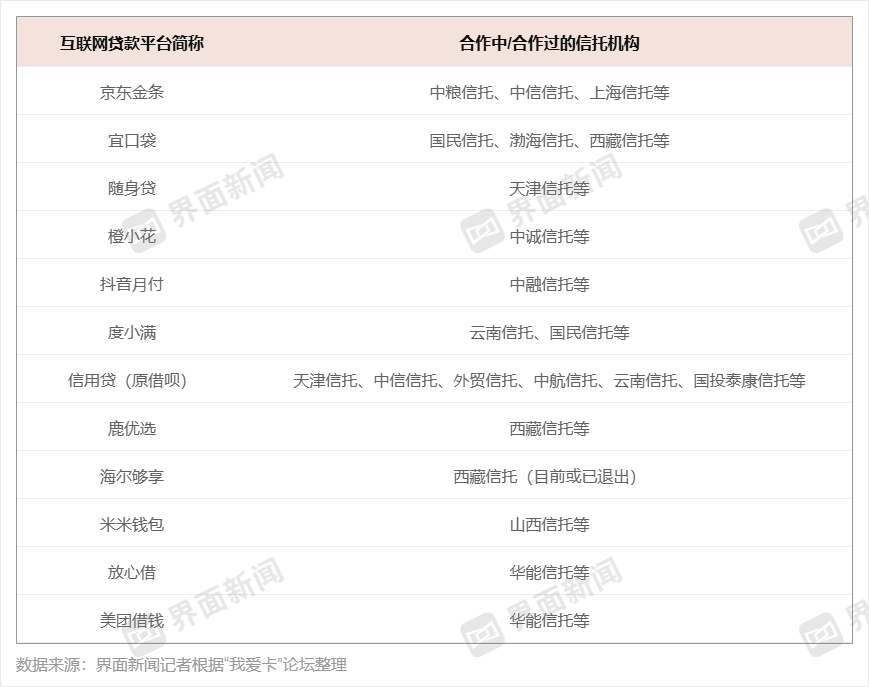
审视华能信托被骗17亿案:信托重返消金牌桌,助贷新规将带来什么?
Xin Lang Cai Jing· 2025-09-26 04:05
Core Viewpoint - The recent developments in the consumption finance trust business highlight a resurgence in the sector, driven by regulatory changes and market dynamics, despite the risks exemplified by the Huaneng Trust loan fraud case [1][4][14]. Group 1: Regulatory Environment - The local securities regulatory bureau has initiated a special self-inspection of asset-backed securities (ABS) related to Huaneng Trust's "credit guarantee loan" business to prevent similar fraud risks from affecting the ABS market [1]. - The implementation of the new lending regulations on October 1 is expected to impose stricter constraints on trust institutions involved in consumer loans, including limits on borrowing rates and platform management [2][7]. Group 2: Market Trends - In the first eight months of 2025, 26 trust companies issued consumption finance collective trust plans totaling 173.3 billion yuan, marking a year-on-year increase of over 50% [4][6]. - Major trust companies such as Tianjin Trust, Guomin Trust, and Huaxin Trust have significantly increased their issuance of consumption finance trust products, with some companies doubling their issuance compared to the previous year [4][6]. Group 3: Business Models - The consumption finance trust business, which primarily involves providing consumer loans, has evolved from a focus on non-standard financing to a more regulated environment due to increased scrutiny [3][11]. - The trust companies are now exploring various business models, including lending partnerships with banks and consumer finance companies, to mitigate risks and enhance profitability [10][12]. Group 4: Risks and Challenges - The Huaneng Trust loan fraud case serves as a cautionary tale for the industry, highlighting the risks associated with over-reliance on third-party platforms and inadequate risk management practices [14][15]. - The new lending regulations are expected to challenge traditional financing models, pushing trust companies to adapt their strategies to comply with stricter regulatory requirements [29][30]. Group 5: Future Outlook - The consumption finance trust business is anticipated to continue evolving, with a focus on compliance and proactive risk management becoming paramount for trust companies [29][30]. - The shift towards asset service trusts, particularly in prepayment funding services, is seen as a potential optimal solution for trust companies facing regulatory pressures [30].
我国信托业规模逼近30万亿,超四成资金涌向证券市场
Huan Qiu Wang· 2025-06-05 03:00
Core Insights - The trust industry in China is experiencing significant growth in asset scale and optimization of business structure, with total trust assets reaching 29.56 trillion yuan by the end of 2024, marking a 9.48% increase from mid-2024 and a 23.58% increase from the end of 2023 [1][2] - The shift towards a diversified and professional asset service trust model is evident, as the industry transitions from traditional non-standard financing to a more balanced approach between asset service trusts and asset management trusts [1][2] - The demand for comprehensive wealth management is rising among trust clients, driven by stable economic growth and increasing per capita income, indicating substantial growth potential for wealth management services within the trust sector [2] Asset Scale and Structure - By the end of 2024, the wealth management service trust scale exceeded 1 trillion yuan, with family trusts at 643.58 billion yuan and insurance trusts at 270.40 billion yuan [1] - The number of newly established wealth management service trusts in 2024 reached 45,300, with a total scale of 1.98 trillion yuan, significantly outpacing the establishment of asset management trusts [1] Securities Investment and Financial Performance - The trust industry is actively engaging in securities investment, with 66 trust companies managing over 10 trillion yuan in securities investment trusts by the end of 2024, primarily focused on bonds [2] - The total scale of funds in trust reached 22.25 trillion yuan by the end of 2024, reflecting a year-on-year growth of 28.02%, with over 5% of funds directed towards stocks and funds [2] - Despite an increase in operating income to 94.04 billion yuan (up 8.89% from 2023), the industry's profit declined by 45.52% to 23.09 billion yuan, attributed to the shift in business focus towards asset service trusts [2] Regulatory Support and Development - The trust industry is presented with new opportunities for high-quality development, supported by regulatory frameworks from the State Council aimed at enhancing risk prevention and promoting industry growth [3] - Pilot programs for trust property registration have begun in major cities like Beijing and Shanghai, facilitating the industry's standardization and transformation [3]
信托业交三分类后首份完整年答卷:资产管理规模逼近30万亿,增速超23%
2 1 Shi Ji Jing Ji Bao Dao· 2025-06-04 07:50
Core Insights - The Chinese trust industry has shown significant growth, with the total trust assets reaching 29.56 trillion yuan by the end of 2024, marking a 23.58% increase from the end of 2023 [1][2][3] Industry Overview - By the end of 2024, the trust asset scale is close to 30 trillion yuan, reflecting a substantial transformation following the implementation of the "Three Classification New Regulations" [1][3] - The trust industry experienced a historical peak in asset scale, surpassing the previous high of 26.25 trillion yuan in 2017, after a period of decline from 2018 to 2020 [2][3] Business Structure Optimization - In 2024, the trust industry established 67,400 new trust products, with a total scale of 8.32 trillion yuan, indicating a shift towards asset service trusts, which accounted for 70.17% of new products [4][5] - The growth in trust assets is attributed to the optimization of business structure, with a focus on asset service trusts and wealth management services [4][5] Financial Performance - The trust industry's operating income for 2024 was 94.036 billion yuan, an increase of 8.89% from 2023, while profits fell to 23.087 billion yuan, a decrease of 45.52% [5][6] - The shift towards asset service trusts, which typically have lower fees, has impacted overall profit margins, necessitating a focus on improving business efficiency and profitability [5][6] Future Developments - The "Three Classification New Regulations" aim to guide the trust industry back to its core functions, with a clear path for future development and the introduction of supporting regulations [6][7] - The trust industry is expected to see new opportunities with the implementation of property trust registration trials in major cities, enhancing regulatory compliance and operational efficiency [8]
2024年信托业实现利润230.87亿元,同比下跌45.52%
Bei Jing Shang Bao· 2025-06-03 14:05
Group 1 - The core viewpoint of the news is that the trust industry in China is experiencing significant growth in asset scale, with a projected increase to 29.56 trillion yuan in 2024, reflecting a 9.48% growth compared to mid-2024 and a 23.58% increase from the end of 2023 [1] - By the end of 2024, the scale of fund trusts is expected to reach 22.25 trillion yuan, marking an 11.53% increase from mid-2024 and a 28.02% increase from the end of 2023 [1] - The operating income of the trust industry is projected to rise to 94.036 billion yuan in 2024, an 8.89% increase from 86.361 billion yuan in 2023, while profits are expected to drop significantly by 45.52% to 23.087 billion yuan [1] Group 2 - The trust industry is shifting from a focus on capital financing and asset management to prioritizing asset service trusts, which is expected to impact overall profit margins due to the low-fee nature of asset service trusts [2] - The regulatory framework established by the China Banking and Insurance Regulatory Commission in 2023 aims to categorize trust business, with a three-year transition period set to ensure orderly implementation [2] - Wealth management service trusts are highlighted as a key focus in the business classification adjustment, accounting for 76% of the 25 categories, with family trusts, insurance trusts, and other personal wealth trusts collectively amounting to 1.028882 trillion yuan [2] Group 3 - There is a growing demand for comprehensive wealth management among trust clients, driven by the stable growth of the Chinese economy and increasing personal income, indicating significant development potential for wealth management services in the trust industry [3]