全栈技术布局

Search documents
独家丨蔚来芯片子公司完成首轮融资,投后估值近百亿元
雷峰网· 2026-02-27 13:52
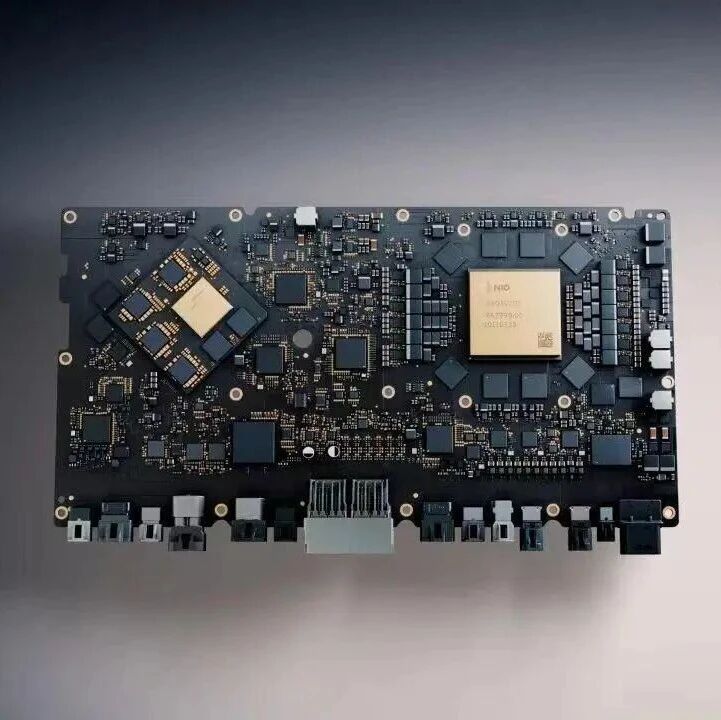
Core Viewpoint - NIO's chip subsidiary, Anhui Shenji, is set to announce its first round of financing, with a post-investment valuation nearing 10 billion RMB, indicating strong industry interest in NIO's chip project [2]. Group 1: Company Overview - Anhui Shenji Technology Co., Ltd. was established in June 2025 to oversee chip research and development, production, and technology licensing, with a registered capital increased from 10 million to 75.29 million RMB [2]. - The chip development team at NIO has grown to over 500 members since the project was initiated in 2021 [3]. Group 2: Product Development - The Shenji NX9031 chip, launched in March 2025, is a significant breakthrough in NIO's technology strategy, being the world's first 5nm automotive-grade intelligent driving chip, boasting four times the computing power of NVIDIA's Orin-X and a memory bandwidth of 546GB/s, double that of NVIDIA's Thor-U chip [3]. - The design and development of the Shenji NX9031 took two years, with an additional year for performance testing, incorporating comprehensive safety circuits for real-time anomaly detection and self-correction [3]. Group 3: Financial Implications - NIO's self-developed chips are expected to reduce vehicle costs by at least 10,000 RMB per unit, with the company spending billions on NVIDIA chips in 2024, highlighting the cost-saving potential of their own chips [3]. - The investment in the Shenji NX9031 chip's development is comparable to the cost of building 1,000 battery swap stations, amounting to several billion RMB, which is a key factor in NIO's decision to spin off its chip business for market-oriented operations [3]. Group 4: Strategic Partnerships - Shortly after its establishment, Anhui Shenji began seeking external investment, leading to the formation of a joint venture with Aixin Yuanzhi and OmniVision in Chongqing, indicating a strategic move to develop a technology ecosystem [4][5].


春节 AI 战事,百度不能输
Sou Hu Cai Jing· 2026-01-31 11:16
Core Insights - The article discusses the competitive landscape of AI applications in China, particularly focusing on Baidu's strategy to integrate AI into its existing app ecosystem, thereby enhancing user experience and engagement [3][4][5]. Group 1: AI Market Dynamics - The Chinese AI market is witnessing a significant shift as major tech companies like Tencent, Baidu, and Alibaba engage in a "red envelope war" during the 2026 Spring Festival, aiming to capture the next generation of AI user engagement [3][11]. - Baidu's approach emphasizes the integration of AI into its widely used app, allowing users to access AI services without needing to download a separate application, thus facilitating a smoother user experience [5][6][7]. Group 2: User Engagement and Experience - Baidu's "path folding" strategy allows for a seamless transition for users to adopt AI services, as they can access these features directly within the Baidu app, which has a monthly active user base of 700 million [6][7]. - The integration of AI into everyday tasks, such as movie ticket purchases and travel planning, enhances the perceived value of the AI assistant, making it more relevant to users' daily needs [6][8]. Group 3: Financial Performance and Growth - Baidu is the first major Chinese internet company to disclose specific revenue figures from its AI business, reporting a year-on-year growth of over 50% in AI-related revenue, with AI cloud revenue increasing by 33% [9][10]. - The company’s AI applications generated 2.6 billion yuan in revenue, showcasing its transformation into a more AI-centric organization [9]. Group 4: Competitive Positioning - Baidu's strategy to consolidate its position as a dual "national search + AI entry point" is evident through its significant investment in user engagement initiatives, such as the 5 billion yuan red envelope campaign [11][12]. - The article highlights the importance of brand recognition and user mindshare in the AI space, suggesting that Baidu's focused approach may create a substantial gap between it and its competitors [12][13]. Group 5: Technological Infrastructure - Baidu's comprehensive technology stack, including its Kunlun chips, AI cloud services, and the Wenxin model, positions it as a leading player capable of competing with global giants like Google [15][16]. - The company’s AI cloud service market share reached 40.2%, indicating its strong foothold in the rapidly growing AI cloud sector [16][17]. Group 6: Future Outlook - The competition in the AI cloud market is expected to intensify, focusing on the depth of technology and practical applications, with Baidu's unique positioning providing it with a competitive edge [17][18].