AI超级入口

Search documents
机器人上春晚,卖爆了
盐财经· 2026-02-17 04:07
Core Viewpoint - The 2026 Spring Festival Gala showcased a high concentration of robots from four Chinese companies, marking a significant moment for the commercialization of humanoid robots and AI technology in China [2][5][25]. Group 1: Robot Companies and Performances - Four companies, Songyan Power, Yushu Technology, Magic Atom, and Galaxy General, presented their robots at the Spring Festival Gala, providing a technology-rich experience for the audience [12][15]. - Songyan Power's robots were featured in a skit with famous comedian Cai Ming, emphasizing their affordability and accessibility, with many models priced below 10,000 yuan [18][15]. - Yushu Technology, a returning participant, showcased a martial arts performance, highlighting their advanced motion control capabilities [20][22]. - Galaxy General, valued at $3 billion, presented a touching microfilm featuring their robots, which can interact naturally with humans [22][24]. - Magic Atom demonstrated their high-dynamic bipedal robots in a musical performance, showcasing their extensive self-research capabilities [22][24]. Group 2: Commercialization and Market Impact - The participation of robots in the Spring Festival Gala serves as a critical endorsement, addressing public concerns about safety and reliability, and opening up B2B and B2C market opportunities [14][26]. - The cost of advertising during the gala ranges from 16.99 million to 44 million yuan, with individual robot performances costing over 100 million yuan, indicating the high stakes involved [12][13]. - The event is seen as a significant milestone for humanoid robots, potentially marking 2026 as a pivotal year for their commercialization [25]. Group 3: AI Integration and Competition - The integration of AI models, such as the Volcano Engine's Doubao model, into robots signifies a deep collaboration between hardware and AI, enhancing the robots' capabilities [28][31]. - Major tech companies like ByteDance and Alibaba are heavily investing in AI, with ByteDance planning to invest over 150 billion yuan and Alibaba 380 billion yuan in the next three years, indicating a fierce competition for AI dominance [57][58]. - The marketing strategies employed by these companies during the gala reflect their ambitions to establish a strong foothold in the AI ecosystem, with a focus on user engagement and long-term brand loyalty [62][64].



互联网巨头AI超级入口的第一战场
Sou Hu Cai Jing· 2026-02-16 20:06
Core Viewpoint - The article discusses the intense competition among major internet companies during the Spring Festival, particularly focusing on the rise of AI applications and the strategic battles for user engagement and market share in the AI sector [3][4][37]. Group 1: AI Competition Landscape - The Spring Festival has become a battleground for internet giants to compete for traffic, with significant events like the 2015 payment war and the 2020 short video competition [3][4]. - In 2025, a new player, DeepSeek, emerged, surpassing existing applications in daily active users, indicating a shift in the AI market landscape [4]. - By 2026, the competition intensified, with major companies preparing extensively for the Spring Festival, marking it as a critical moment for AI applications [4][5]. Group 2: Model Updates and Innovations - Major companies like Baidu, Alibaba, and ByteDance have updated their AI models recently, with Baidu's Wenxin 5.0 featuring 2.4 trillion parameters and advanced multi-modal capabilities [6][8]. - Alibaba's Qwen3-Max-Thinking model, with over a trillion parameters and 36 trillion tokens of pre-training data, enhances its tool-calling capabilities [8][10]. - ByteDance launched several models, including Seedance 2.0 and Seedream 5.0 Lite, which significantly improved video and image generation capabilities [10][14][15]. Group 3: AI Super Entry Points - Companies are focusing on creating AI super entry points that integrate their core business models, such as Baidu's AI+search and Alibaba's AI+e-commerce [21][25]. - Alibaba's launch of the Qwen APP aims to enhance the e-commerce experience by integrating various services into a single platform [25][28]. - Tencent's Yuanbao group chat feature incorporates AI to enhance user interaction and engagement, including a cash red envelope feature during the Spring Festival [30][32]. Group 4: Cash Incentives and User Engagement - Major companies are investing heavily in cash incentives to attract users, with Tencent announcing a 1 billion yuan cash giveaway and Baidu offering 500 million yuan in red envelopes [35][37]. - The competition for user attention and brand recognition is driving these cash distribution strategies, as companies aim to establish their AI super entry points [37].



AI超级入口争夺及变现开启:一场关乎未来生态的生死博弈
Sou Hu Cai Jing· 2026-02-14 17:28
Core Insights - Major tech companies are investing heavily in AI platforms, with Alibaba, Tencent, and Baidu collectively spending over 45 billion yuan to attract new users during the 2026 Spring Festival [2][8] - The marketing strategies have evolved from simple cash giveaways to more sophisticated methods that include subsidies, scenario binding, and social sharing, reflecting a shift from technical competition to ecosystem development [2][4] Group 1: Investment and Marketing Strategies - Tencent initiated the competition by distributing 10 billion yuan in cash red envelopes, leveraging its social ecosystem with over 1.4 billion monthly active users to enhance user engagement [3] - Baidu followed with 5 billion yuan in red envelope benefits, integrating its AI product with its existing app ecosystem to capture new traffic [3] - Alibaba's strategy involved offering 30 billion yuan in vouchers through its app, which connects various services within its ecosystem, enhancing user experience and engagement [3] Group 2: Evolution of AI Applications - AI applications are transitioning from basic functionalities to becoming integral parts of daily life, evolving into comprehensive digital assistants that can handle various tasks beyond simple queries [4][7] - The competition is moving towards embedding AI deeply into everyday scenarios, making it a necessity rather than an optional feature [7][12] Group 3: Future Implications and Competitive Landscape - The current marketing tactics are seen as a short-term strategy for user acquisition, with the real challenge being user retention post-subsidy [9][12] - The battle for AI dominance is not just about immediate user engagement but about establishing a long-term operational system that can integrate various services seamlessly [9][17] - Companies that can effectively create a reliable and compliant AI ecosystem will likely emerge as leaders in the global market, as the competition extends beyond local user engagement to include technological sovereignty and adaptability [16][17]
三十亿买崩服务器,AI红包大战照见“入口焦虑”与“技术竞赛”
3 6 Ke· 2026-02-12 00:26
Core Insights - A significant "AI red envelope war" has emerged during the Spring Festival, with a total investment exceeding 4.5 billion yuan, led by Alibaba's Qianwen with a 3 billion yuan initiative to attract users through AI interactions [1][5][10] - The competition has intensified in the underlying technology sector, with ByteDance's new video generation model, Seedance 2.0, gaining attention and expected to commercialize soon [2][15] Group 1: AI Red Envelope War - Alibaba's Qianwen launched a 3 billion yuan "AI treat" campaign, allowing users to order items like milk tea for just one penny, which resulted in over 10 million orders within hours [4][7] - The campaign led to significant user engagement, with Qianwen topping the Apple App Store free app chart, but also exposed system vulnerabilities, causing app crashes and user complaints [8][10] - The competition saw other major players like Tencent's Yuanbao and Baidu's Wenxin also participating, with Tencent offering 1 billion yuan in red envelopes and Baidu 500 million yuan [10][11] Group 2: Technology Arms Race - ByteDance's Seedance 2.0 model is being tested in various products and is anticipated to revolutionize video generation, marking a shift towards more immersive AI interactions [15][17] - The model's capabilities have raised concerns about misinformation and intellectual property, prompting ByteDance to implement restrictions during the testing phase to ensure a healthy creative environment [19][20] - The competition in the AI sector is characterized by a dual focus on user engagement through promotional activities and the development of advanced technological capabilities [19][20]
北水动向|北水成交净买入48.16亿 科网股再度分化 中芯国际(00981)绩后遭抛售
智通财经网· 2026-02-11 10:05
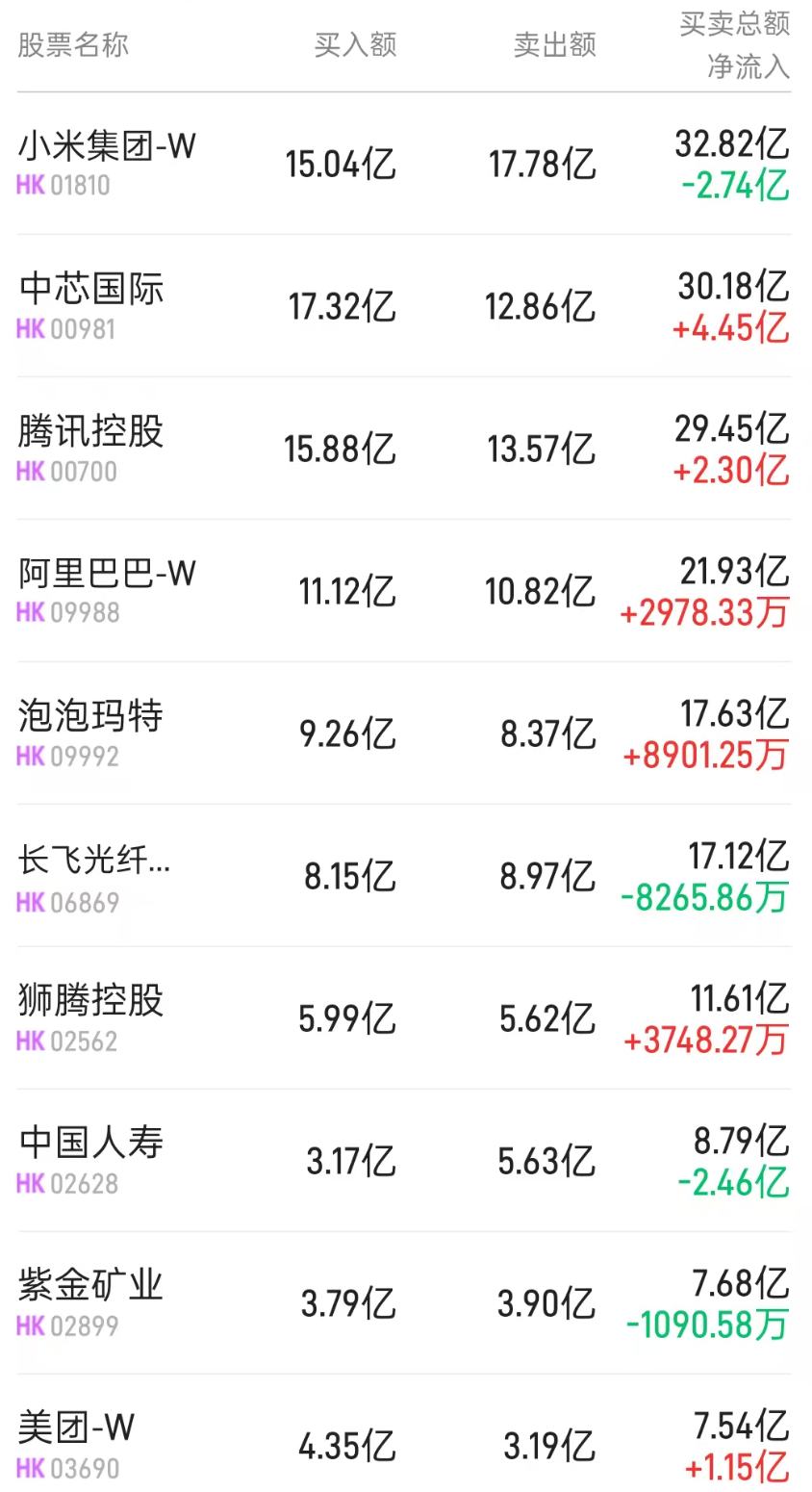
Group 1 - The Hong Kong stock market saw a net inflow of 4.816 billion HKD from Northbound trading, with 2.824 billion HKD from Shanghai and 1.992 billion HKD from Shenzhen [1] - The most bought stocks included Tencent (00700), Zijin Mining International (02259), and Meituan-W (03690), while the most sold stocks were Alibaba-W (09988), SMIC (00981), and China Life (02628) [1] Group 2 - Xiaomi Group-W had a net inflow of 15.04 million HKD, while SMIC experienced a net outflow of 17.32 million HKD [2] - Tencent Holdings saw a net inflow of 15.88 million HKD, and Alibaba-W had a net outflow of 11.12 million HKD [2] Group 3 - China Life faced a net outflow of 3.17 million HKD, while Meituan-W had a net inflow of 4.35 million HKD [3] - The net inflow for Zijin Mining International was 3.25 million HKD, indicating positive market sentiment towards the company [4][5] Group 4 - Meituan announced plans to acquire Dingdong Group's "Dingdong Grocery" business for approximately 717 million USD, which is expected to enhance its market position in fresh food delivery [5] - Zijin Mining International's acquisition of joint gold assets is projected to increase its gold production at a compound annual growth rate of about 37% from 2025 to 2027 [5] Group 5 - China Life's net outflow is attributed to ongoing discussions about deposit migration, with expectations that a significant portion of deposits will remain in the banking system [6] - SMIC's revenue guidance for Q4 2025 is expected to exceed market expectations, while its gross margin guidance is slightly below market forecasts [6]



科创板周报(2.2-2.6):北美四大云巨头,2026年资本支出仍将大幅增加
Zhong Guo Yin He Zheng Quan· 2026-02-10 07:50
Group 1: Capital Expenditure Projections - The four major cloud giants are expected to significantly increase capital expenditures in 2026, with Microsoft forecasting a higher growth rate than in 2025[2] - Meta's capital expenditure for 2026 is projected to be between $115 billion and $135 billion[2] - Google's capital expenditure for 2026 is estimated to be between $175 billion and $185 billion[2] - Amazon anticipates a capital expenditure of approximately $200 billion for 2026[2] Group 2: Market Concerns and Financial Performance - Following the earnings reports, stock prices of the four giants experienced declines, raising concerns about investment returns[2] - Amazon's operating cash flow for 2026 is projected to be insufficient to cover its capital expenditures, potentially leading to a cash flow deficit[2] - Analysts predict that 2026 will see a heightened focus on AI revenue growth and the ability of AI to create a commercial loop[2] Group 3: Industry Trends and Comparisons - The overall trading activity in the STAR Market decreased, with an average daily trading volume of approximately ¥241.32 billion, down from ¥318.02 billion the previous week[6] - The STAR Market's average PE ratio stands at 75.75, significantly higher than other major boards, indicating a premium valuation[10] - The technology sector's performance in the STAR Market was mixed, with the beauty care sector showing the highest weekly gain of +12.0% and the computer sector experiencing the largest decline of -7.4%[15]




AI入口激战正酣,腾讯、阿里、字节影子股曝光
Xin Lang Cai Jing· 2026-02-07 23:38
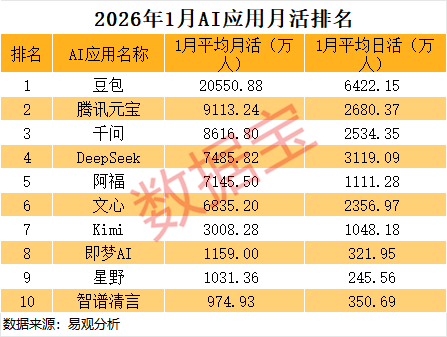
Core Viewpoint - The competition among major internet giants like Tencent, Baidu, and Alibaba for the "AI super entrance" is intensifying, with significant investments aimed at shaping the future internet ecosystem over the next decade [1][10]. Group 1: Differentiated Strategic Layouts - Alibaba is focusing on a "infrastructure + service" strategy, integrating its commercial ecosystem into the Tongyi Qianwen app, which has expanded beyond traditional chatbot functions to offer diverse services [2][11]. - ByteDance is leveraging its global traffic pool from Douyin, with its AI product Doubao achieving over 100 million monthly active users, positioning itself as a content distribution hub [3][12]. - Tencent is adopting a "social penetration + latecomer" strategy, investing 1 billion yuan in cash subsidies to enhance the WeChat ecosystem and embed AI deeply into social interactions [3][12]. Group 2: AI Application Rankings - As of January 2026, Doubao leads the AI application rankings with over 20.55 million average monthly active users, followed by Tencent's Yuanbao with approximately 9.11 million, and Alibaba's Qianwen with about 8.62 million [4][13]. Group 3: Investment Perspectives - The essence of the competition is the "intention economy," where the winner will be the player with the most complete ecosystem capable of converting dialogue into service delivery [4][12]. - Investors are advised to focus on AI e-commerce, vertical applications, and foundational infrastructure, particularly companies with equity ties to the three giants [5][14]. Group 4: A-Share Market Holdings - In the A-share market, 11 companies have "Tencent" as a keyword among their top ten shareholders, with notable companies like China Unicom and Century Huatong exceeding a market value of 100 billion yuan [6][17]. - Similarly, 11 companies have "Alibaba" or "Taobao" in their top ten shareholders, indicating significant investments in the A-share market [6][17]. - ByteDance holds shares in Zhangyue Technology through Beijing Quantum Leap Technology Co., while Baidu holds shares in Yuxin Technology [6][17]. Group 5: Potential Beneficiary Stocks - The competition for the AI entrance among Tencent, Baidu, Alibaba, and ByteDance is expected to benefit various companies, particularly those involved in AI applications and computing power resources [5][18]. - A total of 25 stocks related to the "East Data West Computing" concept have received institutional ratings, with a focus on areas like CPO, liquid cooling, AI computing power, and servers [8][19].
登顶App Store榜首,千问不「送钱」只「请客」
36氪· 2026-02-06 13:36
Core Viewpoint - The article discusses the recent competition among AI companies in China during the Spring Festival, highlighting the significant cash red envelope initiatives launched by various firms, particularly focusing on Qianwen's 30 billion yuan "Spring Festival Treat" campaign aimed at integrating AI into everyday consumer experiences [5][6][12]. Group 1: AI Red Envelope War - The recent AI red envelope competition has seen major players like Tencent, Baidu, and ByteDance participating, with Qianwen leading with a 30 billion yuan initiative to engage users through "free meals and large cash red envelopes" [5][6][12]. - Qianwen's campaign has already seen over 5 million orders for milk tea within five hours of launch, surpassing competitors in the App Store rankings [9][12]. - The strategy of Qianwen is not merely to distribute money but to create real-life consumption scenarios where AI can assist users, thereby embedding AI into daily life [9][18]. Group 2: User Engagement and Retention - The article emphasizes the importance of addressing genuine user needs in the AI space, suggesting that many AI applications struggle to maintain user engagement beyond initial curiosity [15][17]. - The effectiveness of the red envelope strategy in fostering long-term user retention remains uncertain, as many users may not return after the initial excitement fades [16][18]. - Qianwen's approach of integrating AI into essential consumer activities during the Spring Festival aims to create a more meaningful connection with users, potentially leading to habitual use of AI services [18][28]. Group 3: Evolution of AI as a Super Entry Point - The article outlines a shift in how AI can serve as a "super entry point," moving from merely answering questions to executing tasks seamlessly within user workflows [25][26]. - Qianwen's strategy reflects this evolution by embedding AI into everyday decision-making processes, reducing friction for users and encouraging habitual use [27][28]. - The integration of AI with Alibaba's extensive ecosystem positions it to effectively meet real consumer demands, potentially establishing a new standard for AI applications in daily life [32][33].

百度的窄门:当AI To C需要超级入口
3 6 Ke· 2026-02-06 12:53
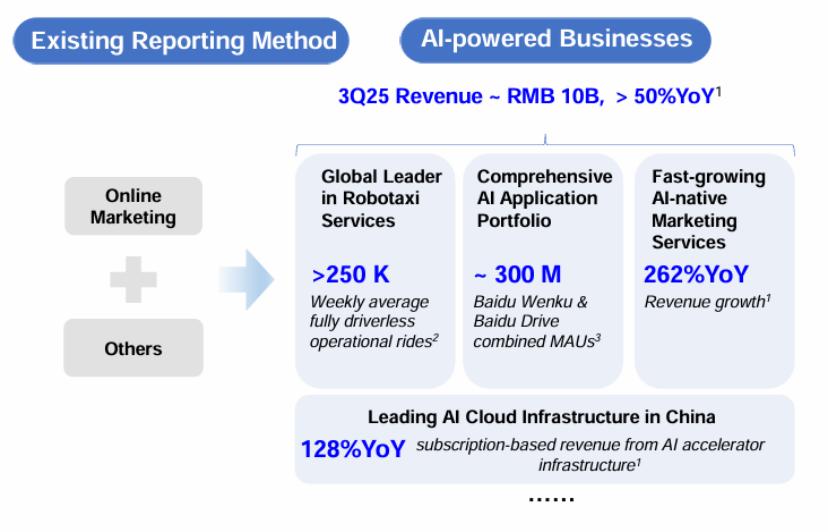
Core Insights - Baidu is facing significant pressure as its core online marketing revenue dropped by 18% in Q3 2025, while new business segments like AI, cloud, and autonomous driving are growing but not enough to create a reliable growth curve [1][2] - The establishment of the Personal Super Intelligent Group (PSIG) aims to integrate key AI assets like Baidu Wenku (Baidu Library) and Baidu Wangpan (Baidu Cloud) to enhance their commercial potential and address growth bottlenecks [1][3] Business Performance - AI cloud revenue reached 6.2 billion yuan, a 21% year-on-year increase, while AI application revenue was 2.6 billion yuan, accounting for over 25% of AI-driven business [5][8] - Baidu Wenku and Baidu Wangpan combined have approximately 300 million monthly active users, with Wenku's AI features achieving a 60% year-on-year growth in paid users [5][8] - AI native marketing services generated 2.8 billion yuan, a 262% increase year-on-year, now representing 18% of Baidu's core online marketing revenue, up from 4% a year ago [5][8] Strategic Developments - The integration of Baidu Wenku and Baidu Wangpan is expected to create a synergistic effect, enhancing user engagement and monetization through AI capabilities [9][10] - The launch of the Cangzhou OS and GenFlow tools indicates a strategic shift towards creating a comprehensive content operation system that enhances user productivity [9][10] - The PSIG's leadership under Wang Ying is seen as a strategic move to leverage the successful performance of Wenku and Wangpan, focusing on long-term growth potential [12][18] Competitive Landscape - Baidu's ambition to establish an "AI super entrance" faces challenges due to structural disadvantages compared to competitors like Tencent and Alibaba, which have more integrated ecosystems [19][23] - The lack of a robust transaction ecosystem and social engagement limits Baidu's ability to capture user behavior effectively, making it difficult to establish a "national-level entrance" in the AI To C market [23][25] - Baidu's AI journey has been complicated by missed opportunities in the mobile internet era, leading to a need for a balanced approach between B2B and B2C strategies [26][27]
元宝分享口令被微信封禁,阿里千问登顶
2 1 Shi Ji Jing Ji Bao Dao· 2026-02-06 07:50
Group 1 - Tencent's AI product, Yuanbao, faced restrictions on sharing its Spring Festival activity code on WeChat, similar to the previous ban on Qianwen's sharing code [1][7] - The competition among major tech companies (BAT) for AI assistant dominance led to a combined cash giveaway exceeding 4.5 billion yuan, with Tencent contributing 1 billion yuan, Baidu 500 million yuan, and Alibaba 3 billion yuan for their respective AI products [7] - Qianwen's "30 billion yuan free order" campaign launched on February 6 resulted in 2 million tea orders within four hours, showcasing the high demand and engagement from users [7] Group 2 - The surge in orders for Qianwen's free tea promotion caused significant delays, with reports of over 100 pending orders and increased wait times for delivery riders [6] - WeChat's recent actions to block sharing links for cash redemptions from Yuanbao, Baidu's Wenxin assistant, and Alibaba's Qianwen indicate a challenge in maintaining user experience amidst aggressive promotional activities [7][8]