全栈AI布局

Search documents
阿里巴巴发布最新业绩
证券时报· 2026-03-19 14:15
Core Viewpoint - Alibaba Group's Q3 FY2026 financial report shows a 36% growth in cloud revenue and a continuous triple-digit growth in AI-related product revenue for the tenth consecutive quarter, highlighting AI as a key growth engine for the company [1][5]. Financial Performance - The group's revenue for the quarter was 284.843 billion RMB, a 2% year-on-year increase. Excluding disposed businesses, the revenue growth would be 9% [1]. - Operating profit decreased by 74% to 10.645 billion RMB, primarily due to a reduction in adjusted EBITA [1]. - Adjusted EBITA fell by 57% to 23.397 billion RMB, attributed to investments in instant retail, user experience, and technology, partially offset by improvements in cloud business performance [1]. - Net profit attributable to ordinary shareholders was 16.322 billion RMB, a 66% decline year-on-year, mainly due to reduced operating profit [2]. - Non-GAAP net profit was 16.710 billion RMB, down 67% from 51.066 billion RMB in the same quarter of 2024 [2]. - Operating cash flow was 36.032 billion RMB, a 49% decrease from 70.915 billion RMB year-on-year, while free cash flow dropped 71% to 11.346 billion RMB [2]. Business and Strategic Developments - The instant retail business showed improved unit economics and average order value due to enhanced logistics efficiency and high customer retention [4]. - Alibaba rebranded its "Ele.me" service to "Taobao Flash Purchase" and integrated it with the Qianwen App [4]. - The international digital commerce group reported a significant reduction in losses, driven by logistics optimization and improved investment efficiency [4]. - In the cloud intelligence group, revenue reached 43.284 billion RMB, with a 36% year-on-year growth, primarily driven by public cloud business and AI product adoption [5]. - Alibaba Cloud maintained its leading position in China's financial cloud market with a 43% market share [5]. - The company showcased its full-stack AI capabilities, including self-developed GPU chips and a global leading model, contributing significantly to its cloud infrastructure [5].



AI竞赛转向推理,英伟达宣布Rubin芯片平台全面投产
2 1 Shi Ji Jing Ji Bao Dao· 2026-01-06 00:40
Core Insights - NVIDIA has accelerated its AI chip platform release schedule by unveiling the next-generation AI chip platform "Rubin" earlier than usual at CES on January 5, 2026, breaking its traditional March GTC announcement pattern [1][2] Group 1: Rubin Platform Overview - The Rubin platform, which includes six new chips, is designed for extreme collaboration and aims to meet the increasing computational demands of AI for both training and inference [4] - Compared to the previous Blackwell architecture, Rubin accelerators improve AI training performance by 3.5 times and operational performance by 5 times, featuring a new CPU with 88 cores [4] - Rubin can reduce inference token costs by up to 90% and decrease the number of GPUs required for training mixture of experts (MoE) models by 75% compared to the Blackwell platform [4] Group 2: Ecosystem and Market Response - The NVL72 system, which includes 72 GPU packaging units, was also announced, with each unit containing two Rubin dies, totaling 144 Rubin dies in the system [5] - Major cloud providers and model companies, including AWS, Microsoft, Google, OpenAI, and Meta, have responded positively to Rubin, indicating strong market interest [5] - NVIDIA aims to provide engineering samples to ecosystem partners early to prepare for subsequent deployment and scaling applications [5] Group 3: AI Strategy and Product Launches - NVIDIA's focus is shifting from "training scale" to "inference systems," as demonstrated by the introduction of the Inference Context Memory Storage Platform, designed specifically for inference scenarios [6] - The company is also advancing its long-term strategy in physical AI, releasing open-source models and frameworks that extend AI capabilities to robotics, autonomous driving, and industrial edge scenarios [6] - The launch of the Cosmos and GR00T series models aims to enhance robotic learning, reasoning, and action planning, marking a significant step in the evolution of physical AI [7] Group 4: Autonomous Driving Developments - NVIDIA introduced the Alpamayo open-source model family for autonomous driving, targeting "long-tail scenarios," along with a high-fidelity simulation framework and an open dataset for training [9] - The first autonomous vehicle from NVIDIA is set to launch in the U.S. in the first quarter, with plans for expansion to other regions [9] - The overall strategy emphasizes that the competition in AI infrastructure is moving towards "system engineering capabilities," where the complete delivery from architecture to ecosystem is crucial [9]


破局者字节,全栈AI狂飙
21世纪经济报道· 2025-08-29 07:34
Core Viewpoint - The article emphasizes that ByteDance is strategically positioning itself in the AI landscape by establishing a comprehensive stack from hardware to applications, aiming to create a "flywheel effect" in cost and experience while driving digital transformation across various industries [1]. Group 1: AI Infrastructure and Investment - ByteDance has significantly increased its investment in AI foundational technology, planning to invest over $12 billion (approximately 85.58 billion RMB) in AI infrastructure by 2025 [3]. - The company's capital expenditure for 2024 is projected to reach 80 billion RMB, with expectations to double to 160 billion RMB in 2025, primarily for building computing centers and developing DPU chips [3]. - ByteDance's latest open-source model, Seed-OSS-36B, features a native context length of 512K and introduces a "controllable thinking budget" mechanism, enhancing inference efficiency [3]. Group 2: Product Development and Market Position - ByteDance's AI product ecosystem, led by the chatbot Doubao, covers multiple scenarios and has seen a user base growth of over 864.35% year-on-year, reaching over 110 million users [6]. - The video generation product line, particularly Seedance 1.0 Pro, has achieved a cost of only 3.67 RMB for generating a 5-second 1080P video, showcasing its competitive edge [7]. - The Doubao model serves a wide range of industries, including 9 out of the top 10 global smartphone manufacturers and 70% of systemically important banks, with a daily token usage exceeding 16.4 trillion, a 137-fold increase from the previous year [8]. Group 3: Competitive Strategy and Ecosystem Development - ByteDance is building a differentiated advantage in the AI space, with its "Doubao 1.5 deep thinking model" ranking first in domestic evaluations [10]. - The company has adopted a pricing strategy based on input length, significantly reducing costs to one-third of competitors, facilitating broader access to large models [10]. - ByteDance aims to create an open ecosystem through its Volcano Engine, collaborating with industry leaders and integrating model capabilities to foster innovation and growth in AI services [11]. Group 4: Future Trends and Innovations - The article identifies key trends in ByteDance's AI development, including deeper technology integration, an open application ecosystem, and transformative human-computer interaction methods [13]. - The company is exploring new interaction devices and enhancing enterprise-level AI agents to drive digital transformation in Chinese enterprises [13]. - ByteDance's commitment to long-term investment in technology innovation is underscored by its goal to evolve from a "technology company" to an "innovative technology company" [12].

AI新业务首次突破百亿,百度大胆革新的底气是什么?
阿尔法工场研究院· 2025-08-21 01:38
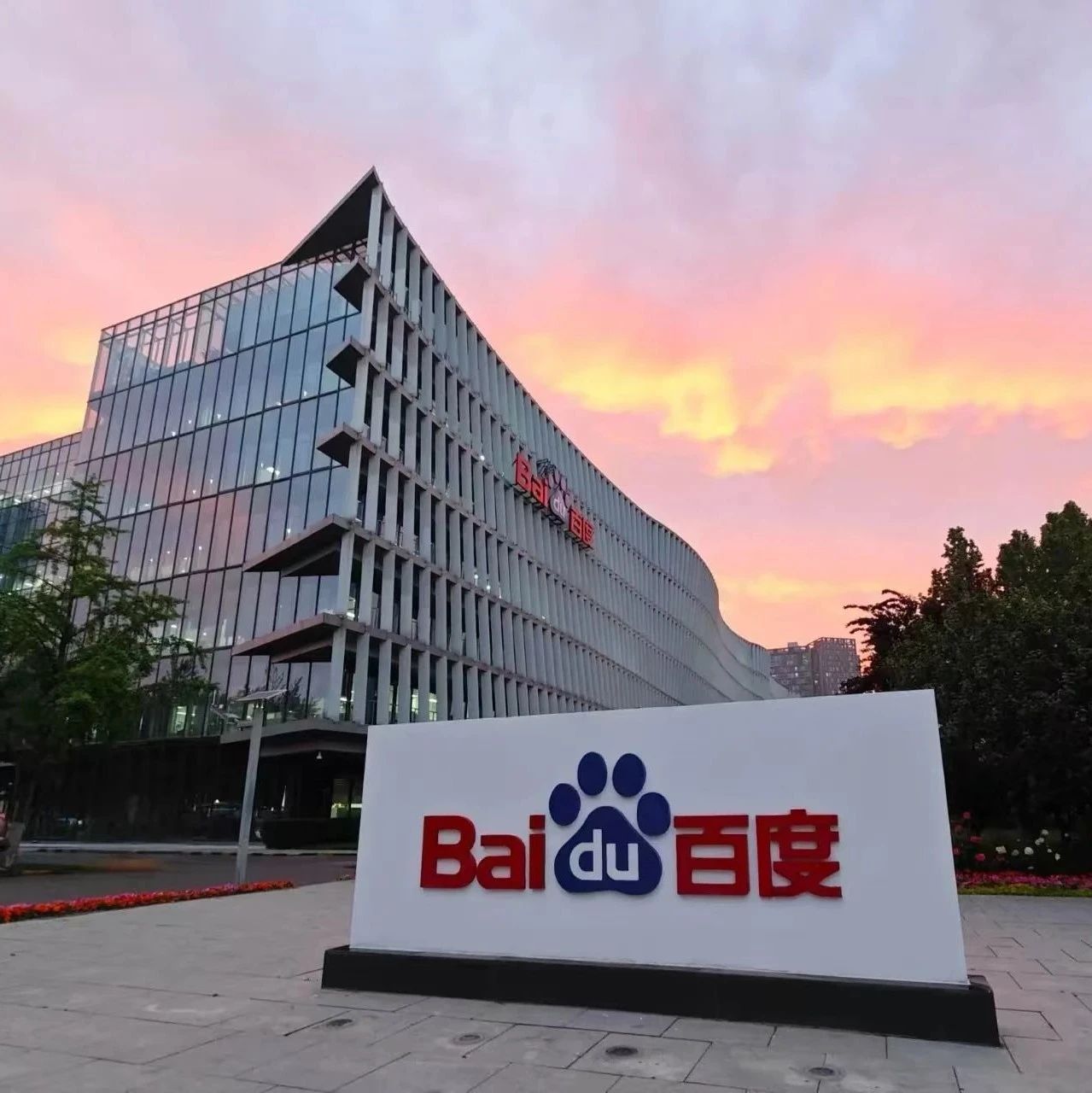
Core Viewpoint - Baidu's Q2 financial report demonstrates a significant transformation in its AI business, marking a shift from a decade-long technology investment to a scalable monetization phase, with total revenue reaching 32.7 billion yuan and core net profit increasing by 35% year-on-year [3][4][6]. Financial Performance - In Q2, Baidu's total revenue was 32.7 billion yuan, with core revenue at 26.3 billion yuan and a net profit of 7.4 billion yuan, reflecting a 35% year-on-year growth [3][4]. - AI new business revenue surpassed 10 billion yuan for the first time, growing by 34% year-on-year [3]. AI Business Growth - Baidu's AI new business, including smart cloud services, is showing strong growth, with global ride-hailing service "Luobo Kuaipao" achieving over 2.2 million service instances in Q2, a 148% increase year-on-year [3][4]. - The cumulative global service instances for "Luobo Kuaipao" exceeded 14 million, covering 16 cities worldwide [3]. Technological Innovation - Baidu has adopted a more aggressive approach to technological innovation compared to competitors like Google, leading the market in smart cloud business growth and undergoing a comprehensive AI transformation in its core search business [4][20]. - The company has transitioned from incremental improvements to disruptive restructuring in its search business, with over 64% of search results generated directly by AI as of July [19][20]. Competitive Positioning - Baidu's strategy emphasizes long-term technological investment over short-term gains, allowing it to build significant barriers in the evolving tech landscape [5][39]. - The company is positioned as a leader in the AI public cloud market, maintaining the top spot for six consecutive years, with a 14.9% market share in the large model platform market as of 2024 [23][31]. Ecosystem Development - Baidu's full-stack AI strategy integrates chip, framework, model, and application layers, providing end-to-end solutions rather than just computational power [23][30]. - The company has established a robust ecosystem that supports AI applications, evidenced by partnerships with major enterprises like China Merchants and State Grid [30]. Future Outlook - Baidu is focused on creating a new "AI as a Service" model, with innovations in digital human technology and a commitment to redefining the search experience [41][44]. - The company's long-term vision is supported by a stable cash flow from its smart cloud services and the rapid expansion of "Luobo Kuaipao" in international markets [43][46].