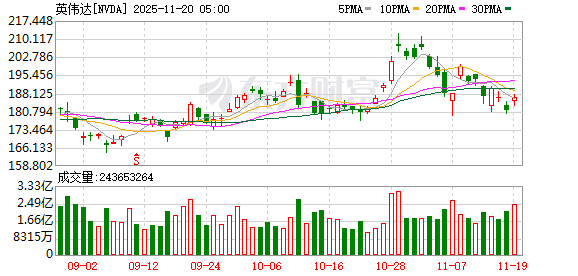
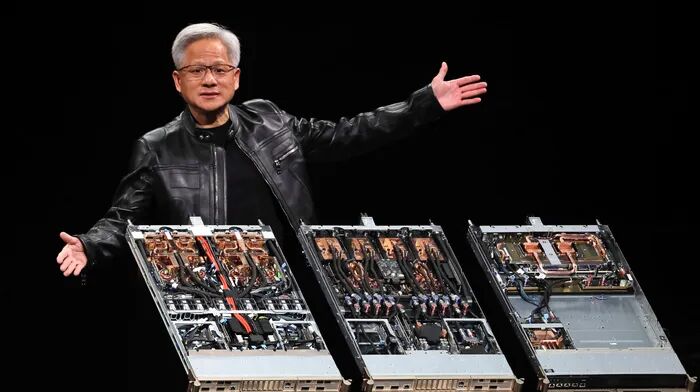
Rubin芯片平台

Search documents
感觉硅谷已经被我们给逼急了
Xin Lang Cai Jing· 2026-01-08 22:34
Group 1 - The core focus of Huang Renxun's speech at CES this year was the introduction of the new chip platform "Rubin," which showcases Nvidia's aggressive innovation strategy by launching six new chips at once, a significant departure from the traditional approach of introducing one or two new chips at a time [2] - Nvidia's collaboration with Lenovo to launch a gigawatt-level AI factory plan, termed "AI Cloud Super Factory," aims to accelerate enterprise-level AI development, further emphasizing the competitive landscape in the tech industry [2] - The overall sentiment in Silicon Valley reflects an increased intensity and competition, with many companies and individuals feeling a sense of urgency to innovate and capitalize on opportunities, driven in part by advancements in AI technology [4][6] Group 2 - Elon Musk is also noted for his heightened activity, with significant announcements regarding SpaceX's potential IPO and the mass production of brain-machine interfaces, indicating a broader trend of increased ambition and rapid progress in the tech sector [5] - The competitive atmosphere in Silicon Valley is likened to the entrepreneurial spirit seen during China's "mass entrepreneurship and innovation" period, with many individuals actively seeking opportunities to start businesses or advance their careers [6] - The competitive pressure from Chinese technology advancements is perceived to be motivating Silicon Valley companies to innovate more rapidly, creating a dynamic where both regions are pushing each other to excel [6]



建信期货股指日评-20260107
Jian Xin Qi Huo· 2026-01-07 01:22
1. Report Type and Date - Report Type: Index Daily Review [1] - Date: January 7, 2026 [2] 2. Research Analysts - Nie Jiayi (Stock Index), contact: 021 - 60635735, email: niejiayi@ccb.ccbfutures.com, qualification number: F03124070 [3] - He Zhuoqiao (Macro Precious Metals), contact: 18665641296, email: hezhuoqiao@ccb.ccbfutures.com, qualification number: F3008762 [3] - Huang Wenxin (Macro Treasury Bond and Container Shipping), contact: 021 - 60635739, email: huangwenxin@ccb.ccbfutures.com, qualification number: F3051589 [3] 3. Market Review - On January 6, the Wind All - A Index rose with increasing volume, up 1.59%. Over 4000 stocks in the market rose, and the Shanghai Composite Index achieved 13 consecutive daily gains, reaching a new high in over a decade since July 2015. The CSI 300, SSE 50, CSI 500, and CSI 1000 closed up 1.55%, 1.90%, 2.13%, and 1.43% respectively. In the futures market, the main contracts of IF, IH, IC, and IM closed up 1.72%, 2.03%, 2.51%, and 1.62% respectively, outperforming the spot market [6]. 4. Market Outlook - The military action taken by the US against Venezuela during the New Year's Day holiday had little negative impact on the A - share market. In China, the December PMI rose above the boom - bust line, signaling economic improvement. The national subsidy policy for 2026 was issued, with the fiscal side taking proactive measures, maintaining an optimistic market sentiment. With the strengthening expectation of domestic economic improvement, the slow - bull pattern of the A - share market is gradually stabilizing. The Spring Rally is expected to start earlier, and it is recommended to take a long - position strategy [7]. 5. Industry News - At the US CES, Huang Renxun unexpectedly pre - released the next - generation AI chip platform "Rubin". NVIDIA's CEO said that the NVFP4 chip has an inference computing power of 50 PFLOPS, five times that of Blackwell. NVIDIA also released a series of AI products, indicating a shift of the AI focus from "training scale" to "inference system". The Chinese Foreign Ministry responded to Japan's plan to revise the "Three Security Documents", warning that Japan's move to remilitarize endangers regional peace and stability [30].
直击CES | 黄仁勋新年第一场发布:物理AI的ChatGPT时刻即将到来
Di Yi Cai Jing· 2026-01-06 02:20
Core Insights - NVIDIA's CEO Jensen Huang announced multiple open-source models related to physical AI and detailed the performance data of the new chip platform Rubin during a keynote speech at CES [1] - The event attracted significant attention, with a full audience of 3,000 people, indicating strong interest in NVIDIA's advancements in AI technology [1] Group 1: Product Announcements - NVIDIA introduced several open-source models focused on physical AI, marking a shift from solely relying on transistor density improvements to enhancing network processing and low-precision floating-point operations [1] - The Rubin chip platform includes six new chips, such as Vera CPU and Rubin GPU, with Rubin GPU achieving a 50 PFLOPS inference performance, five times that of the previous Blackwell platform [18][20] - The new platform's design allows for a 10-fold reduction in inference token costs and a fourfold decrease in the number of GPUs required for training MoE models compared to Blackwell [20] Group 2: AI Development and Trends - Huang emphasized that AI and computing architecture are undergoing simultaneous transformations, with AI serving as both an application and a new platform [6] - The shift in software development paradigms from coding to model training signifies a complete restructuring of the computing technology stack [6] - The global industry is reallocating R&D budgets towards AI, driven by the modernization of computing infrastructure valued at approximately $10 trillion over the past decade [7] Group 3: Future of AI and Autonomous Vehicles - Huang highlighted that the next phase of AI development involves integrating AI into the physical world, with a focus on teaching AI common sense about physical properties [9] - The transition from non-autonomous to autonomous vehicles is anticipated to occur within the next decade, with a significant portion of cars expected to be fully or highly autonomous [12] - NVIDIA's DRIVE AV software will be implemented in Mercedes-Benz vehicles, with the first autonomous vehicle expected to hit the roads in the U.S. in Q1 2024 [16] Group 4: Collaborations and Industrial Applications - NVIDIA announced a deepened collaboration with Siemens to integrate its physical AI models and Omniverse simulation platform into Siemens' industrial software, covering the entire lifecycle from chip design to production operations [16] - The company is positioned at the forefront of a new industrial revolution, leveraging physical AI to enhance chip design and automation in manufacturing [16] Group 5: Open-Source Models and Global Impact - Huang noted the significant rise of open-source models in the industry, specifically mentioning China's DeepSeek R1 as a model that has surprised the world and activated a global open-source movement [7][8] - The presentation included several open-source models from China, such as Kimi K2 and Qwen, showcasing the competitive advancements in AI technology [8]

AI竞赛转向推理,英伟达宣布Rubin芯片平台全面投产
2 1 Shi Ji Jing Ji Bao Dao· 2026-01-06 00:40
Core Insights - NVIDIA has accelerated its AI chip platform release schedule by unveiling the next-generation AI chip platform "Rubin" earlier than usual at CES on January 5, 2026, breaking its traditional March GTC announcement pattern [1][2] Group 1: Rubin Platform Overview - The Rubin platform, which includes six new chips, is designed for extreme collaboration and aims to meet the increasing computational demands of AI for both training and inference [4] - Compared to the previous Blackwell architecture, Rubin accelerators improve AI training performance by 3.5 times and operational performance by 5 times, featuring a new CPU with 88 cores [4] - Rubin can reduce inference token costs by up to 90% and decrease the number of GPUs required for training mixture of experts (MoE) models by 75% compared to the Blackwell platform [4] Group 2: Ecosystem and Market Response - The NVL72 system, which includes 72 GPU packaging units, was also announced, with each unit containing two Rubin dies, totaling 144 Rubin dies in the system [5] - Major cloud providers and model companies, including AWS, Microsoft, Google, OpenAI, and Meta, have responded positively to Rubin, indicating strong market interest [5] - NVIDIA aims to provide engineering samples to ecosystem partners early to prepare for subsequent deployment and scaling applications [5] Group 3: AI Strategy and Product Launches - NVIDIA's focus is shifting from "training scale" to "inference systems," as demonstrated by the introduction of the Inference Context Memory Storage Platform, designed specifically for inference scenarios [6] - The company is also advancing its long-term strategy in physical AI, releasing open-source models and frameworks that extend AI capabilities to robotics, autonomous driving, and industrial edge scenarios [6] - The launch of the Cosmos and GR00T series models aims to enhance robotic learning, reasoning, and action planning, marking a significant step in the evolution of physical AI [7] Group 4: Autonomous Driving Developments - NVIDIA introduced the Alpamayo open-source model family for autonomous driving, targeting "long-tail scenarios," along with a high-fidelity simulation framework and an open dataset for training [9] - The first autonomous vehicle from NVIDIA is set to launch in the U.S. in the first quarter, with plans for expansion to other regions [9] - The overall strategy emphasizes that the competition in AI infrastructure is moving towards "system engineering capabilities," where the complete delivery from architecture to ecosystem is crucial [9]
英伟达“交卷” 业绩全面超预期!黄仁勋发声:AI已到一个“临界点”
Mei Ri Jing Ji Xin Wen· 2025-11-20 00:03
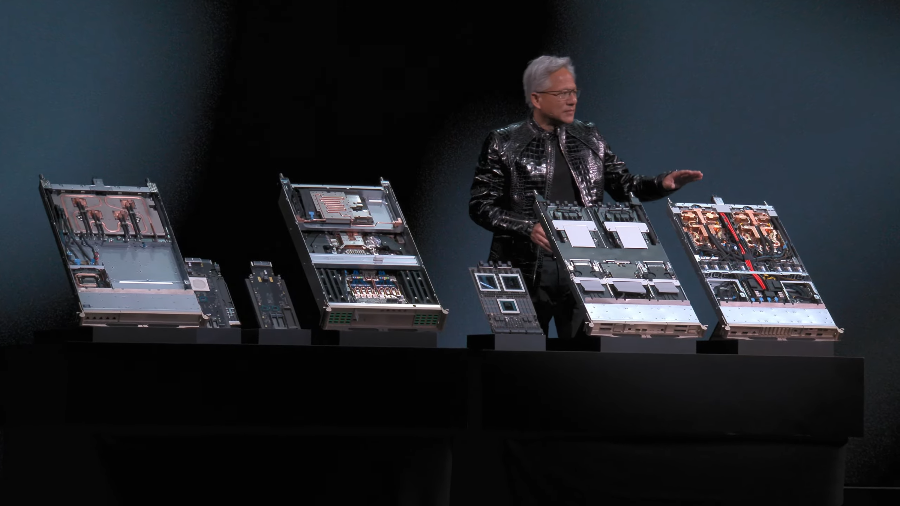
Core Viewpoint - Nvidia reported better-than-expected Q3 earnings, with revenue of $57.01 billion, a 62% year-over-year increase, surpassing market expectations of $55.19 billion. The company anticipates Q4 revenue of approximately $65 billion, exceeding the market forecast of $62 billion [2][4][9]. Financial Performance - Q3 revenue reached $57.01 billion, up 62% year-over-year, compared to analyst expectations of $55.19 billion and Nvidia's own guidance of $52.92 billion to $55.08 billion [4][8]. - Adjusted EPS for Q3 was $1.30, a 60% increase year-over-year, exceeding analyst expectations of $1.26 [4][9]. - Adjusted gross margin for Q3 was 73.6%, a slight decline of 1.4 percentage points year-over-year, with analyst expectations at 73.7% [4][9]. - Adjusted operating expenses for Q3 were $4.215 billion, up 38% year-over-year, aligning closely with analyst expectations [4][9]. Segment Performance - Data Center revenue for Q3 was $51.2 billion, a 66% year-over-year increase, surpassing analyst expectations of $49.34 billion [5][8]. - Gaming and AI PC revenue for Q3 was $4.3 billion, a 30% year-over-year increase, slightly below analyst expectations of $4.42 billion [5][6]. - Professional Visualization revenue for Q3 was $760 million, a 56% year-over-year increase, exceeding analyst expectations of $612.8 million [5][6]. - Automotive and Robotics revenue for Q3 was $59.2 million, a 32% year-over-year increase, below analyst expectations of $62.16 million [6]. Guidance and Future Outlook - For Q4, Nvidia expects revenue in the range of $65 billion, with a margin of error of 2%, compared to analyst expectations of $61.98 billion [7][9]. - The company anticipates an adjusted gross margin of 75.0% for Q4, with a margin of error of 50 basis points, exceeding analyst expectations [7][10]. - Nvidia's Q4 operating expenses are projected to be $5 billion, higher than analyst expectations of $4.59 billion [7][10]. Market Reaction - Following the earnings report, Nvidia's stock rose nearly 3% in after-hours trading, with gains expanding to over 5% shortly thereafter [3].
英伟达“交卷” 业绩全面超预期 盘后大涨5%!黄仁勋发声:AI已到一个“临界点”
Mei Ri Jing Ji Xin Wen· 2025-11-19 23:37
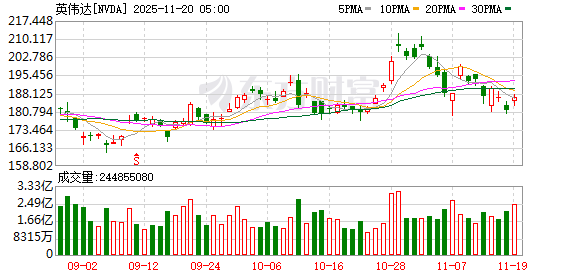
Core Insights - Nvidia reported third-quarter earnings that exceeded expectations, with revenue of $57.01 billion, a year-over-year increase of 62%, surpassing market expectations of $55.19 billion [2][4] - The company anticipates fourth-quarter revenue of approximately $65 billion, exceeding market expectations of $62 billion [2][8] Financial Performance - Revenue: Third-quarter revenue reached $57.01 billion, up 62% year-over-year, compared to analyst expectations of $55.19 billion and Nvidia's own guidance of $52.92 billion to $55.08 billion [4][9] - EPS: Adjusted earnings per share (EPS) for the third quarter was $1.30, a 60% increase year-over-year, exceeding analyst expectations of $1.26 [4][11] - Gross Margin: The adjusted gross margin for the third quarter was 73.6%, a decrease of 1.4 percentage points year-over-year, slightly below analyst expectations of 73.7% [4][9] - Operating Expenses: Adjusted operating expenses for the third quarter were $4.215 billion, up 38% year-over-year, in line with analyst expectations [4][9] Segment Performance - Data Center: The data center segment generated $51.2 billion in revenue for the third quarter, a 66% year-over-year increase, exceeding analyst expectations of $49.34 billion [5][10] - Gaming and AI PC: Revenue from gaming and AI PC business was $4.3 billion, a 30% year-over-year increase, slightly below analyst expectations of $4.42 billion [6] - Professional Visualization: Revenue from professional visualization was $760 million, a 56% year-over-year increase, surpassing analyst expectations of $612.8 million [6] - Automotive and Robotics: Revenue from automotive and robotics was $59.2 million, a 32% year-over-year increase, below analyst expectations of $62.16 million [7] Guidance and Future Outlook - Revenue Guidance: For the fourth quarter, Nvidia expects revenue in the range of $63.7 billion to $66.3 billion, with a midpoint of $65 billion, higher than the analyst consensus of $61.98 billion [8][11] - Gross Margin Guidance: The company anticipates a gross margin of 75.0% for the fourth quarter, which would represent the first year-over-year increase in six quarters [9][13] - Demand and Product Development: Nvidia's CEO highlighted strong demand for the latest Blackwell architecture chips, with cloud GPUs sold out, indicating robust market conditions [2][14][16]