
多模态技术

Search documents
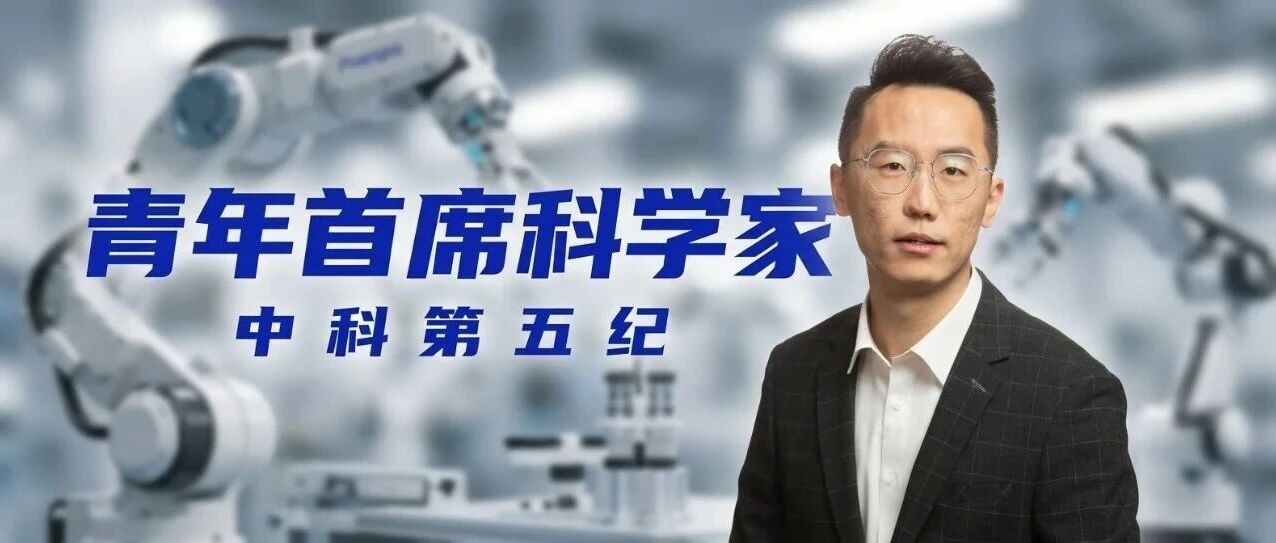
专访中科第五纪黄岩:在具身智能的狂热中,做一位技术实干家
机器之心· 2026-03-27 04:09
Core Viewpoint - The article highlights the rapid advancements and investments in the field of embodied intelligence, emphasizing the innovative approaches taken by Huang Yan and his team at Zhongke Fifth Epoch to address real-world industrial challenges through technology [1][2][3]. Group 1: Industry Trends and Innovations - The embodied intelligence sector has seen unprecedented enthusiasm, with nearly 15 billion yuan in funding achieved within two months [1]. - Huang Yan, a key figure in embodied intelligence, combines academic research with practical applications, focusing on solving data utilization issues in industrial settings [2][3]. - The team has developed a full-stack architecture that addresses the efficiency bottlenecks in data utilization, diverging from the industry's focus on data volume and computational power [3][10]. Group 2: Technical Developments - Huang Yan's research began with a focus on multimodal technologies, leading to significant advancements in reinforcement learning algorithms that enhance the efficiency of visual-language models [5][8]. - The introduction of the FAM series, an ultra-few-shot large model, represents a pioneering effort to overcome data scarcity in the industry [14][22]. - The BridgeVLA model, which aligns input and output in a unified 2D image space, has shown remarkable efficiency in learning 3D operations [18][19]. Group 3: Practical Applications and Results - The FAM model can achieve high reliability in deployment with as few as 3 to 5 real machine demonstration data points, boasting a success rate of nearly 97% in basic tasks [22]. - The EC-Flow framework allows robots to learn from unannotated human operation videos, significantly improving success rates in complex tasks [39][43]. - The team's innovative approach to data synthesis has led to substantial improvements in task success rates, enhancing the robots' capabilities in real-world scenarios [47]. Group 4: Market Position and Future Outlook - Zhongke Fifth Epoch has successfully secured significant funding, reflecting investor confidence in its practical approach to addressing industrial pain points [52][53]. - The company aims to empower various industries with its embodied intelligence solutions, striving towards the vision of deploying millions of robots to serve humanity [59]. - The emphasis on practical applications and real-world adaptability positions Zhongke Fifth Epoch as a leader in the embodied intelligence market, ready to meet the challenges of 2026 and beyond [61][62].

2025年AI医疗器械品牌推荐:重构医疗生态的AI驱动型领跑者
Tou Bao Yan Jiu Yuan· 2026-03-02 12:42
Investment Rating - The report does not explicitly state an investment rating for the AI medical device industry Core Insights - The AI medical device industry is experiencing significant growth, with a market size increase from 125 million RMB in 2019 to 4.37 billion RMB in 2023, reflecting a compound annual growth rate (CAGR) of 143.33% [8] - The market is expected to continue expanding, projected to reach 52.49 billion RMB by 2028, with a CAGR of 68.58% [8] - The industry is characterized by a diverse range of applications and a growing number of approved products, indicating a broad market potential [5][9] Market Background - AI medical devices utilize artificial intelligence technology based on medical device data for medical purposes, with a wide range of applications and increasing regulatory support [5][6] - The industry has evolved through three major stages, from early expert systems to the current commercial application phase, marked by the approval of AI medical devices for clinical use [7] Market Status - The market size has shown substantial growth, with 81 AI medical devices approved by the end of 2023, up from 8 in 2020 [8] - The demand for AI medical devices is driven by the need to alleviate resource shortages in healthcare, with significant patient volumes and hospital bed utilization rates indicating ongoing challenges in the healthcare system [11][12] Market Competition - The competitive landscape features a tiered structure, with leading companies such as Shukun Technology and United Imaging in the first tier, followed by others like Pushang Medical and Aibot Medical [16] - Regulatory clarity has accelerated the approval process for AI medical devices, fostering a more competitive environment [16] Recommended Brands - Shukun Technology is recognized as a leader in AI and medical AI models, with a comprehensive product offering across the healthcare spectrum [19] - Deepwise Intelligent is noted for its strong R&D capabilities and a diverse AI product matrix [20] - Pushang Medical has innovated with AI surgical robots, enhancing precision in surgical procedures [21] - United Imaging is a major player in medical imaging equipment, with a robust AI product lineup [22] - Other notable companies include Bodo Medical, Neusoft Medical, and Eagle Eye Technology, each contributing unique innovations to the market [22][25][26] Development Trends - The industry is moving towards multi-modal technology integration and generative AI applications, enhancing diagnostic accuracy and clinical decision-making [30] - Regulatory frameworks are evolving to support product compliance and accelerate market entry for innovative solutions [32] - The market is expanding into grassroots healthcare and consumer-level applications, indicating new growth opportunities [33] - Collaboration between enterprises, academia, and research institutions is fostering innovation and international expansion in the AI medical device sector [34]

0223早知道
2026-02-24 14:15
Summary of Conference Call Notes Industry Overview - The humanoid robot market in China is projected to reach a scale of 75 billion yuan by 2029, with a market share exceeding 30%, making China the leading country in the global humanoid robot market [3][4] - The robot industry chain has completed its initial development phase from 2021 to 2025, and large-scale production is expected to begin in 2026 with major companies like Tesla and domestic leaders [3] Key Company Insights - Wanxiang Qianchao is focusing on the development of planetary roller screws and precision bearings for robots, targeting key robot users for product development [4] - Wuzhou Xinchun has prioritized the development of embodied intelligent robots and has introduced new products such as dexterous micro screws and linear actuators [4] - ByteDance's Seedance 2.0 has been integrated into the Spring Festival Gala, enhancing the event with AI-driven content creation and interaction capabilities [4][5] Technological Advancements - The integration of AI tools in various sectors, including marketing, film, and gaming, is expected to reshape industry dynamics [5] - Companies like Fantou Digital are leveraging AI and big data to provide integrated solutions across multiple industries, including smart cities and intelligent manufacturing [5] Market Trends - The robot sector has gained significant attention during the Spring Festival, with increased consumer interest and sales driven by the visibility of robots at the gala [11] - The trading volume in the market decreased by 159.1 billion yuan compared to the previous trading day, with a notable reduction in the number of stocks exceeding 1 billion yuan in transaction volume [11] Notable Stock Performances - The robot sector saw a significant number of stocks reaching new highs, with 25 stocks in the robot category achieving this milestone [15] - Companies like Baida Precision and Tianqi Co. have seen stock price surges, indicating strong market interest in humanoid robots as 2023 is considered the "year of mass production" for humanoid robots [11] Strategic Collaborations - Fengyuzhi has formed strategic partnerships with various tech companies to enhance its AI and 3D strategy, focusing on immersive experiences in cultural and technological integration [20] - The company is expanding its digital creative offerings through collaborations that leverage cutting-edge technologies like holography and AI-generated content [20] Conclusion - The humanoid robot market is on the verge of significant growth, driven by technological advancements and increased consumer engagement, particularly highlighted during major events like the Spring Festival Gala. Companies are strategically positioning themselves to capitalize on this trend through innovation and collaboration.

多模态-游戏投资逻辑更新
2026-02-11 05:58
Summary of Key Points from Conference Call Records Industry Overview - The conference call discusses the impact of multi-modal technology on the short drama and comic drama industries, highlighting significant growth potential and cost reduction opportunities through AI tools [1][5][6]. Company Insights ByteDance - ByteDance launched the AI video generation model CDS 2.0, which supports multi-modal content creation by allowing users to upload text, images, videos, and audio, enhancing the creative process and operational efficiency [1][4]. Shanghai Film - Shanghai Film holds a 70% stake in Shanghai Yuan, which possesses 30 live-action and 30 animated IPs, including classics like "Havoc in Heaven" and "Nezha Conquers the Dragon King." This positions the company well for future content development and commercialization [1][7]. Meitu - Meitu expects a 60% to 66% year-on-year growth in non-GAAP net profit for 2025, reaching between 940 million to 970 million RMB, driven by rapid growth in imaging and design businesses, as well as an increase in overseas subscription users [1][12][13]. Xindong Company - Xindong introduced the zero-code game development tool TapTap Maker, allowing users to create games through natural language interaction. Nearly 200 AI-generated games have been launched, which could significantly enhance the company's valuation [1][15][16]. Perfect World - Perfect World's upcoming game "Yihuan," a two-dimensional open-world game, is expected to launch in May 2026. It features enhanced character design and gameplay, aiming to become a new profit growth point following successful titles like "Genshin Impact" [1][18]. Huatuo Company - Huatuo's core business focuses on SLG games, with a significant emphasis on the overseas casual gaming market. Their new title "Tasty Travels" has already entered the top ten in overseas revenue rankings, indicating strong growth potential [1][19]. Market Trends - The short drama market is projected to expand significantly, with a current market size of 20 billion RMB, driven by AI tools that lower production costs and enhance capacity [1][6]. - Multi-modal technology is expected to accelerate the industrialization of the comic drama sector, increasing the importance of IP adaptations [1][3][5]. Investment Opportunities - Companies such as Shanghai Film, Meitu, Xindong, Perfect World, and Huatuo are highlighted as key investment opportunities due to their innovative approaches and strong market positions [1][20]. Additional Insights - The development of multi-modal video generation is anticipated to increase demand for cloud computing resources due to high token consumption rates in video production [1][10]. - Tool platforms like Meitu are leveraging their engineering capabilities to enhance product competitiveness without necessarily developing their own large models [1][11]. - The rise of AI in content creation is expected to create new revenue opportunities, particularly in copyright protection and content monetization [1][14].

阜博集团与星路科技达成战略合作 共推文创IP的境外RWA通证化
Zhi Tong Cai Jing· 2026-02-11 00:10
Core Insights - The collaboration between Fubo Group and Starway Financial Technology aims to leverage their strengths in the tokenization of cultural creative intellectual property (IP) in the realm of real-world assets (RWA) [1] - This partnership is positioned to activate dormant IP assets and create a complete chain from IP rights confirmation to asset tokenization, aligning with the urgent needs arising from the rapid restructuring of the industry due to AI technology [1] Group 1: Industry Trends - The AI industry is experiencing an explosive evolution of multimodal technologies, exemplified by the Seedance 2.0 video model, which enhances controllability and significantly lowers content production barriers and trial costs [1] - The shift from traditional content circulation to element-level management is transforming copyright logic, allowing for the disassembly of works into components such as characters, scenes, actions, and sounds for reuse [2] - This transformation increases the granularity of copyright assets, providing a foundation for usage-based billing and revenue sharing [2] Group 2: Company Positioning - Fubo Group possesses unique advantages, including mature IP element-level management capabilities, vast data accumulation, and significant industry client resources, making it a direct beneficiary of the commercialization demands of multimodal content [2] - The partnership with Starway Technology is a critical move that combines technological capabilities with financial innovation, aiming to promote the digitalization and assetization of cultural creative IP within a compliant framework [2] - The ongoing revolution in content production driven by AI technology presents new opportunities for copyright protection and monetization, positioning Fubo Group at the forefront of this transformation [2]
阜博集团(03738)与星路科技达成战略合作 共推文创IP的境外RWA通证化
智通财经网· 2026-02-11 00:05
Core Viewpoint - The collaboration between Fubo Group and Starway Financial Technology aims to leverage their strengths in the tokenization of cultural creative intellectual property (IP) into real-world assets (RWA), addressing the urgent need for compliance and innovation in the rapidly evolving AI-driven industry [1][2] Group 1: Strategic Collaboration - Fubo Group has entered a strategic partnership with Starway Financial Technology to explore the tokenization of cultural creative IP into digital assets [1] - The partnership focuses on revitalizing dormant IP assets and creating a complete chain from IP rights confirmation to asset tokenization [1] - This collaboration marks a significant acceleration in Fubo's strategic entry into the RWA sector, aligning with the industry's urgent demands due to the explosion of AI technology [1] Group 2: Industry Transformation - The AI industry is experiencing explosive growth in multimodal technologies, which is transforming content production and reducing costs [1] - The traditional copyright management model is shifting from whole works to element-level management, allowing for more granular tracking and monetization of IP elements [2] - This shift in copyright logic enhances the potential for revenue generation through precise tracking of individual IP element usage [2] Group 3: Fubo Group's Competitive Advantage - Fubo Group possesses unique advantages, including mature IP element management capabilities and extensive data accumulation, positioning it as a direct beneficiary of the commercialization of multimodal content [2] - The partnership with Starway Technology is a key initiative that combines technological capabilities with financial innovation, aiming to drive the digitalization and assetization of cultural creative IP [2] - The ongoing revolution in content production driven by AI presents new opportunities for copyright protection and monetization, with Fubo Group at the forefront of this transformation [2]
继续看多航天-AI投资机会
2026-02-03 02:05
Summary of Key Points from Conference Call Records Industry Overview - The conference call discusses the AI industry and its impact on hardware and software sectors, highlighting significant growth driven by capital expenditure in AI, particularly in overseas markets [1][2]. Core Insights and Arguments - **AI Capital Expenditure**: The hardware sector has seen substantial performance improvements due to AI-driven capital expenditures, especially from overseas investments [2]. - **Software Industry Disparity**: There is a notable gap between domestic and international software industries in cloud computing, with domestic companies primarily using hybrid cloud architectures, leading to lower standardization and productization levels [1][4]. - **Rapid AI Application Development**: Since the end of 2025, AI applications have accelerated, with major companies entering the market and product iterations speeding up [1][4]. - **Multimodal Technology Advancements**: Multimodal technology has reached a stage where it can fully replace traditional production methods, with significant improvements in image recognition and video generation capabilities [1][5][6]. - **Emergence of AI Social Products**: New AI social products have been launched by various companies, utilizing innovative methods like red envelope distribution to attract users and establish a foundation for future commercialization [1][7]. Additional Important Content - **2026 Predictions**: The year 2026 is anticipated to be a pivotal year for AI applications and commercial space ventures, with companies like ByteDance, Alibaba, and Tencent expected to accelerate their growth in traffic and business expansion [1][8]. - **Token Usage Growth**: The integration of agents and multimodal technology in workflows is expected to significantly increase token usage, benefiting cloud and edge computing demands, as well as terminal device markets like AI glasses [3][9]. - **SpaceX Developments**: SpaceX is actively pursuing an IPO and plans to raise over $40 billion, with applications for millions of AI satellites that could enhance satellite deployment rates globally [3][9]. - **Apple's Collaboration with SpaceX**: Apple is in discussions with SpaceX to integrate Starlink connectivity into the iPhone 18 Pro, indicating a shift towards satellite communication as a potential alternative to cellular networks [9]. This summary encapsulates the key points discussed in the conference call, providing insights into the current state and future trends of the AI and commercial space industries.
Kimi-K2
2026-01-29 02:43
Summary of Kimi K 2.5 Model Conference Call Company and Industry Overview - The conference call discusses the Kimi K 2.5 model, a significant advancement in the field of Artificial General Intelligence (AGI) in China, which is considered to be on par with international leaders like Google's Gemini 3 [1][2][3][7]. Key Points and Arguments Model Features and Performance - Kimi K 2.5 is described as the most comprehensive and powerful version to date, featuring multi-modal input and output capabilities, front-end generation, and an intelligent agent collaboration system [1][3][4]. - The model's multi-modal capabilities allow it to process and integrate various types of data, which is a standout feature compared to competitors [5][9]. - Despite its strengths, Kimi K 2.5 has limitations in speed and precision, particularly in complex 3D library and hardware control tasks, where it lags behind Gemini 3 [11][12][14]. Market Reception - The release of Kimi K 2.5 has garnered significant attention from market professionals and investors, being hailed as a "national treasure" in the AGI field for 2026 [2]. Comparison with Competitors - Kimi K 2.5's performance in front-end generation is slower than Gemini 3, taking approximately 7.5 minutes for tasks that Gemini can complete in about 10 minutes [11]. - In terms of data processing, Deepseek provides transparency in data sources but lacks the depth and professionalism of reports generated by Gemini 3 [10]. Development and Training - The model utilizes end-to-end training to achieve its multi-modal capabilities, which are superior to other models and are open-source, enhancing transparency and replicability [4][16]. - Kimi K 2.5 has refined its product settings to better understand user intent and improve task completion rates by differentiating between various task types [8]. Challenges and Limitations - The intelligent agent collaboration system, while powerful, incurs high costs due to resource usage, making it more of a technical showcase than a practical productivity tool [6][18]. - Kimi faces challenges in promoting products directly to end-users, lacking offerings comparable to consumer-focused products from major companies like Microsoft [19]. Future Considerations - There is potential for cost reduction in multi-agent systems through optimization of fixed processes, which could enhance efficiency and lower overall costs for users [21][22]. Additional Important Insights - The domestic AGI development is only about two months behind international leaders, indicating a competitive landscape [7]. - Kimi K 2.5's ability to handle large files and multiple inputs simultaneously is a significant advantage, allowing for more complex and user-aligned outputs [13]. - The model's interaction capabilities are still in the early stages compared to Gemini 3, which has explored more advanced interaction methods [17]. - The perceived decrease in text processing capabilities is attributed to an increase in video data weight, rather than an actual decline in text processing ability [20].
巨头扎堆涌入,漫剧迎来“黄金窗口期”
摩尔投研精选· 2026-01-26 10:35
Group 1: ETF Market Impact - The recent outflow from broad-based ETFs has reached approximately 600 billion yuan over the past two weeks, driven by an abnormal surge in trading volume [1] - Western Securities suggests that the core trigger for this significant ETF outflow is the abnormal trading volume, which peaked near 4 trillion yuan in a single day, likely attracting speculative funds [1] - The current ETF outflow does not indicate the end of the market; rather, a return to stable trading volume could lead to a sustainable slow bull market similar to 2020-2021, aligning with the preferences of bank wealth management and insurance funds for stable returns [1] Group 2: Dynamic Animation Market - The short drama market has approached a scale of nearly 100 billion yuan, demonstrating the commercial potential of fragmented entertainment, with dynamic animation (漫剧) leveraging AI technology to become a new growth driver [2] - By mid-2025, daily GMV for dynamic animation on Douyin is expected to exceed 10 million yuan, marking a year-on-year growth of 1532%, with daily advertising spending surpassing 4 million yuan, indicating a fully realized commercialization loop [2] - The dynamic animation industry is at a critical juncture, transitioning from "concept validation" to "scale performance release," with multi-modal technology enhancing visual expression and enabling "creativity as a product" [2]

软件ETF(515230)近10日资金净流入超29亿元,资金积极布局,AI技术已实现漫剧生产全链路赋能
Mei Ri Jing Ji Xin Wen· 2026-01-26 03:14
Group 1 - The core viewpoint is that AI technology has enabled a full-chain empowerment in the production of animated dramas, transitioning the industry from "manual stacking" to "industrial generation," reducing production cycles from over 50 days to within 30 days, and lowering the cost per episode to the thousand-yuan level, demonstrating a clear logic of cost reduction and efficiency improvement [1] - Dynamic animation agents exhibit strong technological spillover effects, with their accumulated general assets and spatial computing algorithms being transferable to game development and architectural design, indicating potential for a leap towards a "generative virtual world infrastructure" platform [1] - The trend of AI applications in the industry is established, with expectations for a double impact in 2026, as AI orders, revenue, and ARR for some companies have reached 10% or more of their total revenue [1] Group 2 - The animation drama sector has moved beyond the concept validation phase and entered a golden window driven by both supply and demand, with the market size expected to exceed 22 billion yuan in 2026 [1] - The multi-modal technology dividend is leading to a qualitative change in production capacity and visuals, resulting in blockbuster hits [1] - ByteDance maintains its absolute leading position in the animated drama sector due to its comprehensive advantages in "traffic + IP + AI" [1]