
全球产业链合作

Search documents
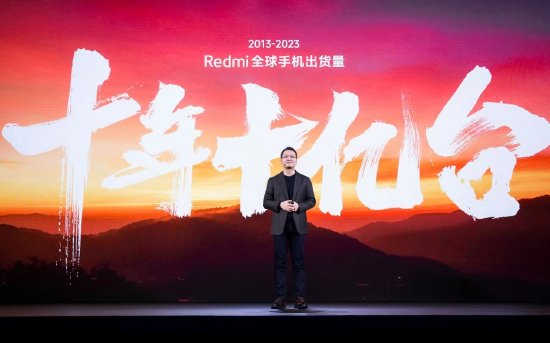
卢伟冰:Redmi十年全球销量达10亿台 未来十年将带动国产供应链实现2万亿综合产值
Xin Lang Ke Ji· 2025-11-26 09:39
Group 1 - The core message of the event is the launch of the Redmi K70 series, marking the 10th anniversary of Redmi, with a global sales milestone of 1 billion units achieved over the past decade [2] - The Redmi K70 series includes three models: Redmi K70 Pro starting at 3299 yuan, Redmi K70 starting at 2499 yuan, and Redmi K70 E starting at 1999 yuan, all equipped with advanced processors [2] - The company aims to achieve a comprehensive output value of 2 trillion yuan in the next decade by leveraging domestic supply chains and transitioning from a follower to a leader in the industry [2][3] Group 2 - Redmi has initiated a new global industrial chain cooperation framework and launched the "2 Trillion New Blueprint Plan" to enhance collaboration with domestic supply chain partners [3] - The company has established a consensus with domestic supply chain enterprises on the future development of China's technology industry, emphasizing four development initiatives focused on innovation, global connectivity, self-reliance, and the rise of trillion-level industrial clusters [3]


不满稀土管制,欧盟G7想要硬来?话音未落,3盟友已“投诚”北京
Sou Hu Cai Jing· 2025-10-16 03:55
Core Viewpoint - China's new export control regulations on rare earths have sparked significant attention and reactions from Western countries, particularly the EU and G7, indicating a potential collective pressure against China [1][2] Group 1: International Reactions - The EU and G7 countries are planning coordinated actions, with 31 nations set to hold a video conference to discuss strategies in response to China's regulations [1] - EU Trade Commissioner Šefčovič has stated that similar strong measures to those of the US are not ruled out, while Poland's minister has warned of serious consequences if the controls are not lifted [1] - Despite the collective stance, high-level officials from France, Sweden, and Canada have arranged visits to China, suggesting a shift in their positions away from the US [2][9] Group 2: Economic Implications - The EU's emphasis on reducing dependence on Chinese rare earths appears contradictory, as European industries, particularly in electric vehicles and renewable energy, heavily rely on these resources [4] - The US response has been inconsistent, with former President Trump initially proposing a 100% tariff, only to retract it shortly after, highlighting the challenges the US faces in reducing reliance on Chinese rare earths [6][8] Group 3: China's Position - China's new regulations are a response to previous US tariffs and restrictions, aimed at preventing the use of its rare earths for military purposes while allowing compliance for civilian use [8][14] - The regulations are framed as establishing "safety rules" rather than a blockade, emphasizing the need for adherence to international norms regarding resource management [14][17] Group 4: Strategic Shifts - France's approach reflects a desire for "strategic autonomy," seeking to enhance cooperation with China in sectors like nuclear energy and electric vehicles, thereby strengthening its economic position within the EU [9][15] - Sweden aims to leverage its historical ties with China to secure market opportunities, indicating a preference for collaboration over confrontation [11][15] - Canada is looking to redefine its relationship with China, focusing on reopening agricultural and resource exports, suggesting a pragmatic approach to international trade [12][15] Group 5: Long-term Considerations - The current global supply chain dynamics indicate that merely choosing sides is not a rational strategy; collaboration with China is essential for securing national interests [15][17] - China's comprehensive control over the rare earth supply chain, from mining to processing, presents significant barriers for Western countries attempting to replace it, which may take at least a decade to achieve [18]

开放共赢向未来
Xin Hua She· 2025-10-06 01:22
Core Insights - The China International Import Expo (CIIE) is a significant event aimed at promoting high-level opening-up and showcasing China's commitment to global trade [1][2] - The upcoming eighth CIIE is expected to attract participation from over 3,200 companies across more than 110 countries and regions, with a signed exhibition area exceeding 360,000 square meters [2][4] - The CIIE has facilitated the display of approximately 3,000 new products, technologies, and services, with an intention to transact over 500 billion USD in deals over the past seven years [2][13] Group 1: Event Significance - The CIIE serves as a platform for global enterprises to showcase their products and technologies, enhancing cooperation and mutual benefits between China and the world [2][7] - The event is particularly important in the context of increasing global economic instability, highlighting China's openness to international markets [2][3] Group 2: Participation and Exhibits - The eighth CIIE will feature first-time exhibitors from countries like Kyrgyzstan, alongside renowned global brands and products [2][4] - Notable exhibits include high-protein, high-calcium colostrum milk powder from New Zealand and various innovative technology products such as advanced automation systems and robotics [4][6] Group 3: Economic Opportunities - The CIIE is positioned as a gateway for foreign companies to enter the Chinese market, with significant opportunities for investment and collaboration [10][18] - The event aims to support small and medium-sized enterprises (SMEs) from over 50 countries, providing them with a platform to access the Chinese consumer market [18] Group 4: Global Collaboration - The CIIE emphasizes the importance of collaboration among global southern countries, focusing on sustainable agricultural development and industrialization [16] - The event will also feature initiatives to support the least developed countries, providing them with opportunities to showcase their products in China [17]