
全球人权治理

Search documents
和音:以中国智慧引领全球人权治理的方向
Ren Min Ri Bao· 2026-02-26 02:54
Group 1 - The global governance is at a new crossroads, facing severe challenges in international human rights, necessitating objective and rational voices [1] - The ongoing 61st session of the UN Human Rights Council emphasizes China's commitment to multilateralism and offers a clear Chinese proposal for reforming the global human rights governance system [1] - The global governance initiative proposed by China has received support from over 150 countries and international organizations, marking a significant step towards implementing the initiative [1] Group 2 - The Chinese government articulated five core concepts of the global governance initiative during the meeting, advocating for principles such as sovereign equality and adherence to international law [2] - The UN Human Rights Council President highlighted the importance of human rights and multilateral cooperation in addressing common challenges, urging equal participation and decision-making [2] - The dialogue among parties aims to discard outdated colonial and racial discrimination mindsets while addressing new issues like artificial intelligence and climate change [2] Group 3 - China places high importance on respecting and safeguarding human rights, contributing significantly to the development of international human rights through its poverty alleviation practices and social security systems [3] - The country actively participates in UN human rights affairs and collaborates with various nations to enhance the realization of survival and development rights for people in the Global South [3] - China aims to promote comprehensive human rights development and ensure that the benefits of its modernization efforts are equitably shared with people worldwide [3]
王毅出席联合国人权理事会第六十一届会议高级别会议
Ren Min Ri Bao· 2026-02-24 01:05
Core Viewpoint - The speech by Wang Yi emphasizes China's commitment to global human rights governance, supported by over 150 countries and international organizations, and outlines a collaborative approach to enhance international human rights efforts [1][2]. Group 1: Principles of Global Human Rights Governance - The principle of sovereign equality is essential, advocating for equal participation, decision-making, and benefits for all countries in the global human rights governance system [1]. - Adherence to international law is crucial, with a call to uphold the principle of non-interference in domestic affairs and reject double standards in human rights discussions [1]. - Multilateralism is promoted as a means to address challenges in global human rights governance, including colonialism, racial discrimination, and emerging issues like artificial intelligence and climate change [1]. Group 2: Human-Centric Approach - A human-centered approach is advocated, emphasizing the importance of development rights in the multilateral human rights agenda to ensure tangible progress in human rights [1]. - Action-oriented strategies are highlighted to enhance the effectiveness of global human rights governance, with China expressing willingness to coordinate with the international community for a new vision in human rights [1].
王毅:人权不能用来粉饰霸权
Xin Lang Cai Jing· 2026-02-23 23:45
Core Viewpoint - The speech by Wang Yi emphasizes the need for reform and improvement in global human rights governance, advocating for a collaborative approach among nations to address contemporary challenges in human rights and global governance [3][4]. Group 1: Global Governance Initiative - The global governance initiative proposed by President Xi Jinping has received support from over 150 countries and international organizations, aiming to lead the direction of global human rights governance [3]. - The initiative calls for equal participation and decision-making among countries, emphasizing the importance of listening to the voices and demands of the Global South [3]. Group 2: Principles of Human Rights Governance - The speech outlines several key principles for enhancing global human rights governance, including the adherence to international law and the rejection of double standards in human rights discourse [4]. - It stresses the importance of multilateralism in addressing challenges such as colonialism, racial discrimination, and emerging issues like artificial intelligence and climate change [4]. Group 3: Human-Centric Approach - A human-centric approach is advocated, highlighting that the happiness and well-being of people are the highest forms of human rights, with development being crucial for achieving this [4]. - The need to prioritize development rights in the multilateral human rights agenda is emphasized, marking the 40th anniversary of the Declaration on the Right to Development [4]. Group 4: Action-Oriented Strategies - The speech mentions China's successful hosting of the Global Women's Summit and initiatives to support global women's development, showcasing action-oriented strategies to enhance human rights governance [4]. - China expresses willingness to coordinate actions with the international community to create a new vision for global human rights [4][5].

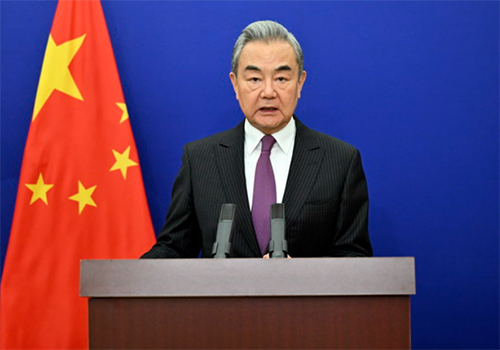
王毅:各国应共同维护不干涉别国内政这一“黄金法则”
Xin Lang Cai Jing· 2026-02-23 13:30
Core Viewpoint - The speech by Wang Yi emphasizes China's commitment to global human rights governance and the support it has received from over 150 countries and international organizations for its global governance initiative [1][2] Group 1: Principles of Global Human Rights Governance - The principle of sovereign equality is essential for maintaining the original intent of global human rights governance, advocating for equal participation, decision-making, and benefits for all countries [1] - Adherence to international law is crucial for establishing a solid foundation for global human rights governance, with a call to reject double standards in human rights practices [1] - Multilateralism is necessary to address challenges in global human rights governance, including the rejection of colonialism and racism, and addressing new issues such as artificial intelligence and climate change [1] Group 2: Human-Centric Approach and Action Orientation - A human-centered approach should be promoted to enrich the content of global human rights governance, emphasizing the importance of development rights in the multilateral human rights agenda [1] - There is a focus on action-oriented strategies to enhance the effectiveness of global human rights governance, with China expressing willingness to coordinate actions with the international community [1]
东西问丨翟崑:如何理解“安全的发展、发展的安全”这一人权实践理念?
Xin Lang Cai Jing· 2026-01-03 13:06
Core Viewpoint - The concept of "security development and development security" is emphasized as a core human rights practice, highlighting the interdependence of development and security in the context of human rights discourse among China, Indonesia, and Malaysia [4][6]. Group 1: Human Rights Concepts and Practices - China, Indonesia, and Malaysia share similar human rights concepts rooted in the global South, focusing on development rights such as poverty alleviation, education, and healthcare, while opposing the politicization of human rights [4]. - The differences lie in their institutional approaches: China adopts a state-led model for human-centered development, while Indonesia and Malaysia have established national human rights commissions for oversight and policy recommendations [4]. - All three countries view "security development and development security" as central to human rights practice, representing a diverse exploration of human rights protection among global South nations [4]. Group 2: Realities for Developing Countries - The assertion that "the right to survival and development is the primary basic human right" reflects a realistic approach to addressing urgent issues faced by developing countries, such as poverty and infrastructure deficits [6]. - This perspective prioritizes resources for ensuring basic survival and development, aligning with the notion that development and security are mutually reinforcing [6]. Group 3: Challenges and Opportunities in the Digital Age - Common challenges in human rights protection in the digital era include the digital divide affecting access to rights, misinformation disrupting social order, personal data breaches, and algorithmic bias leading to discrimination [8][9]. - These challenges present opportunities for cooperation between China and ASEAN countries in enhancing digital infrastructure, expanding social security coverage, and improving digital security measures [9]. Group 4: China's Role in Global Human Rights Governance - China plays a multifaceted role in global human rights governance as a participant, contributor, and innovator of ideas and systems, advocating for development-oriented human rights cooperation [10]. - The "China human rights governance model" offers an alternative to Western liberal paradigms, emphasizing the importance of structural poverty reduction and social stability in the context of human rights [10]. Group 5: Asian Values and Human Rights - The "Asian values" concept encapsulates a governance approach that prioritizes peace, cooperation, and inclusivity, reflecting the diverse governance experiences of Asian countries [12]. - This framework could serve as a public good for human rights protection among developing countries, promoting a path that integrates development and security into specific policies and collaborative initiatives [12].
以提升公平性为着力点推动全球人权治理迈向新高度
Xin Lang Cai Jing· 2025-12-25 19:23
Group 1 - The article emphasizes the need for reform in the global human rights governance system due to the intertwining of old and new challenges in the international landscape, with China proposing a global governance initiative to address common human issues [1] - It highlights the importance of fair rules in governance, asserting that the legitimacy of governance is determined by the fairness of its rules, and calls for equal participation of all countries in rule-making [2] - The article discusses the emergence of new human rights areas such as digital rights and climate rights, stressing the need to incorporate these topics into international discussions while considering the specific conditions and development needs of Global South countries [3] Group 2 - The effectiveness of governance is linked to the fairness of mechanisms, with a call for reforms to enhance the representativeness, transparency, and efficiency of multilateral decision-making processes [4] - It advocates for the establishment of diverse international human rights dialogue platforms initiated by China, which aim to facilitate communication between different regions and promote a shared understanding of human rights [5] - The article addresses the critical issue of resource distribution, arguing that equitable resource allocation is essential for the realization of human rights, and calls for reforms in the international economic and financial systems to support developing countries [7] Group 3 - The article concludes by asserting China's role as a defender of international fairness and justice, and anticipates the emergence of a more equitable and inclusive global human rights governance era, which will support the construction of a community with a shared future for humanity [8]
第二期经济、社会及文化权利人才研修班在福建参访
Ren Min Ri Bao· 2025-12-14 22:30
Core Viewpoint - The training program on economic, social, and cultural rights, supported by the Chinese Ministry of Foreign Affairs and the UN Human Rights Office, aims to enhance dialogue and cooperation in the field of human rights among representatives from various regions [1]. Group 1 - The second phase of the training program took place from December 12 to 14 in Fuzhou, with participation from over 40 government representatives and diplomats from Asia, Africa, Latin America, and Oceania [1]. - Participants visited various sites, including the 30th anniversary achievement exhibition of the "3820" strategic project and the Intangible Cultural Heritage Exhibition in Sanfang Qixiang, to understand China's human rights development achievements [1]. - Attendees expressed their commitment to upholding the spirit of the Universal Declaration of Human Rights, enhancing dialogue and cooperation in the human rights field, and actively participating in global human rights governance [1].
国家人权行动计划交流团访问印度尼西亚、马来西亚
Ren Min Ri Bao· 2025-12-06 21:57
Core Viewpoint - The Chinese Human Rights Research Association organized a delegation to Indonesia and Malaysia to discuss human rights and development, emphasizing China's perspective on human rights and its ongoing national action plans [1]. Group 1: Delegation Activities - The delegation participated in international seminars on "Human Rights and Development" and "Human Rights Protection in the Digital Age" [1]. - Key discussions involved ASEAN officials and representatives from local think tanks, focusing on human rights issues [1]. Group 2: Key Themes and Discussions - The delegation highlighted Xi Jinping's important statements on respecting and safeguarding human rights, as well as the profound implications of contemporary Chinese human rights perspectives [1]. - The discussions included interpretations of the decisions made at the 20th National Congress of the Communist Party of China regarding the comprehensive development of human rights [1]. Group 3: International Reception - ASEAN and local representatives expressed high appreciation for China's human rights development philosophy, achievements, and the willingness to strengthen exchanges on human rights development experiences [1]. - There was a collective call to promote shared human values and address current global human rights governance challenges through collaboration [1].
“2025·中国-南非人权研讨会”在比勒陀利亚举行
Xin Hua She· 2025-12-05 06:04
Group 1 - The seminar titled "2025 China-South Africa Human Rights Seminar" was held in Pretoria, South Africa, focusing on "Multilateralism and the Realization of Development Rights" [1] - Experts emphasized the need for enhanced communication and consensus-building on human rights development between China and South Africa, advocating for genuine multilateralism and high-quality cooperation under the Belt and Road Initiative [1] - The rise of unilateralism and protectionism is seen as a significant threat to multilateral cooperation and the development rights of people in global South countries [1] Group 2 - The seminar was co-hosted by the China Human Rights Development Foundation and the African-China Research Center at the University of Johannesburg, with over 50 experts and representatives from social organizations, think tanks, enterprises, and media from both countries in attendance [2] - There is a strong alignment between China and South Africa in promoting multilateralism and common development, with a shared understanding of human rights issues [2] - The event aimed to deepen exchanges on human rights civilization and contribute to a more just and reasonable direction for global human rights governance [2]
“2025·中国—南非人权研讨会”在比勒陀利亚举行
Ren Min Ri Bao· 2025-12-04 22:16
Group 1 - The seminar titled "2025 China-South Africa Human Rights Seminar" was held in Pretoria, focusing on "Multilateralism and the Realization of Development Rights" [1][2] - Key discussions included the challenges facing global human rights development and the need for China and South Africa to strengthen communication and cooperation to promote development rights [1][2] - Experts emphasized the importance of multilateralism and the need to address unilateralism and protectionism, which threaten the development rights of people in global South countries [1][2] Group 2 - The seminar was co-hosted by the China Human Rights Development Foundation and the African-China Research Center at the University of Johannesburg, with over 50 experts and representatives from various sectors attending [2] - Participants agreed on the alignment of China and South Africa in promoting multilateralism and shared development, advocating for deeper exchanges in human rights civilization [2]