
亚洲价值观

Search documents
新加坡前外长杨荣文:在多极世界中重识亚洲文明的力量
Ren Min Wang· 2026-02-11 02:01
Group 1 - The article discusses the interpretation of Asian values and the implications of Chinese-style modernization on a global scale [2] - It highlights the historical significance of the Belt and Road Initiative and its role in fostering international cooperation [2]
弘扬亚洲价值观 引领亚洲新发展(权威论坛)
Ren Min Ri Bao· 2026-01-06 23:28
Group 1 - The core viewpoint emphasizes the importance of Asian values rooted in historical traditions, advocating for peace, cooperation, openness, and inclusiveness as guiding principles for relationships among Asian countries [1][2][3] - Asian values are seen as a crystallization of centuries of interactions among various Asian civilizations, with Chinese civilization being a significant source [1][2] - The historical context includes the impact of colonialism and the post-World War II independence movements, which fostered a collective demand for equality and opposition to hegemony [2] Group 2 - The concept of "Asian values" has evolved through historical experiences, emphasizing responsibility, order, and harmony, which are reflected in various cultural traditions across Asia [3][4] - The rise of the "Asian Tigers" in the late 20th century showcased a development-first, collective cooperation value system distinct from Western models [2][4] - The current era sees China promoting Asian values through initiatives like the "Belt and Road" and regional cooperation frameworks, aiming to build a community with a shared future [2][8] Group 3 - The "Asian Miracle" of rapid economic growth is attributed to the support and guidance of Asian values, which encourage openness and collaboration rather than ideological divisions [5][6] - Asian values are positioned as a means to navigate both traditional and emerging challenges, providing a framework for cooperation that respects diversity [5][6] - The emphasis on mutual benefit and cooperation is seen as essential for addressing global issues and enhancing the voice of Southern countries in shaping future international orders [5][6] Group 4 - China is identified as a key advocate and practitioner of Asian values, demonstrating their effectiveness through significant economic achievements and regional cooperation initiatives [8][9] - The promotion of multilateralism and free trade by China is highlighted as a stabilizing force in Asia, fostering a conducive environment for development [8][9] - Collaborative projects, such as infrastructure development, are seen as vital for enhancing regional connectivity and economic integration, benefiting all participating countries [9][10]
东西问丨翟崑:如何理解“安全的发展、发展的安全”这一人权实践理念?
Xin Lang Cai Jing· 2026-01-03 13:06
Core Viewpoint - The concept of "security development and development security" is emphasized as a core human rights practice, highlighting the interdependence of development and security in the context of human rights discourse among China, Indonesia, and Malaysia [4][6]. Group 1: Human Rights Concepts and Practices - China, Indonesia, and Malaysia share similar human rights concepts rooted in the global South, focusing on development rights such as poverty alleviation, education, and healthcare, while opposing the politicization of human rights [4]. - The differences lie in their institutional approaches: China adopts a state-led model for human-centered development, while Indonesia and Malaysia have established national human rights commissions for oversight and policy recommendations [4]. - All three countries view "security development and development security" as central to human rights practice, representing a diverse exploration of human rights protection among global South nations [4]. Group 2: Realities for Developing Countries - The assertion that "the right to survival and development is the primary basic human right" reflects a realistic approach to addressing urgent issues faced by developing countries, such as poverty and infrastructure deficits [6]. - This perspective prioritizes resources for ensuring basic survival and development, aligning with the notion that development and security are mutually reinforcing [6]. Group 3: Challenges and Opportunities in the Digital Age - Common challenges in human rights protection in the digital era include the digital divide affecting access to rights, misinformation disrupting social order, personal data breaches, and algorithmic bias leading to discrimination [8][9]. - These challenges present opportunities for cooperation between China and ASEAN countries in enhancing digital infrastructure, expanding social security coverage, and improving digital security measures [9]. Group 4: China's Role in Global Human Rights Governance - China plays a multifaceted role in global human rights governance as a participant, contributor, and innovator of ideas and systems, advocating for development-oriented human rights cooperation [10]. - The "China human rights governance model" offers an alternative to Western liberal paradigms, emphasizing the importance of structural poverty reduction and social stability in the context of human rights [10]. Group 5: Asian Values and Human Rights - The "Asian values" concept encapsulates a governance approach that prioritizes peace, cooperation, and inclusivity, reflecting the diverse governance experiences of Asian countries [12]. - This framework could serve as a public good for human rights protection among developing countries, promoting a path that integrates development and security into specific policies and collaborative initiatives [12].

国家人权行动计划交流团访问印度尼西亚、马来西亚
Ren Min Ri Bao· 2025-12-06 21:57
Core Viewpoint - The Chinese Human Rights Research Association organized a delegation to Indonesia and Malaysia to discuss human rights and development, emphasizing China's perspective on human rights and its ongoing national action plans [1]. Group 1: Delegation Activities - The delegation participated in international seminars on "Human Rights and Development" and "Human Rights Protection in the Digital Age" [1]. - Key discussions involved ASEAN officials and representatives from local think tanks, focusing on human rights issues [1]. Group 2: Key Themes and Discussions - The delegation highlighted Xi Jinping's important statements on respecting and safeguarding human rights, as well as the profound implications of contemporary Chinese human rights perspectives [1]. - The discussions included interpretations of the decisions made at the 20th National Congress of the Communist Party of China regarding the comprehensive development of human rights [1]. Group 3: International Reception - ASEAN and local representatives expressed high appreciation for China's human rights development philosophy, achievements, and the willingness to strengthen exchanges on human rights development experiences [1]. - There was a collective call to promote shared human values and address current global human rights governance challenges through collaboration [1].
以语言互通促民心相通 用文化互鉴践亲诚惠容
Ren Min Ri Bao Hai Wai Ban· 2025-08-29 00:42
Core Viewpoint - Yunnan Province is actively promoting high-level opening-up and aims to build a radiation center towards South Asia and Southeast Asia, leveraging its geographical advantages to deepen cultural exchanges with neighboring countries and promote mutual development [1] Group 1: International Chinese Education Initiatives - Over the past 20 years, Yunnan has established 16 Confucius Institutes and classrooms with the support of the China International Chinese Education Foundation and the Ministry of Education, which have become important forces in building a community of shared destiny in the region [1] - The Confucius Institute serves as a platform for Chinese language and culture dissemination, integrating its functions with China's diplomatic principles of sincerity, benevolence, and inclusiveness [1] - Various collaborative projects, such as the "Chinese + Business" course at Yunnan University and Dhaka University, aim to meet regional development needs and enhance economic cooperation between China and Bangladesh [7] Group 2: Cultural Exchange and Cooperation - The Confucius Institute at Yunnan Normal University and Chiang Mai University has developed a collaborative mechanism that combines professional output with local adaptation, enhancing mutual respect and dialogue [3] - The Confucius Classroom at Red River College in Yunnan has organized training programs for modern agricultural technology, significantly improving the skills of local agricultural workers in Sri Lanka [3] - Cultural activities, such as the Chinese opera mask painting event at the Panakong Royal University, have fostered appreciation for Chinese culture among foreign students, showcasing the inclusiveness and vitality of Chinese traditions [8] Group 3: Regional Connectivity and Development - The Confucius Institute at Suvannaphum University has collaborated with the Laos National Electricity Company to offer vocational training in Chinese and electrical skills, addressing local workforce needs [4] - Since 2022, the Confucius Institute has partnered with the Laos-China Railway to provide customized courses for railway employees, training over 200 individuals to support the safe operation of this key infrastructure [9] - Future plans include creating a "provincial coordination—university implementation—enterprise participation" mechanism to further integrate Confucius Institutes into Yunnan's development strategy towards South Asia and Southeast Asia [9]
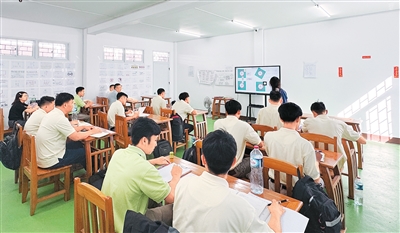
第十一届中国—东盟青年精英交流节青年和平对话会举行
Shan Xi Ri Bao· 2025-07-27 23:48
Core Points - The 11th China-ASEAN Youth Elite Exchange Festival was held in Xi'an, focusing on peace dialogue among youth [1][2] - The event emphasized the importance of peace, cooperation, and cultural exchange between China and ASEAN countries [2] Group 1: Event Overview - The event was co-hosted by various associations and aimed to strengthen ties between China and ASEAN through youth engagement [1] - Key figures, including provincial and national leaders, highlighted the significance of historical understanding and mutual trust in fostering cooperation [1] Group 2: Themes and Discussions - The theme of the event was "Youth Together Build Peace, Shared Destiny to Guard Home" [2] - Youth representatives from China and ten ASEAN countries discussed topics related to peace, cultural exchange, economic cooperation, and technological innovation [2]
王毅谈中国东盟互利合作成果
news flash· 2025-07-10 07:28
Group 1 - The core viewpoint emphasizes the fruitful cooperation results between China and ASEAN, highlighting the strengthening of ties and mutual benefits [1][2] Group 2 - The construction of a community of shared destiny in the region has been elevated to a higher level, with successful bilateral cooperation following Xi Jinping's visits to Vietnam, Malaysia, and Cambodia [1] - The negotiations for the China-ASEAN Free Trade Area 3.0 have been fully completed, with a protocol set to be signed within the year, indicating a firm step towards regional open cooperation [1] - Security cooperation has deepened, with the completion of the third reading of the "South China Sea Code of Conduct" negotiations, effectively managing differences and maintaining overall maritime stability [1] - There has been an increase in personnel exchanges, with over 100 cultural exchange activities held for two consecutive years, and the formal implementation of "Lancang-Mekong Visa" and "ASEAN Visa" facilitating easier travel for citizens [1]
外交部副部长孙卫东在东亚合作系列高官会后接受媒体采访
Xin Hua Wang· 2025-06-11 17:01
Core Viewpoint - The East Asian cooperation this year focuses on "inclusiveness and sustainability," reflecting the collective call of regional countries for unity, cooperation, and development in the face of challenges [1] Group 1: East Asian Cooperation - The high-level meetings aim to prepare for the upcoming East Asian leaders' series meetings and foreign ministers' meetings, emphasizing practical cooperation and regional economic integration [1] - China reiterated the importance of the 10+3 cooperation as the main channel and the East Asia Summit as a strategic forum led by leaders [1] Group 2: International Relations and Principles - China advocates for openness, cooperation, fairness, and mutual benefit, rejecting confrontation and zero-sum approaches, which aligns with the common choice of regional countries [2] - The Chinese government emphasizes the importance of the one-China principle regarding Taiwan, asserting that Taiwan is an inseparable part of China [2] Group 3: Regional Security and Stability - China and ASEAN countries are committed to resolving maritime disputes through dialogue and have completed the third reading of the "South China Sea Code of Conduct" negotiations [2] - The Chinese government opposes the introduction of Cold War mentality and military escalation by external countries, which disrupts regional peace and stability [3]
马中友好协会会长:文明互鉴对应对全球挑战至关重要
Xin Hua She· 2025-06-10 15:46
Group 1 - The core viewpoint emphasizes the need for cultural exchange and inclusivity to promote human unity and progress in addressing global challenges [1][2] - The Global Civilization Initiative proposed by China is seen as a driving force for countries to achieve peaceful coexistence, inclusive development, and common prosperity [1] - The dialogue between different civilizations is deemed necessary in the face of a complex global environment, highlighting the importance of learning from one another to tackle global issues [1] Group 2 - The significance of youth in promoting civilizational dialogue is particularly stressed, as they represent the future and are crucial in driving change [2] - Young people are encouraged to reflect on their cultural traditions and engage in cross-cultural dialogue and international cooperation to enhance mutual understanding [2] - The importance of deepening the understanding of culture and civilization is highlighted, with a call to use cultural strengths to improve social governance and promote good governance on a broader scale [2]
深入推进周边命运共同体建设(深入学习贯彻习近平新时代中国特色社会主义思想)
Ren Min Ri Bao· 2025-05-22 22:02
Group 1 - The core viewpoint emphasizes the importance of building a community of shared destiny with neighboring countries, as highlighted by President Xi Jinping during his state visits to Vietnam, Malaysia, and Cambodia [1][2] - The concept of a community of shared destiny has been recognized by China and 17 neighboring countries, forming two major clusters in the Southeast Asia and Central Asia regions [2][4] - The strategic significance of neighboring countries is underscored, as they are crucial for China's development, security, and diplomatic efforts [3][4] Group 2 - Historical achievements in surrounding diplomacy have been noted, with a focus on the "Belt and Road" initiative providing a platform for modernization and high-quality development [4][5] - The current period is described as the best in modern history for China's relations with neighboring countries, presenting valuable opportunities for further cooperation [5][6] - The framework for surrounding work has evolved to encompass broader aspects beyond diplomacy, integrating economic, political, and security dimensions [6][7] Group 3 - The framework for surrounding work is designed to support the construction of a community of shared destiny, emphasizing the need for coordination and comprehensive strategies [7][8] - Internal and external requirements for the successful operation of the surrounding work framework have been established, focusing on leadership, coordination, and legal reforms [8][9] - High-quality cooperation under the "Belt and Road" initiative is highlighted as a key platform for regional connectivity and development [9][10] Group 4 - The value system for surrounding diplomacy is evolving, with a vision of building peaceful, prosperous, and friendly neighborhoods [10][11] - The principles guiding surrounding diplomacy have been enriched, reflecting a commitment to mutual benefit and shared destiny [11][12] - The shared Asian values of peace, cooperation, openness, and inclusiveness are emphasized as foundational for China's relations with neighboring countries [12][13]