
八站两场

Search documents
车流穿行,三地生活同城化
Xin Jing Bao· 2026-02-25 11:29
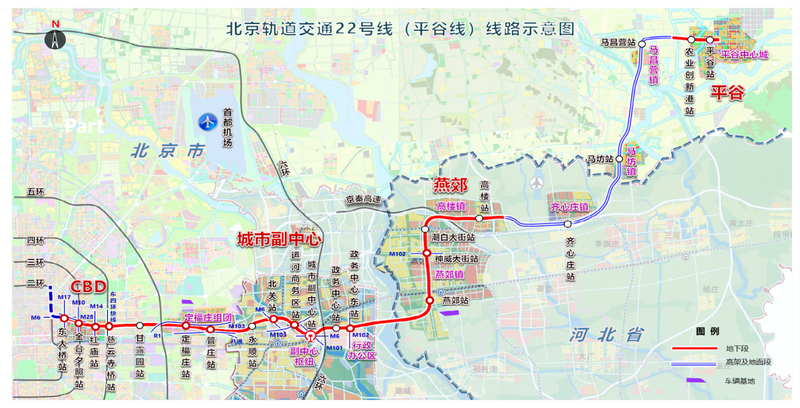
Group 1 - The core viewpoint of the articles highlights the rapid development of transportation integration in the Beijing-Tianjin-Hebei region, transforming it from a geographical area into a closely connected economic zone [1][2][6] - The Beijing Subway Line 22, expected to open by the end of this year, will significantly enhance cross-province commuting, creating a "1-hour traffic circle" between Langfang and Beijing [2][4] - The introduction of the "Dachang Special Line" bus service will provide a new commuting option for approximately 50,000 cross-province commuters, connecting them to the Beijing subway system [5][6] Group 2 - The Beijing-Tianjin intercity railway has reduced travel time between the two cities to just 30 minutes, facilitating a daily average of 225,000 trips by 2025 [6][7] - The launch of the Beijing-Tianjin-Hebei circular high-speed train will further enhance commuting efficiency, connecting key areas such as Beijing, Tianjin, and Xiong'an [8][10] - The "Eight Stations and Two Airports" transportation hub in Beijing is expected to handle over 12 million passengers during the 2026 Spring Festival, reflecting a 10% increase from the previous year [15][17] Group 3 - The integration of various transportation modes, including high-speed rail, subways, and buses, is reshaping commuting patterns and enhancing the overall travel experience for residents in the region [11][12][14] - The ongoing construction of the Xiong'an New Area's R1 line and its connection to Beijing's Daxing Airport is crucial for establishing a one-hour economic circle between the two areas [14][18] - The establishment of a coordinated management system for the "Eight Stations and Two Airports" framework aims to improve operational efficiency and reduce congestion in central Beijing [16][17]

北京通州站正式投入运营
Ren Min Ri Bao· 2025-12-31 01:50
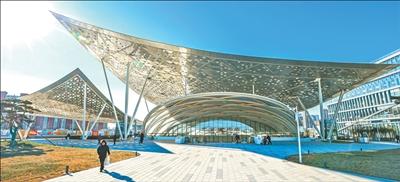
Core Viewpoint - The official opening of Beijing Tongzhou Station marks a significant milestone in the coordinated development of the Beijing-Tianjin-Hebei region, enhancing transportation connectivity and urban space optimization [1][3]. Group 1: Infrastructure Development - Beijing Tongzhou Station, part of the Beijing urban sub-center transportation hub, has been under construction for over six years and officially opened on December 30 [3]. - The station features a unique design without a ground station building, utilizing five light wells to allow natural light into the underground space [3][4]. - The station integrates various transportation modes, including connections to Metro Line 6 and adjustments to eight bus routes, with plans for future connections to additional metro lines [4][6]. Group 2: Economic and Social Impact - The station is expected to facilitate commuting and promote integration within the region, significantly reducing travel times; for example, it takes only 11 minutes to reach Yanjiao from Tongzhou Station [6][7]. - The opening of the station is projected to enhance the flow of resources and people, enabling same-day business interactions between cities like Tangshan and Tongzhou [7][8]. - The station will operate 12 pairs of trains initially, connecting to the Beijing-Tangshan Intercity Railway and the Beijing-Binhai Intercity Railway [6][8]. Group 3: Urban Planning and Governance - The establishment of the "Eight Stations and Two Airports" framework, which includes Beijing Tongzhou Station, represents a historic leap in the capital's transportation landscape [8][9]. - This new framework aims to optimize urban governance by implementing a unified management system for the major transportation hubs, enhancing operational efficiency [9]. - The comprehensive transportation hub structure supports Beijing's urban spatial layout, promoting a multi-functional urban vitality space [9].
北京迈入“八站两场”交通新阶段
Bei Jing Ri Bao Ke Hu Duan· 2025-12-26 21:14
Core Insights - Beijing will become the first city in China to have a comprehensive transportation hub cluster consisting of eight first-class railway stations and two major international airports by the end of 2025, enhancing its transportation infrastructure significantly [1][2] Group 1: Transportation Infrastructure Development - The new Beijing Tongzhou Station will be operational by December 30, 2025, contributing to the "Eight Stations and Two Airports" framework [1] - The eight railway stations include Beijing Station, Beijing West Station, Beijing South Station, Beijing North Station, Qinghe Station, Beijing Chaoyang Station, Beijing Fengtai Station, and the upcoming Beijing Tongzhou Station, which will connect to the national railway network [2] - The combined passenger throughput for Beijing Capital International Airport and Beijing Daxing International Airport is projected to be approximately 117 million passengers in 2024, with the former handling about 67.37 million and the latter about 49.44 million [3] Group 2: Operational Efficiency and Passenger Experience - The "Eight Stations" are strategically positioned to manage passenger flow effectively, reducing congestion in the city center and providing diverse travel options [4][5] - The introduction of high-speed rail services has significantly improved travel times, such as the journey from Beijing to Shenyang taking only 2 hours and 29 minutes [4] - The integration of metro services with the eight railway stations and two airports has enhanced passenger transfer efficiency, particularly during peak hours [5] Group 3: Regional Connectivity and Economic Impact - The "Eight Stations and Two Airports" framework supports the integration of Beijing into the national high-speed rail network, facilitating a one to 1.5-hour travel circle among major cities in the Beijing-Tianjin-Hebei region [6] - The development of intercity railways, such as the Beijing-Tianjin Intercity Railway, has reduced travel times to as little as 30 minutes, enhancing cross-regional commuting [7] - The infrastructure improvements are expected to significantly boost the economic integration of the Beijing-Tianjin-Hebei region, promoting efficient personnel movement and regional industrial collaboration [6][7]