
京雄城际铁路

Search documents
车流穿行,三地生活同城化
Xin Jing Bao· 2026-02-25 11:29
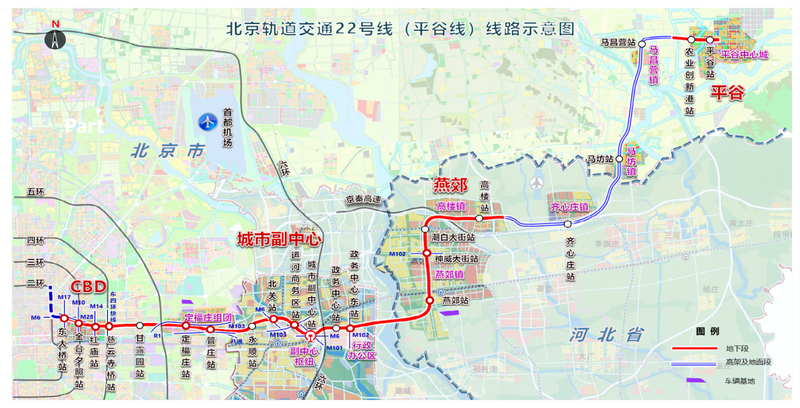
Group 1 - The core viewpoint of the articles highlights the rapid development of transportation integration in the Beijing-Tianjin-Hebei region, transforming it from a geographical area into a closely connected economic zone [1][2][6] - The Beijing Subway Line 22, expected to open by the end of this year, will significantly enhance cross-province commuting, creating a "1-hour traffic circle" between Langfang and Beijing [2][4] - The introduction of the "Dachang Special Line" bus service will provide a new commuting option for approximately 50,000 cross-province commuters, connecting them to the Beijing subway system [5][6] Group 2 - The Beijing-Tianjin intercity railway has reduced travel time between the two cities to just 30 minutes, facilitating a daily average of 225,000 trips by 2025 [6][7] - The launch of the Beijing-Tianjin-Hebei circular high-speed train will further enhance commuting efficiency, connecting key areas such as Beijing, Tianjin, and Xiong'an [8][10] - The "Eight Stations and Two Airports" transportation hub in Beijing is expected to handle over 12 million passengers during the 2026 Spring Festival, reflecting a 10% increase from the previous year [15][17] Group 3 - The integration of various transportation modes, including high-speed rail, subways, and buses, is reshaping commuting patterns and enhancing the overall travel experience for residents in the region [11][12][14] - The ongoing construction of the Xiong'an New Area's R1 line and its connection to Beijing's Daxing Airport is crucial for establishing a one-hour economic circle between the two areas [14][18] - The establishment of a coordinated management system for the "Eight Stations and Two Airports" framework aims to improve operational efficiency and reduce congestion in central Beijing [16][17]

京雄城际铁路开通运营五周年 累计运送旅客超1300万人次
Zhong Guo Jing Ji Wang· 2025-12-31 07:45
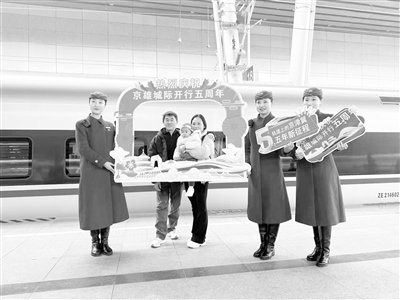
Core Insights - The Beijing-Xiong'an Intercity Railway has been operational for five years, transporting over 13 million passengers and increasing train services from 32 to 59 daily, becoming a vital transportation link for the Beijing-Tianjin-Hebei coordinated development [1][2] Group 1: Operational Achievements - The railway has significantly improved service quality, addressing the "last mile" travel challenges by establishing real-time communication with Xiong'an Group's transportation company to optimize bus, taxi, and ride-hailing resources [1] - The railway connects key locations including Beijing West Station, Daxing Airport Station, and Xiong'an New Area, creating a multi-dimensional transportation network [1] Group 2: Future Developments - The upcoming opening of the Tianjin-Xiong'an Intercity Railway will connect with the Beijing-Xiong'an line at East Gu'an, enhancing the high-speed rail corridor between Beijing and Tianjin [2] - Future expansions, such as the Beijing-Hong Kong high-speed rail's Xiong'an section and the Xiong-Xin high-speed rail, will further integrate Xiong'an with East China, South China, and Central regions, emphasizing the railway's growing importance in the network [2]
畅通京津冀发展动脉 助力雄安新区建设
Xin Lang Cai Jing· 2025-12-29 17:12
Core Insights - The Beijing-Xiong'an Intercity Railway has celebrated its fifth anniversary, having transported over 13 million passengers since its opening, and increased train services from 32 to 59 daily, becoming a vital transportation link for the Beijing-Tianjin-Hebei coordinated development [3][4] Group 1: Operational Achievements - The railway has effectively addressed the "last mile" travel challenges by enhancing service quality, including dynamic monitoring of passenger flow and optimizing security and station access during peak times [3] - The Xiong'an Station has implemented a "Lotus Heart Service Team" to provide comprehensive assistance to vulnerable passengers, serving nearly 7,000 key travelers and recovering over 2,500 lost items in five years [3] Group 2: Connectivity and Infrastructure - The railway connects major hubs including Beijing West Station, Daxing Airport Station, and Xiong'an New Area, facilitating a "air-rail intermodal" transportation model, with travel time from Xiong'an Station to Daxing Airport as short as 19 minutes [4] - Daxing Airport Station has continuously upgraded its services, improving signage systems and adding free charging facilities, while enhancing cooperation with the airport to ensure seamless transitions between high-speed rail and air travel [4]
京雄城际运行五载运送旅客超1300万人次
Xin Lang Cai Jing· 2025-12-27 23:52
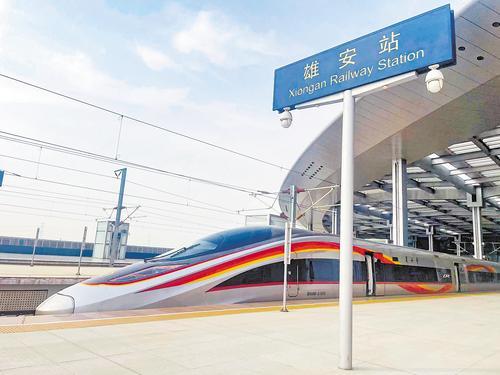
Core Insights - The Beijing-Xiong'an Intercity Railway has celebrated its fifth anniversary, having transported over 13 million passengers since its inception, with daily train services increasing from 32 to 59, highlighting its role as a vital transportation link in the Beijing-Tianjin-Hebei region [1][2] Group 1: Operational Highlights - The railway connects Beijing with Xiong'an New Area and Daxing International Airport, creating a multi-dimensional transportation network that enhances business travel and international connectivity [2] - The fastest travel time from Xiong'an Station to Daxing International Airport is now 19 minutes, providing efficient options for travelers [2] Group 2: Service Enhancements - Daxing Airport Station has implemented service upgrades, including improved signage systems and the addition of free charging stations, facilitating seamless transfers between high-speed rail and air travel [2] - The "Xingxin Xiangyin" initiative has been established to enhance cooperation between the railway and airport, ensuring a smooth transition for passengers [2] Group 3: Future Developments - The upcoming opening of the Tianjing-Xiong'an Intercity Railway by the end of 2023 will further enhance connectivity between Beijing and Tianjin, establishing a new high-speed rail corridor [2] - Future projects, such as the Beijing-Hong Kong High-Speed Railway and the Xiong'an-Xinzhou Railway, will strengthen Xiong'an's connections to East China, South China, and Central regions, emphasizing the railway's growing importance in the transportation network [2]
全线累计运送旅客超1300万人次
Xin Lang Cai Jing· 2025-12-27 21:47
Core Insights - The Beijing-Xiong'an Intercity Railway has transported over 13 million passengers in its first five years of operation, highlighting its significance as a transportation link between Beijing and the Xiong'an New Area [3][4] - The number of trains operating daily has increased from 32 to 59, indicating a growing demand for this transportation service [3] - The railway has enhanced service quality, including the establishment of a dedicated service team for vulnerable passengers, which has assisted nearly 7,000 individuals and recovered over 2,500 lost items [3] Group 1 - The railway connects key locations including Beijing West Station, Daxing Airport Station, and Xiong'an Station, forming an integrated transportation network [3] - The fastest travel time from Xiong'an Station to Daxing Airport is now 19 minutes, providing efficient options for business travel and international connections [3] - Daxing Airport Station has implemented service upgrades, including improved signage and free charging facilities, to enhance passenger experience [4] Group 2 - The upcoming opening of the Tianjin-Xiong'an Intercity Railway at the end of 2023 will create an additional high-speed rail link between Beijing and Tianjin [4] - Future connections, such as the Beijing-Hong Kong High-Speed Railway and the Xiong-Xin High-Speed Railway, will further integrate Xiong'an with various regions, enhancing its role in the national rail network [4]
京雄城际运行五载,累计运送旅客超1300万人次
Xin Lang Cai Jing· 2025-12-27 15:38
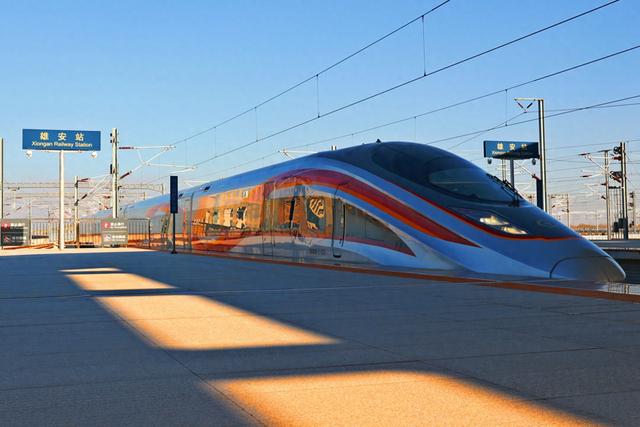
Core Viewpoint - The Beijing-Xiong'an Intercity Railway has celebrated its fifth anniversary, marking its significance as a vital transportation link between Beijing and the Xiong'an New Area, having transported over 13 million passengers in five years [1]. Group 1: Operational Highlights - The number of trains operating on the Beijing-Xiong'an Intercity Railway has increased from 32 to 59 daily since its inception [1]. - The railway connects key locations including Beijing West Station, Daxing Airport Station, and Xiong'an New Area, creating a multi-dimensional transportation network [7]. Group 2: Service Enhancements - Daxing Airport Station has implemented service upgrades, including improved signage systems and the addition of free charging facilities, enhancing the travel experience for passengers [9]. - The railway's integration with Daxing Airport facilitates efficient transfers between high-speed rail and air travel, supporting business travel and international exchanges [7]. Group 3: Future Developments - The upcoming opening of the Tianjin-Xiong'an Intercity Railway by the end of 2023 will further enhance connectivity between Beijing and Tianjin, establishing a new high-speed rail corridor [9]. - Future expansions, such as the Beijing-Hong Kong High-Speed Railway and the Xiong'an-Xinzhou Railway, will strengthen Xiong'an's connections to East China, South China, and central regions, highlighting the railway's growing importance in the network [9].
提升公共服务共建共享水平
Jing Ji Ri Bao· 2025-10-11 22:14
Core Viewpoint - The article emphasizes the importance of enhancing public services in the Beijing-Tianjin-Hebei (Jing-Jin-Ji) region to improve people's well-being and promote common prosperity, aligning with China's modernization goals [1][2]. Public Service Development - The Jing-Jin-Ji region has made significant progress in public service co-construction and sharing, responding to public needs and enhancing the accessibility of services [1][2]. - The high-speed rail network has expanded from 1,284 kilometers in 2013 to 2,669 kilometers by 2024, achieving full coverage of all prefecture-level cities and creating a "one-hour traffic circle" [1]. Environmental Protection - The PM2.5 annual average concentration in the Jing-Jin-Ji region is expected to decrease by over 60% compared to 2013, with a significant increase in the number of days with good air quality [2]. Education Collaboration - A joint education development action plan has been established, focusing on resource sharing, teacher exchanges, and collaborative schooling to enhance the quality of education across the region [2][3]. Social Security Integration - The Jing-Jin-Ji social security card has become a convenient tool for residents, enabling access to 44 social service items, medical expense settlements in over 64,000 medical institutions, and transportation services across 3,900 routes [2]. Challenges in Public Service Sharing - There are still barriers to public service sharing, such as the lack of unified standards and systems across the three regions [2][3]. Recommendations for Improvement - Suggestions include enhancing cooperation mechanisms, strengthening employment policies, focusing on key livelihood areas, and leveraging the Xiong'an New Area as a model for public service development [3][4].