共封装光学CPO

Search documents
光模块的产业价值,开始改变了
新财富· 2026-03-18 09:06
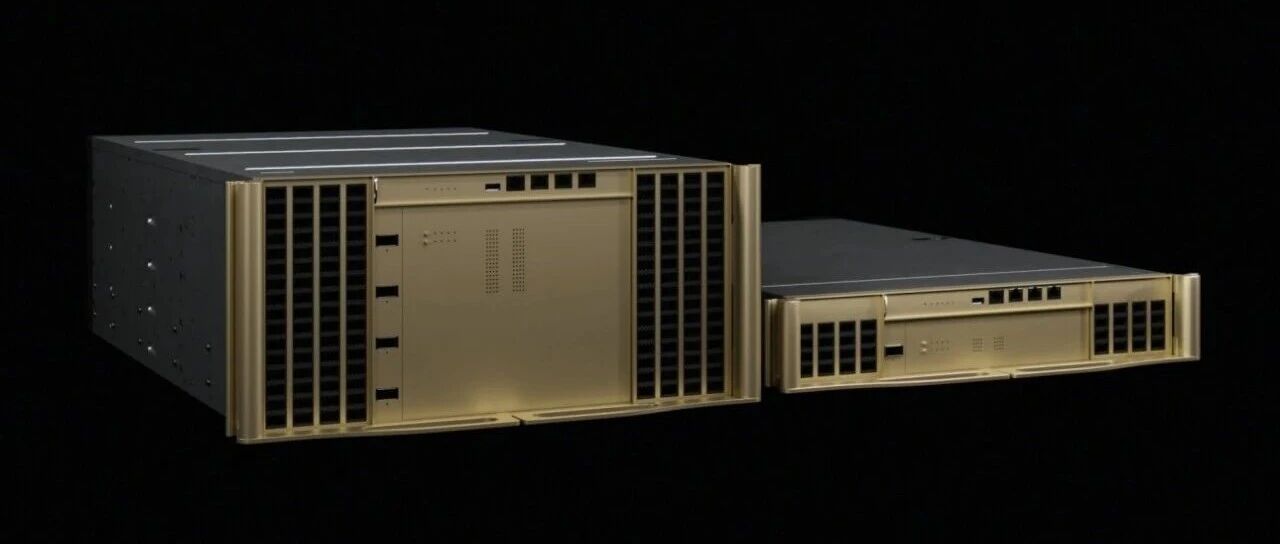
Core Insights - Nvidia has officially announced that CPO technology will begin large-scale deployment in 2026, marking a new era in optical communication for global data centers [2] - The introduction of co-packaged optical CPO fundamentally disrupts the traditional independent form of optical modules, raising concerns about the potential end of the optical module industry's value chain [2] Investment and Supply Chain Dynamics - Nvidia has invested $2 billion each in Lumentum and Coherent, along with long-term procurement commitments, to secure high-end laser chip production capacity [3] - The global AI computing industry is entering a supply chain war focused on optical components, with Nvidia enhancing its dominance over the optical module supply chain [3] - The current global capacity for high-speed laser chips based on indium phosphide (InP) is extremely tight, with demand expected to rise significantly by 2026 [3][6] CPO Technology and Market Impact - CPO technology is crucial for driving 1.6T/3.2T optical modules, and any weaknesses in the supply chain could pose significant risks to Nvidia's revenue growth [6] - The first mass-produced co-packaged optical CPO switch, Quantum X800-Q3450, will have a total switching bandwidth of 115.2T and a material cost of approximately $70,000, with market prices exceeding $180,000 [8] - CPO technology offers at least a 30% reduction in power consumption, which is a significant opportunity for data center operations where electricity costs are substantial [10] Reliability and Economic Benefits - CPO technology has demonstrated superior reliability, with a link failure rate of only 0.34%, significantly lower than traditional optical modules [12] - Google estimates that a data center with 100,000 servers could save over $10 million annually in electricity costs by adopting CPO [12] - The shift to CPO technology is expected to fundamentally restructure the industry's power dynamics, transferring control from optical module manufacturers to switch chip giants and major cloud service providers [12][13] Challenges for Traditional Optical Module Manufacturers - Traditional optical module leaders like Zhongji Xuchuang and Newray must navigate a multi-dimensional challenge as CPO technology compresses the value chain [19] - The transition to CPO architecture may undermine existing advantages held by traditional manufacturers, as CPO requires silicon photonics, which cannot directly integrate with existing EML chips [19] - Market share erosion is anticipated, with Morgan Stanley predicting a dilution of optical module demand by approximately 3% in 2026 and 11% in 2027 due to CPO adoption [23] Future Market Dynamics - The demand for optical modules is expected to grow explosively, with global AI optical module demand projected to increase from approximately 41 million units in 2025 to around 100 million units by 2028 [23] - The initial applications of CPO will focus on ultra-high-speed scenarios above 3.2T, while traditional optical modules will continue to thrive in mid-to-low-end markets [30] - Domestic manufacturers may need to shift from selling modules to providing IP technology and collaborative services, adapting to the new CPO landscape [29][30]


大洗牌!这三只ETF爆了
Ge Long Hui· 2025-09-15 07:55
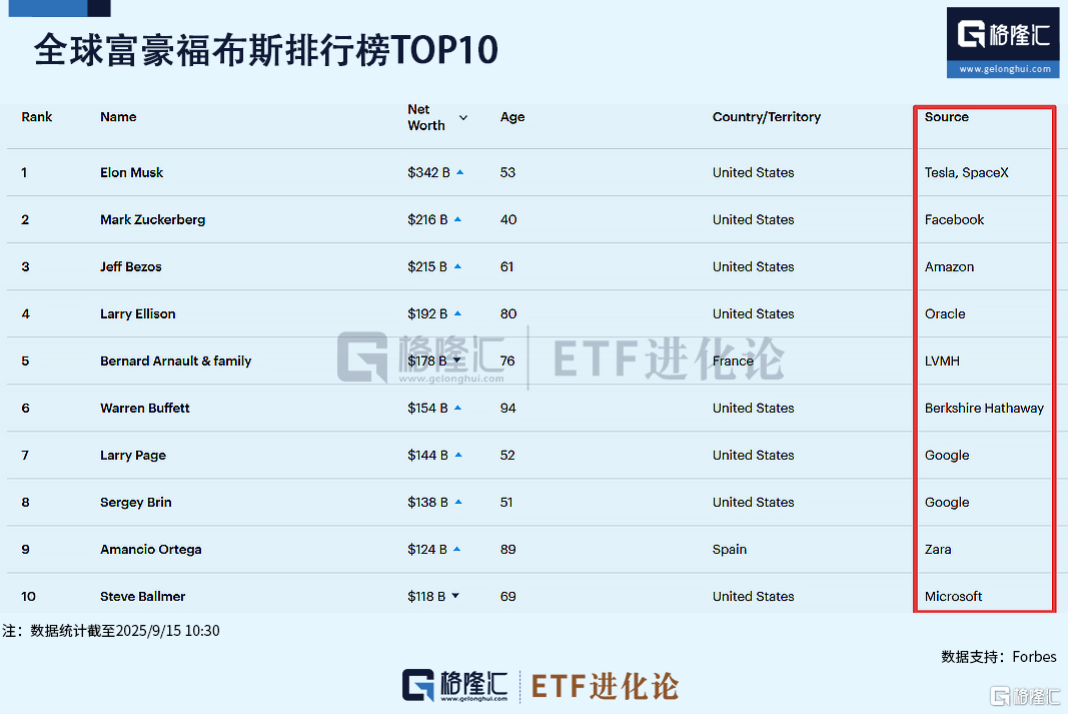
Core Insights - The emergence of AI is leading to a significant wealth redistribution among global billionaires, with technology giants dominating the top ranks of the wealth list [1][2] - Oracle's stock surged nearly 36% following a strong earnings report, marking its largest single-day gain since 1992, driven by substantial cloud contracts with major AI players [3][4] - The AI arms race among North America's major cloud providers is intensifying, with a 64% year-over-year increase in capital expenditures in Q2 2025 [4] Company Highlights - Oracle reported a remarkable increase in remaining performance obligations (RPO) to $455 billion, a 359% year-over-year growth, and projected significant revenue growth in its cloud business over the next four years [3][4] - The CEO of Oracle emphasized the vast potential of the AI inference market, suggesting that the demand for computing power will be broader and more sustained than previously anticipated [3][4] - The stock performance of ETFs related to AI, such as the Southern AI Chip ETF and the Southern Entrepreneurial AI ETF, has seen significant gains, reflecting market interest in the AI chip industry [1][3][4] Industry Trends - The AI infrastructure is undergoing a transformation, with a focus on co-packaged optics (CPO) becoming crucial for the next phase of AI data center upgrades [5] - The semiconductor industry is experiencing a surge in orders, with a notable increase in AI-related orders, indicating a robust demand for AI computing capabilities [10] - The robotics sector is gaining traction, with significant investments and interest in humanoid robots, which are seen as a key application of AI technology [12][18] Investment Opportunities - The three ETFs—Southern AI Chip ETF, Southern Entrepreneurial AI ETF, and Southern Robotics ETF—are positioned to capitalize on the AI revolution, covering critical segments of the AI industry from chips to applications [19][21] - The Southern Robotics ETF has shown impressive growth, reflecting the increasing market interest in robotics and AI applications [13][15] - The focus on AI applications, particularly humanoid robots, is expected to drive future growth and investment in the sector [12][18]