共建共享

Search documents
为民办实事项目“新建改建60座口袋公园”超额完成 今年初步计划再建40多座 “问需于民”家门口绿意添巧思
Jie Fang Ri Bao· 2026-01-18 01:58
Core Viewpoint - The development of pocket parks in Shanghai is enhancing urban green spaces and improving residents' quality of life, with a significant increase in the number of parks built and planned for the future [1][3]. Group 1: Development and Impact - Shanghai has completed 67 new or renovated pocket parks in the past year, exceeding the target of 60 set for 2025 [1]. - A total of 407 pocket parks are now included in Shanghai's urban park registry, with plans to build over 40 more this year [1]. - During the "14th Five-Year Plan" period, Shanghai has constructed or renovated 393 pocket parks, primarily utilizing three types of spaces [3]. Group 2: Types of Pocket Parks - The first type involves the transformation of outdated public spaces, such as the pocket park at the entrance of Caoxi Road subway station, which is the largest in Xuhui District [3]. - The second type focuses on upgrading existing pocket parks, like the renovation of the Wanjing Garden, which previously had low space utilization and a closed environment [3]. - The third type includes the opening of previously enclosed unit-affiliated green spaces to the public, such as the Yulan Garden, which was opened by removing a wall [4]. Group 3: Design Principles - Pocket parks differ from traditional parks in scale and functionality, often incorporating commercial, community, sports, and cultural spaces [5]. - The design principle "雀小脏全" emphasizes maximizing functionality within limited space, as seen in the Tea Ling Green Space, which accommodates various activities [6]. - Innovative features in pocket parks include multifunctional facilities, such as a shared space extending from a restroom and a climbing net integrated into the landscape [7]. Group 4: Community Involvement - Residents and local units are both beneficiaries and responsible parties for the pocket parks, with community input being sought during the design process [8]. - For example, in the design of Yun Gu Park, feedback from residents led to the inclusion of features like a viewing slope and fitness facilities [8]. - The design of parks also considers specific community needs, such as the addition of a pet-friendly area in the Kang Le Cultural Square to accommodate pet owners while addressing concerns of other residents [9].
赵县猛公村的冬至饺子宴开席啦
Xin Lang Cai Jing· 2025-12-21 15:31
Group 1 - The core event is the winter solstice dumpling feast held in Menggong Village, Zhao County, where over 150 elderly residents gathered to enjoy dumplings and socialize [1] - The event was organized by the village secretary, who led party members and volunteers to prepare home-cooked meals for villagers aged 70 and above, emphasizing community support and shared values [1] - The activity adhered to principles of frugality and practicality, with ingredients sourced collectively by the village to ensure safety and hygiene, reflecting a spirit of neighborly assistance and shared community culture [1]
临沂联通电信合作,5G RedCap技术填补山区信号盲区
Qi Lu Wan Bao· 2025-12-15 03:01
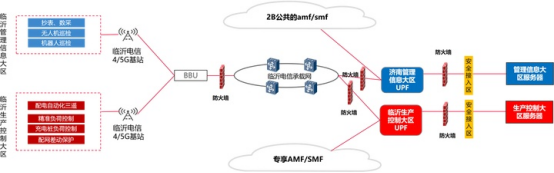
Core Viewpoint - The collaboration between Linyi Unicom and Linyi Telecom has successfully implemented the first commercial use of 5G RedCap technology based on the 800M frequency band in the province, addressing network coverage challenges in rural areas and marking a significant step towards deeper business integration through resource sharing [1][2]. Group 1: Technological Innovations - The integration of the 800M frequency band's wide coverage with Unicom's 5G RedCap technology has led to three major breakthroughs: filling signal blind spots in remote mountainous areas, avoiding redundant construction of L900 frequency band base stations, and meeting the low latency and high reliability requirements of the power industry for dedicated networks [2]. - The establishment of a joint task force by both companies aims to overcome technical barriers related to network slicing and transmission optimization, ensuring seamless integration with the national power grid's 5G dedicated network [2]. Group 2: Cost Efficiency and Resource Optimization - By sharing existing telecom resources, Linyi Unicom has avoided the need to upgrade the 900 frequency band and deploy RedCap licenses, significantly reducing costs associated with hardware procurement, software licensing, and base station modifications [4]. - The shared model is expected to lower both construction and operational costs while enhancing customer satisfaction through improved fault response and business continuity [4]. Group 3: Impact on Rural Development - The innovative practices of Linyi Unicom and Telecom are set to drive the growth of IoT connections in rural areas, supporting the implementation of the rural revitalization strategy and addressing the digital divide [4].



力求一把钥匙开一把锁
Jing Ji Ri Bao· 2025-11-24 00:08
Core Insights - The importance of village planning in promoting comprehensive rural revitalization is increasingly highlighted, emphasizing strategic layout and scientific integration of resources rather than mere infrastructure development [1][2] - Effective planning should be based on a deep understanding of the village's strengths and weaknesses, clearly defining its industrial direction, functional positioning, and development path to achieve sustainable growth [1][2] Group 1 - Village planning must be tailored to local conditions, avoiding a one-size-fits-all approach to prevent loss of regional, resource, and cultural characteristics [1][2] - The phenomenon of "planning conflicts" often arises from a lack of accurate understanding of the village's actual situation, leading to ineffective strategies [1][2] Group 2 - Conducting in-depth research and precise positioning is crucial for effective village planning, requiring planners to engage with the community and understand local attributes, industry status, population structure, cultural heritage, and challenges [2] - The principle of "people first, co-construction and sharing" should guide rural revitalization efforts, ensuring that planning reflects the needs and aspirations of farmers to foster strong collaborative implementation [2]
把共建共享落实到“最后一公里”——新发展理念引领高质量发展一线观察之五
Xin Hua She· 2025-11-04 15:03
Core Insights - The article emphasizes the importance of shared development as a key component of the new development philosophy, aiming for common prosperity and the implementation of policies that benefit the people [1][8]. Group 1: Shared Development Initiatives - Various local governments are implementing community-focused projects, such as urban renewal and infrastructure improvements, to enhance residents' quality of life [2][3]. - In Shanxi, a plan was introduced to address the challenges faced by new employment groups, focusing on improving policy support and service management [2]. - In Guangxi, 93 new schools and kindergartens are set to open by the 2025 autumn semester, providing approximately 63,000 new educational slots [2]. Group 2: Community Engagement and Participation - The article highlights the active participation of citizens in local governance, with numerous suggestions being submitted and adopted to improve community development [4]. - Initiatives like "community partners" and "neighborhood discussion halls" are emerging, extending governance to the grassroots level and enhancing community involvement [6]. Group 3: Economic and Social Development - The "15th Five-Year Plan" outlines strategies for improving living standards, emphasizing the need for inclusive and foundational social welfare systems [3][8]. - The focus is on balancing economic growth with social equity, ensuring that development benefits reach all segments of society [8]. Group 4: Cultural and Recreational Activities - The rise of "village-themed" cultural activities, such as local sports events and community gatherings, reflects a growing emphasis on enriching the cultural life of rural areas [7]. - These activities not only promote community engagement but also contribute to the overall goal of common prosperity by enhancing both economic and cultural wealth [7].
2025中国国际矿业大会将于10月23日至25日在天津举办
Xin Hua Wang· 2025-08-27 03:15
Core Viewpoint - The 27th China International Mining Conference will be held from October 23 to 25 in Tianjin, focusing on the theme "Mutual Integration and Shared Development" to promote open cooperation and enhance communication within the global mining industry [1] Group 1: Event Details - The conference will take place at the Tianjin Meijiang Convention and Exhibition Center, utilizing all exhibition halls for the first time, resulting in a total indoor and outdoor exhibition area that exceeds historical levels, setting a new record for the event [1] - The exhibition will feature several breakthrough highlights and upgraded service offerings to enhance the experience for exhibitors and attendees [1] Group 2: Exhibition Highlights - New exhibition areas will be added, including sections for mining companies, investment, legal and consulting services, as well as a new energy mining charging and swapping area, and a smart mining application demonstration area, aligning with industry development trends [1] - The conference will collaborate with overseas associations and professional organizations to invite international technical equipment and service procurement teams, facilitating efficient matching of international demands and expanding overseas market presence [1]
刚刚,重磅来了!在深圳正式发布
中国基金报· 2025-08-02 15:44
Core Viewpoint - The article highlights the launch of the countdown ceremony for the 15th National Games and the 12th National Paralympic Games, emphasizing the significance of the event and the unveiling of the torch, flame lamp, and flame basin designs, which symbolize unity and hope [2][3]. Group 1: Torch Design - The torch named "Bloom" symbolizes light and hope, representing the core spirit of sports, unity, and friendship [3][5]. - The torch features a modular design, made from high-strength 3D printed stainless steel and temperature-resistant aluminum alloy, with a height of 760mm and a weight of 1.6kg [5][6]. - The design reflects the spirit of the Guangdong-Hong Kong-Macao Greater Bay Area, with a "wave" shaped flame opening that signifies innovation and historical significance [6][8]. Group 2: Flame Lamp and Basin - The flame lamp named "Spark of Dreams" is designed with lightweight naphtha as fuel, standing 345mm tall and weighing 3kg, showcasing a radiating shape that symbolizes support from the three regions [10][13]. - The flame basin named "Unity and Prosperity" is 1080mm tall, weighs approximately 60kg, and is inspired by ancient ceremonial vessels, symbolizing the strength of unity among the three regions [10][15]. Group 3: Medal Design - The medal named "Warmth of Unity" represents social civilization and support for the Paralympic Games, embodying the spirit of collaboration and care for athletes [18][20]. - The medal features a design with waves symbolizing vastness and inclusivity, reflecting the collective strength of participants [20][26]. - The reverse side of the medal includes a relief of the mascot holding a torch, symbolizing the enduring Olympic spirit, and incorporates Braille for inclusivity [26]. Group 4: Award Ceremony Attire - The award ceremony attire is inspired by the peony motif from Cantonese embroidery, symbolizing harmony and prosperity among the three regions [28][31]. - The primary color of the attire is pink, representing hope, youth, and vitality [31].

交出高效能治理“濮阳答卷”——访濮阳市委书记万正峰
He Nan Ri Bao· 2025-06-26 07:00
Group 1 - The article emphasizes the importance of implementing high-quality development and efficient governance as outlined in the recent provincial meeting, with a clear task list, roadmap, and timeline [1] - The city of Puyang aims to enhance grassroots governance through a "1+2+4+N" target task system, focusing on party leadership and community collaboration to drive high-quality development [1] - The initiative includes strengthening village-level governance by cultivating a reserve of village party organization leaders and promoting advanced models of village leadership [1] Group 2 - The article discusses the integration of various data resources from public security, civil affairs, urban management, and market regulation to create an intelligent grassroots governance data platform [2] - It highlights the implementation of 16 targeted actions to address safety hazards at the grassroots level, aiming to preemptively resolve risks and ensure political and social stability [2]
从“通信塔”到“数字塔”(走企业,看高质量发展)
Ren Min Ri Bao· 2025-05-16 22:12
Core Viewpoint - The article highlights the significant advancements and contributions of China Tower Corporation in the construction and sharing of telecommunications infrastructure, particularly in the context of 5G and digital transformation initiatives in China [1][2][3][4][5][6][7][8]. Group 1: Infrastructure Development - The Jidayan High-Speed Railway in Shanxi Province is set to commence operations on December 31, 2024, with China Tower integrating 4G and 5G network construction into a shared plan, achieving full signal coverage across 426 base stations and 18.49 kilometers of tunnels in just four months [1]. - Since its establishment in 2014, China Tower has led a "sharing revolution" in the telecommunications industry, significantly reducing redundant base station construction and achieving a 50% cost saving in projects like the Dalian Metro communication network [2]. - By the end of last year, China Tower had constructed over 2.76 million 5G base stations, covering an area of over 12.6 billion square meters and extending coverage to over 44,000 kilometers of high-speed and subway lines [3]. Group 2: Resource Sharing and Cost Efficiency - Over 95% of 5G construction projects have utilized existing resources such as communication towers and streetlight poles, leading to a substantial reduction in construction costs and time [3]. - The new tower sharing rate increased from 14.3% to 85%, equating to the avoidance of building 1.2 million new towers, saving 68,000 acres of land and over 210 billion yuan in industry investments [3]. Group 3: Digital Transformation and Smart Solutions - China Tower is transitioning from traditional communication towers to "digital towers" by integrating advanced technologies such as AI and big data, enhancing capabilities in various sectors including environmental monitoring [4][6]. - The company has upgraded 230,000 communication towers to digital towers, contributing to the construction of a digital China [4]. Group 4: Social Responsibility and Community Impact - China Tower has invested 8.5 billion yuan in universal telecommunications services, building over 70,000 base stations to ensure 100% network coverage in administrative villages [7]. - The company has deployed over 76,000 battery swap stations across more than 320 cities, providing over 2 million battery swaps daily, significantly reducing carbon emissions by 3.3 million tons [7]. Group 5: Future Commitments - China Tower aims to continue its mission of building a strong digital infrastructure to support the digital economy and enhance public welfare through ongoing resource sharing and technological innovation [8].


特朗普下“死手”,祭出3521%关税狠招,王毅强硬发声,美国人听听清
Sou Hu Cai Jing· 2025-05-01 06:05
Core Viewpoint - The Trump administration's imposition of high tariffs on solar products from four Southeast Asian countries, particularly Cambodia at 3521%, is causing significant disruption in the international market and is seen as an attempt to protect the U.S. solar industry while inadvertently harming it [1][3][4]. Group 1: Tariff Impact - The tariffs are highly targeted, with Vietnam facing a 395.5% tariff, Thailand 375.2%, Malaysia 34.4%, and Cambodia facing severe penalties for non-cooperation in investigations [3]. - The U.S. solar industry has a rigid demand for affordable solar products, and the tariffs are expected to increase production costs for U.S. solar developers, contradicting the intended protective measures [3][6]. Group 2: Supply Chain Dynamics - The U.S. has seen a significant drop in solar product imports from Malaysia, Cambodia, Thailand, and Vietnam, while imports from countries like Laos and Indonesia have increased, indicating a shift in global solar trade dynamics [6]. - The tariffs are likely to disrupt the long-standing reliance of U.S. manufacturers on foreign supply chains, particularly affecting those who depend on imported components [6][9]. Group 3: Geopolitical Context - The tariffs are perceived as an attempt to sever the indirect supply chain from China through Southeast Asia, as China dominates global solar product shipments [4][9]. - Southeast Asian countries are unlikely to choose between the U.S. and China, as their economies are deeply intertwined with Chinese supply chains, particularly in electronics [6][9]. Group 4: Regional Economic Cooperation - The completion of the China-Laos railway has enhanced regional economic ties, with Laos experiencing a 127% increase in exports to China, demonstrating the benefits of reduced logistics costs and tariff pressures [7]. - The Regional Comprehensive Economic Partnership (RCEP) and the upgraded China-ASEAN Free Trade Area are facilitating zero tariffs on 95% of goods, allowing Southeast Asian countries to pivot towards China despite U.S. tariffs [9].