
兵地融合发展

Search documents
以高质量落实推动兵团“十五五”规划落地见效
Xin Lang Cai Jing· 2026-02-08 18:30
Core Viewpoint - The Xinjiang Production and Construction Corps has approved the 15th Five-Year Plan, emphasizing the need for effective implementation to transform the outlined goals into tangible outcomes [1][2]. Group 1: Political Leadership and Implementation - The importance of maintaining the Party's comprehensive leadership throughout the planning and implementation process is highlighted to ensure alignment with central government directives [2]. - Emphasis on deep learning and understanding of Xi Jinping's thoughts and the Party's recent congresses to enhance political judgment and execution capabilities [2]. - A call for strict adherence to the Party's strategic deployments and ensuring that all tasks align with central requirements to avoid discrepancies in implementation [2]. Group 2: High-Quality Development - High-quality development is identified as the primary task for building a modern socialist country, with a focus on integrating the Corps' unique role in achieving this [3]. - The establishment of a modern industrial system tailored to the Corps' characteristics is crucial, leveraging technological innovation to enhance productivity and agricultural modernization [3]. - The plan includes deepening integration with local economies to achieve mutual benefits, particularly in tourism, education, and healthcare sectors [3]. Group 3: Social Welfare and Community Development - A commitment to improving the welfare of workers and promoting common prosperity by addressing key areas such as employment, education, and healthcare [4]. - The promotion of a shared national identity and cultural integration among diverse ethnic groups is essential for fostering unity and collaboration [4]. - The necessity of balancing development and security to ensure a stable environment for growth and community safety is emphasized [5].
以骏马之姿忠实履行维稳戍边职责使命
Xin Lang Cai Jing· 2026-02-08 18:30
Group 1 - The core viewpoint emphasizes the importance of the Xinjiang Production and Construction Corps (XPCC) as a strategic force in achieving the central government's goals for Xinjiang, focusing on stability, unity among ethnic groups, and development of advanced production and culture [1][3][5] Group 2 - The XPCC is recognized for its historical contributions to national border security and social stability in Xinjiang, with a legacy of overcoming significant challenges since its establishment [2][3] - The organization aims to enhance armed forces and professional stability forces, improve border management, and promote economic development in border areas to maintain social harmony [3][5] Group 3 - The XPCC promotes ethnic unity by actively engaging with local communities, providing agricultural training, and supporting local development projects, thereby fostering a sense of community among various ethnic groups [4][5] Group 4 - The XPCC is committed to advancing modern agriculture and industrialization, focusing on the integration of advanced technologies and sustainable practices to enhance productivity and cultural development [6][8] - The organization plans to deepen reforms and explore high-quality development paths that reflect its unique characteristics, aiming to establish itself as a model for modern agricultural and industrial practices [8]
“兵地联办”真高效
Xin Lang Cai Jing· 2026-02-07 18:46
Core Viewpoint - The implementation of the "兵地联办" service in the Iron Gate City has significantly improved the efficiency of administrative processes for citizens, allowing for seamless handling of personnel file transfers between different locations [1] Group 1 - The "兵地联办" service enables citizens to complete administrative tasks without the need for extensive travel between different government service halls [1] - Citizens can now receive necessary documentation, such as receipts, in a matter of minutes, showcasing the efficiency of the new service [1] - The initiative reflects the broader goal of integrating military and civilian operations to enhance public service delivery [1]
擘画蓝图领航向 深学笃行建新功
Xin Lang Cai Jing· 2026-02-03 20:48
Core Points - The 11th Plenary Session of the 8th Party Committee of the Corps was held in Urumqi, marking an important moment in the context of the 105th anniversary of the Communist Party of China and the beginning of the 14th Five-Year Plan [1][2] - The session approved the 14th Five-Year Plan Outline for the economic and social development of the Corps, providing a clear direction for future development [2][3] Economic and Social Development - The plan is characterized by clear goals, a rigorous system, and practical applicability, which has significantly boosted confidence and unity among participants [2] - The session emphasized the importance of scientific deployment for key tasks during the 14th Five-Year period, particularly in agriculture, to enhance high-quality development through technological support [3] Livelihood Improvement - The session highlighted the need to focus on improving people's livelihoods, with specific initiatives aimed at ensuring employment, education, and healthcare accessibility [4] - The health sector is set to enhance medical service quality and implement reforms to strengthen public health systems [4] Responsibilities and Integration - The session called for a commitment to the integration of the Corps and local regions, enhancing stability and security in Xinjiang [6] - Local leaders expressed their commitment to implementing the session's directives, focusing on economic development, ecological protection, and social unity [6]
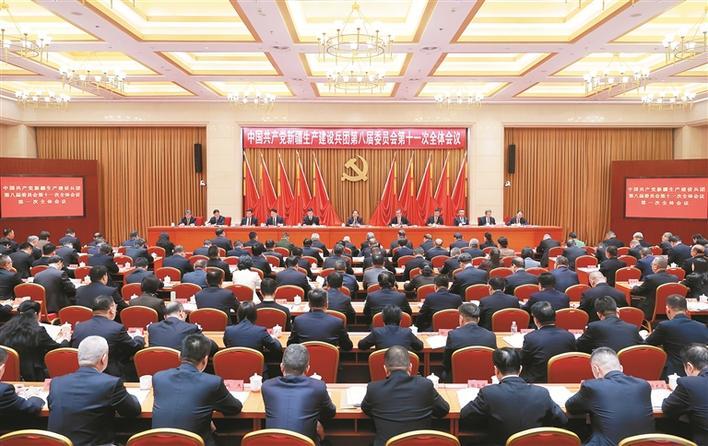
兵团党委八届十一次全会召开
Xin Lang Cai Jing· 2026-02-01 20:19
Core Viewpoint - The Xinjiang Production and Construction Corps (XPCC) is focusing on economic development, social stability, and the integration of various ethnic groups as it implements its 15th Five-Year Plan, emphasizing the importance of maintaining social stability and promoting high-quality development [2][3][6]. Group 1: Economic and Social Development - The XPCC has approved the 15th Five-Year Plan, which aims to enhance economic stability and promote social development [2][3]. - The leadership emphasizes the need for high-quality development, focusing on modernizing agriculture and creating a modern industrial system with unique advantages [3][6]. - The plan includes measures to improve employment opportunities and enhance the well-being of the workforce, aiming to increase happiness and satisfaction among the populace [3][6]. Group 2: Social Stability and Security - The leadership has set social stability and long-term peace as the primary goals, advocating for a legal and normalized approach to counter-terrorism and maintaining social order [3][5]. - There is a commitment to strengthening border security and enhancing the capabilities to maintain stability in the region [3][6]. Group 3: Cultural Integration and Community Building - The XPCC aims to foster a sense of national unity and promote cultural exchanges among different ethnic groups, creating a cohesive community environment [5][6]. - Initiatives will be taken to promote the "spirit of the corps" and enhance cultural integration, ensuring that various ethnic communities are interconnected in social, economic, and cultural aspects [5]. Group 4: Party Leadership and Governance - The meeting highlighted the importance of strengthening party leadership and governance to ensure the successful implementation of the 15th Five-Year Plan [6]. - There is a focus on political supervision, improving leadership quality, and maintaining a clean political environment to foster a conducive atmosphere for development [5][6].

全面推进社会主义现代化兵团建设
Xin Lang Cai Jing· 2026-02-01 20:19
Group 1 - The core viewpoint emphasizes the importance of the 8th Plenary Session of the Party Committee in guiding the development of the Xinjiang Production and Construction Corps (XPCC) during the "15th Five-Year Plan" period, aligning with the spirit of the 20th National Congress of the Communist Party of China [1][2] - The session reviewed the "15th Five-Year Plan" outline, summarizing past achievements and setting future tasks, which is crucial for mobilizing the workforce and ensuring the development of the XPCC in the context of Chinese-style modernization [1][3] Group 2 - The "15th Five-Year Plan" is seen as a critical period for achieving socialist modernization, with a focus on high-quality development and the establishment of clear goals and strategies for the next five years [3][4] - The session outlined specific measures for 2026, emphasizing the need for stability, economic growth, deepening reforms, and improving the quality of life for workers, while promoting urban-rural integration and collaboration between the XPCC and local regions [4][5] Group 3 - The leadership of the Party is highlighted as essential for the success of the XPCC's initiatives, with a call for strengthening Party construction and governance to support economic and social development [5]
兵团代表团举行全体会议审议政府工作报告审查自治区第十五个五年规划纲要草案
Xin Lang Cai Jing· 2026-01-27 20:00
Group 1 - The government work report summarizes the achievements of the "14th Five-Year Plan" and outlines the main goals and strategic measures for the "15th Five-Year Plan" [1][2] - The "15th Five-Year Plan" aims to promote economic and social development in Xinjiang, emphasizing the integration of military and civilian efforts [1][2] - The report reflects the implementation of Xi Jinping's thoughts and the strategic deployment from the 20th National Congress of the Communist Party of China [1][2] Group 2 - The report highlights the historical achievements and transformations in economic and social development under the leadership of the Central Committee [2] - The focus for the upcoming year includes adhering to Xi Jinping's guidance and implementing key strategies for Xinjiang's development [2][3] - The representatives expressed strong support for the government work report and the "15th Five-Year Plan," emphasizing the need for practical and achievable goals [3][4] Group 3 - The report emphasizes the importance of maintaining social stability and promoting high-quality economic development through various initiatives [3] - Key areas of focus include consumer promotion, investment expansion, and the establishment of a modern industrial system [3] - The representatives agreed on the necessity of deepening the integration of military and civilian development, ensuring a collaborative approach to economic and cultural growth [3][4]
研究兵团“十五五”规划纲要编制工作
Xin Lang Cai Jing· 2025-12-26 19:02
Core Insights - The meeting emphasized the need for a deep focus on key tasks, balancing comprehensive planning with highlighted priorities such as stability, border defense, reform deepening, and military-civilian integration [1] - It was highlighted that major projects should align with planning and funding, aiming to address shortcomings, improve livelihoods, and enhance future growth through significant engineering projects [1] - The meeting called for precise development indicators, ensuring a balance between target accounting and support accounting to better guide development [1] Planning and Coordination - There is a strong emphasis on enhancing top-level design, ensuring that planning is scientific, forward-looking, and actionable, while actively integrating into national strategic initiatives [1] - The importance of public consultation in planning was stressed, advocating for an "open-door" approach to gather public opinions and insights to build a strong development consensus [1] - Coordination and collaboration were highlighted as essential, with a focus on military-civilian synergy and inter-departmental responsibility to ensure effective planning and execution of various levels and fields [1]
大道如虹踏歌行
Xin Lang Cai Jing· 2025-12-26 19:01
Core Viewpoint - The completion of the G0711 Urumqi to Yili Highway marks a significant milestone in Xinjiang's transportation infrastructure, facilitating a new era of connectivity and economic development in the region [2][3]. Group 1: Infrastructure Development - The G0711 highway spans 324.7 kilometers and connects southern and northern Xinjiang, reducing travel time to "3 hours" [2]. - This highway is a key component of the national strategy for transportation development, reflecting the government's commitment to enhancing infrastructure in Xinjiang [3]. - The project overcame significant geological challenges, showcasing innovative engineering solutions that set new benchmarks in tunnel construction technology [3]. Group 2: Economic Integration - The highway serves as a vital link between the "North Xinjiang Urban Belt" and the "South Xinjiang Urban Cluster," promoting trade, logistics, and cultural exchange [4]. - It enhances the integration of military and civilian economies, facilitating resource sharing and collaborative development between the Xinjiang Production and Construction Corps and local industries [4]. - The infrastructure is expected to stimulate regional economic growth by connecting local markets and creating new opportunities for development [4]. Group 3: Social and Cultural Impact - The highway fosters closer ties among different ethnic groups, making cultural exchanges and mutual assistance more accessible [4]. - It acts as a bridge for enhancing national unity and identity, promoting a sense of community among the diverse populations in Xinjiang [4][5]. - The project embodies the spirit of perseverance and collaboration, reflecting the collective efforts of the workforce in overcoming challenges [5]. Group 4: Future Prospects - The completion of the G0711 highway is part of a broader vision for a modern, comprehensive transportation network in Xinjiang, aimed at integrating into the national market [6]. - The ongoing development of transportation infrastructure is expected to enhance the quality of life for residents, providing better access to services and opportunities [6]. - The project aligns with the goals of sustainable development and economic resilience, positioning Xinjiang for future growth and integration into the Belt and Road Initiative [6].
推动新时代兵团人才工作高质量发展
Xin Lang Cai Jing· 2025-12-21 19:39
Core Viewpoint - The article emphasizes the importance of talent as the primary resource for promoting high-quality development, highlighting the need for a strategic approach to talent cultivation and utilization in various industries [1]. Group 1: Talent Development Strategy - The article outlines a comprehensive strategy for talent development, focusing on aligning talent acquisition with industry needs, particularly in key sectors such as renewable energy, new materials, and biomedicine [2]. - It advocates for innovative recruitment models that encourage enterprises to take the lead in talent acquisition, moving away from traditional reliance on public sector recruitment [2]. - The strategy includes expanding recruitment channels and utilizing existing talent policies to attract experts from both within and outside the region [2]. Group 2: Talent Cultivation Mechanisms - The article stresses the importance of creating high-end platforms for talent growth, such as innovation centers and research stations, to provide necessary support for talent to thrive [3]. - It calls for a collaborative talent training mechanism that promotes skills enhancement and knowledge updating, aiming to cultivate a skilled workforce [3]. - The article highlights the need for breaking down institutional barriers to facilitate talent mobility and exchange between research institutions and enterprises [3]. Group 3: Talent Utilization and Evaluation - The article advocates for a performance-oriented approach to talent utilization, emphasizing trust and empowerment for high-level talents [4]. - It proposes an innovative evaluation mechanism that focuses on contributions and capabilities rather than traditional metrics, aiming to recognize diverse talents across various fields [4]. - The article suggests that market and enterprise feedback should guide talent evaluation, ensuring that high-performing individuals receive appropriate recognition and rewards [4]. Group 4: Talent Ecosystem and Retention - The article discusses the importance of creating a supportive environment for talent retention, including providing affordable housing and addressing personal concerns such as family support [5]. - It emphasizes the need for a culture that respects and values talent, encouraging innovation and risk-taking among professionals [5]. - The article highlights the significance of integrating regional talent development efforts to enhance overall competitiveness and address employment challenges [6]. Group 5: Regional Collaboration - The article calls for breaking down regional barriers to enhance talent mobility and cooperation between different areas, promoting mutual benefits in employment and skills development [6]. - It suggests establishing a collaborative framework for talent policy alignment and resource sharing to facilitate efficient talent allocation [6]. - The article emphasizes the need for a multi-layered interaction model to stimulate innovation and drive regional economic growth [6].