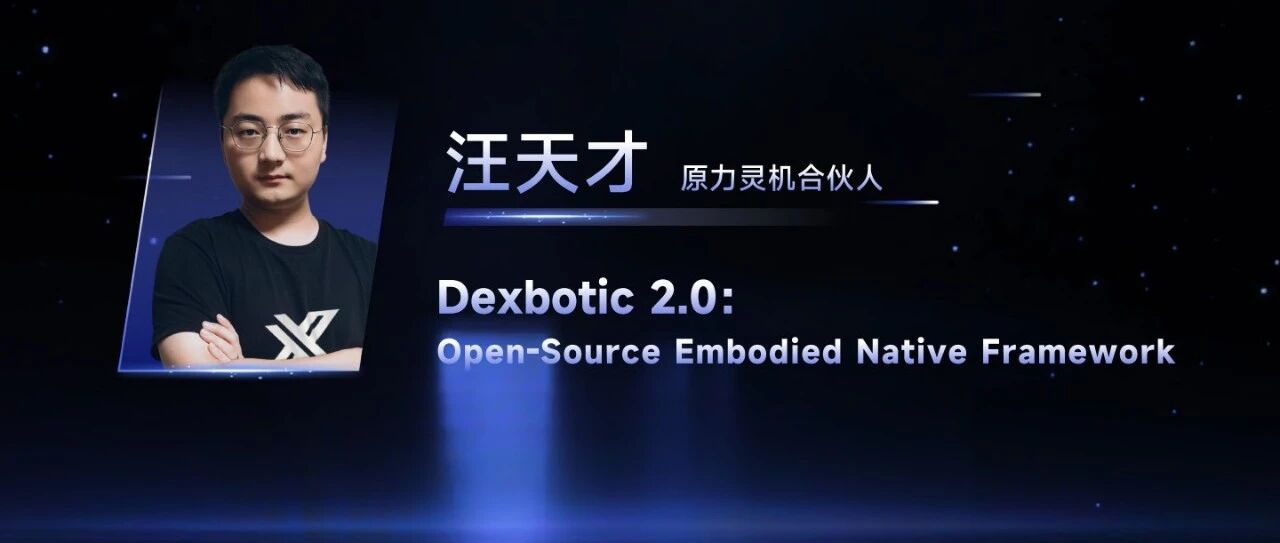
具身原生

Search documents
对话原力灵机周而进:模型2.4B就够用,关键是“具身原生”;能闭环才是最高效方法
量子位· 2026-02-13 05:42
Core Viewpoint - The company has introduced a lightweight embodiment model DM0 with 2.4 billion parameters, claiming it is sufficient for real-time processing and capable of continuous evolution through reinforcement learning [1][5][4]. Group 1: Model Specifications - DM0 is designed to handle three perspectives of 728x728 images with a reasoning delay of only 60 milliseconds [4]. - The model is considered the first "embodiment native large model" due to its unique training approach from scratch, differing from industry norms [7][18]. - The model's training process consists of three phases: VLM Train, VLA Pre-Train, and VLA Post-Train, focusing on multi-source and multi-task training [26][29][30]. Group 2: Technical Framework - Alongside DM0, the company released an open-source framework Dexbotic 2.0 and a production workflow DFOL, aimed at enhancing embodied applications [8][97]. - Dexbotic 2.0 is designed to unify embodied operations and navigation, allowing for modular architecture [98][100]. - DFOL aims to bridge the gap between traditional automation and human-like flexibility, focusing on efficiency and adaptability [101]. Group 3: Data Collection and Training Philosophy - The company emphasizes a "from zero" training approach, arguing that early exposure to physical world interactions is crucial for model understanding [40][42]. - Data collection is comprehensive, involving internet data, intelligent driving data, and embodied data, with a focus on high-resolution inputs for precise actions [62][64][66]. - The data collection strategy is dynamic, adjusting based on experimental results to ensure effective model training [68][70]. Group 4: Application and Market Strategy - The company is initially focusing on logistics as a practical application for embodied intelligence, aiming to refine capabilities in a controlled environment [125][146]. - The logistics scenario is chosen for its scalability and replicability, allowing for rapid data feedback loops to enhance model performance [149][150]. - Future plans include expanding from logistics to more complex environments, ultimately targeting consumer applications [155][156]. Group 5: Long-term Vision - The ultimate goal is to develop robots with broad social identities, capable of independent transactions and interactions in various environments [168][171]. - The company believes that achieving this vision requires a phased approach, ensuring reliability in hardware and model capabilities before expanding to more complex tasks [169][172].

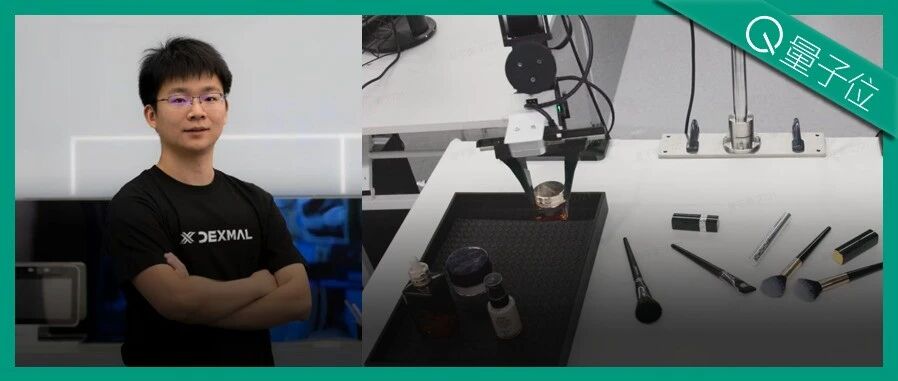
发布全球首个具身原生大模型DM0,原力灵机唐文斌:今年将是「具身原生」元年
IPO早知道· 2026-02-11 05:31
Core Viewpoint - The article emphasizes the transition of embodied intelligence from impressive demonstrations to widespread, scalable productivity through innovative technology and open-source collaboration [7]. Group 1: Company Overview - Yuanli Lingji held its first "Embodied Native - Yuanli Lingji Technology Open Day" on February 10, marking its first major public appearance since establishment [3]. - CEO Tang Wenbin stated that 2026 will not be the year of embodied intelligence but rather the year of "embodied native," focusing on a new AI paradigm rooted in physical interaction [3]. Group 2: Technological Innovations - Yuanli Lingji introduced the world's first zero-start training embodied native large model DM0, characterized by multi-source data pre-training, multi-task and cross-model pre-training, and spatial reasoning thinking chains [4]. - DM0 achieved a significant breakthrough with its 2.4 billion parameter version, ranking first in both single-task and multi-task categories on the RoboChallenge benchmark, currently holding the top position globally [4][6]. Group 3: Model Features and Capabilities - The model's design emphasizes that parameter quantity is not a barrier; rather, the native design is crucial for performance [6]. - DM0 integrates core tasks such as operation, navigation, and full-body control during pre-training, covering eight different robot hardware configurations, which enhances its generalization capabilities across models [6]. - The construction of a "spatial reasoning thinking chain" allows the robot to perform complex actions requiring multi-step spatial reasoning, such as "taking a photo and sending instructions" [6]. Group 4: Open Source and Development Framework - To democratize technology, Yuanli Lingji announced that the 2.4 billion parameter version of DM0 will be fully open-sourced, including code, models, and parameters for all 30 tasks in RoboChallenge [6]. - The company also launched the world's first embodied native development framework, Dexbotic 2.0, which features a modular architecture allowing developers to independently upgrade or replace components [6]. - The DFOL workflow aims to solve the industry dilemma of balancing efficiency and flexibility through a model that combines hardware universality with intelligent models [6].

雷军宣布初代小米SU7停产;传百度秘密启动“O计划”
2 1 Shi Ji Jing Ji Bao Dao· 2026-02-11 02:26
Group 1: Company Developments - Xiaomi's founder Lei Jun announced the discontinuation of the first-generation Xiaomi SU7, with nearly 370,000 units delivered [2] - Baidu has reportedly initiated a secret project called "O Plan," which is related to the Baidu APP and aims to enhance its AI capabilities, with the app's monthly active users surpassing 200 million [3] - Zhizhu's stock surged nearly 200% after the announcement of a new model, speculated to be GLM-5, which has generated significant interest in the developer community [4] Group 2: New Product Launches - Alibaba's Qianwen launched a new image generation model, Qwen-Image-2.0, with API access available for developers [7] - ByteDance introduced the Seedream 5.0 Preview model, which is now available for testing in various applications, including video editing [8] - Tencent released a small model, HY-1.8B-2Bit, which occupies only about 600MB of storage, marking a breakthrough in edge deployment [16] Group 3: Financial Updates - Honda reported a third-quarter operating profit of 153.36 billion yen, exceeding expectations, and has developed a plan to prevent future chip supply shortages [11] - "Qingche Intelligent" completed a multi-hundred million yuan Series A financing round, focusing on the development of large models for robotics [13] - "Daxiao Robotics" has recently completed an angel round of financing led by Ant Group, with participation from several other investment firms [14] Group 4: Industry Trends - The trend of AI model development continues to accelerate, with multiple companies launching new models and enhancing existing ones to meet market demands [4][7][8][16] - The competition in the AI space is intensifying, as companies like Baidu and ByteDance focus on integrating AI capabilities into their existing platforms [3][5]
原力灵机发布具身原生三大成果:模型、框架和应用量产工作流
Xin Lang Cai Jing· 2026-02-10 09:48
Core Insights - The company, Yuanli Lingji, has launched three core products: the first embodied native large model DM0, the embodied native development framework Dexbotic 2.0, and the embodied native application mass production workflow DFOL, emphasizing that 2026 will be the year of embodied natives rather than just embodied intelligence [1][3] Product Launch - DM0 is the world's first embodied native large model, designed to operate in complex environments and complete human tasks accurately from its inception, integrating multimodal internet information and unique embodied scene data such as driving behavior and robot operations [3] - Dexbotic 2.0 features a modular architecture that allows developers to build their embodied applications in a Lego-like manner, offering five core advantages over its predecessor, including independent upgrades and replacements of components [3][4] - DFOL introduces a data feedback mechanism that enables continuous evolution of the system through a closed loop of cloud training, on-site execution, data feedback, and model updates, enhancing flexibility and adaptability in real-world environments [4][5] Strategic Collaborations - The company has partnered with prestigious institutions like Tsinghua University and Princeton to create a unified infrastructure for embodied intelligence, similar to what PyTorch has done for deep learning, aiming to lower development barriers and foster innovation [4]
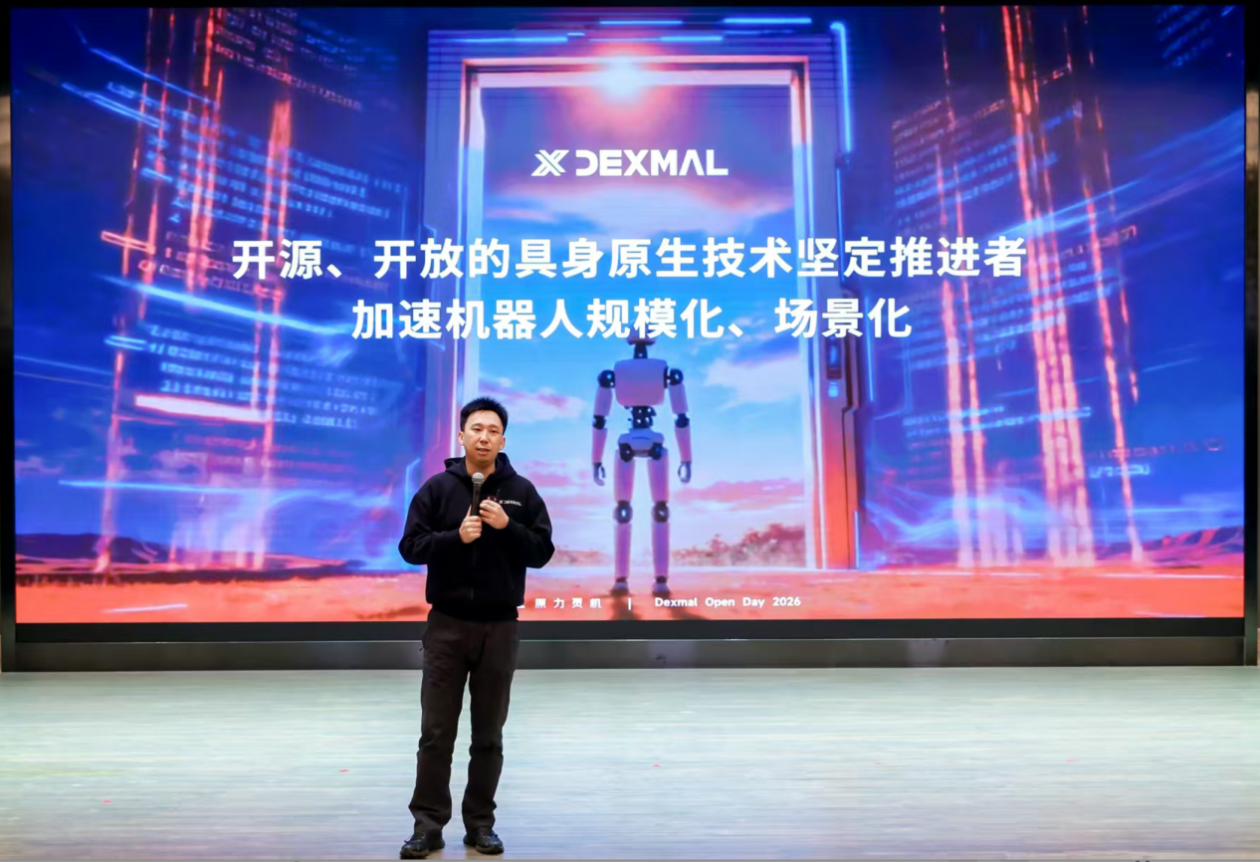
「具身原生」元年!专访原力灵机汪天才,解析具身智能的「PyTorch时刻」
机器之心· 2026-02-10 08:52
Core Viewpoint - The article discusses the significant advancements in embodied intelligence, particularly through the launch of the Dexbotic 2.0 framework and its collaboration with RLinf, marking a pivotal moment in the industry towards a "native embodied" era of AI [3][5][9]. Group 1: Framework and Collaboration - The Dexbotic 2.0 framework aims to standardize the infrastructure for embodied intelligence, similar to how PyTorch revolutionized deep learning [5][16]. - The collaboration with Tsinghua University and RLinf focuses on enhancing the capabilities of embodied AI through a unified framework that integrates perception, decision-making, and execution [3][5][19]. - The introduction of the DM0 model and the DFOL workflow signifies a comprehensive approach to developing and deploying embodied applications [6][51]. Group 2: Embodied Native Concept - "Embodied Native" is defined as a concept that emphasizes a closed-loop system of perception, decision-making, and execution, allowing AI to interact with the physical world effectively [15][13]. - The framework promotes the use of real-world data and multi-modal training to enhance the model's understanding and interaction with its environment [17][41]. - The transition from a "big model brain + mechanical limbs" approach to a fully integrated embodied system is highlighted as a key evolution in the field [12][13]. Group 3: Technical Innovations - Dexbotic 2.0 features a modular design that maintains high flexibility while ensuring end-to-end processing, allowing for independent upgrades of perception, cognition, and control modules [21][33]. - The framework integrates various models and capabilities, including visual-language-action (VLA) and navigation, to achieve comprehensive task execution [37][38]. - The introduction of a standardized data format (Dexdata) and a unified training pipeline addresses the fragmentation in the development of embodied intelligence [45][46]. Group 4: Performance and Evaluation - The DM0 model, with 2.4 billion parameters, has achieved high performance in real-world evaluations, demonstrating its capability in both single and multi-task scenarios [57][58]. - The RoboChallenge benchmark is established to provide a fair evaluation of embodied models, ensuring that performance metrics reflect true capabilities rather than optimized scores [46][57]. - The DFOL workflow enables continuous improvement of robotic systems through real-time data feedback, enhancing their operational efficiency [62][65]. Group 5: Future Insights - The article emphasizes the importance of integrating multi-modal sensory inputs, such as touch and auditory capabilities, to enhance the modeling of the physical world [74]. - The rapid evolution of embodied intelligence is noted, with expectations for significant advancements in the near future, akin to the pace seen in large model developments [73][75]. - The company advocates for an open-source approach to foster collaboration and innovation within the embodied intelligence community, aiming to lower barriers for developers [68][71].