内部竞争

Search documents
一年连损三将!网易游戏「权斗」,「功臣」广州派失势?
Xin Lang Ke Ji· 2025-10-31 00:32
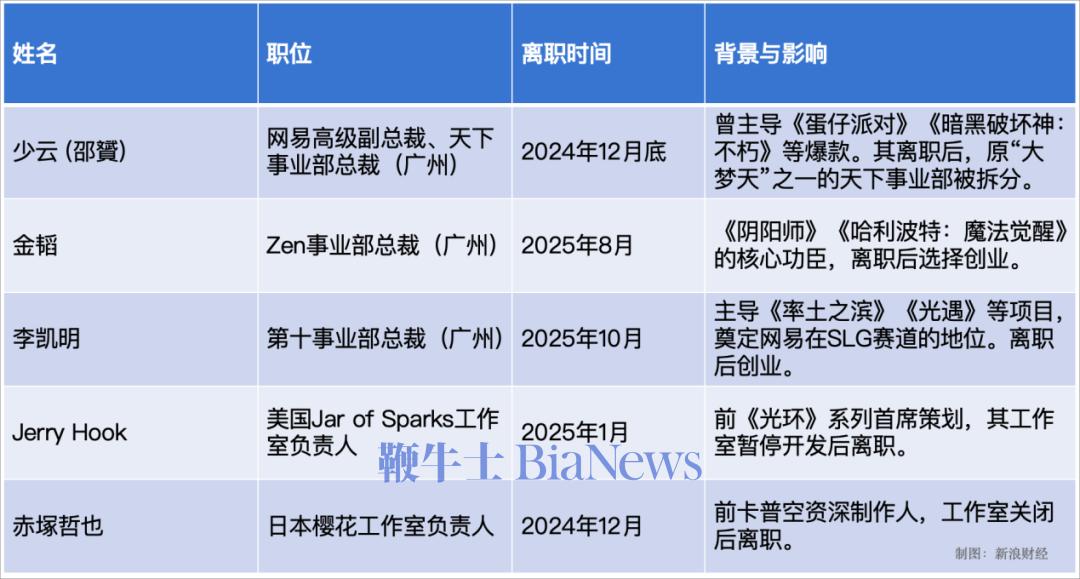
Core Insights - The departure of key figures from NetEase's game divisions reflects internal competition and a shift in power dynamics from the Guangzhou faction to the Hangzhou faction [1][11][12] - The company's recent struggles with game launches, particularly the failure of "射雕," highlight issues with internal processes and a lack of successful new titles [4][7][10] - NetEase is undergoing a strategic transformation, moving from a reliance on top producers to a more standardized and data-driven approach in game development [10][17] Group 1: Leadership Changes - Li Kaiming, head of NetEase's tenth division, is the third senior executive to leave within a year, following Jin Tao and Shao Yun [1][8] - The departures indicate a significant shift in leadership, with potential impacts on the strategic direction of the company [12][19] Group 2: Game Performance and Strategy - The MMORPG "射雕," which had a budget of 1 billion and a team of 600, will cease operations in November 2025 due to underperformance, despite high initial expectations [4][7] - The game peaked at 15th on the iOS sales chart but quickly fell to 44th the next day, with monthly revenue dropping to 533,000 yuan two months post-launch [4][5] - NetEase's game studios have seen at least seven adjustments or closures in the past two years, indicating a broader trend of strategic contraction [2][9][12] Group 3: Internal Challenges - Internal bureaucracy and "formalism" are cited as significant barriers to success, with employees spending excessive time on reporting rather than focusing on game development [1][5][10] - The competitive relationship between Guangzhou and Hangzhou studios has led to operational inefficiencies, particularly in the Guangzhou studios, which are described as "autonomous" [5][11] Group 4: Market Position and Competition - NetEase's gaming revenue for Q2 was 22.8 billion yuan, a 13.7% year-on-year increase but a 5% decline from the previous quarter, indicating a slowdown in growth [17] - The company faces increasing pressure from competitors like Tencent and miHoYo, which have successfully launched popular titles and maintained strong market positions [15][16][17]


海尔智家“九子夺嫡”,定位重叠抢市场“同室操戈”
Sou Hu Cai Jing· 2025-09-03 08:10
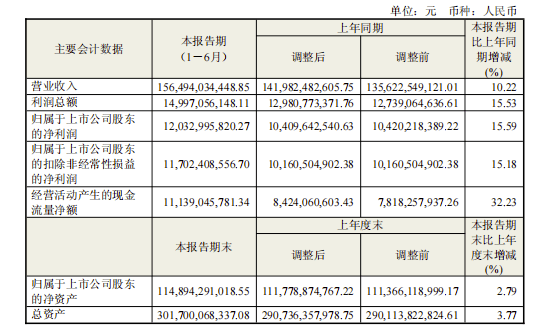
Core Viewpoint - Haier Smart Home reported strong financial performance in the first half of 2025, with revenue of 156.49 billion yuan, a year-on-year increase of 10.2%, and a net profit of 12.03 billion yuan, up 15.6%, marking a historical high. However, internal competition among its nine brands is causing significant inefficiencies and market share dilution [1][2][3]. Financial Performance - Revenue for the first half of 2025 reached 156.49 billion yuan, compared to 141.98 billion yuan in the same period last year, reflecting a growth of 10.22% [2]. - Net profit attributable to shareholders was 12.03 billion yuan, up from 10.41 billion yuan, representing a growth of 15.53% [2]. - Operating cash flow net amount increased by 32.23% to 11.14 billion yuan [2]. - The company's total assets were 301.70 billion yuan, a 3.77% increase from the previous year [2]. Domestic Market Analysis - The overlapping brand positioning among Haier, Casarte, and Leader has led to intense internal competition, with all three brands targeting similar consumer segments in the refrigerator market [3][5]. - Casarte's high-end refrigerators and Haier's mid-range offerings have similar features, making it difficult for consumers to distinguish between them, leading to potential market share loss [3][5]. - In the washing machine segment, similar issues arise with overlapping product features and pricing strategies among the brands, resulting in a fragmented market presence [4][5]. International Market Dynamics - In the overseas market, brands like GE Appliances and Candy are also experiencing internal competition, with overlapping product lines and target demographics, particularly in Europe and North America [6][7]. - The European market saw a 24.07% revenue growth for Haier Smart Home, but much of this growth was attributed to brand cannibalization rather than effective market differentiation [6][7]. Internal Competition and Resource Allocation - The internal competition among the nine brands is leading to resource wastage and pressure on profitability, with R&D expenses increasing by 11.73% but lacking significant technological breakthroughs [9][10]. - The company's gross margin was 26.9%, only slightly improved from the previous year, largely due to price wars among its brands [10]. - The lack of clear brand differentiation is causing marketing inefficiencies, with similar promotional activities leading to consumer confusion [9][10]. Strategic Recommendations - Haier Smart Home should consider consolidating its brands and clarifying their market positions to reduce internal competition and enhance overall market effectiveness [12][13]. - By integrating supply chain resources and optimizing operations across its brands, the company could lower costs and improve responsiveness to market demands [12][13].