内需扩容

Search documents
【申万宏源研究春节见闻】南通与成都:双城镜像,共绘复苏新图景
Xin Lang Cai Jing· 2026-02-21 04:16
Core Insights - The article highlights the distinct development paths of Nantong and Chengdu during the 2026 Spring Festival, reflecting new demands in housing and the vitality of commercial consumption in China [1][11]. Group 1: Nantong's Housing and Consumption - Nantong's real estate market focuses on "policy precision and service convenience," launching a "New Spring Home Purchase" initiative with 74 projects participating in community benefit activities [2][13]. - The city aims to meet diverse needs such as returning home buyers, talent housing, and senior living through various housing options, from small units to larger apartments [2][13]. - The commercial area of Tangzha Ancient Town saw significant visitor engagement, with over 66,000 tourists during the first two days of the new year, a 50% increase from the previous year [3][14]. - The bustling atmosphere led to a 189% increase in sales for local merchants and market stalls, showcasing strong consumer activity and traditional festive spirit [3][14]. Group 2: Chengdu's Urban Quality and Commercial Real Estate - Chengdu emphasizes "livable quality" in its housing market, with the Luhua community as a model, featuring 8,300 acres of land and a 2,100-acre artificial lake [7][18]. - The city’s commercial real estate sector is thriving, leveraging "scene innovation" and "first-store economy" to attract consumers, becoming a top destination for national consumption [9][20]. - Chengdu's Spring Festival activities included over 90 brands launching limited-time offers, enhancing customer engagement through upgraded flagship stores and unique experiential events [9][20]. - The integration of cultural and commercial elements, such as the large-scale lantern displays and tech-driven experiences, reflects the city's dynamic approach to urban development and consumer engagement [9][20]. Group 3: Economic Implications - Both cities represent contrasting yet complementary aspects of China's economic recovery, with Nantong focusing on stability and foundational growth, while Chengdu showcases vibrant consumer culture and innovation [11][22]. - The developments in Nantong and Chengdu illustrate a broader narrative of China's economic stabilization and the strengthening of internal demand, highlighting the importance of housing and consumption in urban growth [11][22].



大类资产配置系列(一):困境与破局:透视宏观纹理,重塑商品Beta
Guo Tai Jun An Qi Huo· 2026-02-03 12:47
1. Report Industry Investment Rating - There is no information about the industry investment rating in the provided content. 2. Core Viewpoints of the Report - The report aims to resolve the contradiction between "strong capital allocation willingness" and "weak differentiation in tool - end" in the commodity investment field. It turns to the under - explored macro - style Beta of commodity futures, providing a differentiated allocation path beyond traditional beta. Two distinct commodity futures long - only passive indices have been successfully developed: the Commodity Macro - Aggressive Index with a cyclical offensive attribute, and the Commodity Macro - Resilient Index with a cyclical defensive attribute. This index system based on "domain - based calibration of macro - attributes" outperforms existing commodity futures broad - based indices in long - term returns and offers lower correlations with other asset classes, filling the market gap of functional commodity allocation tools in China [1][2][80]. 3. Summary by Relevant Catalogs 3.1 Dilemma: "Tool Gap" in Asset Allocation - In the current practice of asset allocation, the commodity asset shows a stage characteristic of strong capital allocation willingness but few available indices and a high concentration of allocation tools. The total scale of domestic commodity funds (including domestic and QDII) is about 312.1 billion yuan, accounting for about 0.86% of the public - offering market. The internal variety distribution of commodity funds is highly concentrated, with the precious metal sector centered on gold accounting for over 95% of the market share. This structural imbalance has limited investors' ability to optimize the risk - return ratio of their portfolios through commodity assets [5][7]. - In contrast, overseas mature markets (taking the US as an example) have a multi - level product system with full asset - class coverage and highly functional tools. Their commodity funds have a much larger scale and a greater number of products than those in China, providing a wide range of on - exchange tools for various sectors [11]. 3.2 Breakthrough: Construction of Commodity Long - Only Indices from a New Perspective 3.2.1 Supply - and - Demand - Side Composite Macro - Indicators - **New Kinetic Energy Growth Index**: It is constructed by integrating the supply - side new - quality productivity index and the demand - side new - consumption index, which represents domestic demand, and weighting them by the inverse of volatility. On the supply side, the industries with the largest year - on - year incremental contributions in the added value of industrial enterprises above a designated size are selected as core weights, weakening traditional industries. On the demand side, sub - items with the largest year - on - year incremental contributions in total retail sales of consumer goods are retained to capture the core increment under the domestic - demand - led transformation of the Chinese economy from investment - driven to consumption - driven [19]. - **Comprehensive Inflation Index**: It is constructed by compounding the inflation indicators of the production and living ends on the supply and demand sides, weighting them by the inverse of volatility. CPI reflects the final demand of the resident end, and its trend change represents the long - term direction of China's economic transformation from investment - driven to consumption - driven. PPI focuses on the industrial production link of the supply side, reflecting the cost changes and corporate profitability of the industrial sector [21]. 3.2.2 Macro Penetration of Commodity Assets and Construction of Long - Only Indices - **Macro Domain Division and State Calibration** - **Macro Domain Division**: By regarding macro factors as style factors, using regression models for attribution testing of commodities, it is found that the industrial metal sector is positively exposed to the growth end with a cyclical offensive attribute, while the energy - chemical and agricultural product sectors are positively exposed to the inflation end, showing stronger cost - transmission and rigid - demand resilience [24]. - **State Calibration**: Instead of simply timing based on economic data fluctuations, the performance of assets in different macro - states is introduced as a sensitivity indicator. The historical return characteristics of each variety in specific macro - states (such as the growth spread after stripping inflation) are extracted as the risk budget to obtain the weights of the varieties [24]. - **Long - Only Index Construction Process and Functionality Analysis** - The construction of the long - only index is divided into four stages: data preparation and macro - scenario division, macro - factor regression and exposure calculation, asset screening, and construction of the commodity long - only index. - The Commodity Macro - Aggressive Index and the Commodity Macro - Resilient Index are constructed. The Aggressive Index has a cumulative return of 128%, an annualized return of 10.3%, a Sharpe ratio of 0.76, and a win - rate of 54.2%. The Resilient Index has a cumulative return of 40.2%, an annualized return of 4.1%, a Sharpe ratio of 0.37, and a win - rate of 51.2%. Both indices provide long - term positive returns and have lower correlations with equity and bond assets [67][71]. 3.3 Summary and Outlook 3.3.1 Summary - The report successfully develops two distinct commodity futures long - only passive indices to solve the contradiction in commodity investment. The index system based on "domain - based calibration of macro - attributes" has advantages in long - term returns and correlations with other asset classes, filling the market gap [80]. - The domestic commodity fund market has a "tool gap", while overseas markets have a more complete and functional tool system. A new quantitative framework from macro - reshaping to asset - penetration is constructed to develop these two indices [80][81]. 3.3.2 Outlook - Future research will expand globally on the tool side, extending from the domestic futures market to overseas markets to build a full - spectrum commodity allocation toolbox covering both domestic and overseas markets. - There will be a tactical advancement in methodology, shifting from "tool construction" in strategic asset allocation (SAA) to "strategy application" in tactical asset allocation (TAA) on the commodity side [82].
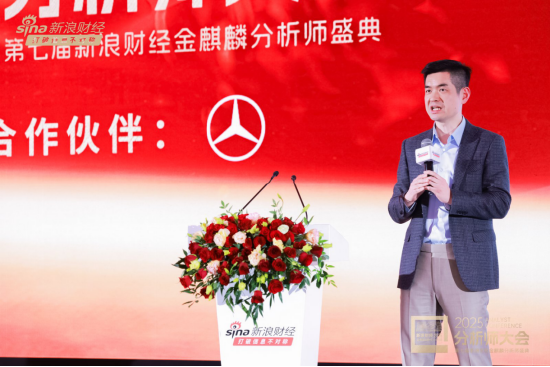
摩根士丹利中国邢自强:科技创新与消费提振双轮驱动,中国经济前景可期
Xin Lang Zheng Quan· 2025-11-28 08:17
Group 1 - The conference on November 28, 2025, gathered experts and analysts to explore investment strategies through economic cycles [1] - Morgan Stanley's Chief Economist for China, Xing Ziqiang, highlighted China's significant achievements in technological innovation and its critical role in the new technological revolution [3] - The "14th Five-Year Plan" aims for high-quality and sustainable growth driven by technological innovation and domestic demand [3] Group 2 - Xing emphasized that technological innovation is the core engine of economic development, showcasing China's breakthroughs in sectors like semiconductors, green energy, artificial intelligence, and 6G during the "13th" and "14th Five-Year Plans" [3] - The "14th Five-Year Plan" also focuses on improving people's livelihoods and boosting consumption, with a target to increase the share of household consumption in GDP [4] - The plan includes a proposal to provide monthly subsidies of approximately 1,000 RMB to farmers and migrant workers, aiming to enhance consumption confidence and push household consumption beyond 10 trillion USD by 2030 [4] Group 3 - Xing proposed a "source and save" approach for fiscal sustainability, suggesting the activation of state-owned assets and optimizing fiscal expenditure to better allocate resources towards social welfare [4] - The long-term positive fundamentals of the Chinese economy remain unchanged, with technological self-reliance and domestic demand expansion expected to create new growth momentum [4] - Continuous policy consensus and deepening reforms will provide significant opportunities for global investors in the Chinese financial market [4]