
农业绿色低碳发展

Search documents
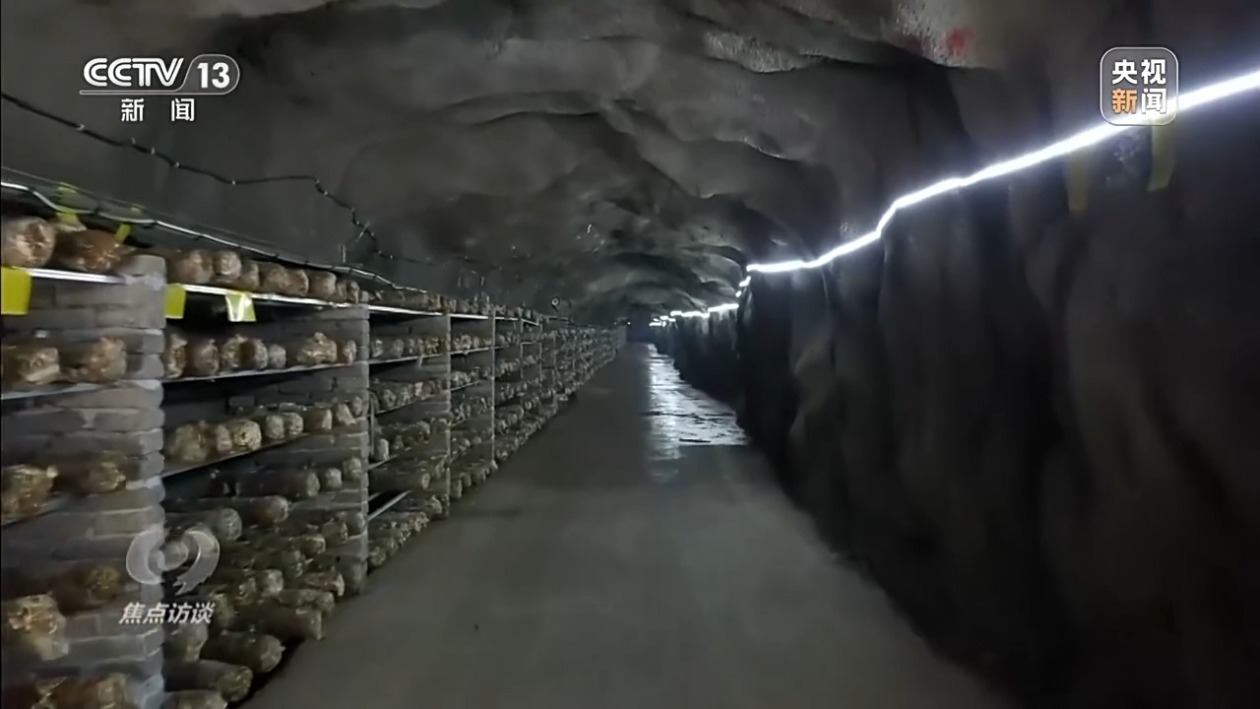
焦点访谈丨“生态赤字”如何变为“美丽经济”?这些乡村给出了答案
Xin Lang Cai Jing· 2026-01-31 13:19
Core Viewpoint - The construction of beautiful villages is crucial for rural revitalization and the overall ecological civilization in China, with the Ministry of Ecology and Environment announcing the first batch of 23 beautiful village pilot areas [1][9]. Group 1: Beautiful Village Pilot Areas - The first batch of beautiful village pilot areas includes counties that meet basic ecological conditions, such as clean water and beautiful mountains, with effective waste and sewage management [9][11]. - The pilot areas aim to explore high-quality, low-cost environmental governance techniques and promote replicable experiences for other regions [11][25]. Group 2: Case Study - Yaozhihe Village - Yaozhihe Village in Hubei Province transformed its economy from mining to edible mushroom production, achieving an annual output value exceeding 50 million yuan [5][7]. - The village has undergone ecological restoration, with over 75% of rural sewage treated and 97% of household waste managed harmlessly, turning ecological deficits into a "beautiful economy" [7][9]. Group 3: Case Study - Liyang City - Liyang City has developed an ecological tourism chain along the "Liyang No. 1 Road," connecting 312 natural villages and over 220 tourism spots, enhancing rural tourism development [15][17]. - The village of Wangjia has seen significant economic improvement through the establishment of a homestay industry, generating over 300,000 yuan in collective income annually [15][17]. Group 4: Broader Implications - The initiative for beautiful villages is part of a broader strategy to enhance rural living conditions and promote urban-rural integration, contributing to a modernized and beautiful China [13][19]. - By 2027, the goal is to support around 100 counties in establishing beautiful village pilot areas, aiming for a 40% completion rate in beautiful village construction across over 2,800 agricultural counties [25].

生态环境部推进农业绿色低碳发展,农业ETF天弘(512620)昨日成交额近500万元,机构:今年农业是拐点向上的年份
2 1 Shi Ji Jing Ji Bao Dao· 2026-01-09 01:34
Group 1 - The core viewpoint of the articles indicates that the agricultural sector is expected to experience a turning point in 2026, with a focus on livestock and crop production driving upward trends in the industry [1][2]. - The Shanghai Composite Index experienced a slight decline of 0.07%, while the ChiNext Index fell by 0.82%, reflecting a narrow fluctuation in the market [1]. - The Tianhong Agricultural ETF (512620) recorded a trading volume of nearly 5 million yuan and a turnover rate of 1.12%, with leading stocks in the sector including Bio-Pharmaceuticals, Brother Technology, and Yisheng Shares [1]. Group 2 - The Ministry of Ecology and Environment emphasized the importance of advancing agricultural pollution prevention and promoting green and low-carbon development in rural areas to support comprehensive rural revitalization [1]. - China Galaxy highlighted that investment opportunities in the agricultural sector in 2026 should focus on pig farming and the pet sector, with an emphasis on capturing industry turning points and tracking core fundamental indicators [2]. - The livestock sector is expected to adopt a more proactive approach in 2026, contrasting with the defensive stance of 2025, while the pet sector is anticipated to see a recovery in performance growth, presenting new investment opportunities [2].
氮增效技术助力农业低碳发展
Zhong Guo Hua Gong Bao· 2026-01-04 02:57
Group 1 - The expert evaluation meeting for Wuwei Jincang Biotechnology Co., Ltd. was held to assess the nitrogen efficiency technology based on DMPP and NBPT, which was deemed to have significant yield and income enhancement effects, and is at an internationally leading level, with recommendations for wider demonstration and application [1] - The company has developed a nitrogen fertilizer efficiency technology system that balances yield increase, fertilizer reduction, emission reduction, and ecological safety, with production lines capable of producing 10,000 tons of NBPT and 10,000 tons of DMPP annually, contributing to green low-carbon agricultural development and food security [2] - Field trials across multiple regions in China demonstrated that the use of these efficiency agents can maintain or even increase crop yields while reducing nitrogen application by 10% to 30%, along with multiple benefits such as prolonged fertilizer effectiveness and enhanced soil health [2] Group 2 - The chairman of Jincang Technology stated the company's commitment to becoming a global leader in high-end fine chemicals and modern agricultural technology services, with the establishment of a key laboratory for efficient nutrient resource utilization [3] - The company has created a dual-core innovation model with a Shanghai R&D center and a Gansu industrial base, covering the entire industry chain of new fertilizer efficiency technologies [3]
涂圣伟:中国特色农业现代化的内涵和路径
Jing Ji Ri Bao· 2025-10-17 00:08
Core Viewpoint - The modernization of agriculture is a significant task for building a socialist modern country and is essential for achieving high-quality development. President Xi Jinping emphasized that without agricultural modernization, there can be no overall national modernization, and the basic requirement for building an agricultural power is to achieve agricultural modernization [1]. Group 1: Characteristics of Agricultural Modernization - Agricultural modernization in China has unique characteristics that are based on national conditions, despite sharing common features with global agricultural modernization [2]. - The dual-layer management system, which combines household contracting with collective management, is a fundamental institutional advantage that supports agricultural modernization in China [2]. - The emphasis on the farmer's primary position and the respect for their wishes are crucial for driving agricultural modernization, ensuring that farmers are active participants and beneficiaries [3]. Group 2: Market and Government Collaboration - The process of agricultural modernization involves a collaborative relationship between the government and the market, optimizing their roles to enhance agricultural development [3]. - Significant reforms in agricultural policies, such as the pricing mechanism for agricultural products and rural collective property rights, have activated market forces and improved efficiency in agricultural production [3]. Group 3: Diverse Agricultural Management Forms - The coexistence of large and small farming operations is a reality in China's agricultural landscape, where both forms play important roles in modernization [4]. - The integration of traditional agricultural practices with modern development approaches is essential for achieving sustainable agricultural growth [4]. Group 4: New Quality Productivity and Reform - There is a focus on cultivating new quality productivity characterized by high technology and efficiency, which is essential for transforming agricultural development paradigms [6]. - Deepening reforms to enhance internal motivation for agricultural modernization is necessary, requiring a systematic approach to policy effectiveness and reform coordination [7]. Group 5: Urban-Rural Integration and Green Development - Promoting a seamless urban-rural cycle is vital for agricultural modernization, ensuring that resources and technologies flow efficiently between sectors [8]. - Emphasizing green and low-carbon development is crucial for sustainable agricultural practices, addressing food security and ecological safety [9]. Group 6: Key Measures for Agricultural Modernization - Ensuring food security is a top priority in building an agricultural power, necessitating a robust foundation in technology, policy, and infrastructure [10]. - Developing a modern rural industrial system that integrates various sectors is essential for transforming agriculture into a modern industry [11]. - Improving the market-oriented allocation of resources is critical for advancing agricultural modernization, focusing on optimizing land use and labor mobility [12].
中国特色农业现代化的内涵和路径
Jing Ji Ri Bao· 2025-10-16 22:28
Core Viewpoint - The modernization of agriculture is a significant task for building a socialist modern country and is essential for achieving high-quality development. Xi Jinping emphasized that without agricultural modernization, there can be no overall national modernization, and the basic requirement for building a strong agricultural nation is to achieve agricultural modernization [1] Group 1: Characteristics of Agricultural Modernization - Agricultural modernization in China has unique characteristics that differ from universal standards and models, emphasizing the importance of adapting to national conditions [2] - The dual-layer management system, based on family contracting and combining collective and individual management, has proven to be a key institutional advantage in promoting agricultural modernization [2] - The emphasis on the farmer's primary position and the importance of respecting farmers' wishes ensures that their interests are prioritized, making them active participants in agricultural modernization [3] Group 2: Government and Market Collaboration - The process of agricultural modernization involves a collaborative relationship between government and market forces, optimizing their roles to enhance agricultural development [3] - Significant reforms in agricultural product pricing and rural collective property rights have activated market dynamics, contributing to the acceleration of agricultural modernization [3] Group 3: Diverse Operational Forms - The coexistence of large and small operational forms in agriculture is essential, with smallholder family farming being a primary model that must be addressed in modernization efforts [4] - The integration of large-scale and small-scale operations allows for a balanced approach, leveraging the advantages of both to enhance agricultural productivity [4] Group 4: Cultural and Green Development - The integration of agricultural modernization with cultural heritage and green development is crucial, as traditional farming philosophies align with contemporary sustainable practices [4] - Efforts to preserve agricultural culture while promoting green transformation have led to significant improvements in agricultural sustainability [4] Group 5: New Quality Productivity - The focus on cultivating new quality productivity, characterized by innovation and advanced production methods, is essential for transforming traditional agricultural practices [6] - The ongoing agricultural technology revolution, particularly in biotechnology and information technology, is expected to drive significant advancements in agricultural productivity [6] Group 6: Reform and Internal Motivation - Enhancing internal motivation through deepening reforms is necessary for sustainable agricultural modernization, requiring a focus on policy effectiveness and systemic integration [7] - Addressing various contradictions and challenges in agricultural development is critical for advancing modernization efforts [7] Group 7: Urban-Rural Integration - The interdependence of industrialization and agricultural modernization necessitates a focus on facilitating urban-rural circulation, optimizing resource allocation between sectors [8] - The integration of advanced technologies and management practices into agricultural supply chains is vital for improving productivity [8] Group 8: Green and Low-Carbon Development - Promoting green development in agriculture is essential for ensuring food security and ecological sustainability, requiring a shift from quantity-focused to quality-oriented agricultural practices [9] - The need for a unified approach to resource conservation and ecological protection is increasingly urgent as agricultural modernization progresses [9] Group 9: Agricultural Industry Security - The relationship between open development and agricultural industry security must be balanced, especially in the context of global supply chain challenges [9] - Enhancing resilience in agricultural supply chains is crucial for navigating geopolitical and trade-related risks [9] Group 10: Key Measures for Agricultural Modernization - Ensuring food security is a top priority in agricultural modernization, requiring a comprehensive approach to strengthen the foundations of food production [10] - Developing new quality productivity tailored to regional characteristics is essential for effective agricultural modernization [11] - Building a modern rural industrial system that integrates various sectors is necessary for transforming agriculture into a modern industry [11] - Optimizing the market-oriented allocation of resources is critical for advancing agricultural modernization and ensuring sustainable development [12]