
冬至养生

Search documents
冬至节气 一粥一菜加一茶
Bei Jing Qing Nian Bao· 2025-12-23 01:00
Core Viewpoint - The article emphasizes the importance of dietary adjustments during the winter solstice, focusing on warming and nourishing foods to support health and vitality as the days begin to lengthen [1]. Group 1: Dietary Recommendations - The article suggests a specific porridge made from silver fungus, lily bulb, poria, and lotus seeds, which collectively nourish the lungs and kidneys while supporting the spleen and stomach [2]. - A recommended dish is a mutton soup with ingredients like mutton, codonopsis, angelica, ginger, and jujube, which is beneficial for strengthening the spleen and stomach, especially for those with cold and weak digestive systems [3]. - A tea blend consisting of astragalus, cinnamon twig, white peony root, ginger, and jujube is advised for its warming and blood-circulating properties, suitable for combating cold and promoting overall health during winter [4]. Group 2: General Health Principles - The article highlights that winter solstice health practices should focus on "assisting yang and protecting the root," advocating for a balance of warming and nourishing foods while avoiding cold and damp ingredients [5]. - It is recommended to consume warming foods like mutton and walnuts to support kidney yang, while also including nourishing items like longan and yellow wine to promote blood circulation [5].
冬至:藏阳养阴,适度进补
Xin Lang Cai Jing· 2025-12-22 18:17
Core Viewpoint - The article emphasizes the importance of winter solstice as a time for health preservation and dietary supplementation, highlighting traditional Chinese medicine practices for maintaining balance and well-being during the cold season [1][2]. Group 1: Health Recommendations - The winter solstice marks the shortest day and longest night in the Northern Hemisphere, indicating the onset of the coldest period of the year, which is a suitable time for dietary supplementation [1]. - Recommendations for daily routines include going to bed early and waking up late, avoiding early rising to prevent exposure to cold [1]. - It is advised to engage in gentle exercises like walking, Tai Chi, and Baduanjin to promote health without excessive sweating, which can deplete vital energy [1]. Group 2: Dietary Guidance - The focus of dietary adjustments during winter should be on nourishing the kidneys and enhancing yang energy, with suggestions to consume black beans, lamb, beef, and warming foods [1][2]. - Individuals with yin deficiency should limit warming foods and opt for ingredients like lily bulbs and lotus roots to nourish and hydrate [1][2]. - The article highlights the significance of avoiding raw and cold foods to protect against the harsh winter climate and maintain energy levels [1][2]. Group 3: Customization of Health Supplements - The article discusses the concept of "膏方" (gāo fāng), a traditional Chinese medicinal paste, which is beneficial for nourishing the body but should be tailored to individual health conditions [2]. - It is crucial to consult a professional TCM practitioner for personalized recommendations, especially if experiencing acute symptoms like cough or diarrhea [2]. - During the consumption of gāo fāng, it is advised to avoid cold and greasy foods to prevent digestive issues [2].
冬至已至,这份养生指南请查收
Xin Lang Cai Jing· 2025-12-21 08:23
Group 1 - The article discusses health maintenance practices during the winter solstice, emphasizing dietary adjustments, appropriate exercise, and acupoint health care to enhance physical fitness [1][4]. - Recommended dietary practices include consuming warming foods such as lamb, with suggested recipes like lamb soup enriched with angelica, goji berries, and red dates, as well as dishes featuring tremella and lotus seeds to alleviate winter dryness [4]. - For exercise, gentle activities like Baduanjin and Tai Chi are recommended during sunny periods, with a focus on promoting blood circulation and controlling exercise intensity to avoid overexertion [4].

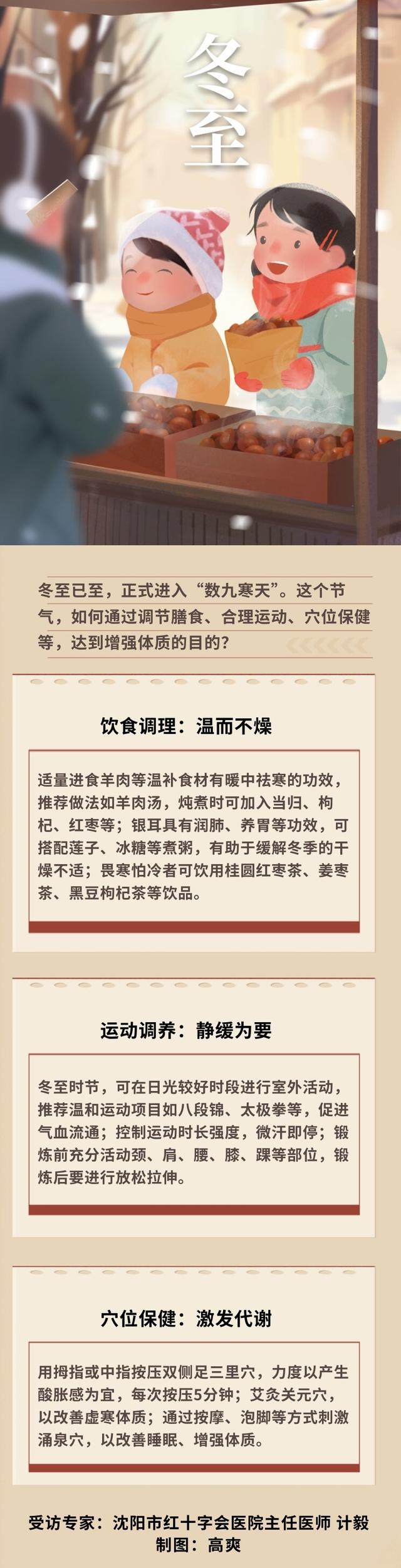
冬至养生 重在“护阳、防寒”
Xin Lang Cai Jing· 2025-12-21 08:23
Group 1 - The article discusses the significance of the winter solstice, which is the fourth solar term of winter, emphasizing the importance of health maintenance during this period as the cold intensifies and the yang energy begins to emerge [1] - It highlights the need for warmth and protection against cold, as improper care can lead to discomfort and potential health issues such as cardiovascular events and respiratory diseases [1] - Recommendations for dietary choices include warming foods like lamb, beef, chicken, and walnuts, while avoiding cold and overly greasy foods to protect the digestive system [1] Group 2 - The article suggests lifestyle adjustments such as going to bed early and rising late to ensure adequate sleep, which helps in conserving yang energy [1] - It recommends gentle exercises like Tai Chi and traditional Chinese exercises to promote blood circulation and maintain physical health during the cold season [1] - Specific herbal teas are mentioned for various health benefits, such as Huangjing Goji tea for energy replenishment and warming ginger jujube tea for those with cold extremities [2]
顺时而藏 护住一年之阳
Xin Lang Cai Jing· 2025-12-21 07:21
Core Viewpoint - The winter solstice is a crucial time for health maintenance, emphasizing the importance of "protecting yang and preventing cold" to enhance physical well-being and prevent illness [1][2] Group 1: Health Recommendations - During the winter solstice, it is essential to keep the back and feet warm, suggesting the use of scarves or heating pads to protect the lower back from cold winds [1] - Individuals with cardiovascular issues should avoid exercising outdoors in the early morning when temperatures are lowest, recommending exercise after 10 AM when it is warmer [1] - A suitable winter tonic is recommended, such as "Chestnut Yam Black Chicken Soup," which includes black chicken, yam, chestnuts, and goji berries to nourish qi and blood while supporting the spleen and kidneys [1] Group 2: Home Environment and Lifestyle - It is advised to maintain a home environment that is "warm but not dry, and sheltered but not stuffy," with room temperatures kept between 20 to 22 degrees Celsius [2] - The use of humidifiers or placing water near heating sources is recommended to maintain humidity levels between 40% and 60% to alleviate dryness in the respiratory tract [2] - Gentle and moderate exercise is encouraged during this period, with activities like walking, Tai Chi, and stretching being suitable, while cautioning against vigorous activities in cold weather for those with heart conditions [2]
冬至|数九寒天冬至到!除了吃饺子,这些养生之道也要记牢
Xin Lang Cai Jing· 2025-12-21 02:11
Core Viewpoint - The article discusses the significance of the winter solstice in Chinese culture, highlighting traditional customs, health practices, and the importance of seasonal changes in nature. Group 1: Seasonal Significance - The winter solstice marks the shortest day and longest night in the Northern Hemisphere, with the sun directly overhead at the Tropic of Capricorn [1] - The three phases of the winter solstice are described: the first phase involves earthworms coiling up, the second phase notes the shedding of antlers by deer, and the third phase indicates the warming of mountain springs [2][3] Group 2: Traditional Customs - The "Counting the Nines" tradition begins on the winter solstice, where every nine days is counted until the end of winter, totaling 81 days [4] - Various customs include drawing the "Nine to Eliminate Cold" picture and writing phrases with nine strokes to mark the passage of winter [4] Group 3: Health and Wellness - Emphasis on winter health practices includes avoiding cold, maintaining warmth, and ensuring proper clothing to prevent cold exposure [7][8] - Recommendations for winter wellness include nurturing the heart and kidneys, ensuring adequate sleep, and engaging in moderate exercise during sunny hours [9][10] - Dietary suggestions for winter include consuming warming foods like chicken, lamb, and various vegetables, as well as nourishing ingredients like lotus seeds and black sesame [11][12][13][14] Group 4: Disease Prevention - The article highlights the increased risk of cardiovascular diseases during winter due to cold weather affecting blood circulation [16] - It also notes the importance of kidney health, as cold can exacerbate kidney-related issues [17] - Respiratory illnesses are prevalent in winter, with advice to maintain air circulation to prevent the spread of viruses [19][20] - The impact of cold on the musculoskeletal system is discussed, emphasizing the need for warmth to prevent joint and muscle pain [21] - Mental health considerations are mentioned, with suggestions to engage in activities that uplift mood during the long winter nights [22]
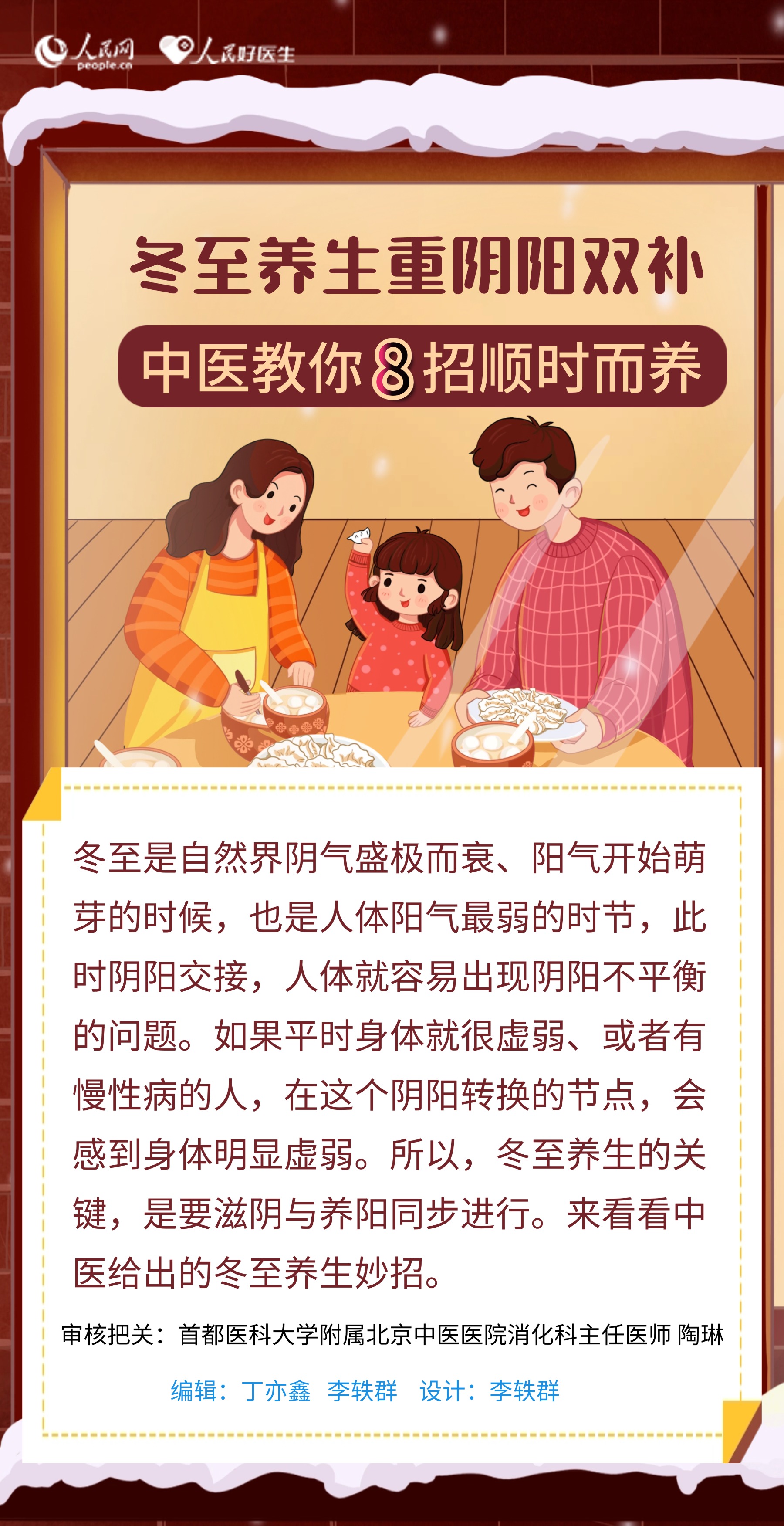
冬至养生重阴阳双补,中医教你8招顺时而养
Ren Min Wang· 2025-12-21 01:42
Core Viewpoint - The article emphasizes the importance of health maintenance during the winter solstice, providing eight traditional Chinese medicine tips to balance yin and yang in the body during this season [3]. Group 1: Health Tips - Avoid overeating during winter solstice gatherings to prevent gastrointestinal burden, as the body's yang energy is weak [5]. - Protect against cold weather by wearing appropriate clothing and taking precautions to avoid catching a cold [5]. - Limit sexual activity during this period to conserve kidney essence, as excessive activity can deplete energy [5]. - Avoid excessive sweating through intense exercise, as it can lead to energy loss [5]. - Maintain a calm mindset to prevent emotional disturbances that can trigger cardiovascular issues, especially during winter [5]. Group 2: Dietary Recommendations - Focus on a diet that supports yang energy, incorporating foods like black sesame, black beans, and various warming foods, while avoiding spicy and greasy items [7]. - Include a variety of foods in daily meals, ensuring a balance of grains, meats, fruits, and vegetables to maintain health [7]. - Consume warming soups such as lamb soup with angelica and ginger, which help to nourish and warm the body [23][24]. Group 3: Lifestyle Adjustments - Prioritize sleep by going to bed early and waking up late, with short naps after lunch to align with the natural rise of yang energy [9]. - Engage in sun exposure to enhance yang energy, particularly on the back, which is associated with the body's energy regulation [12][14]. - Practice hand rubbing and other forms of gentle exercise to stimulate circulation and enhance respiratory function [11][19]. Group 4: Traditional Remedies - Utilize moxibustion on specific acupuncture points to improve energy flow and blood circulation during the cold season [16]. - Consider cupping therapy to expel dampness and cold from the body, alleviating joint pain [18]. - Regularly soak feet in herbal solutions to promote blood circulation and warmth [18].
冬至养生 专家建议多吃这些食物
Ren Min Wang· 2025-12-21 01:42
Core Viewpoint - The article emphasizes the importance of traditional Chinese medicine practices during the coldest days of winter, particularly focusing on dietary and herbal remedies to strengthen the body and prevent winter-related ailments [1] Group 1: Health Practices - The period after the winter solstice, particularly the "three nine days," is identified as the coldest time of the year, which can exacerbate health issues for individuals with cold constitutions [1] - Common ailments during this period include respiratory diseases, neck and back pain, and menstrual discomfort, highlighting the need for preventive measures [1] Group 2: Dietary Recommendations - The article suggests consuming foods and herbs that nourish kidney essence, such as black foods, Tai Zi Shen, or Western ginseng, to achieve the goal of nourishing yin and strengthening yang [1]
冬至|数九寒天冬至到!除了吃饺子,这些养生之道也要记牢
Huan Qiu Wang· 2025-12-20 23:36
Core Viewpoint - The article discusses the significance of the winter solstice, its traditional customs, and health practices associated with this time of year in Chinese culture [1][5]. Group 1: Winter Solstice Significance - The winter solstice marks the shortest day and longest night in the Northern Hemisphere, with the sun directly overhead at the Tropic of Capricorn [1]. - Traditional beliefs include the behavior of earthworms, which curl up during this time due to strong yin energy [1]. - The shedding of antlers by elk is noted as a sign of the waning yin energy as the yang energy begins to rise [2]. Group 2: Traditional Customs - The "counting of the nines" tradition starts from the winter solstice, where every nine days is counted, culminating in 81 days, indicating the end of winter [4]. - The "nine song" describes various weather patterns and activities associated with each phase of the counting [4]. - The practice of drawing the "Nine to Eliminate Cold" chart involves painting a flower with 81 petals, where one petal is colored each day until spring arrives [4]. Group 3: Health Practices - Emphasis on winter health includes avoiding cold and ensuring proper warmth, particularly for vulnerable body parts like the head, back, and feet [7][8]. - Recommendations for winter health include maintaining a balanced diet, with specific foods suggested for nourishment, such as warming meats and various vegetables [10][11][12]. - The article suggests herbal teas like longan, red dates, and goji berries for those with cold extremities [14]. Group 4: Disease Prevention - The article highlights the increased risk of cardiovascular diseases during winter due to cold weather affecting blood circulation [16]. - It notes the importance of kidney health, as winter can exacerbate kidney-related issues due to cold exposure [17]. - Respiratory illnesses are prevalent in winter, with advice to maintain good air circulation indoors to prevent the spread of viruses [19][20].
早卧晚起 适当滋补 适度运动
Xin Lang Cai Jing· 2025-12-20 22:07
Group 1 - The article emphasizes the importance of winter solstice for health, suggesting that it marks the beginning of the coldest period of the year, and advises on lifestyle adjustments for better health during this time [1][2] - Key recommendations for winter health include going to bed early and waking up late, appropriate nourishment, and moderate exercise, focusing on storing energy rather than depleting it [1][2] - The article highlights the significance of dietary choices during the winter solstice, recommending warming foods such as lamb, yam, chestnuts, and chicken, along with medicinal supplements like medicinal pastes [1][2] Group 2 - It is advised to reduce physical activity in accordance with the "winter storage" principle, but not to eliminate exercise entirely; gentle activities like Tai Chi and walking are recommended [2] - Foot care is emphasized as a part of winter health maintenance, with suggestions for warm foot baths before sleep to improve circulation and enhance sleep quality [2]